Home/Residential Roofing/Residential Metal Roofing
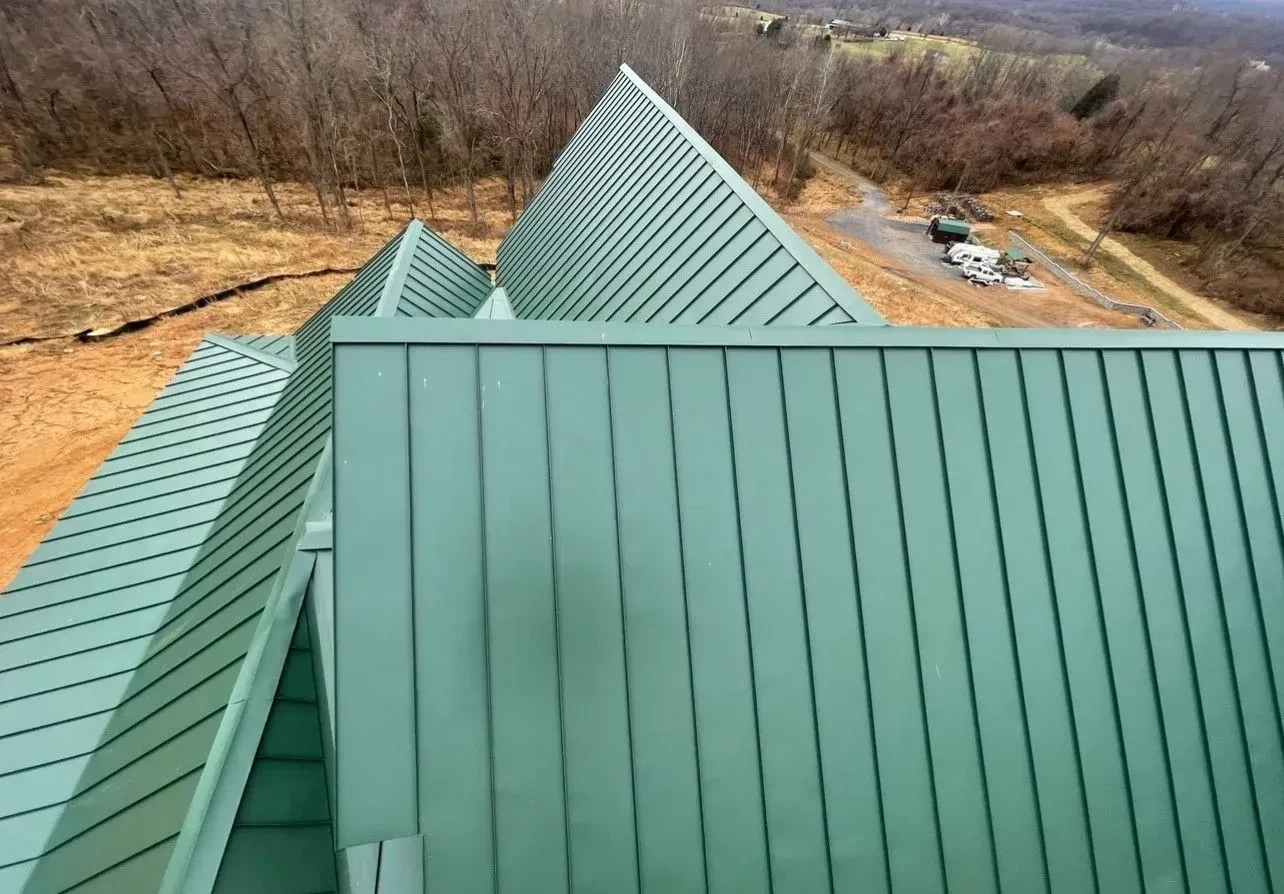
STANDING SEAM AND EXPOSED FASTENER METALResidential Metal Roofingin Martinsburg, WV
We work out of 1886 Winchester Ave right here in Martinsburg, so Berkeley County roofs are the roofs we look at every day. We put the gauge, the substrate, the resin system, and the seam profile on the estimate in writing. And we tell you about oil canning before you sign, not after you call.
Leaking right now
Emergency response
We answer 24 hours. Tarped and stabilized before more gets inside.
Planning ahead
Free inspection
Written scope and photos so you know what the roof actually needs.
Request your written estimate
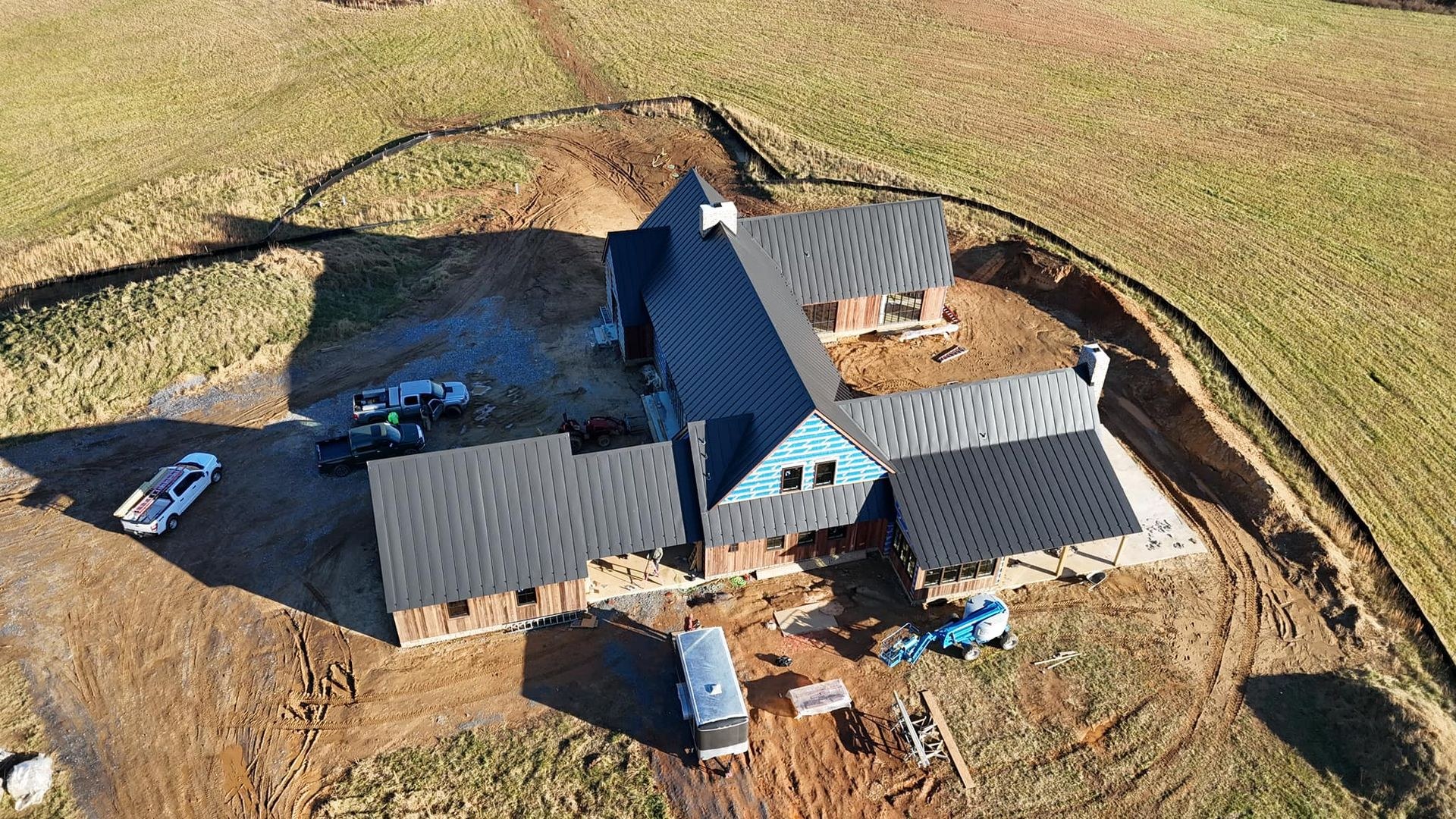
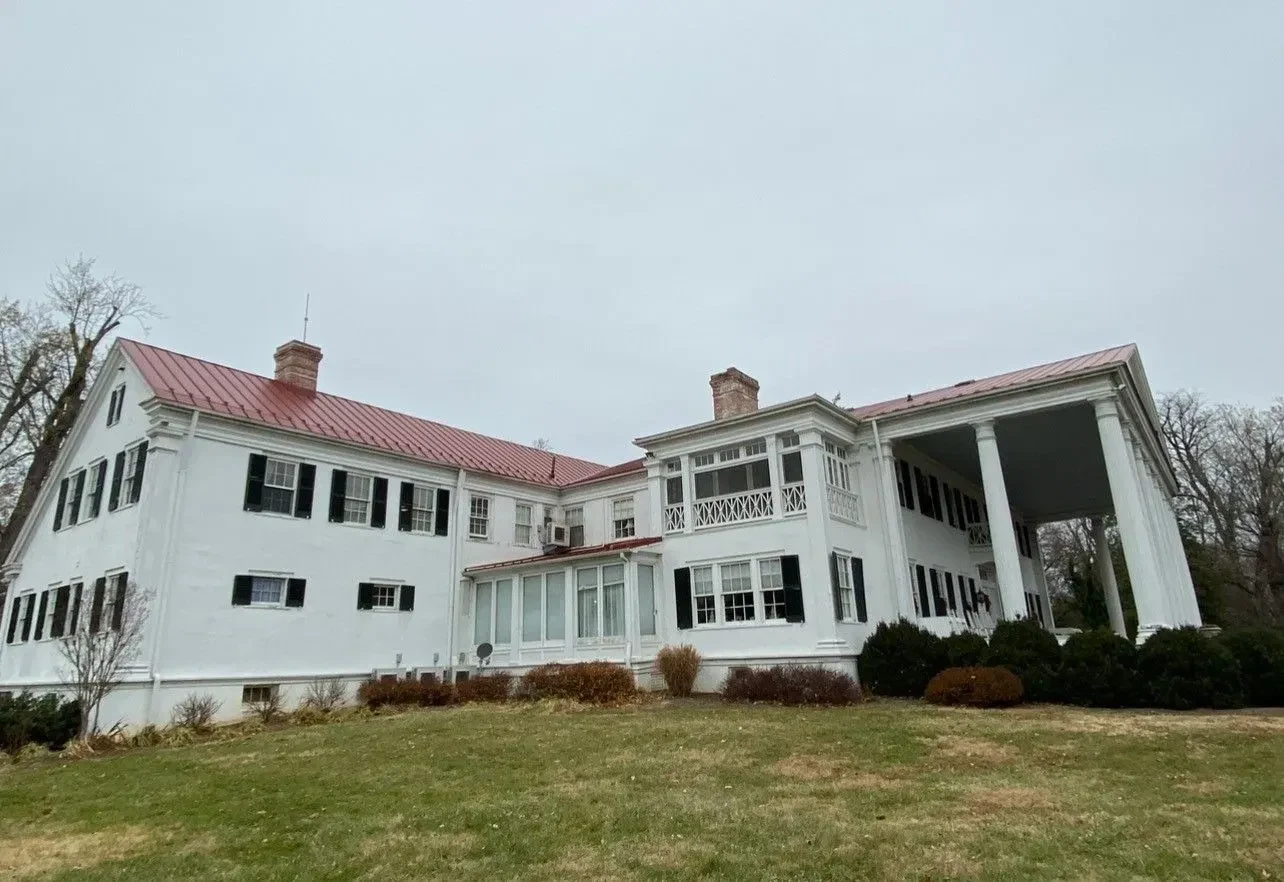
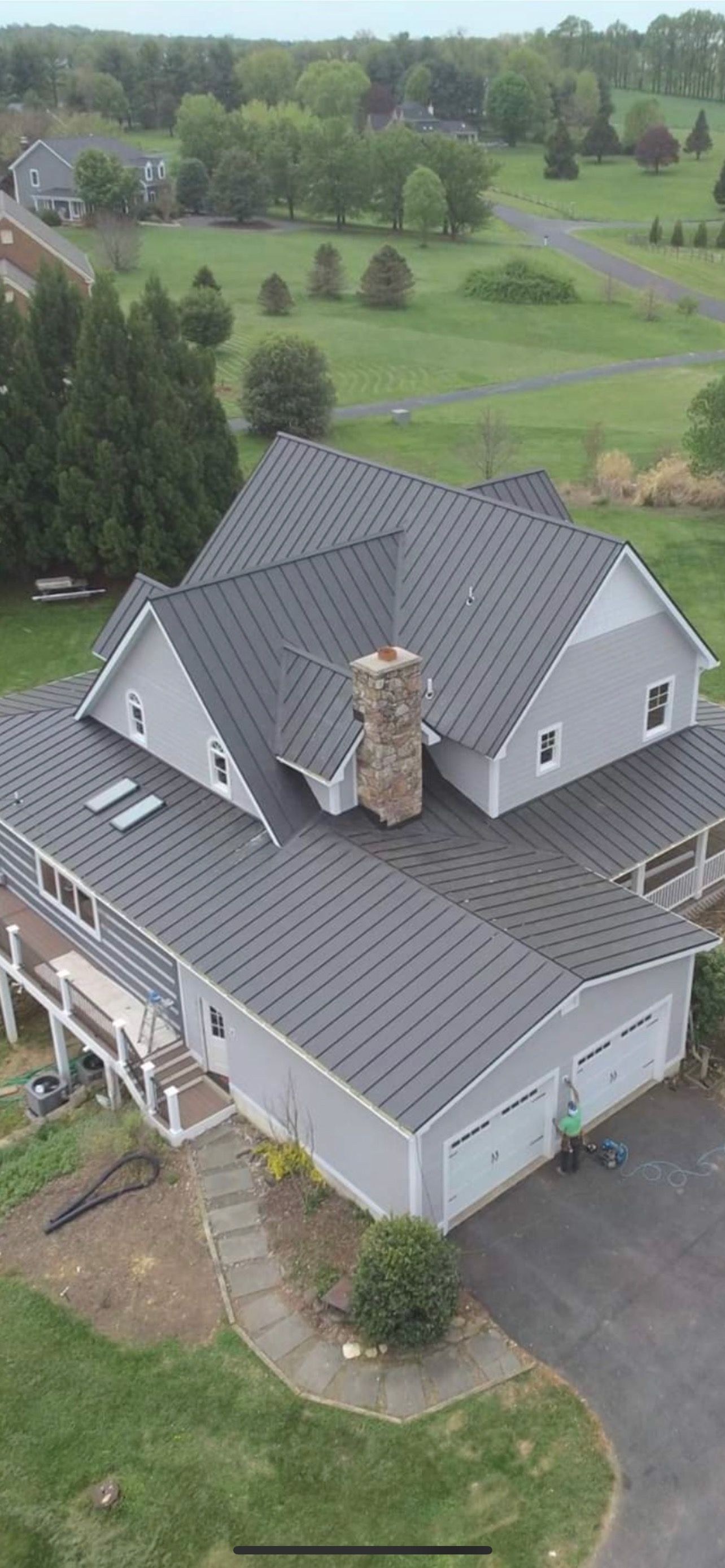
Metal roofs and repairs around Berkeley County
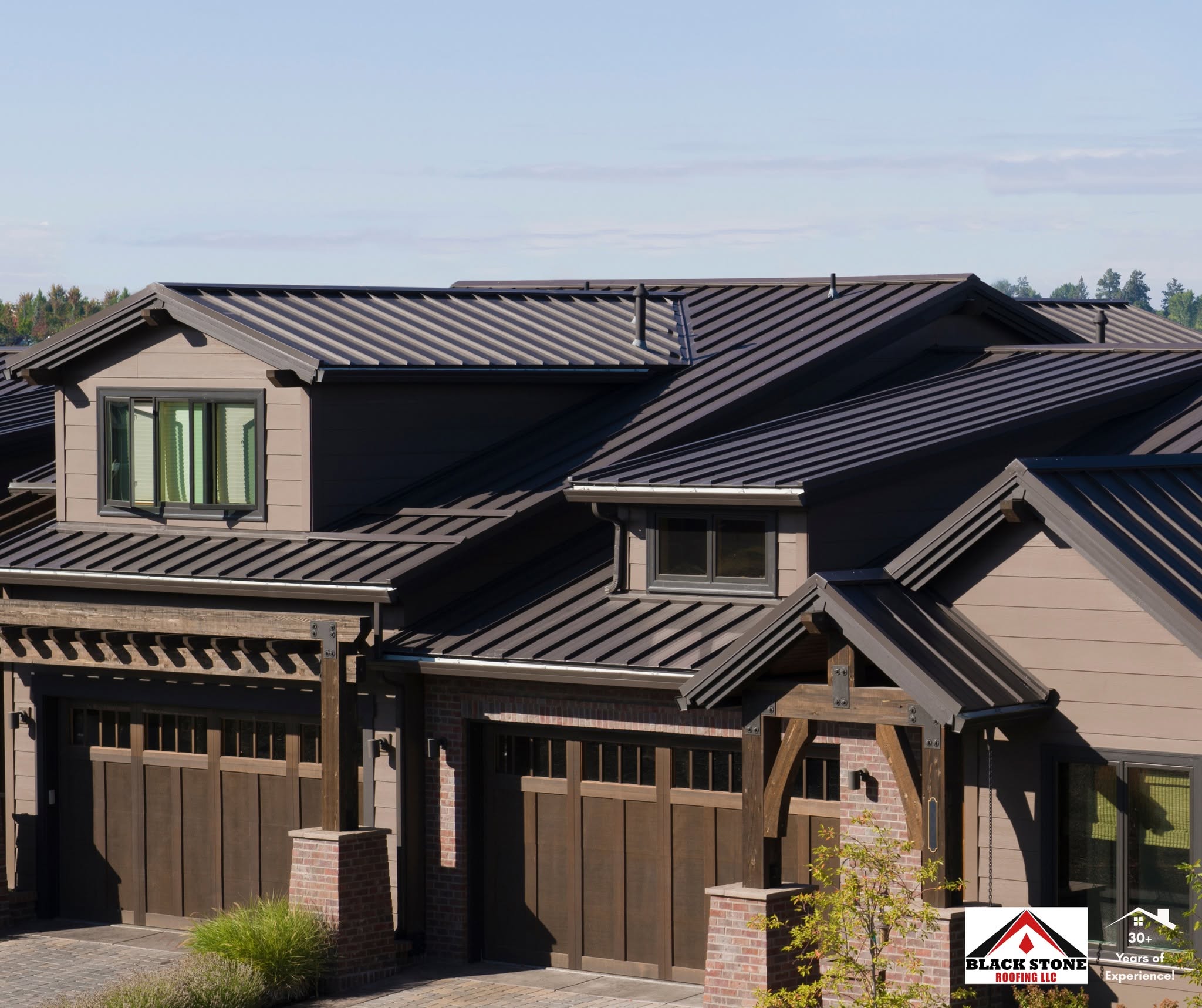
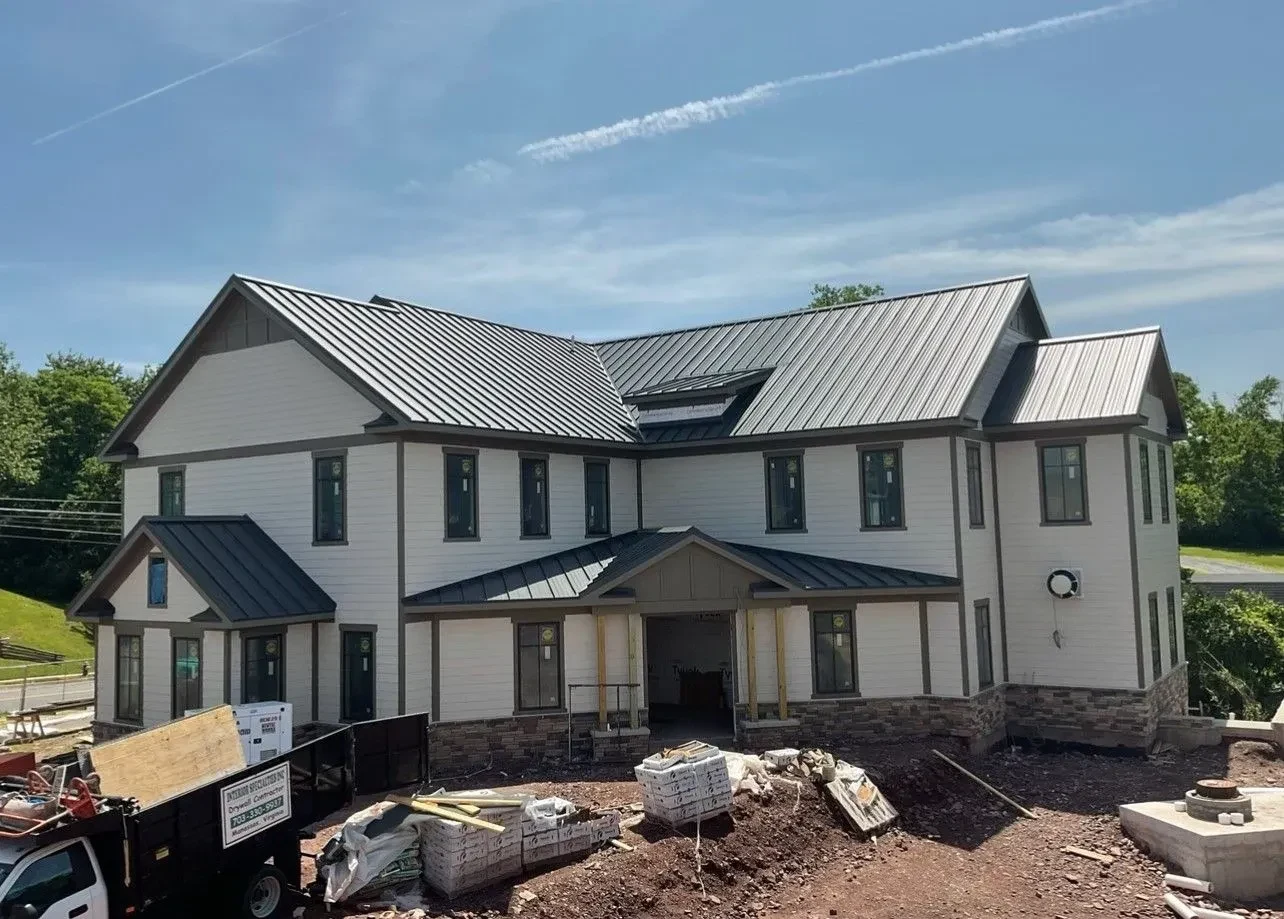
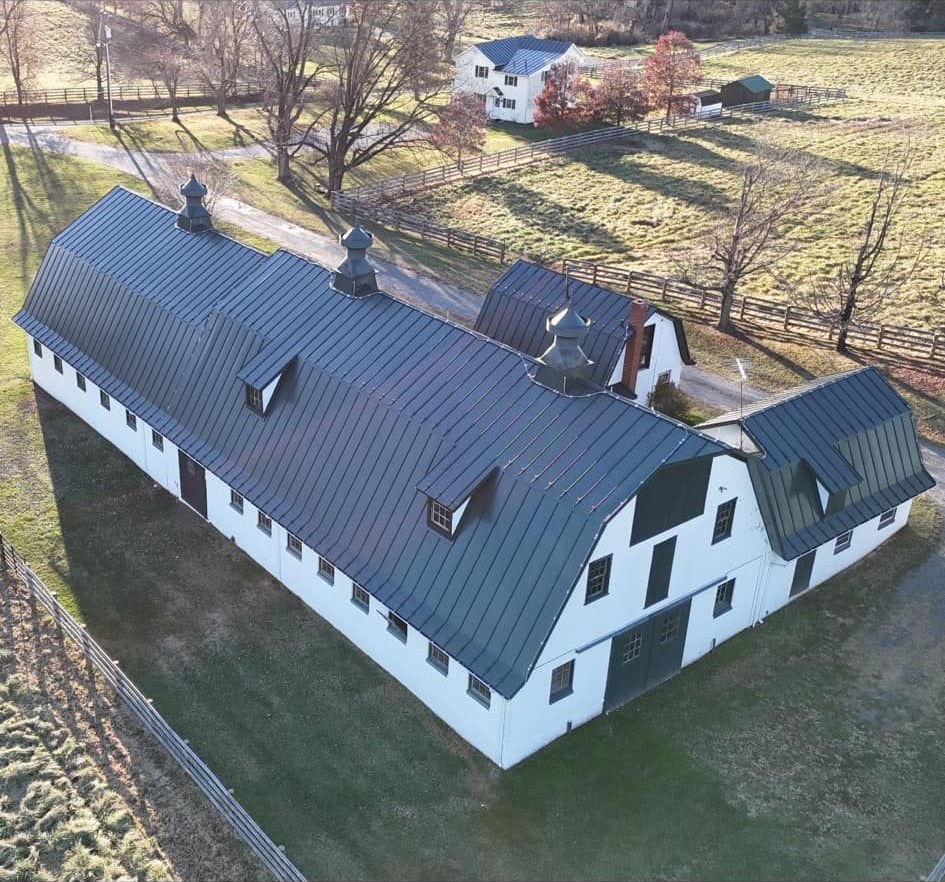
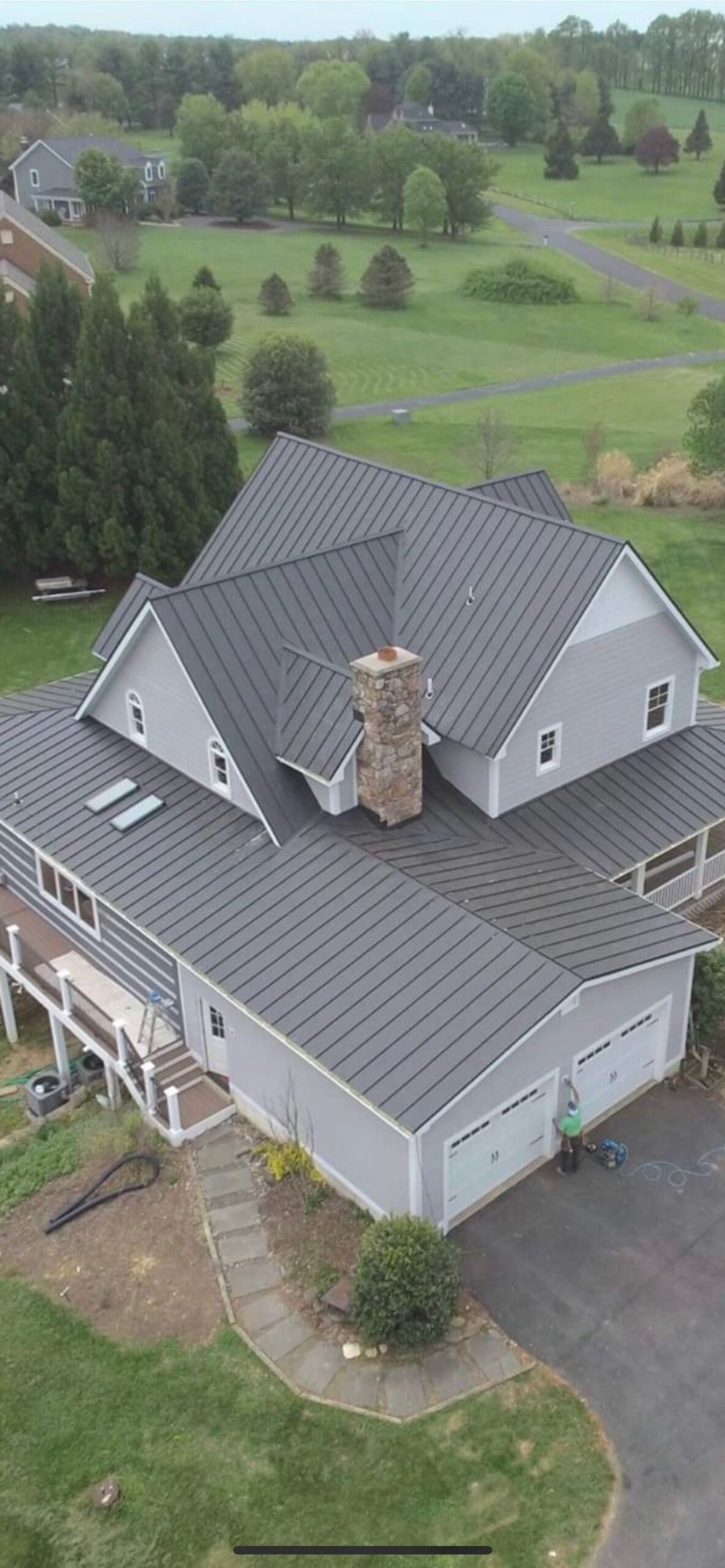
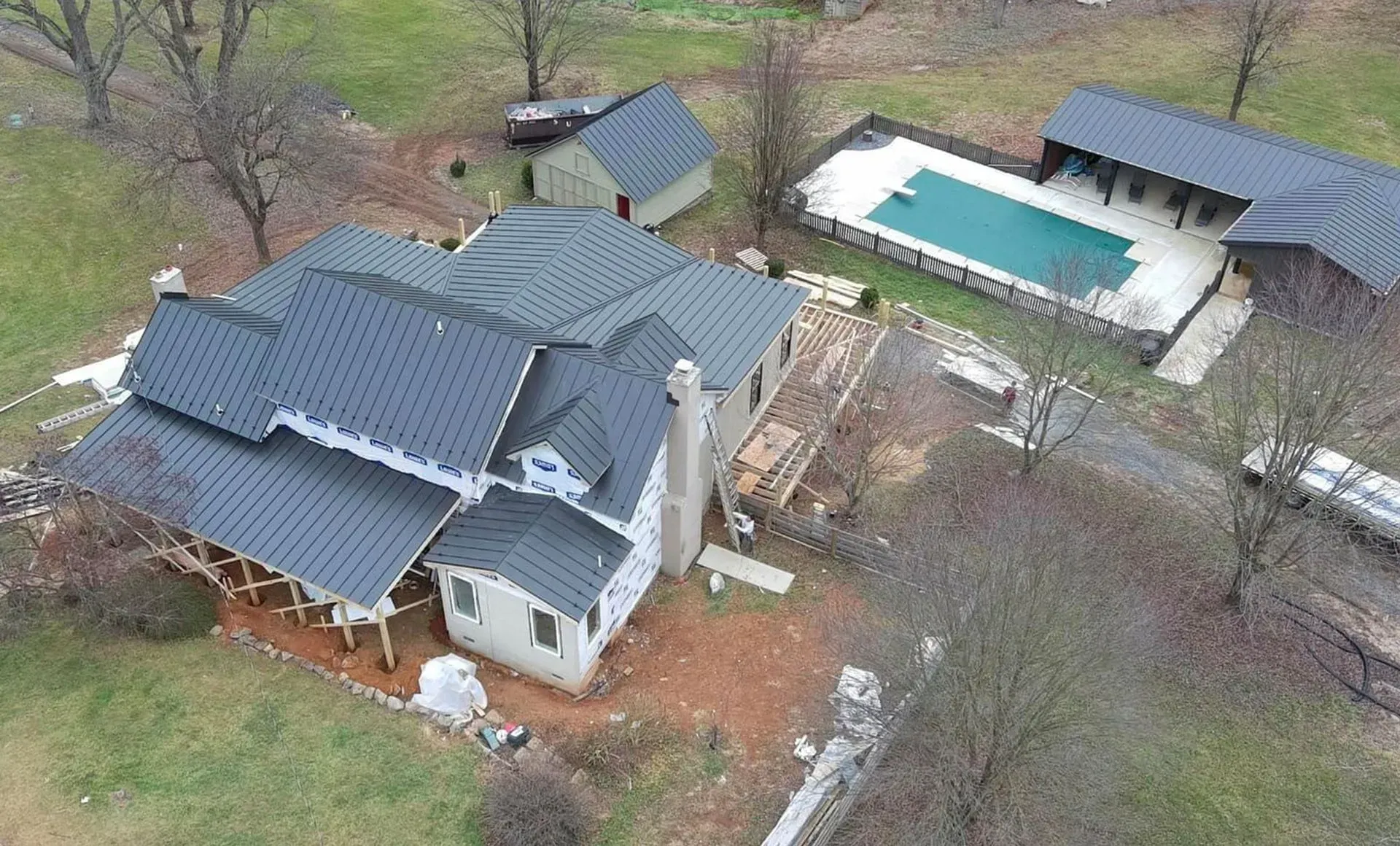

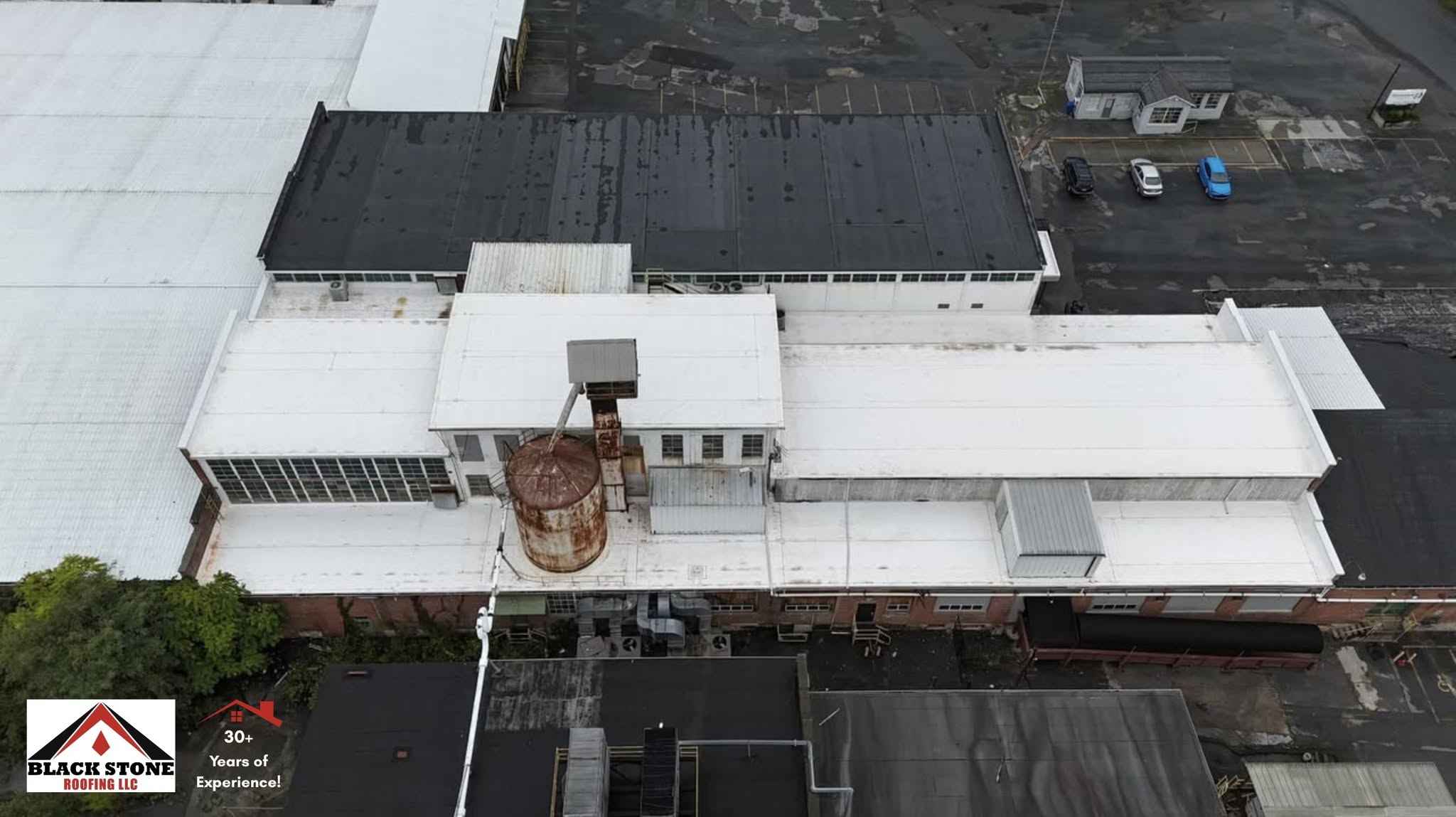
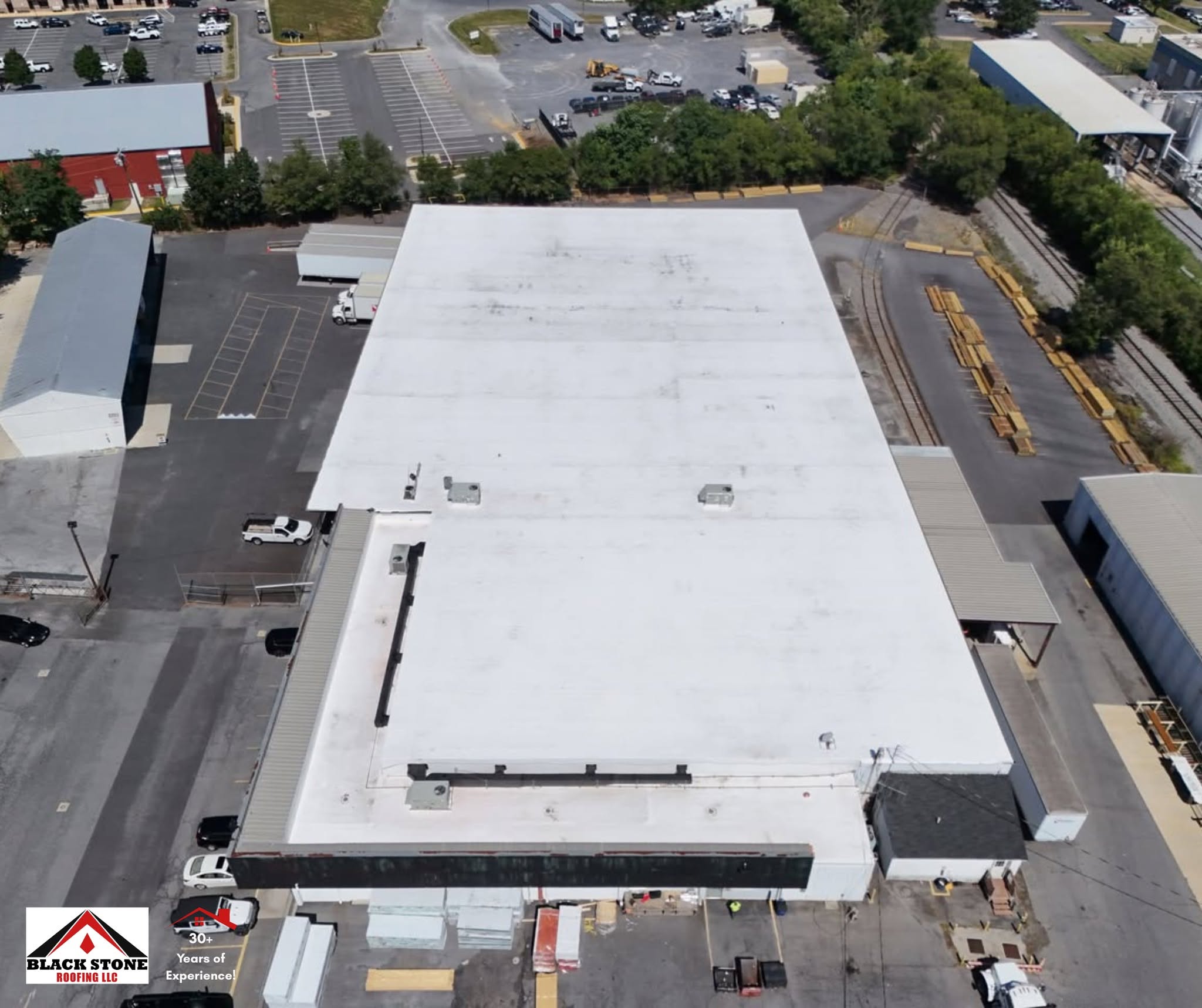
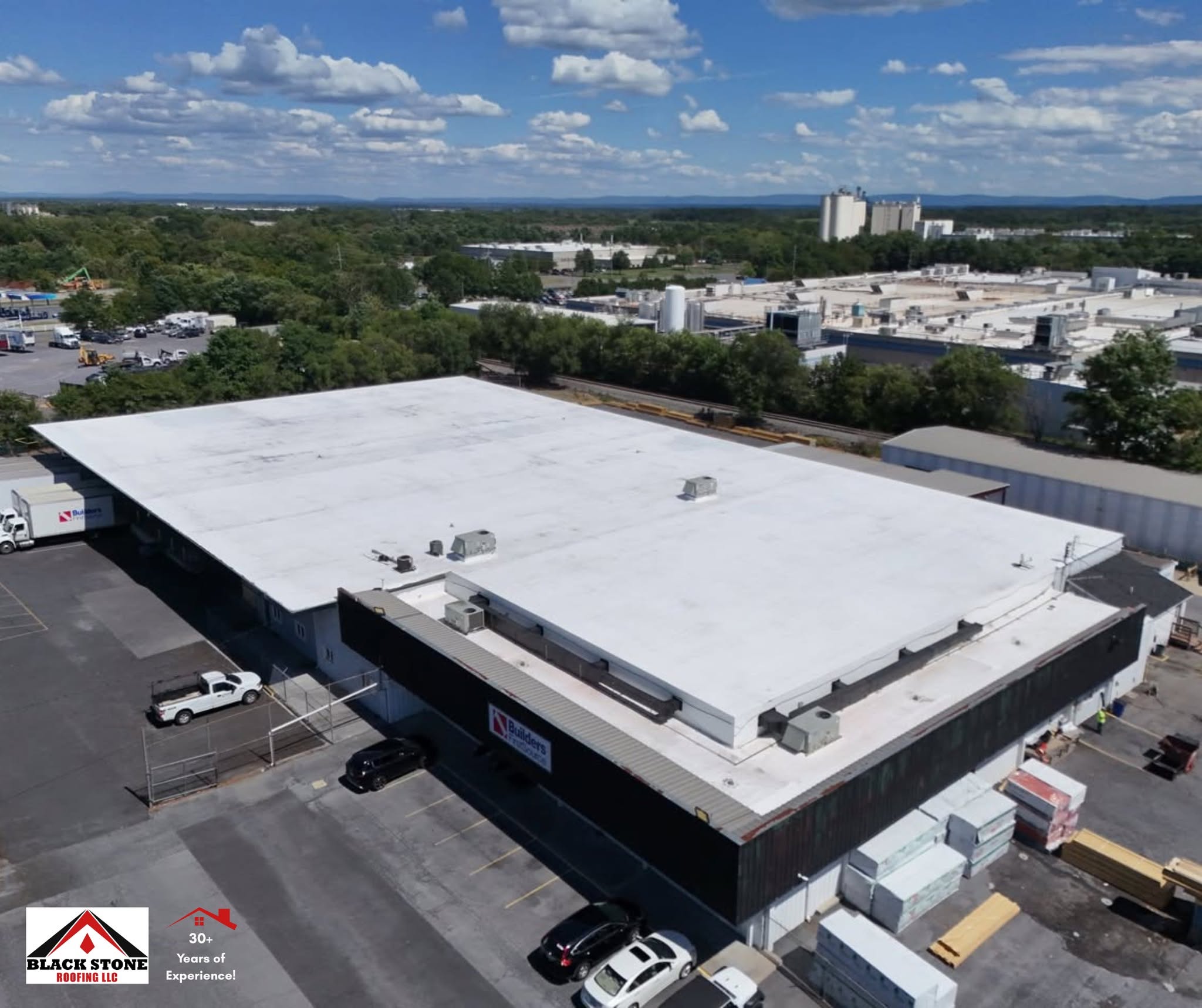
What is actually happening up there
A metal roof is a very good roof. It is also the easiest roof in this trade to sell badly, because almost everything that decides whether it lasts fifty years or leaks in eight is invisible from the driveway and missing from the quote. Here is what the symptoms usually mean.
Screw heads standing proud on an exposed fastener roof
Every screw on that system has a rubber washer under the head, and every washer is a clock. Gaskets get roughly ten to twenty years depending on exposure and slope. Once heads back out, water is tracking down the shank into the deck. Replacing every screw with oversized fasteners at year twelve to fifteen is normal maintenance. Ignore it and you are buying sheathing, not screws.
Rust streaking below the fasteners or at a cut edge
Galvalume protects a cut or a scratch only so far. Streaking tells you the coating is compromised at that point and the steel underneath is working. Caught early it is a spot repair. Left alone it perforates, and a perforated panel in the middle of a run means pulling good panels to reach the bad one.
A leak at a pipe, a chimney, or where the roof dies into a wall
Metal almost never leaks in the flat of the panel. Pull the panels off a leaking metal roof and the water is coming from the same short list nearly every time: pipe boots, curbs, headwall flashing, end laps, and hems. That is good news. It usually means a targeted repair rather than a new roof.
Panels that pop, bang, or tick on a hot afternoon
The panel is trying to move and something is stopping it. Steel expands and contracts about three quarters of an inch per hundred lineal feet per hundred degree temperature swing. If a panel was pinned solid at both ends it will eventually tear at the fastener or buckle in the field. That noise is the warning you get first.
Snow letting go in one sheet over your front door
Asphalt holds snow. Metal releases it all at once, usually on the first warm afternoon. Anything under the eave is in the path: a door, a walkway, a driveway, a deck, a heat pump, a gas meter. This is a safety item on a Berkeley County roof, not an accessory.
You are already on your second asphalt roof
Plenty of homes in the Spring Mills, Falling Waters, and Inwood subdivision belt went up around 2003 and are on covering number two. If you are finished buying a roof every twenty years, this is the conversation. Metal costs more once and then stops asking.
How a metal roof actually gets bought
Free inspection, with a pitch gauge on the roof
We get on it. Slope gets measured, not guessed, because seam profile is a slope decision. You get photos of what we found. If a rear addition or a porch sits under 3:12, you will hear that from us at the inspection instead of from a leak in year three.
A written specification, not a color and a number
Gauge, substrate, resin system, seam profile, clip type, underlayment, flashing details, and snow retention all appear on the estimate in writing. A proposal that reads twenty four gauge metal roof, color of your choice, is not a specification. Ask three bidders for substrate and resin in writing and watch what comes back.
The deck gets opened and evaluated
Panels over one sound existing layer on a purlin or hat channel system is a real assembly and it saves the tear off. It is not a way to bury a bad deck. We open the roof and look. If the sheathing comes back wet, soft, or planked with gaps too wide to hold a fastener, we tell you it needs a full tear off and replacement before the crew is booked.
Panel and trim ordered to your measurements
Panel lengths, hip and ridge trim, valley metal, and headwall receivers are ordered to the roof we measured. Long runs get an expansion joint designed in rather than discovered later. Snow retention gets laid out against the manufacturer load calculation for your pitch and panel.
Installation by our own crew
Underlayment and self adhering membrane go down first and get inspected before panel. Clips get set at the spacing the plan calls for, tighter at perimeters and corners where uplift pressure actually lives. One fixed point per panel. Flashings get hemmed and mechanically locked rather than caulked.
Final walk, cleanup, and the real paperwork
We walk the job with you, magnet the property, and hand over the manufacturer documents for the exact panel and finish that went on your house. Read the ventilation and maintenance clauses in them. If anything looks wrong later, the number that answers is the same one you called the first time.
Every layer that goes on your roof, named
The wood under everything
A wavy deck makes a wavy roof and no panel profile on earth corrects for it. We want it flat within a quarter inch in ten feet before a single panel goes down. Nearly 29 percent of the housing inside Martinsburg predates 1939, and on those homes the original board decking is the single biggest variable. Sometimes the honest answer is that it gets sheeted over first.
High temp, not the roll that goes under shingles
Panels get hot enough to soften a standard synthetic and shear it under thermal cycling. You want high temp underlayment rated to 250 degrees or better, with self adhering membrane at the eaves, the valleys, and every penetration. Substituting the cheap roll is invisible at handoff and expensive at year six.
Gauge, substrate, and resin, all three named
Twenty four gauge is the residential standing seam standard. Twenty six gauge is thinner, oil cans worse, and dents easier. The substrate is Galvalume AZ50 or AZ55, the aluminum zinc coated steel living under the color. The resin is SMP or PVDF. SMP is acceptable and it chalks and fades sooner, especially in reds and dark blues. PVDF holds color far longer and costs more up front.
A slope decision, not a taste decision
Snap lock wants 3:12 or steeper. Mechanically seamed single lock goes down to 2:12. Double lock, seamed twice with the seamer making two passes, runs to half on twelve and in some systems lower. If a bidder put snap lock on a low slope section, he quoted off a photo instead of a pitch gauge. Genuine low slope residential sections sometimes belong in membrane rather than metal at all, and we will say so.
What holds the roof down and lets it move
Standing seam hides every fastener under the seam. Clips screw to the deck and the next panel rolls over and covers them, so nothing holding the roof down ever sees weather or sunlight. Two piece clips let the pan slide, each panel gets one fixed point and only one, and past roughly seventy five to a hundred feet of continuous run the system needs a designed expansion joint. Those same clips carry wind uplift, which is why spacing tightens at the perimeter and corners.
Where every metal roof leak actually starts
Boots on metal need a retrofit pipe collar sized to both the rib profile and the pipe, because a flat collar will not conform to a raised rib and the sealant bridging that gap has a two year life. Headwalls need a real transition with a hem and a receiver rather than a caulk joint. Sealant belongs inside a compressed joint as a gasket, never as the primary waterproofing.
A life safety item on a Martinsburg roof
January here averages 32.4 degrees, so your roof crosses the freezing line most days all winter, and in January 2016 Winter Storm Jonas dropped 42 inches at Glengary in this county. On standing seam the fix is non penetrating seam clamps that grip the seam mechanically without putting one hole in the panel, with the bar over a bearing point rather than cantilevered past the wall. Then understand what you just bought: holding snow at the eave on purpose means the ice barrier, the insulation, and the attic ventilation underneath all have to be right. Ventilation math lives on the residential roofing hub.
Who you are actually hiring
A Martinsburg address, not a service area
1886 Winchester Ave, Martinsburg, WV 25405. The street name confuses people, so to be clear, that is Berkeley County. This is where we are from and where we work.
Licensed in five states
VA, WV, MD, PA, FL. Roofing is Classification 010 under the West Virginia Contractor Licensing Board, and the board will confirm any contractor’s standing if you call and ask. Ask every bidder for a number, including us.
Family owned and operated since 2016
Licensed, bonded, and insured. Sitting at 4.9 stars across 50 Google reviews from homeowners in this county.
One crew from the ridge to the ground
The roof, the gutter, the kickout flashing, the siding, and the window head flashing are one water management system. We detail all of it, which is why we solve mystery leaks a roofing only outfit hands back.
Related roofing services
Residential Roofing
The overview for homeowners still deciding between systems, plus the ventilation math and the missing intake slot problem.
Asphalt Shingle Roofing
If metal is not the answer for your house, this is the honest comparison of 3 tab, architectural laminate, and impact rated Class 4.
Roof Replacement
Full tear off and replacement when the sheathing comes back wet, soft, or planked with gaps too wide to hold a fastener.
Roof Repair
Targeted repair at the pipe boots, curbs, headwalls, end laps, and hems, which is where a metal roof actually leaks.
Roof Inspection
Pitch measured with a gauge, deck condition documented, and photos of everything we found before you buy anything.
Storm Damage Roof Repair
Wind and hail response across Berkeley County, including panel and trim damage on existing metal roofs.
Specialty Roofing
Slate repair and matching on the pre 1939 city stock, synthetic slate, cedar, tile, and residential low slope sections.
Commercial Metal Roofing
Structural standing seam on commercial spans, retrofit framing over failing metal, and aging industrial and agricultural roofs.
Solar Panel Installation
Solar and roof sequencing, because mounting an array on the wrong roof means paying twice.
Exterior Services
Gutter, kickout flashing, siding, and window head flashing detailed as one water management system with the roof.
Where we install metal roofs
Do not see your town? We work the whole corridor, so ask or call (540) 550-9703.
Metal roofing questions we get asked in Martinsburg
-
Is a metal roof loud when it rains?
Over solid decking, with underlayment and an insulated attic underneath, a metal roof is not meaningfully louder than asphalt. Most people who tell you metal is loud are remembering a barn or a carport, where panels are screwed to open purlins with nothing but air behind them. That is a genuinely loud roof. It is also a completely different assembly from what goes on your house.
-
How long will a metal roof last on my house?
It depends almost entirely on which system you buy. A 24 gauge Galvalume standing seam with a PVDF finish, installed on floating clips with one fixed point per panel, is a multi decade assembly, and the finish usually shows its age before the metal does. An exposed fastener panel is limited by its gaskets, which is why replacing every screw around year twelve to fifteen is planned maintenance rather than a surprise. We do not publish warranty lengths here because the real document comes from the manufacturer and the terms differ by product. Ask us for the actual paperwork before you sign, and read the ventilation and maintenance clauses in it.
-
Will hail dent a metal roof in Berkeley County?
Berkeley County recorded 27 hail events between 2015 and 2025, every one of them three quarters of an inch or larger, with one inch the most common size and one and a half inches the verified county maximum. At those sizes, hail on a 24 gauge steel panel is a cosmetic denting question rather than a perforation question. Heavier gauge and a striated or ribbed pan hide dimpling far better than a smooth flat pan, and aluminum dents more easily than steel. Ask to see a sample panel in direct sunlight before you pick a profile.
-
Is oil canning covered under the warranty?
No, and no roofer can get it covered for you. Oil canning is inherent to formed metal and it is excluded from virtually every manufacturer warranty in the category. It is a cosmetic condition and it does not affect performance. What it responds to is striations rolled into the pan, narrower panel widths, heavier gauge, and a deck flattened to within a quarter inch in ten feet before installation. We would rather have this conversation at the estimate than after the panels are up.
-
Do I need snow guards on a metal roof here?
If anything sits under the eave that you care about, yes. Metal sheds an entire snow load in one release rather than melting it off gradually, and Winter Storm Jonas put 42 inches on Glengary in this county in January 2016. Doors, walkways, driveways, decks, heat pumps, and gas meters all need protection. On standing seam we use non penetrating seam clamps that grip the seam without any holes in the panel, with the bar located over a bearing point instead of cantilevered past the wall, and we run the manufacturer load calculation for your pitch and panel before anything gets installed.
-
Where is your office, and are you really in Martinsburg?
Yes. We are at 1886 Winchester Ave, Martinsburg, WV 25405. The street name throws people off, so to be clear, that is a Martinsburg address in Berkeley County. This is the market we live in and work every day, not a market we drive to when the weather turns. What also matters is the license. West Virginia requires a state contractor license for work above the statutory threshold, requires the number to appear in the advertising, and requires it posted at the job site. Ask every bidder for theirs, including us.
-
Can I put metal over my existing shingles?
Sometimes, and it is a legitimate assembly rather than a shortcut. Panels over one existing layer, on a purlin or hat channel system with proper venting behind them, saves the tear off. It works when the deck is sound, the framing carries the added load, there is one layer down and not two, and the shingle surface will not telegraph through the pan. It is not a way to bury a bad deck. We open the roof and look first, and if the sheathing comes back wet, soft, or planked with gaps too wide to hold a fastener, we will tell you it needs a full tear off before the crew is booked.
-
Can I cancel a contract if my insurance claim gets denied?
West Virginia law gives you a five business day right to cancel after your insurer notifies you that all or part of a claim is not covered. That protection exists because storm chasers get signatures before anybody knows what the carrier will pay. We would rather write you a scope you would buy with or without an insurance check, and we will walk you through the claim either way.
Get a metal roof estimate that names the spec
Gauge, substrate, resin system, seam profile, clip layout, underlayment, and snow retention, all in writing before you decide. Somebody answers the phone, including at 2 a.m.