Home/Commercial Roofing/Commercial Metal Roofing
BERKELEY COUNTY AND THE I-81 CORRIDORCommercial Metal Roofingin Martinsburg, WV
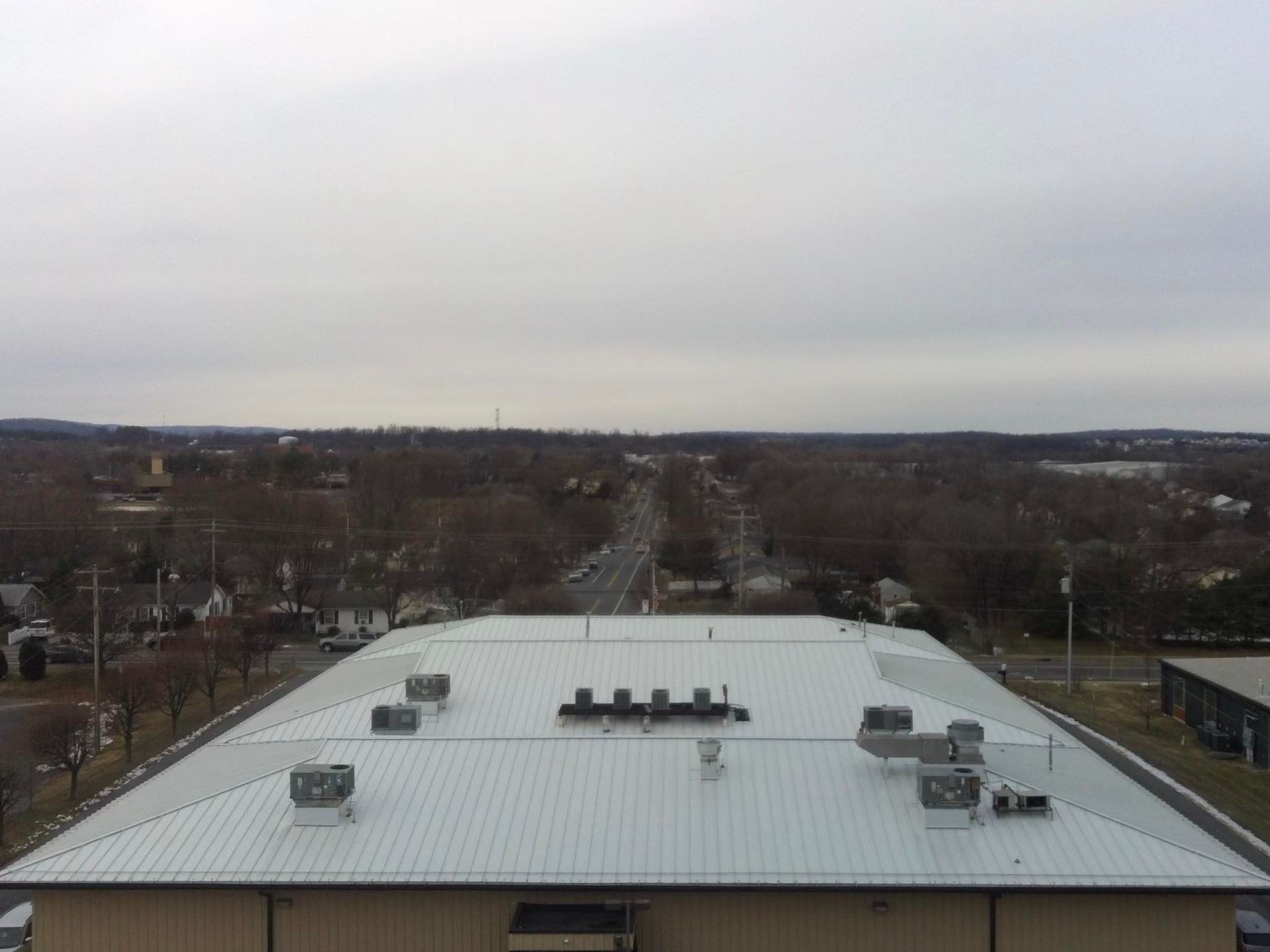
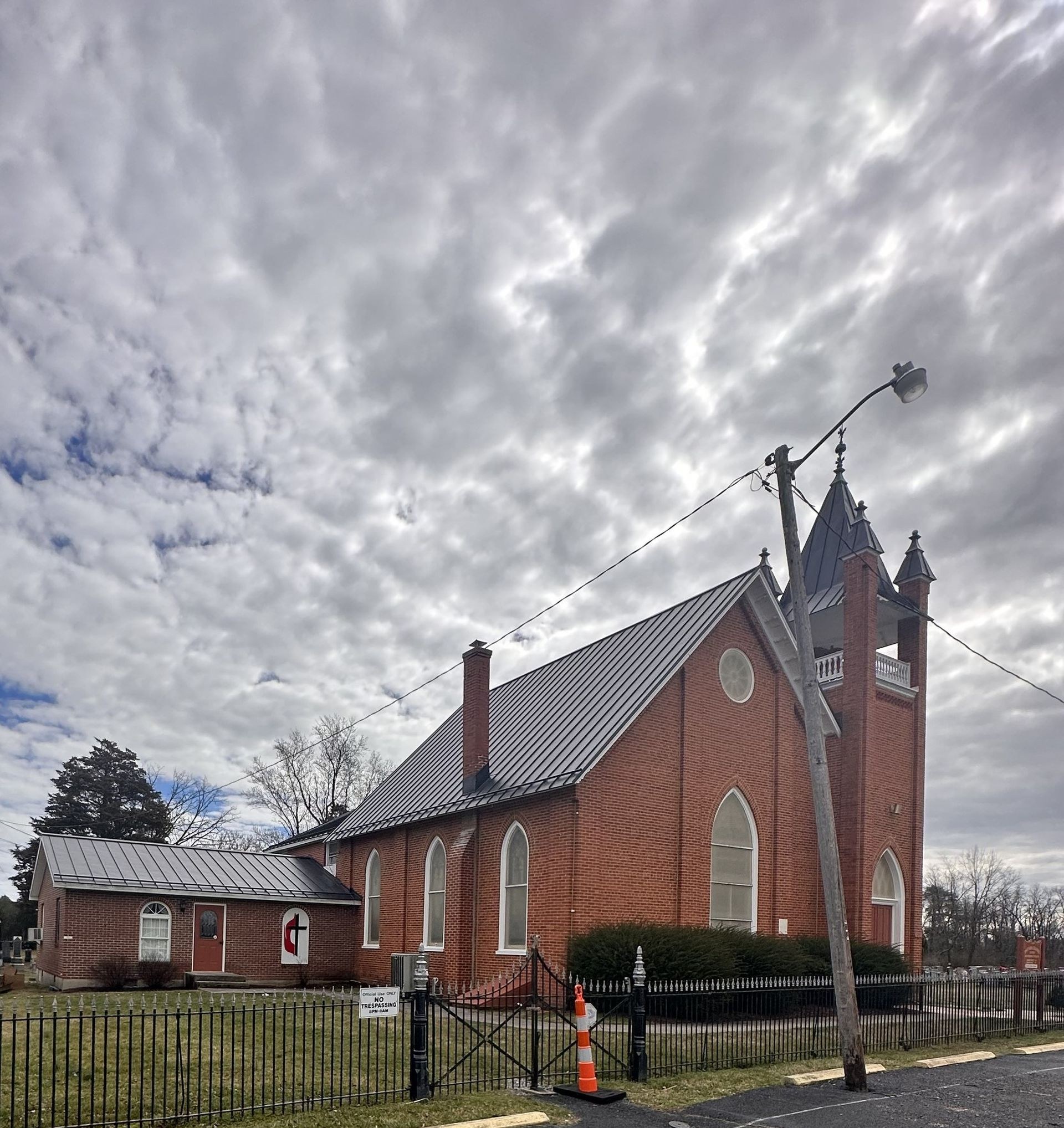
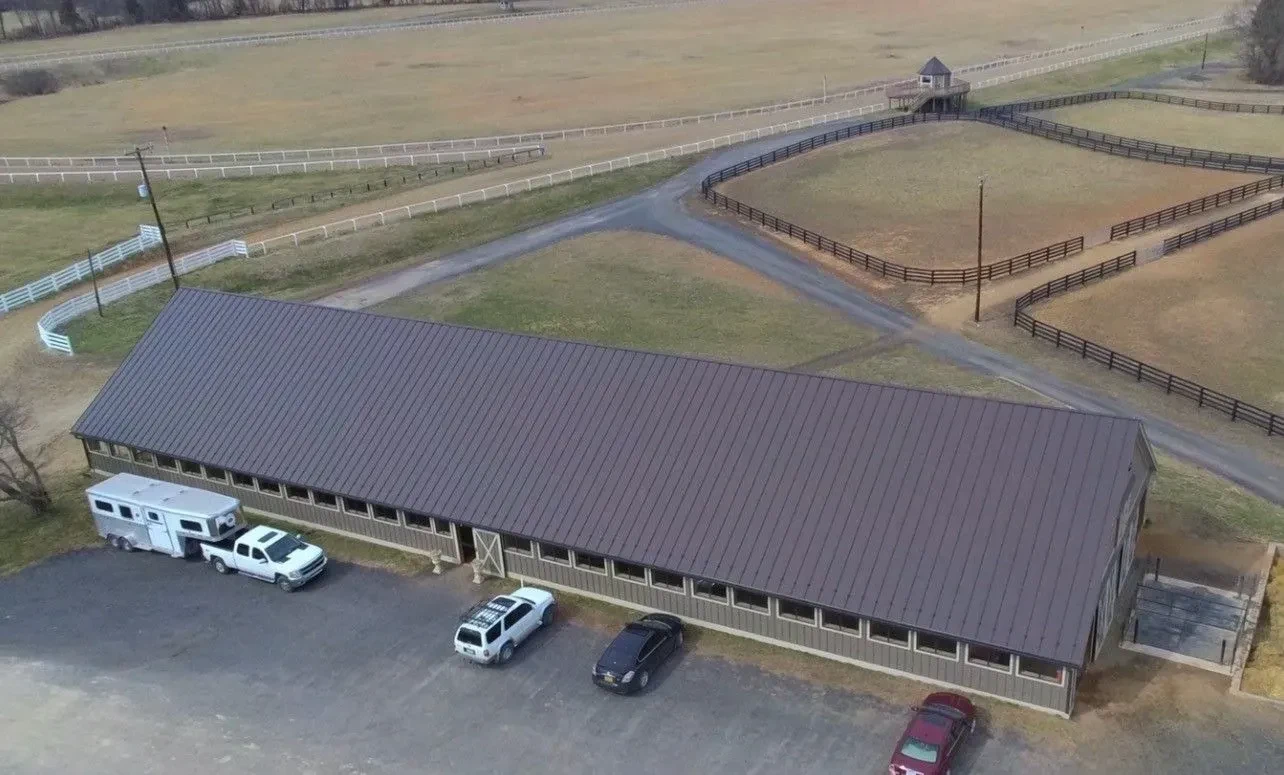
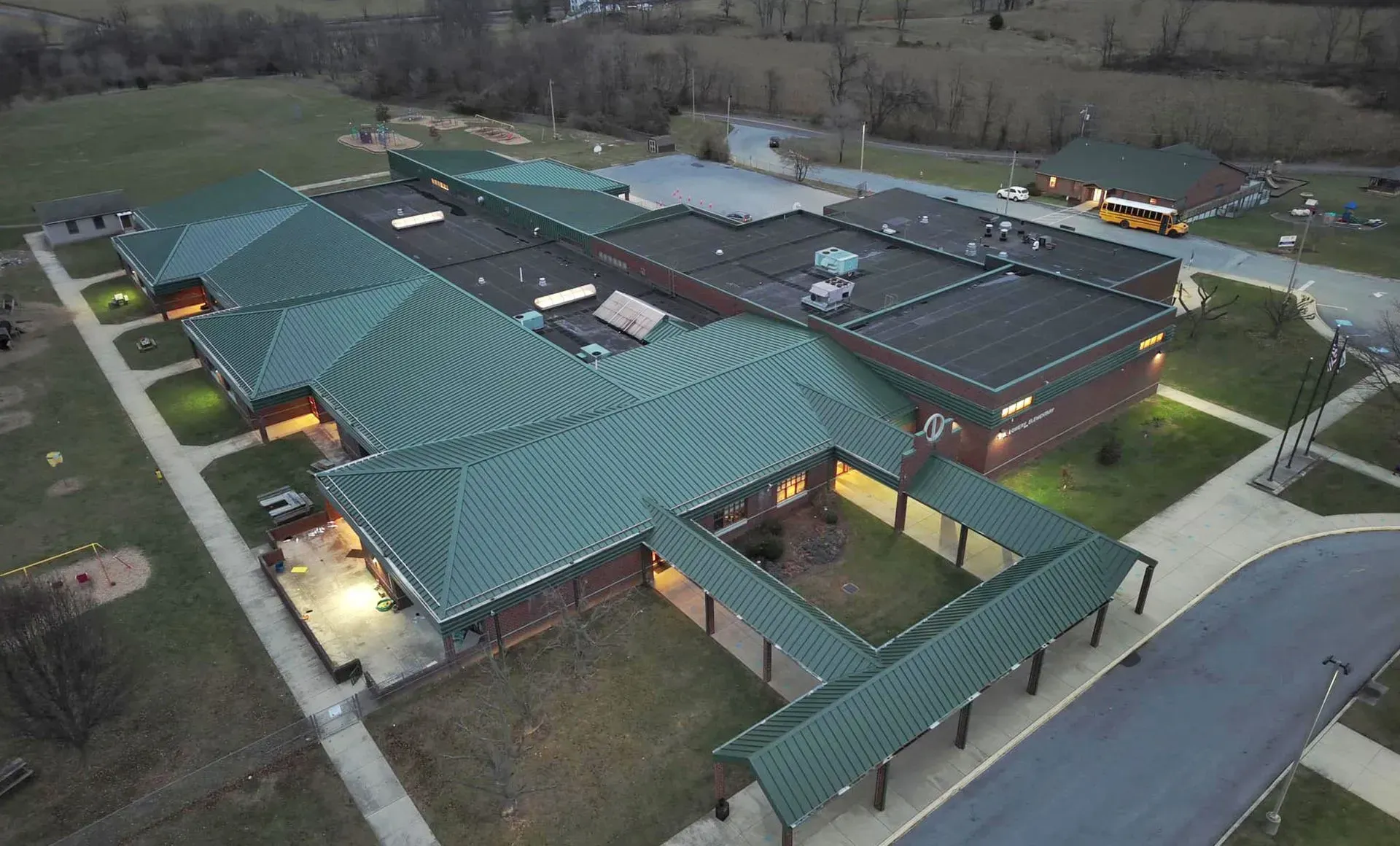
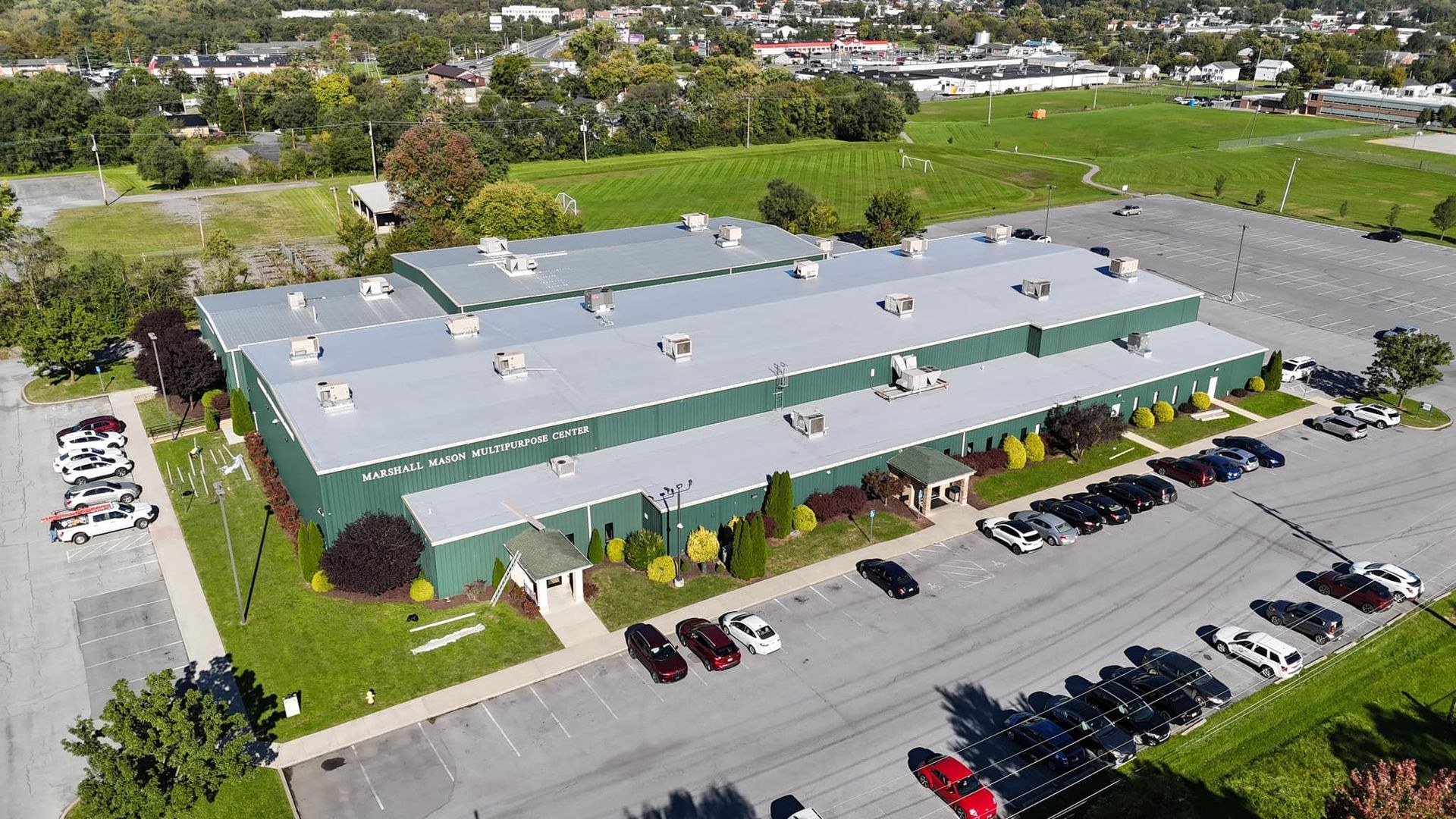
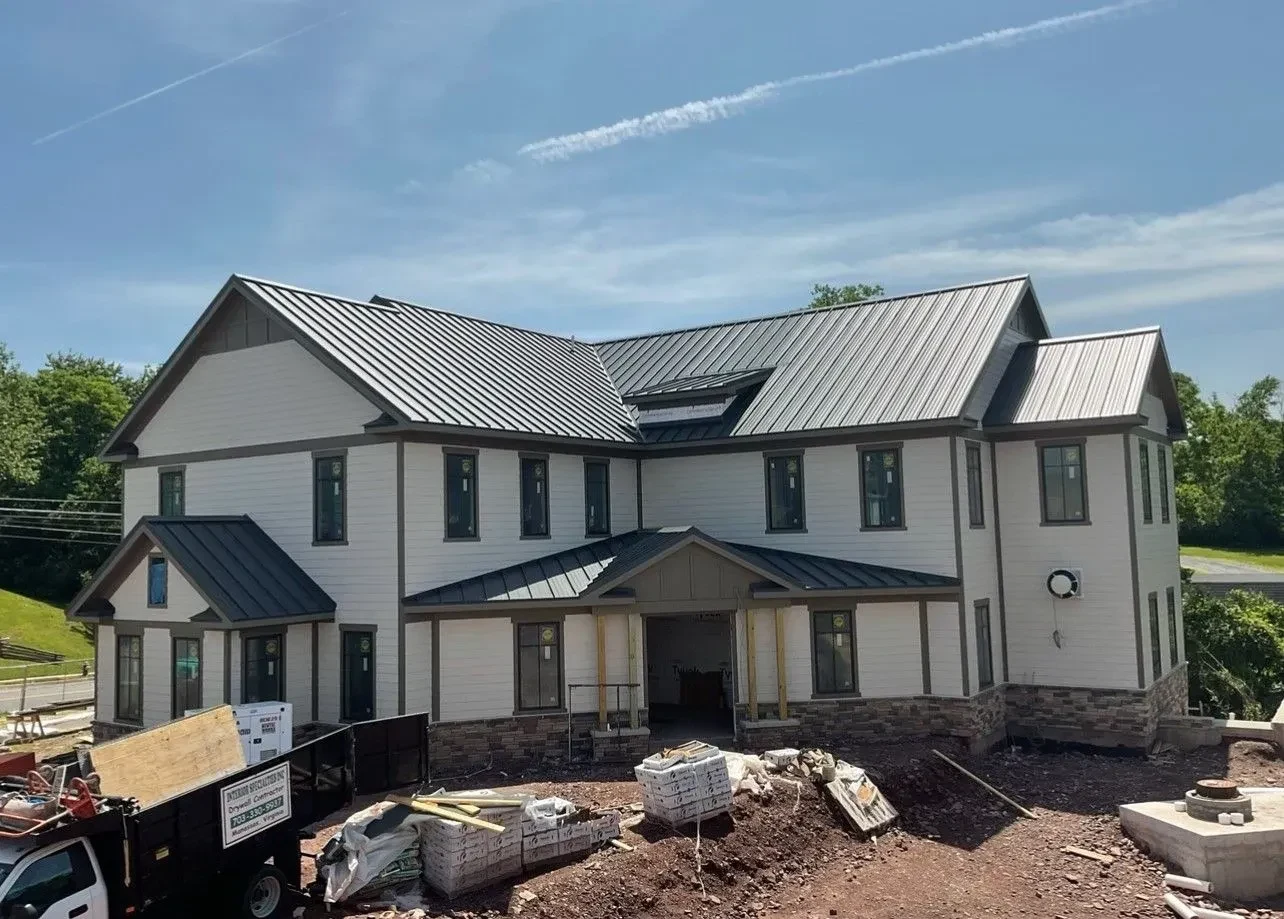
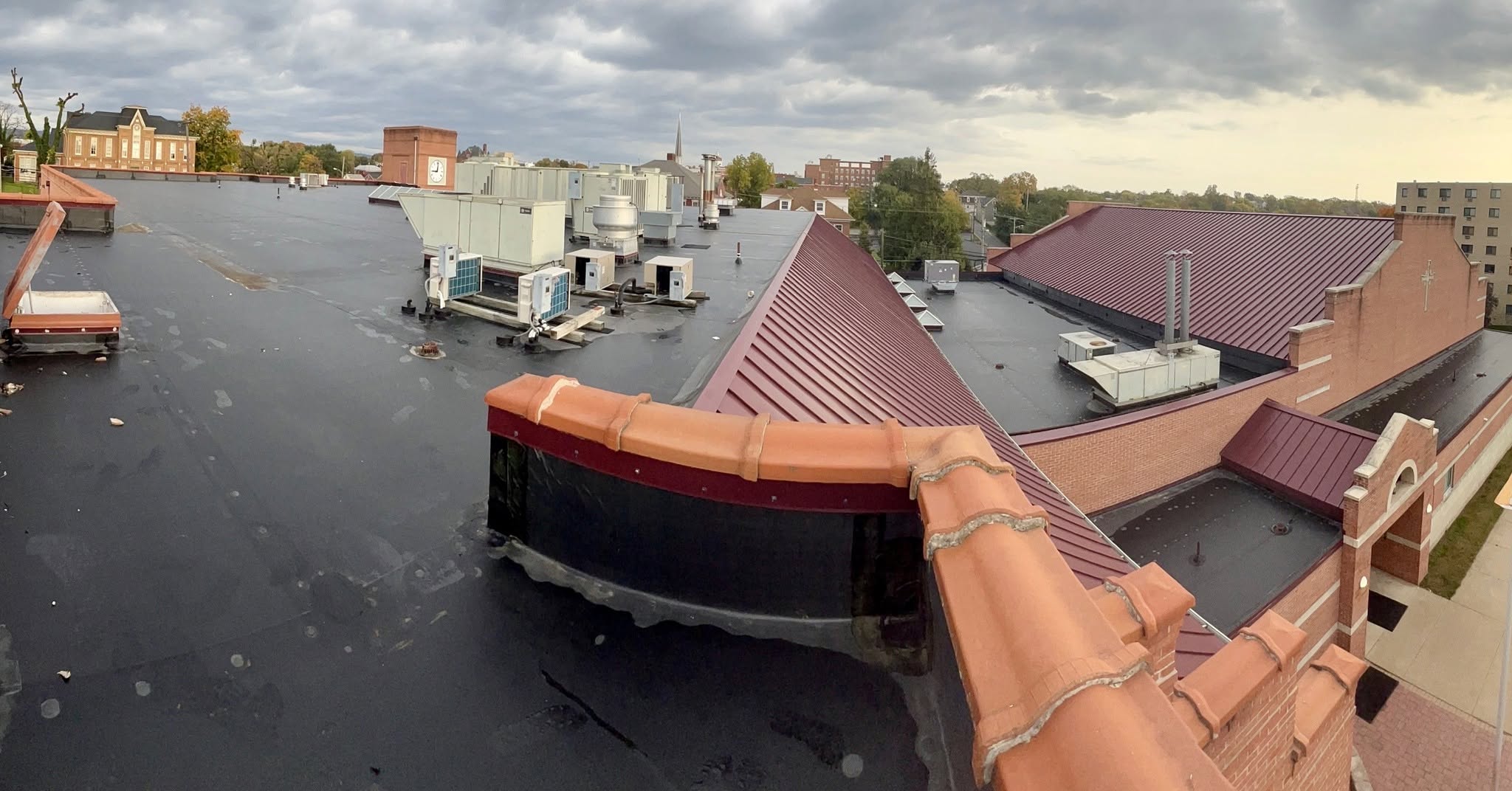
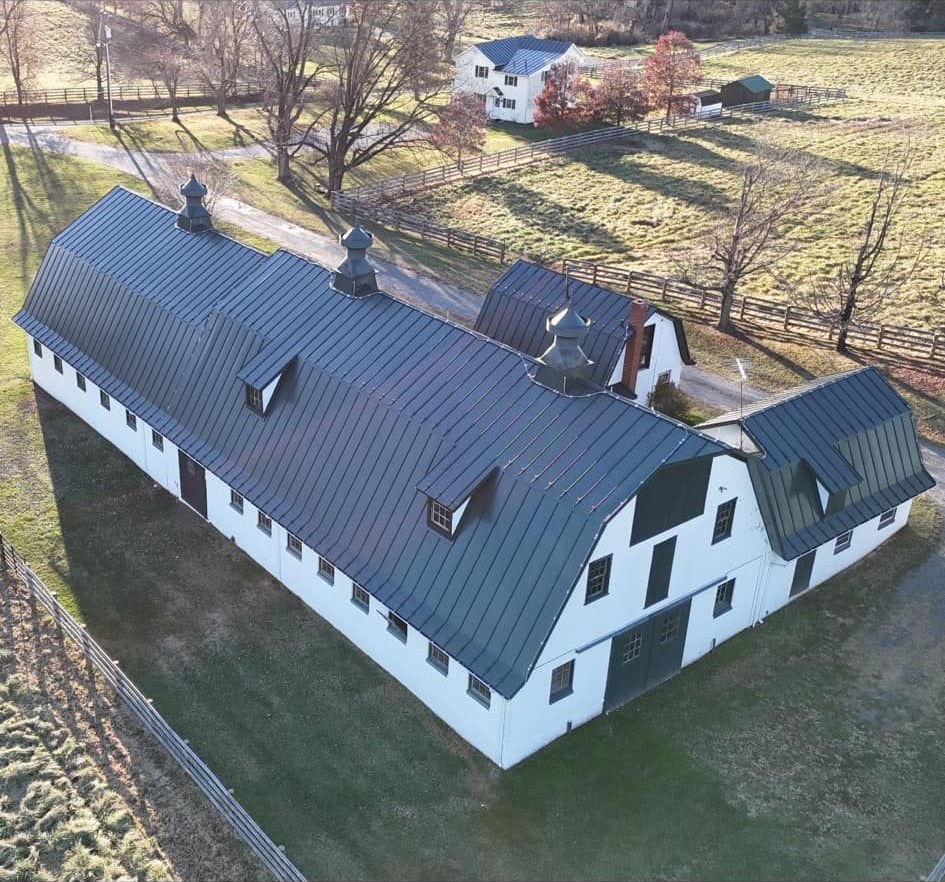
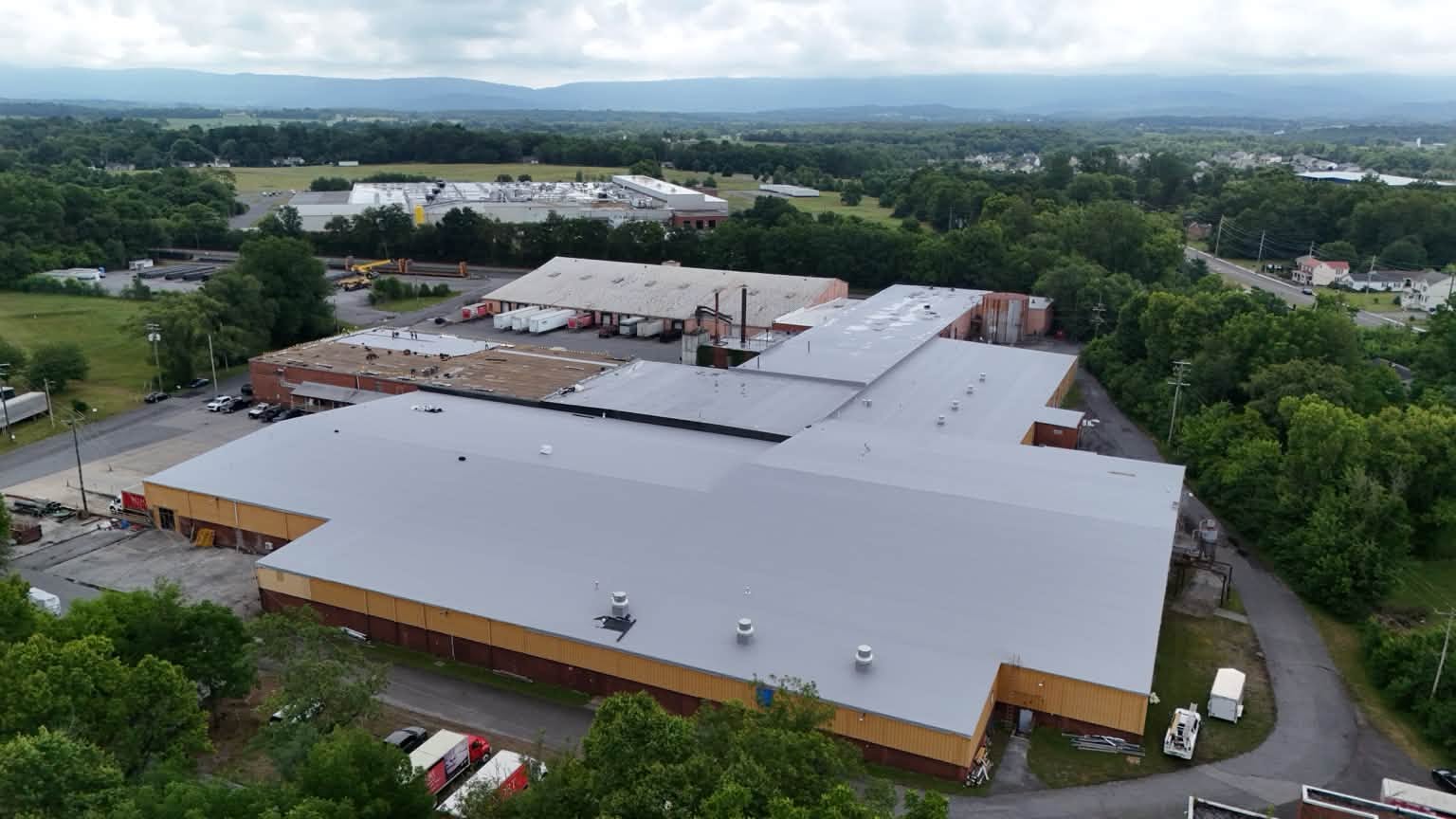
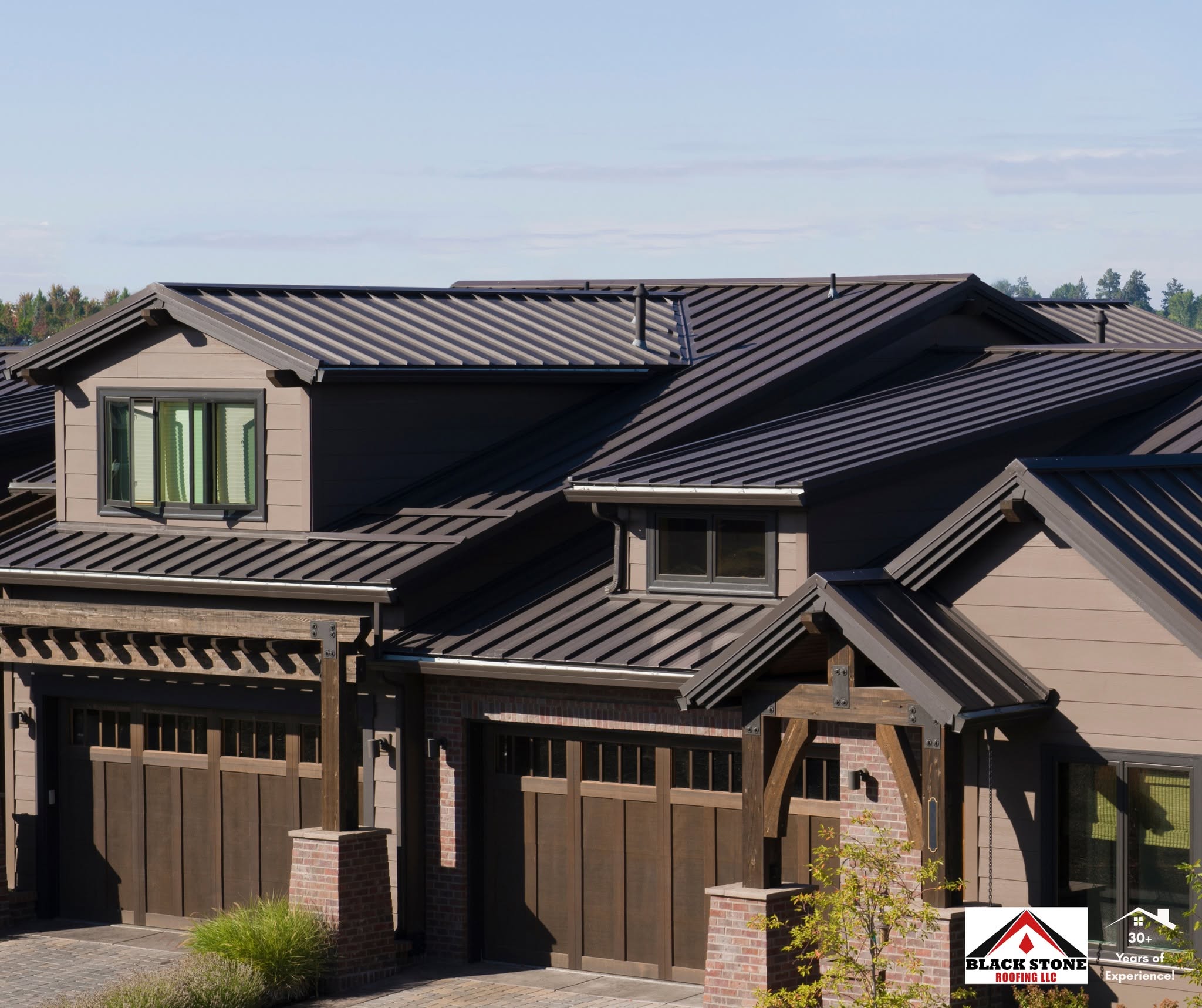
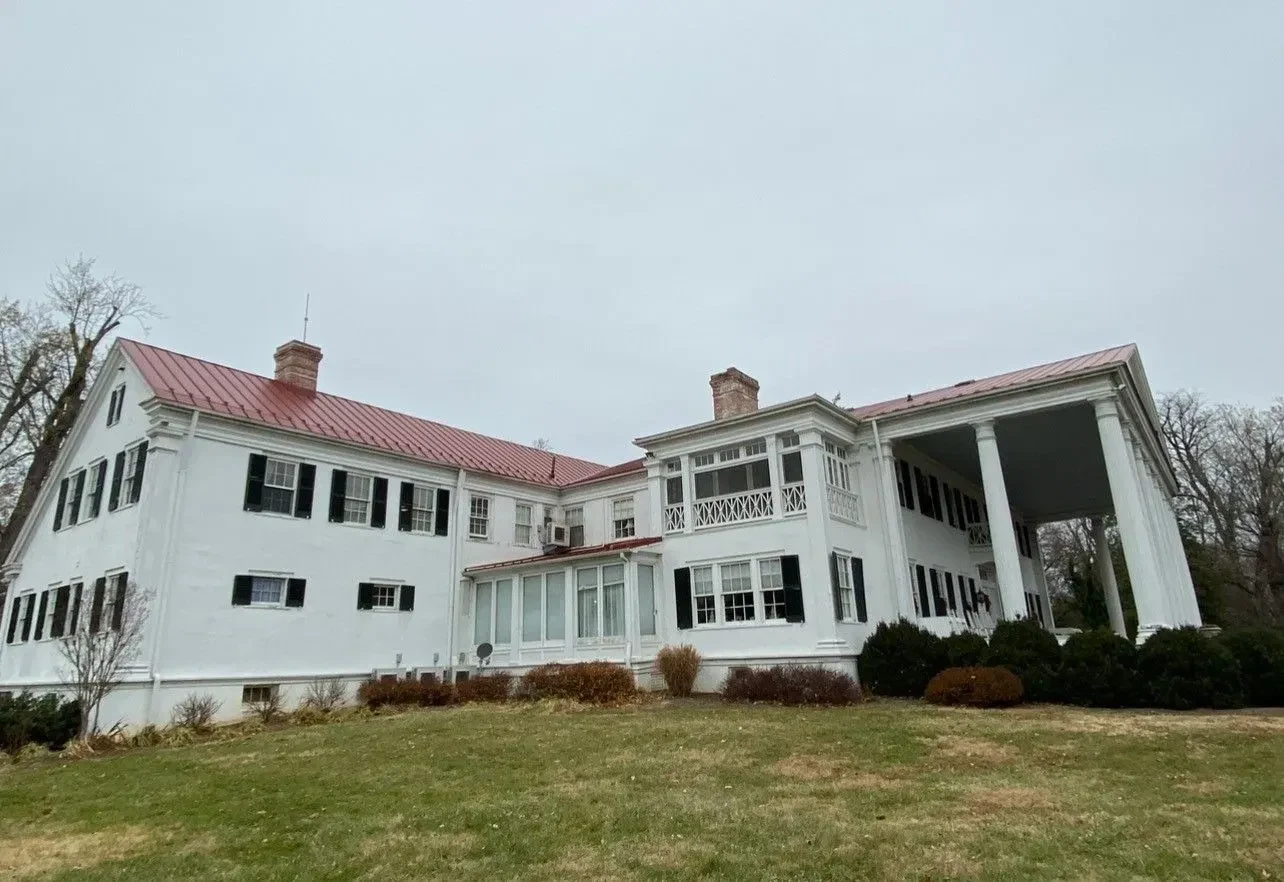
Structural standing seam, exposed fastener panel, and retrofit framing over failing metal. Warehouses, shops, churches, agricultural buildings, and light industrial across Berkeley County. We are at 1886 Winchester Ave in Martinsburg, so the trucks start in the same county your building sits in.
Leaking right now
Emergency response
We answer 24 hours. Tarped and stabilized before more gets inside.
Planning ahead
Free inspection
Written scope and photos so you know what the roof actually needs.
Request your free estimate
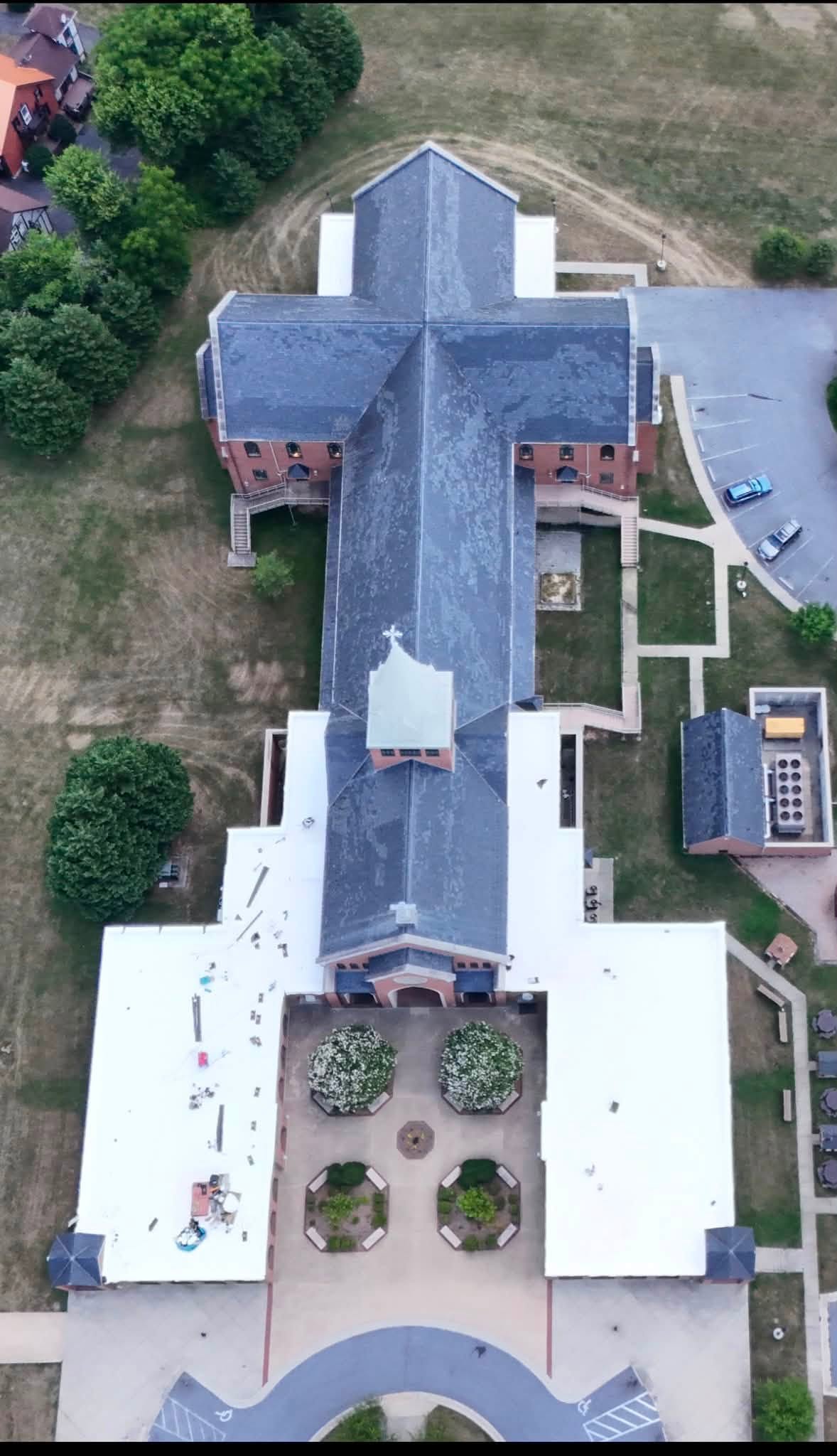
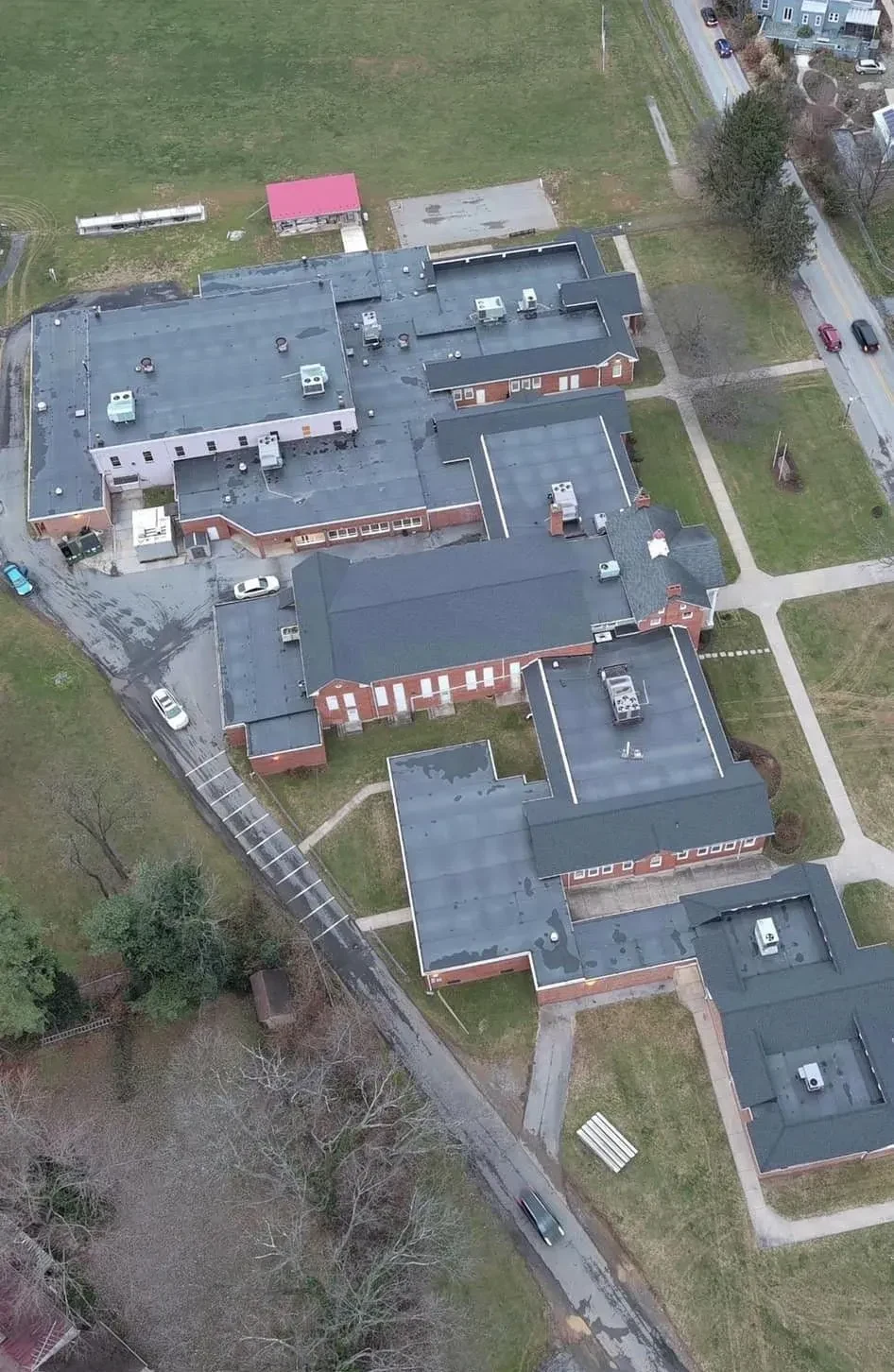
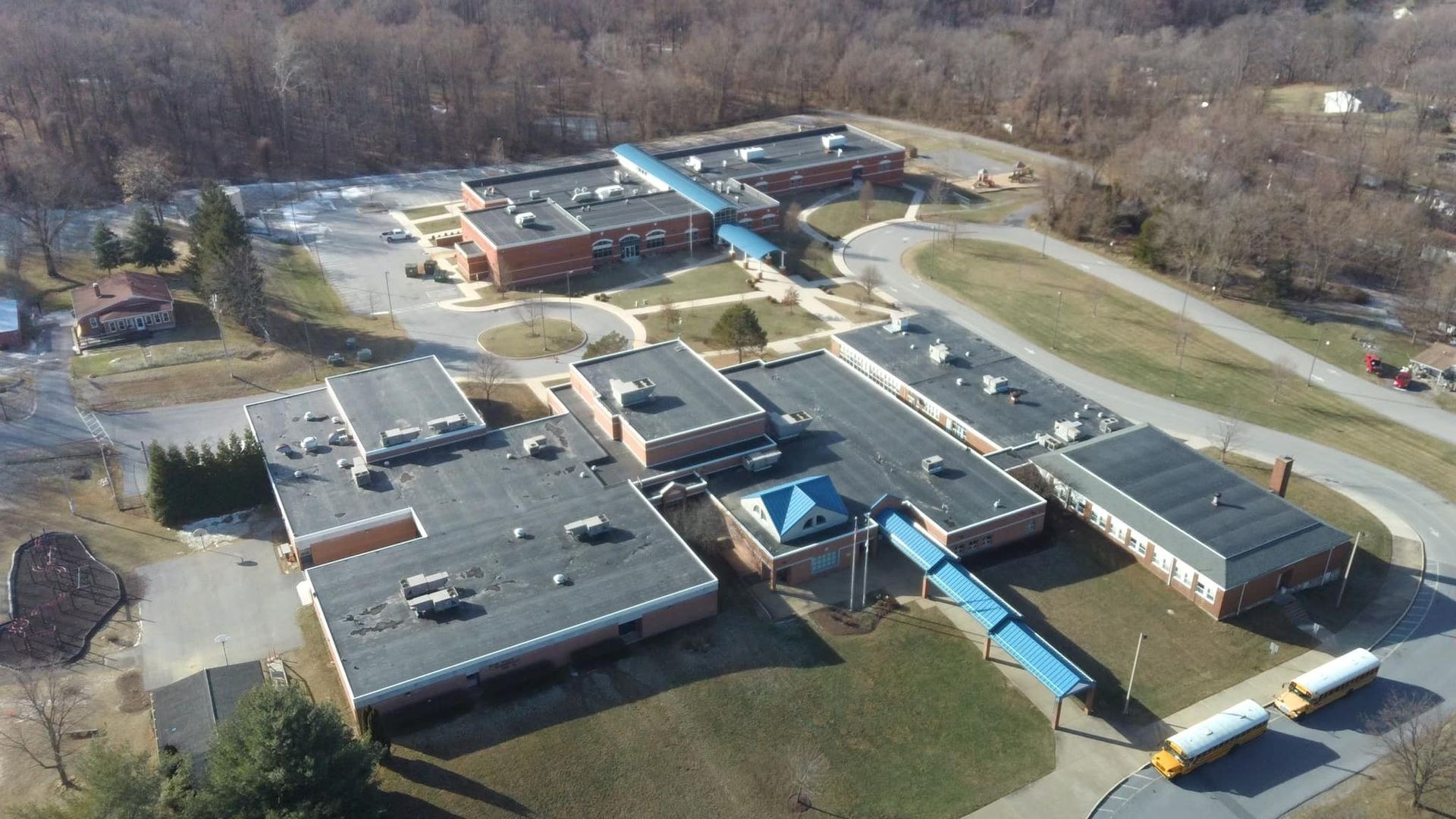
Commercial metal work in and around Martinsburg
What is actually happening up there
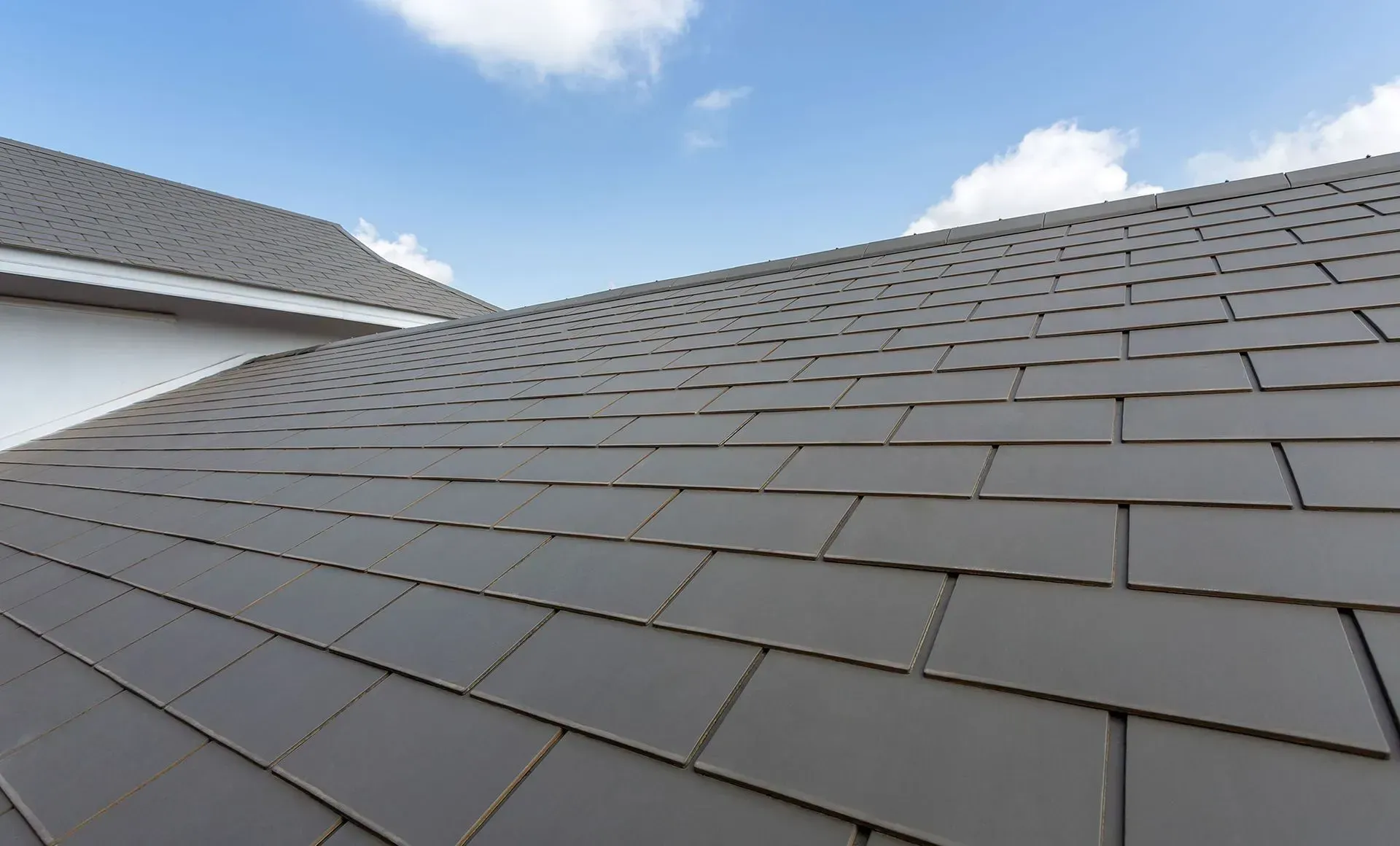
Drive the Tabler Station corridor and count the metal. Then drive out toward Gerrardstown and count it again. Those roofs have almost nothing in common except the word. One is long structural spans with rooftop equipment and inventory underneath. The other is exposed fastener panel that went on decades ago and has never had a screw touched since. Here is how each one tells you it is in trouble.
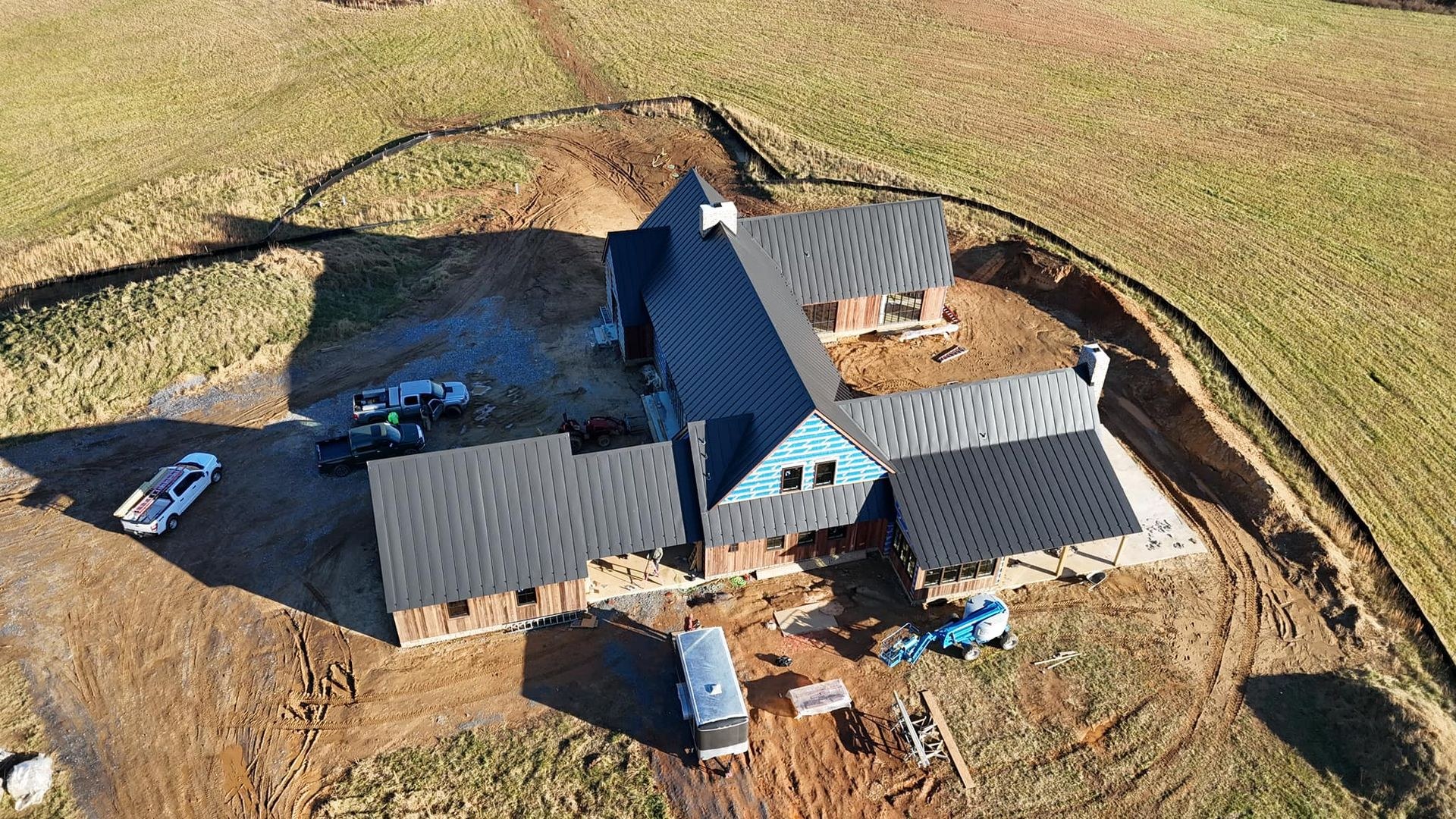
Weeping at the screw heads
On exposed fastener panel the washer is the seal, and washers wear out long before the steel does. Ignored, the water tracks the fastener shank into the framing and the hole elongates until that same screw will never seal again.
A stain that never lines up with the leak
Water enters at a curb or a lap, runs the underside of the panel, and drops somewhere else entirely. Chasing the stain instead of isolating the entry point is how a building gets sealed four times and still leaks.
A hard band of distortion across the run
That is thermal movement with nowhere to go, and it usually shows by the second or third summer. It means clips, fixed points, or an expansion joint were skipped. A tube of sealant does not touch it, and every season widens the fastener holes.
End laps darkening on a long panel run
End laps are the real leak population on long runs. When the butyl is gone, or the lap landed floating in the span instead of over a purlin, the joint breathes and pulls water back uphill on a hard rain.
Rust breaking through at the laps and eave
Once the steel has lost section, a re-screw is money spent on a roof that is finished. This is the finding that moves the job from service work to a retrofit or a tear off, and it deserves core cuts rather than a guess from the ground.
Snow releasing all at once over a door
A standing seam panel is a slide plane, and the load lets go over loading dock doors, man doors, the walkway from the parking lot, gas meters, and parked trailers. That is a life safety item and a liability item, not an accessory.
How a commercial metal roof runs from the first call to the last walk

Phone call and building triage
We ask what the building does, what is stored under the roof, and whether anything is coming in right now. If it is active we get out and stabilize it before anyone talks about a system.
Roof walk with core cuts
We pull fasteners, check the laps and the curbs, look at purlin condition, and open the cavity where we need to know whether the insulation is wet. You get the photos either way, including the ones that cost us the sale.
Written scope that names the specs
Panel system, gauge, substrate, resin, seam profile, clip type, and snow retention layout, in writing. A proposal that names none of those is not a proposal. It is a number.
Scheduling around your operation
Dock doors, inventory that cannot move, rooftop equipment shutdowns, and after hours work get planned before the crew shows up, not the morning of.
Installation by the crew that quoted it
One fixed point per panel and only one, clearance built in at the ridge and every headwall, an expansion joint where the run length calls for one, and details flashed rather than caulked.
Final walk and a maintenance schedule
We walk the finished roof with you, hand over the documentation, and set the fastener and sealant checks on a calendar under a preventative roof maintenance program.
The layers that belong on your quote
Structural standing seam or exposed fastener
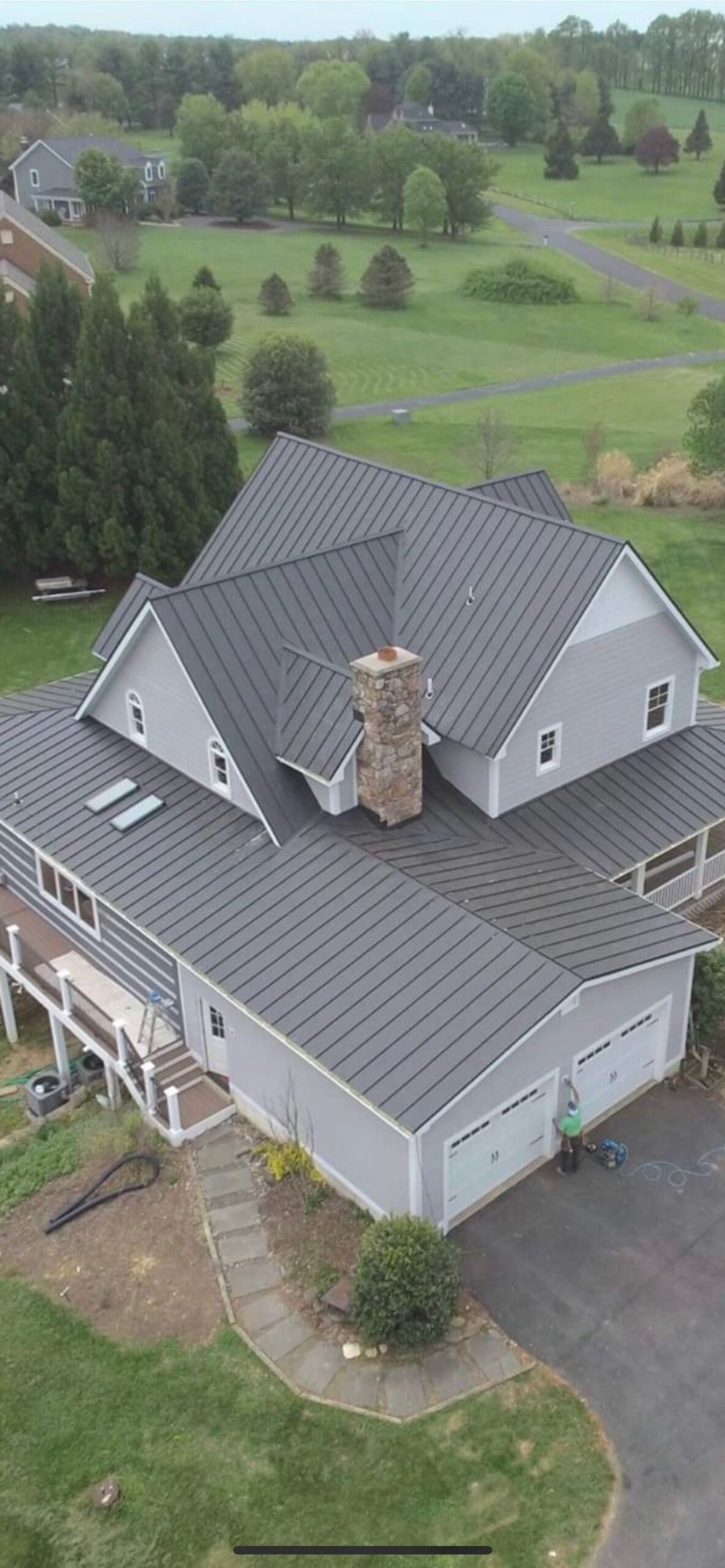
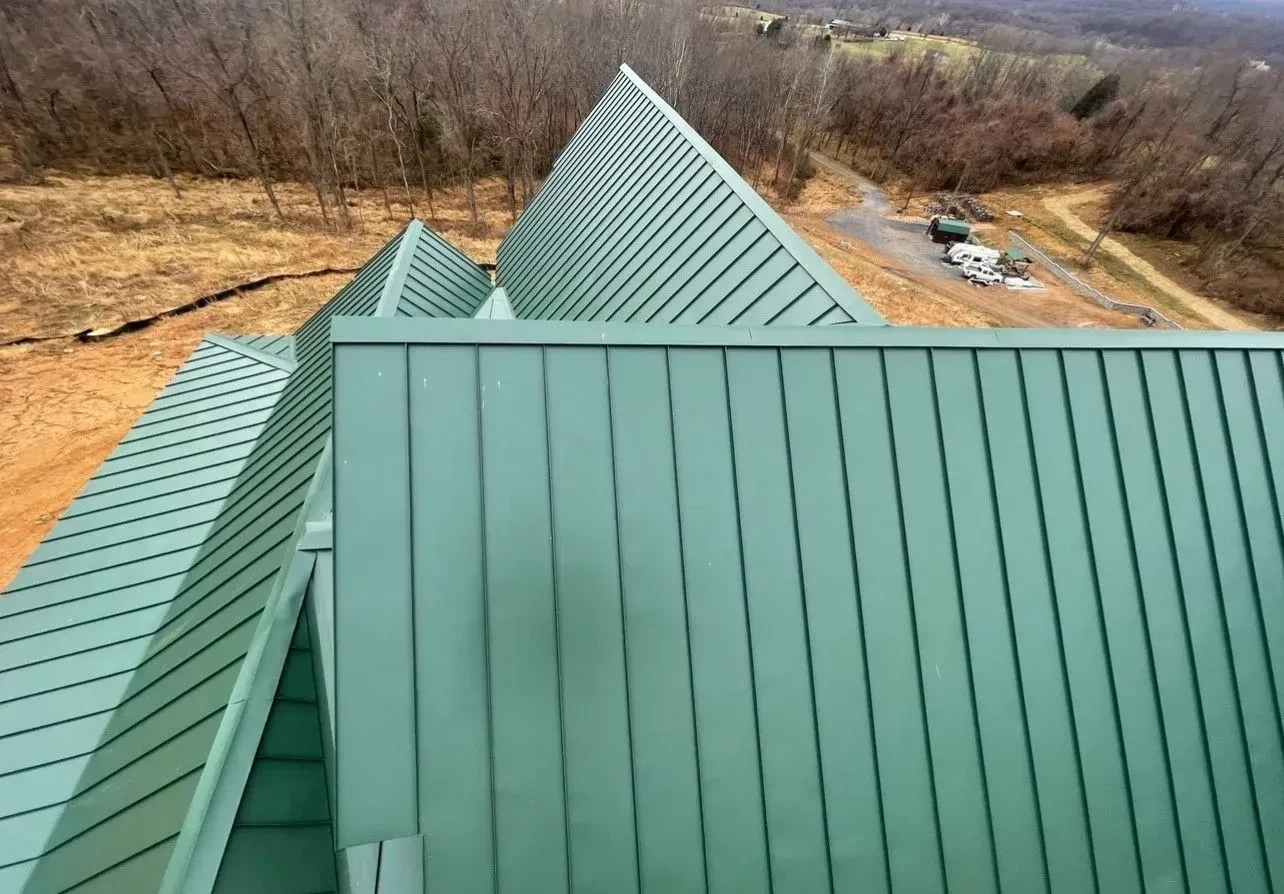
Structural standing seam spans purlin to purlin and carries its own load without continuous decking under it. Architectural panel does not. Putting architectural on open framing because it priced better is a structural decision made by accident, so the first question on any building is which one the framing was built for.
22 for long spans, 24 for lighter work
Twenty two gauge for long spans and any roof that takes foot traffic for equipment service. Twenty four for lighter commercial work. On a Martinsburg warehouse carrying rooftop units, somebody is walking that roof several times a year.
Galvalume at an AZ50 or AZ55 coating weight
The coating weight is the corrosion budget on a roof that sits through freeze and thaw all winter. It is a line you can read on a submittal, and it is one of the first things quietly missing when a bid comes in low.
SMP or PVDF
SMP is the value coating and it chalks and fades sooner. PVDF holds color and gloss much longer and costs more. That one is the owner’s call, not the salesman’s, and it should be priced both ways.
Snap lock, single lock, or double lock
Snap lock wants 3:12 or better. Mechanically seamed single lock goes to 2:12. Mechanically seamed double lock runs down to a half inch in twelve. The slope your building already has decides this, not preference.
Floating clips, fixed points, expansion joints
Steel moves roughly three quarters of an inch per 100 lineal feet across a 100 degree swing, and aluminum moves about double. On a 200 foot run that sits near freezing in January and well past 140 degrees on an August afternoon, that is inches. Two piece floating clips, one fixed point per panel, clearance at the ridge and headwalls, and a transverse joint once the run passes roughly 75 to 100 feet.
Non penetrating seam clamps with a load calc
January averages 32.4 degrees here, so the roof crosses the freezing line most days all winter, and Winter Storm Jonas put 42 inches on the ground at Glengary in this county. The bar mounts to seam clamps with nothing drilled through the panel, lands over a bearing point rather than cantilevered out over the overhang, and gets laid out from the manufacturer’s load calculation before material is ordered.
Why building owners here call Black Stone
Based in Martinsburg
1886 Winchester Ave, Martinsburg, WV 25405. Berkeley County is where our trucks start, not where they visit.
Licensed in five states
VA, WV, MD, PA, FL. Licensed, bonded, and insured. West Virginia requires the license number in advertising and posted at the job site, so ask every bidder for theirs.
Family owned since 2016
Same family, same name on the contract, and the crew that quoted your roof is the crew that installs it.
4.9 stars from 50 Google reviews
Open 24 hours, seven days a week, for buildings that cannot wait until Monday to be dry.
Related commercial roofing services
Commercial Roofing
How we survey a roof and budget it across a portfolio, plus the tear off versus recover versus restore decision.
Single Ply Membrane Roofing
TPO, EPDM, PVC, and KEE on low slope roofs. Welding standards, insulation layup, cover board, and tapered drainage.
Commercial Roof Coatings
Silicone and acrylic restoration on metal and membrane, plus the part most coating companies leave out: when coating is the wrong answer.
Commercial Roof Repair
Leak isolation on large roofs, curb and pitch pocket failures, abandoned penetrations, and after hours work so the building keeps running.
Steel Building Construction
New pre engineered metal buildings from foundation and anchor bolts through rigid frame, secondary framing, insulation, and roof system.
Preventative Roof Maintenance
Scheduled fastener and sealant checks on a program instead of a phone call after the ceiling tile drops.
Residential Metal Roofing
Standing seam and panel on homes, including where oil canning comes from and why it sits outside the warranty.
Roof Inspection
A documented condition survey with photos, core cut findings, and a scope you can hand to a bidder or a board.
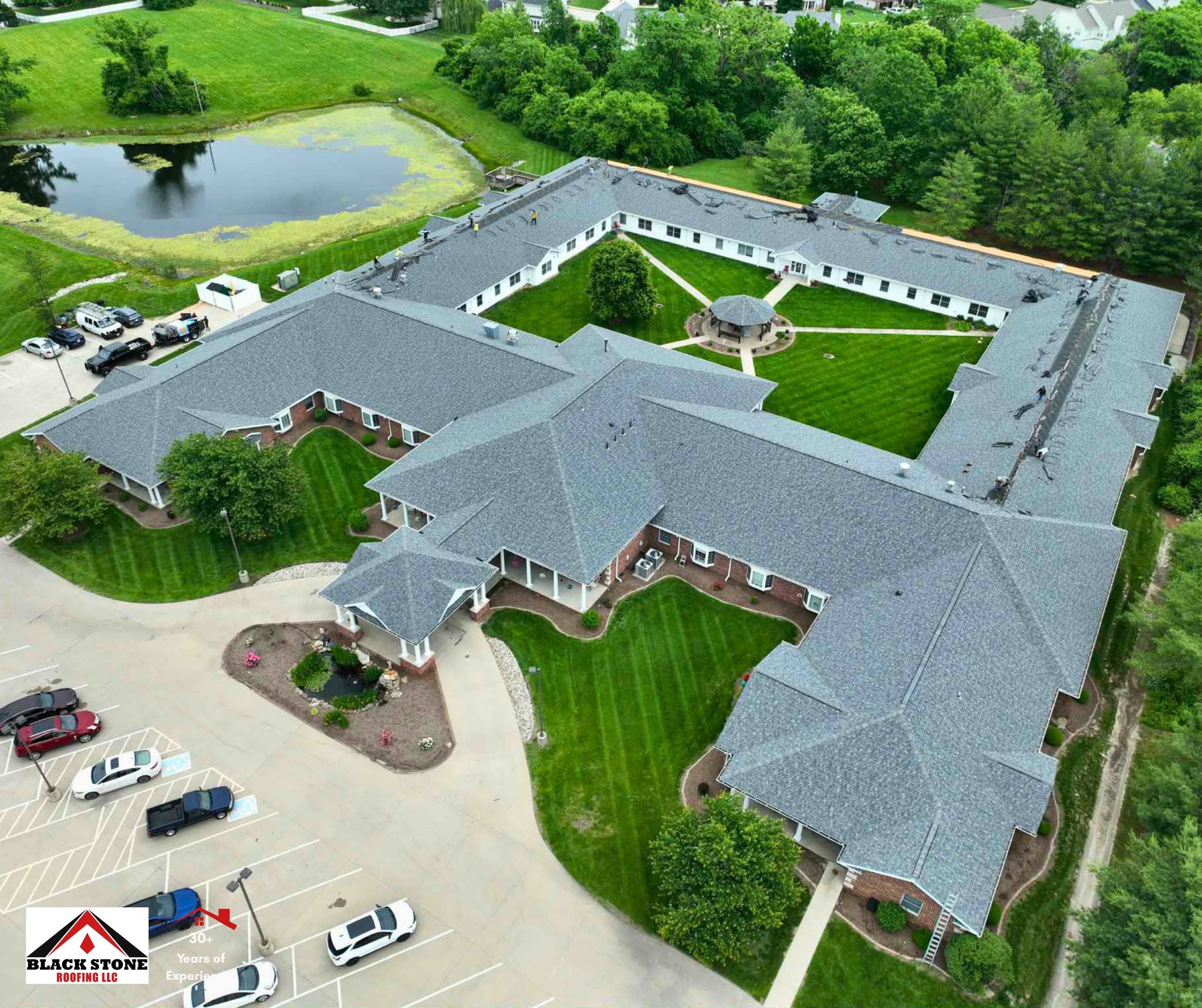
Commercial metal roofing across the Eastern Panhandle
Do not see your town? We work the whole corridor, so ask or call (540) 550-9703.
Questions we get from building owners
-
My metal roof is leaking at the screws. Do I need a new roof?
Probably not. On exposed fastener panel the washer is the seal, and washers wear out long before the steel does. If the panel is sound and the laps are tight, the fix is a re-screw with oversized fasteners and new washers plus a lap sealant refresh, not a tear off. What changes that answer is rust through at the laps or eave, saturated insulation in the cavity, or purlins that have lost section. We check those first and show you what we find before quoting anything.
-
Can you put a new metal roof over the old one?
Often yes. A retrofit sub purlin system notches over the existing ribs, levels the roof plane, adds new insulation in the cavity, and carries a new standing seam roof above the old panel. No tear off, no dumpster in your dock area, and the building is never open overnight. It is the wrong choice when the existing insulation is already wet, when purlins or deck have corroded, or when the framing cannot carry the added dead load without an engineer reviewing it.
-
What is the difference between structural standing seam and the R panel on my shop?
Structural standing seam spans purlin to purlin without continuous decking under it, and its fasteners hide inside the seam. Exposed fastener R panel screws straight through the face of the panel into the framing, so every screw is a seal you can see from the ground. R panel costs less and is a legitimate roof on a shop, barn, or storage building. Standing seam costs more, floats on clips so it can move with temperature, and does not put hundreds of gasketed holes in the roof surface.
-
Why does my metal roof leak around the rooftop units and never in the middle?
Because that is where the roof stops being a roof and becomes a set of details. Rooftop unit curbs, abandoned curbs left when equipment was swapped, pipe penetrations with cracked boots, headwalls where a slope dies into a wall, and end laps on long panel runs account for nearly every commercial metal leak we chase. The field of the panel is the most reliable part of the assembly. The connections are where the failures are.
-
Do we really need snow guards on a commercial building in Berkeley County?
If anything below the eave matters, yes. A standing seam panel is a slide plane and the load releases all at once, over dock doors, man doors, walkways, gas meters, and parked trailers. January averages 32.4 degrees here, and Winter Storm Jonas dropped 42 inches at Glengary in this county in January 2016. On standing seam the retention bar mounts on non penetrating seam clamps with nothing drilled through the panel, sits over a bearing point rather than cantilevered over the overhang, and gets laid out from the manufacturer’s load calculation.
-
Is oil canning on a new metal roof something you fix?
Oil canning is the waviness you see in the flat of a formed metal panel at certain angles and light. It is inherent to formed metal, it is excluded from essentially every manufacturer warranty, and we say that before the contract rather than after. Panel width, gauge, striations or a pencil rib, substrate flatness, and careful handling all reduce how much of it shows. Anyone promising you a panel that will never show it is selling something.
-
Are you actually based in Martinsburg?
Yes. Our address is 1886 Winchester Ave, Martinsburg, WV 25405, right here in Berkeley County. That is worth checking when you compare bids, because several of the companies quoting your building are run out of Pennsylvania and Maryland and will not volunteer that. The other thing worth checking is the license. West Virginia requires a state contractor license, requires the number to appear in advertising, and requires it posted at the job site. Ask every bidder for their West Virginia number before you sign anything.
Get a real condition survey on your metal roof
We walk the roof, pull fasteners, check the laps and the curbs, look for wet insulation, and hand you a photo report with what we found and what it actually needs. If it needs a re-screw and not a re-roof, that is what the report will say.