Home/Gallery
COMPLETED WORKRoofing Project Gallery
Photographs of finished roofs, sorted by the kind of building they went on. Houses, churches, schools, farm buildings, and warehouses all get roofed differently, so a gallery that mixes them together tells you very little. These are our own job photos out of the Martinsburg area, and further down we tell you exactly what to look at in them and what a picture of a roof can never prove.
Want photos of your roof
Free documented inspection
Somebody gets on the roof and comes back with pictures. You keep them either way.
Ready to talk about a project
Written estimate
A scope on paper that lists the layers, not a number written on a card.
Request your free estimate
Six things a roofing gallery cannot prove, including this one
Every roofing company in the Eastern Panhandle publishes a page like this, and the photographs all look about the same because a finished roof is a photogenic object. We would rather hand you the tools to pick this page apart than hope you scroll past it impressed. Use all six on us, then use them on whoever else is bidding your job.
The photo may not be the company’s work at all
Roofing photos get lifted constantly, from manufacturer galleries, from suppliers, from competitors two states away. Test it in about fifteen seconds. Save any image off a contractor’s site and run it through a reverse image search. If the same roof turns up on four other roofing companies and a shingle brochure, you have learned something the testimonials will not tell you. Do it to ours.
Nothing in a photograph carries a date
A roof photographed the week it went on and a roof photographed nine years later look identical in a gallery, and so does a roof from a job the company finished before half the current crew was hired. Ask when the work in a specific picture was done. The answer is easy to give if the job was real and awkward if it was not.
The layer that actually fails is never in frame
Most leaks start at flashing: valleys, chimneys, sidewalls, skylights, and pipe boots. None of it photographs well, all of it is buried by the time the pretty picture gets taken, and reusing old flashing is the most common way a low bid gets low. A gallery is a picture of the one layer that almost never causes the problem.
On day one, a bad roof photographs like a good one
Underlayment thickness, fastener pattern, ventilation balance, and whether rotted decking got replaced or covered are all invisible from the ground the day the job wraps. They surface in year three. That is why we would rather you read a written scope against every other bid you collect than judge anyone on pictures.
The camera angle is doing work
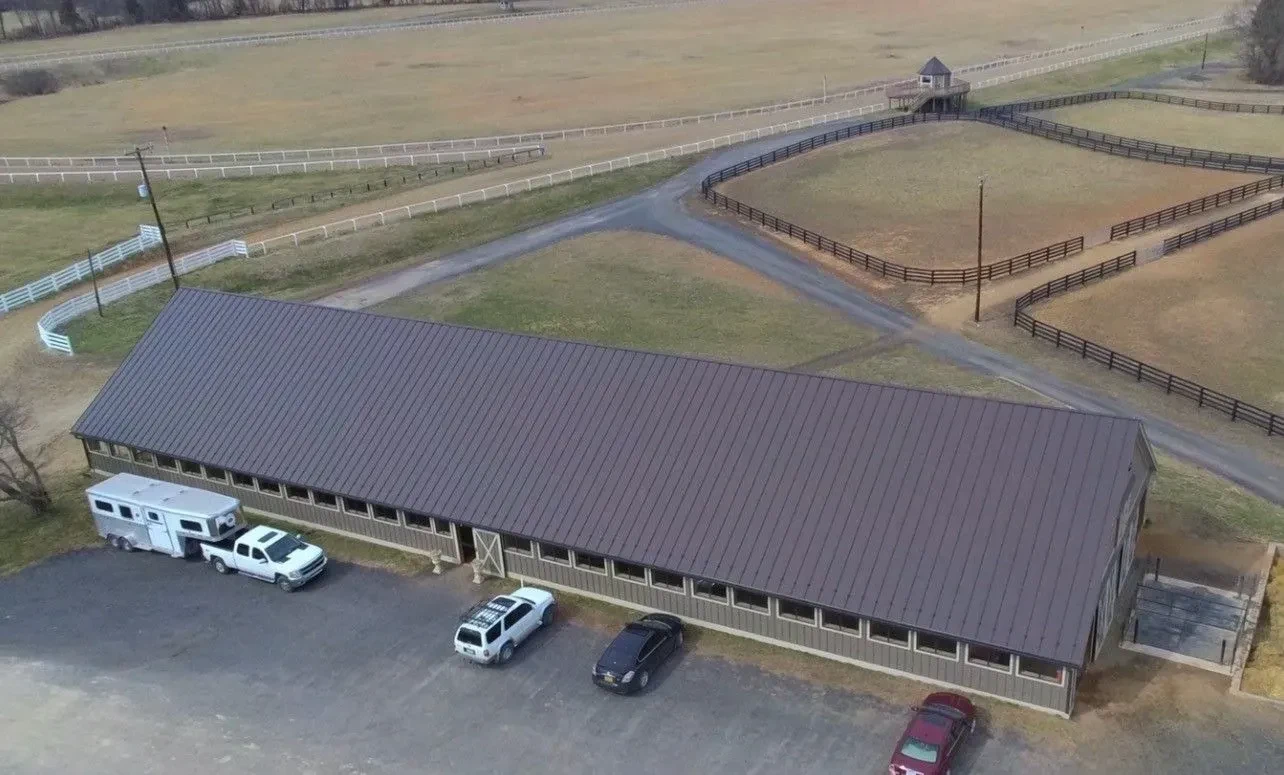
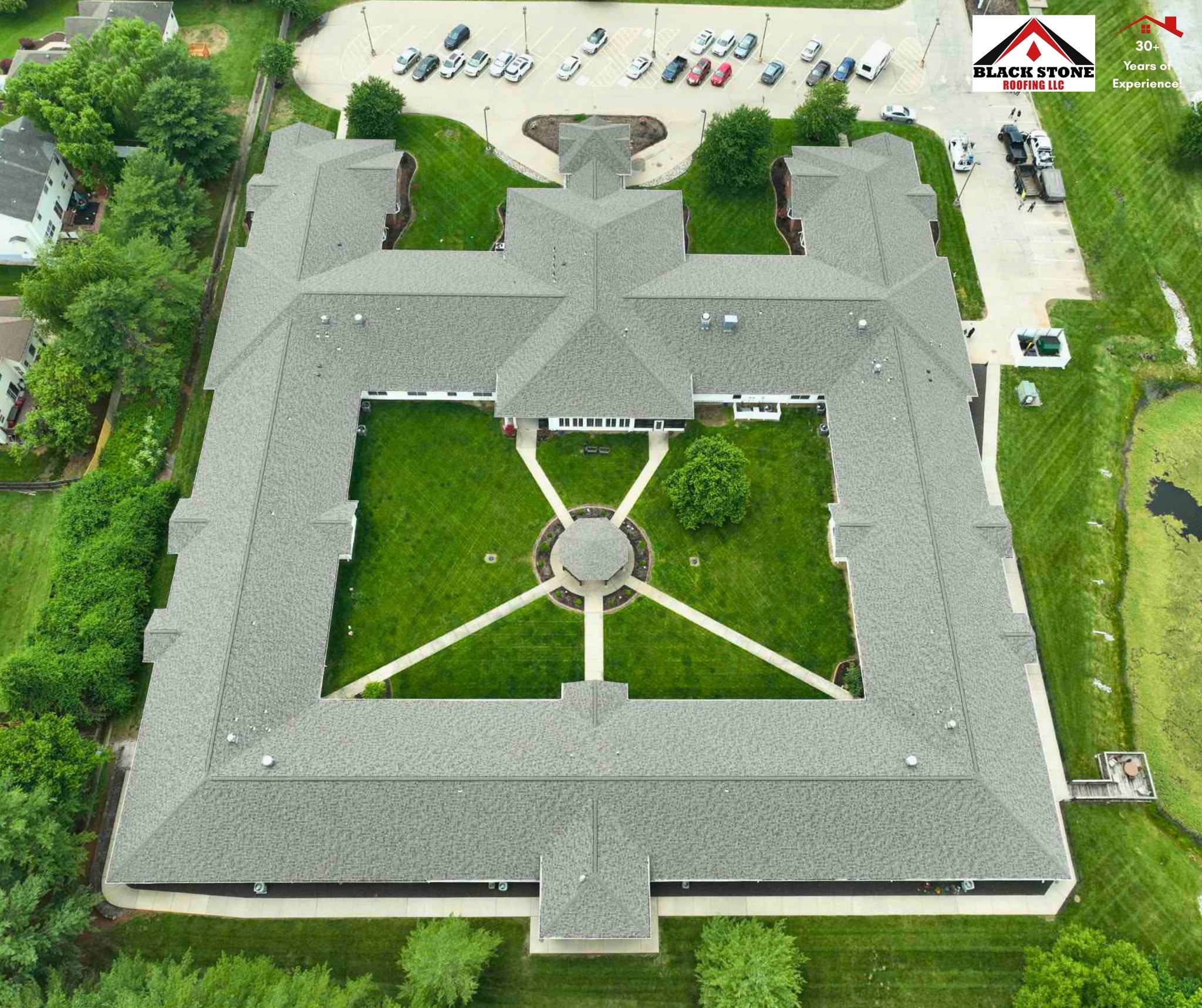
Aerials flatter a roof and hide the edges, where drip edge, gutter line, and rake detail live. Ground level shots hide the field and the ridge. Notice which views a company never publishes. On a low slope roof, an aerial taken in bright sun after a dry week also hides the only thing that matters on a flat roof, which is whether it still holds standing water.
A picture is not a permit and it is not a license
Roofing permits are public record. Berkeley County Building Permits and Inspections and the City of Martinsburg building department are separate offices, and either one can tell you whether a permit was ever pulled at a given address. That record outranks any photograph on any website, ours included. Ask a contractor for a job address rather than a gallery.
What to actually look at in each photograph
If you are going to scroll through roof pictures, scroll through them usefully. These are the seven things a roofer looks at first in somebody else’s photo, and they work just as well on the images below as they do on a competitor’s page.
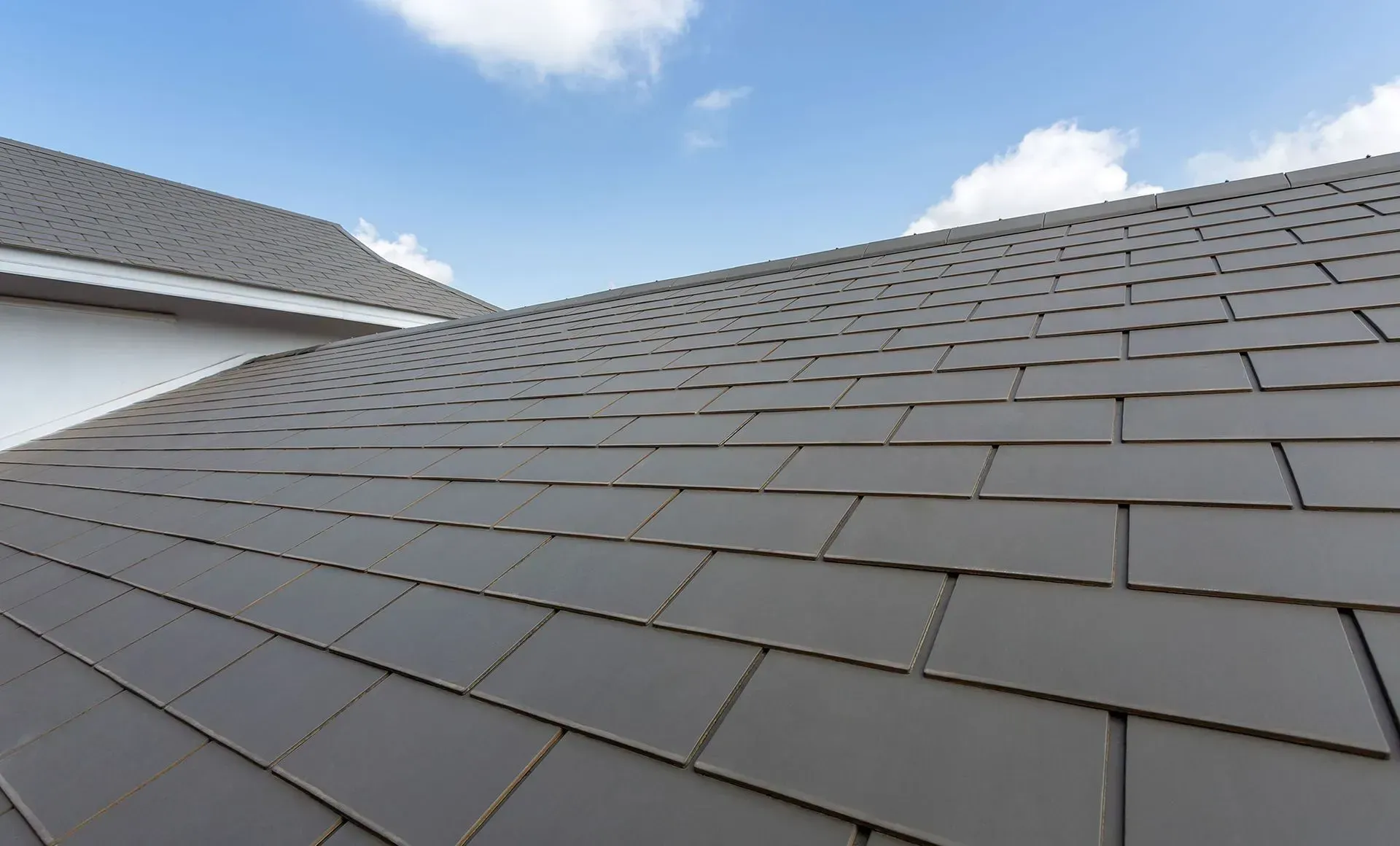
Whether the panel runs are straight and evenly spaced
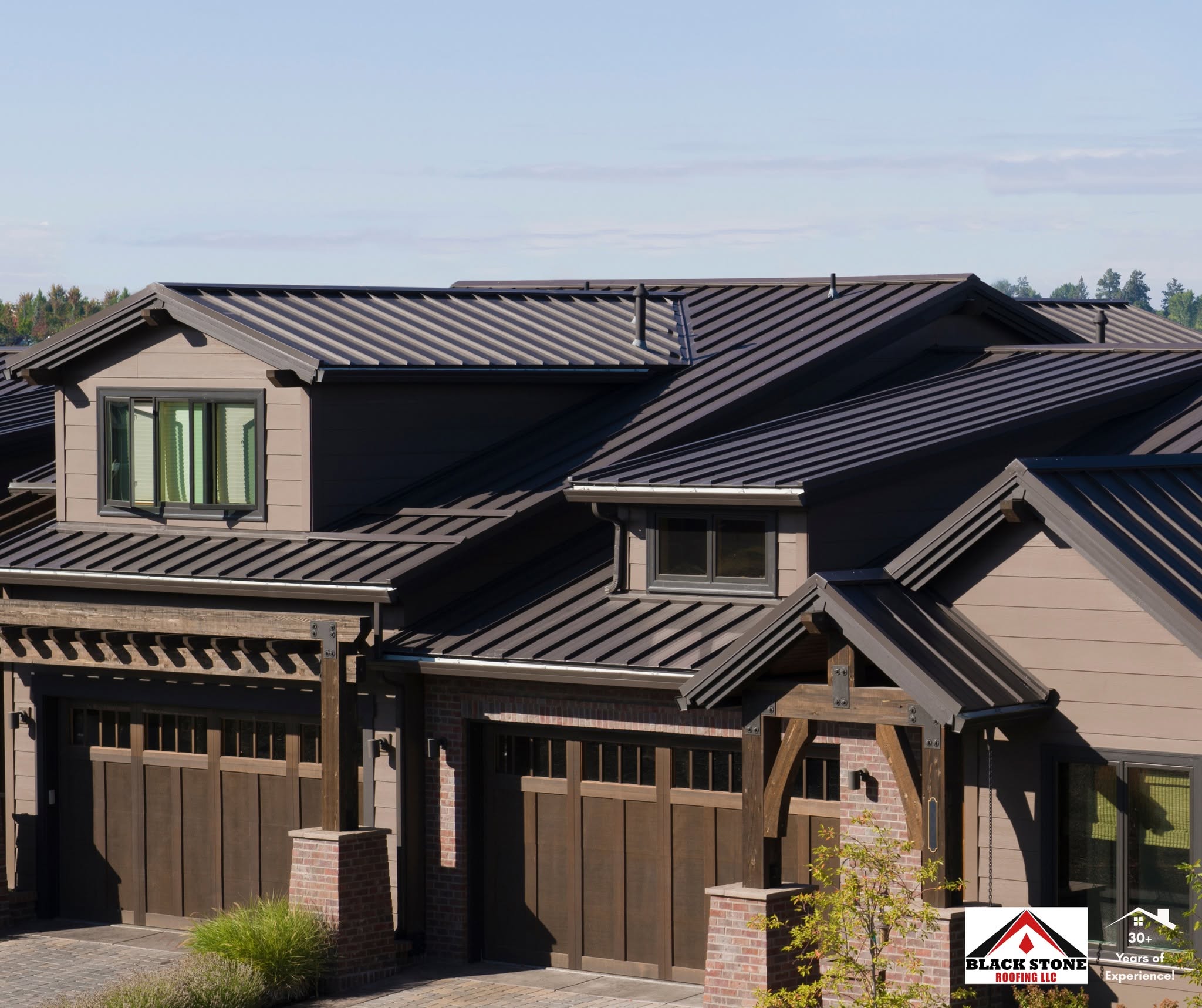
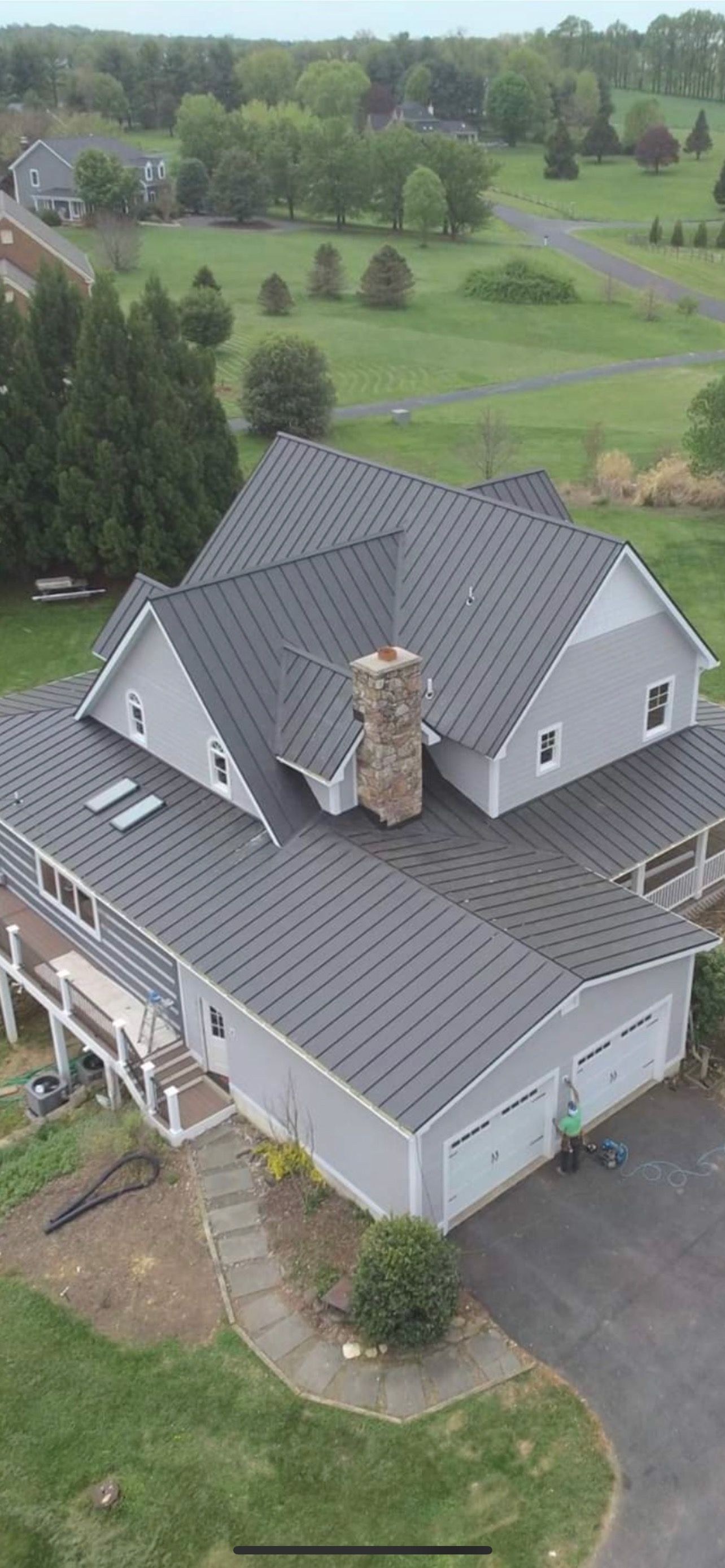
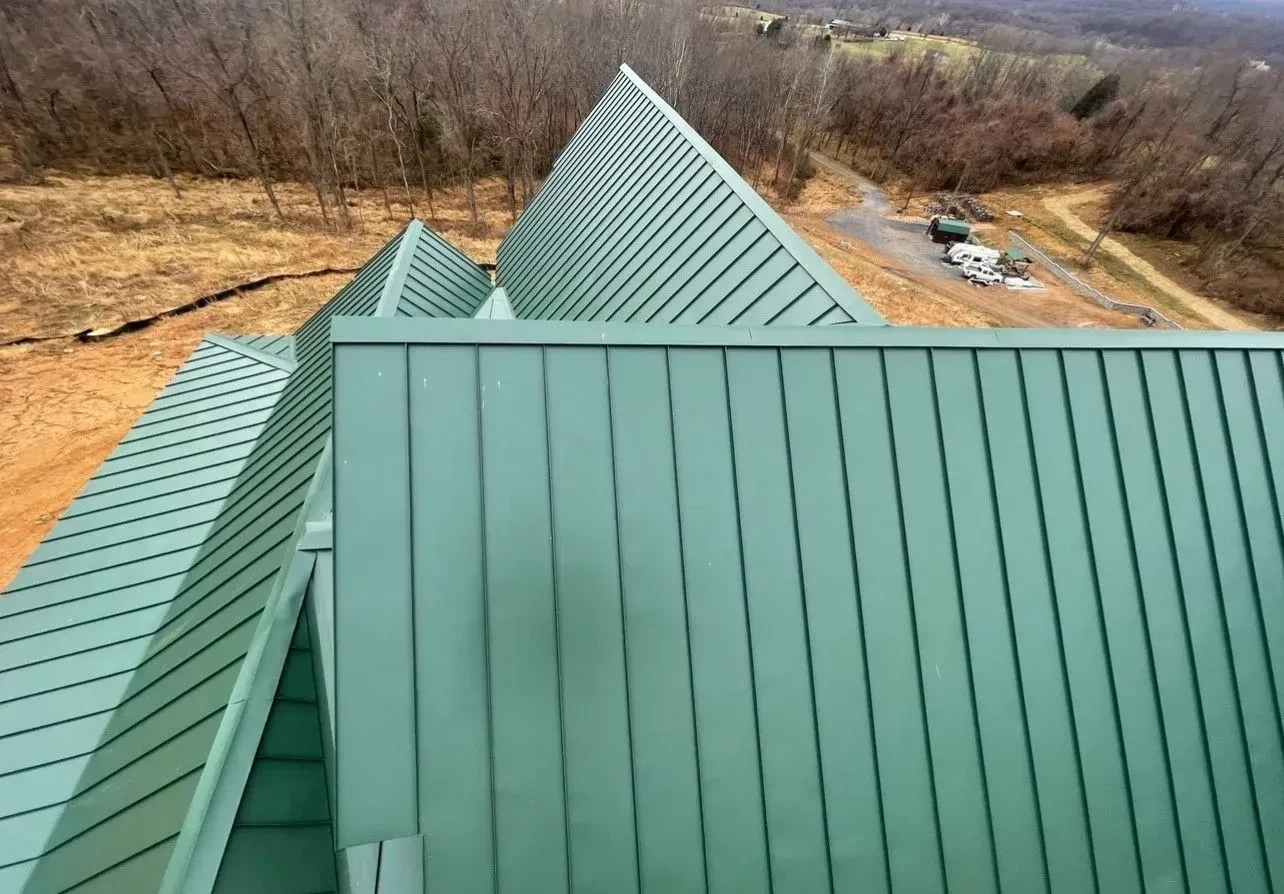
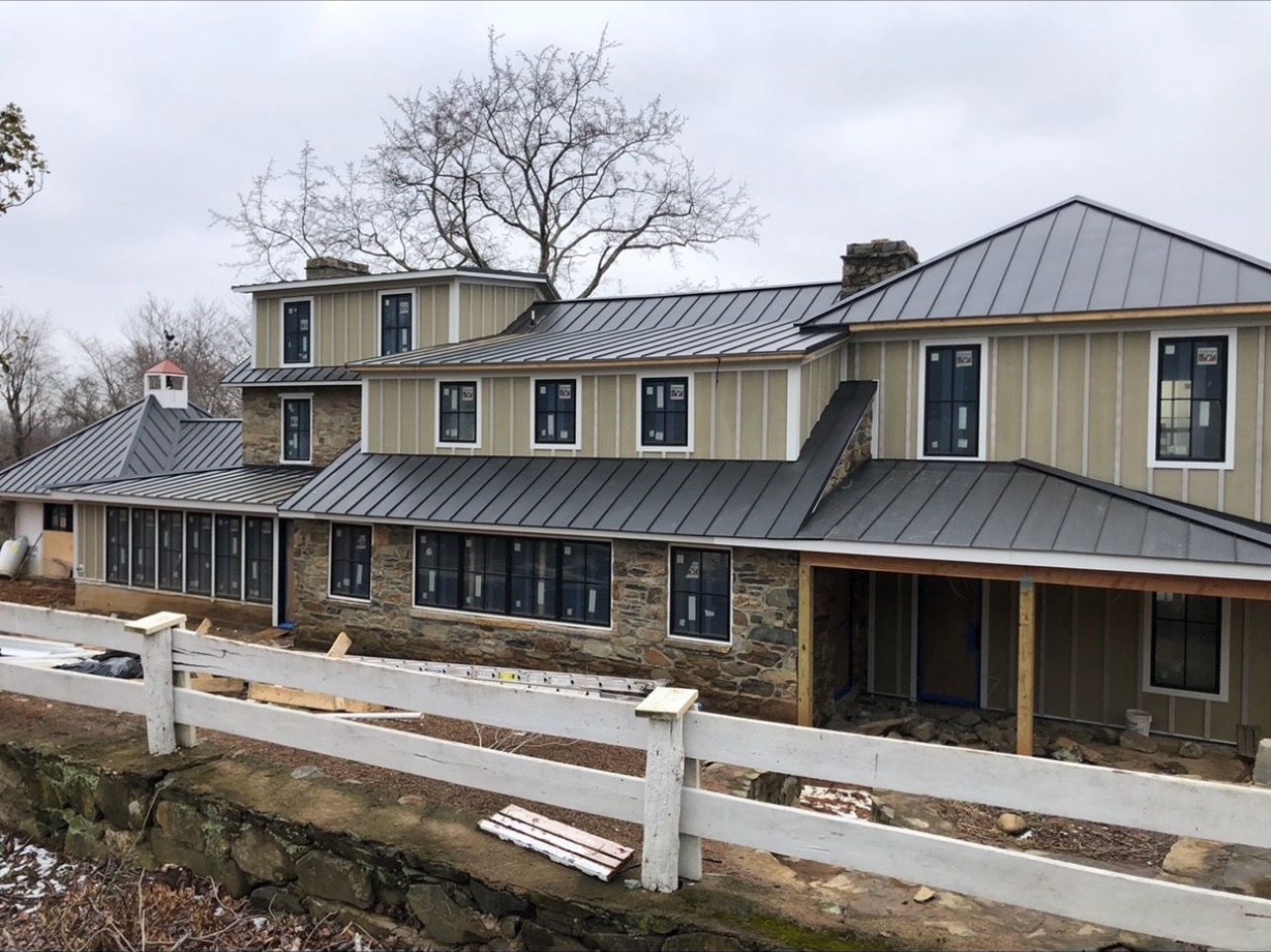
On a standing seam roof the seams are a ruled grid laid across the building, and the eye catches a wandering line long before it catches anything else. Watch what happens where a run crosses a dormer or a valley, because that is where a rushed layout shows up as seams that no longer line up on the far side.
How the two planes are closed at the top
The ridge is where the roof breathes and where wind gets its first grip. Look for a consistent, tight closure that runs the full length without waves in it, and on a hipped roof look at the point where hips and ridge converge, which is the single hardest piece of trim on a metal roof to make look intentional.
Where two roof planes dump water into each other
Every gallon off both slopes funnels through this one channel, so a valley is doing more work than any other part of the roof. In a photo you want to see a clean, open, uniform channel with the field material cut to a straight line along it, not a valley crowded by material or patched with sealant.
The line where the roof hands water to the gutter
Drip edge and rake trim are the cheapest place to cut a corner and the first place wind lifts a roof, and most galleries quietly crop them out. When you can see the edge, look for a straight consistent reveal and a gutter line that sits where the water is actually going to land. Our gutter work exists because that handoff is where the leaks nobody can find tend to live.
Everything that pokes through the roof
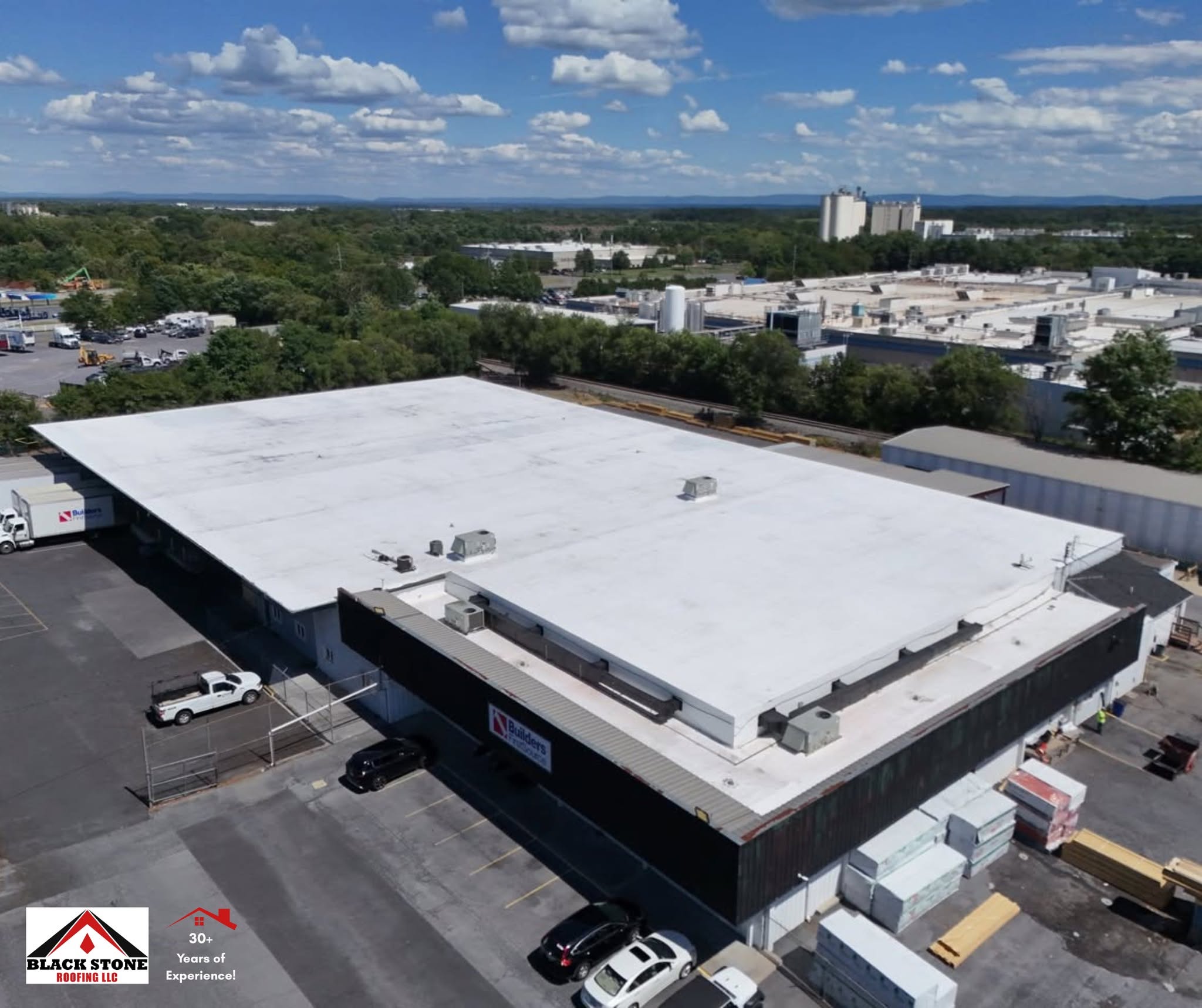
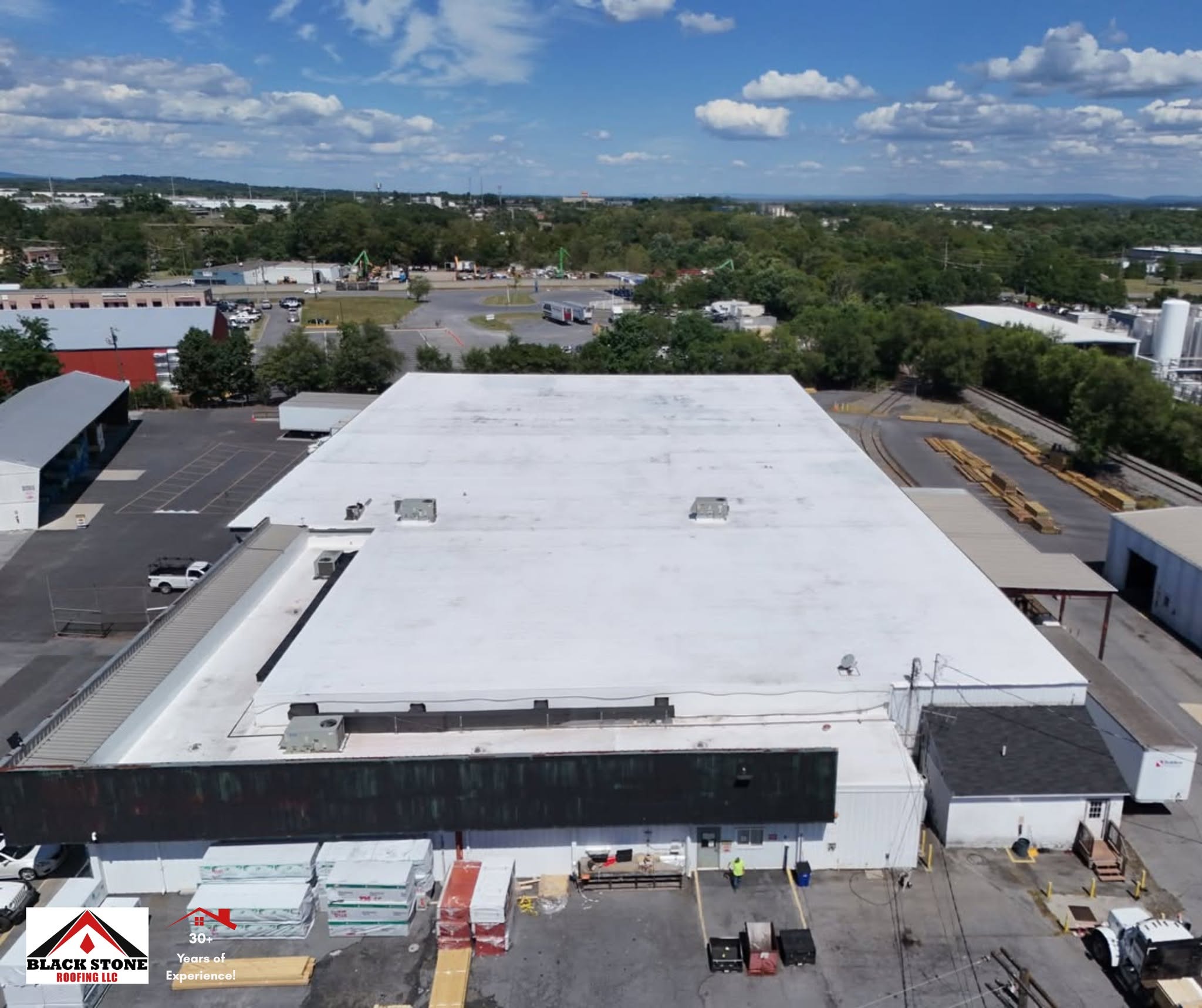
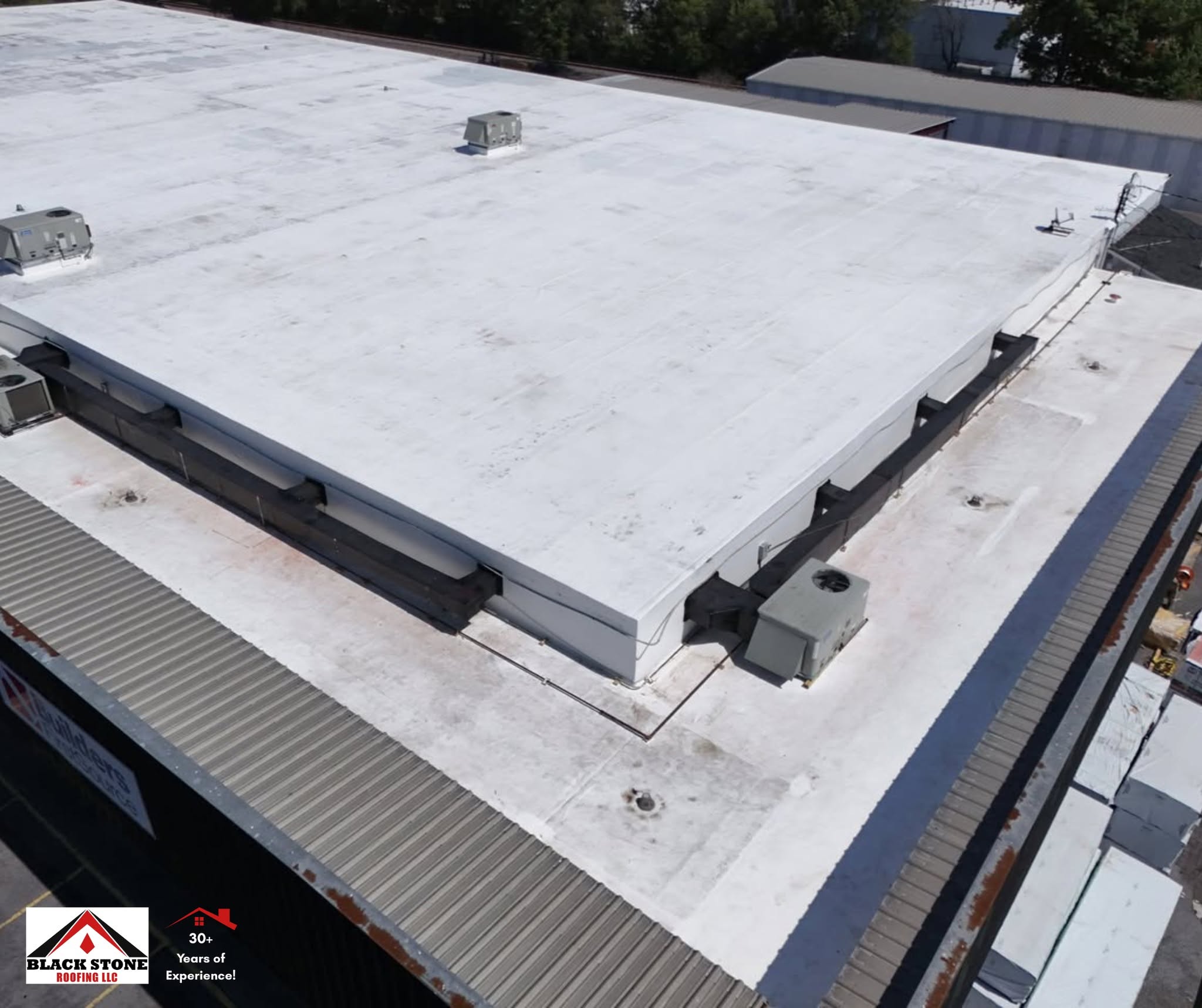
Pipes, chimneys, vents, skylights, and on commercial work the curbs under every rooftop unit. Count them in the picture, because each one is a hole somebody had to seal and each one is a place the roof can fail independently of the roof. A field of shingles almost never leaks. The things sticking out of it do.
The flat run everybody actually looks at
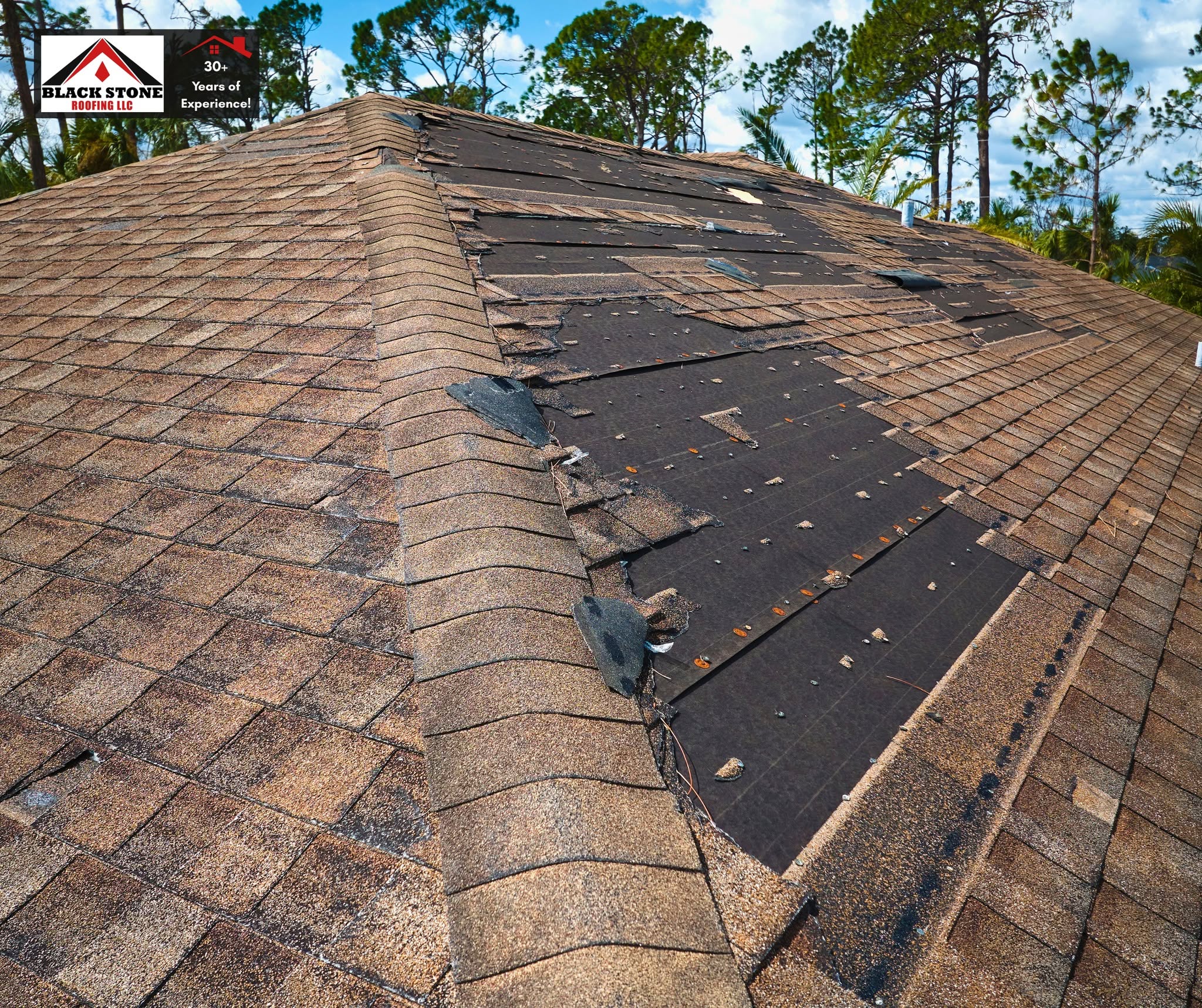
Look across the plane rather than at it. Waviness in a metal panel between the seams is normal and is a property of formed sheet metal rather than a defect, but a plane that dips or telegraphs the framing underneath is telling you about the deck, not the finish. On shingle roofs the same look across the plane shows you course lines and any sagging.
Where the water leaves, especially on a flat roof
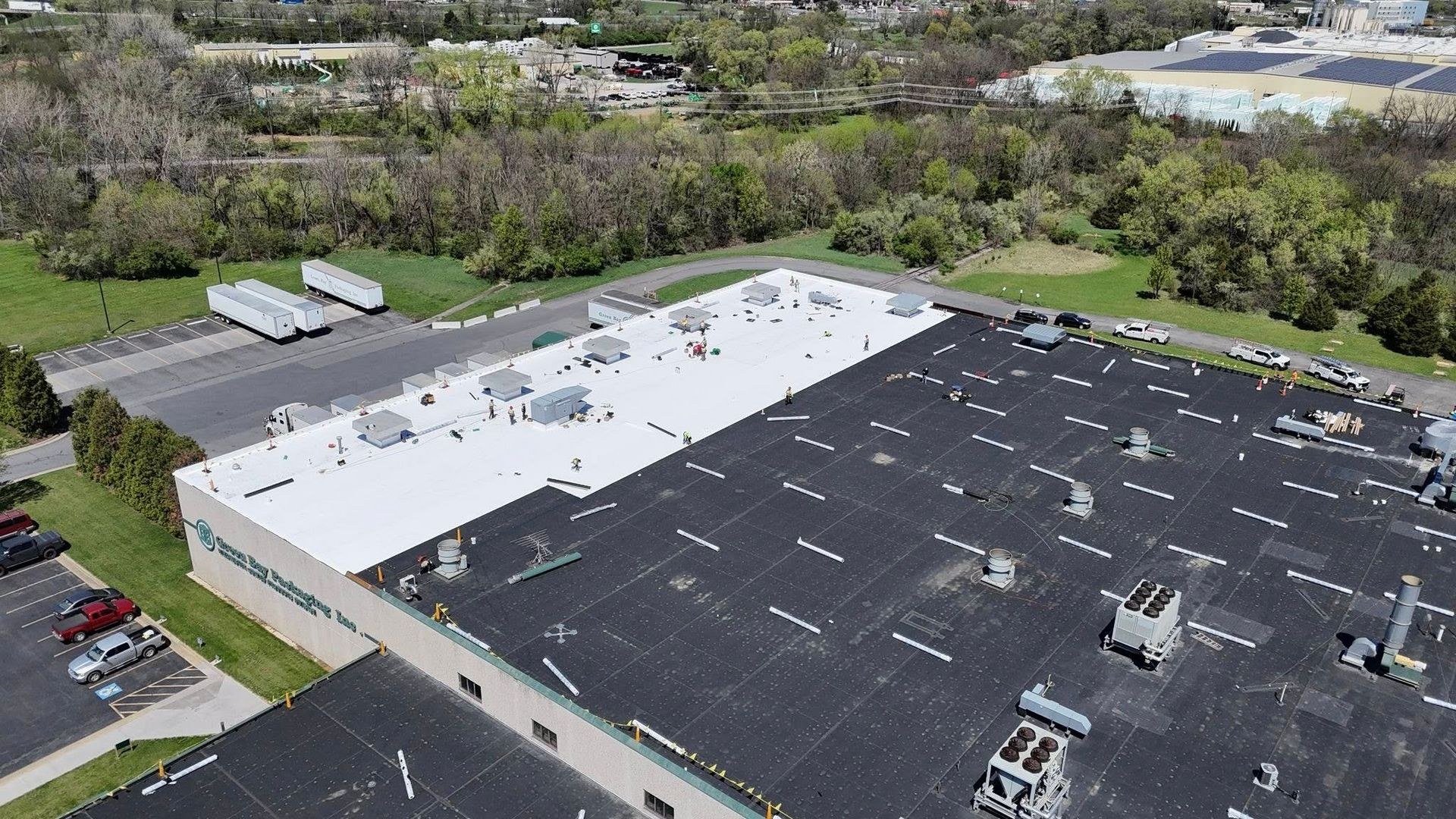
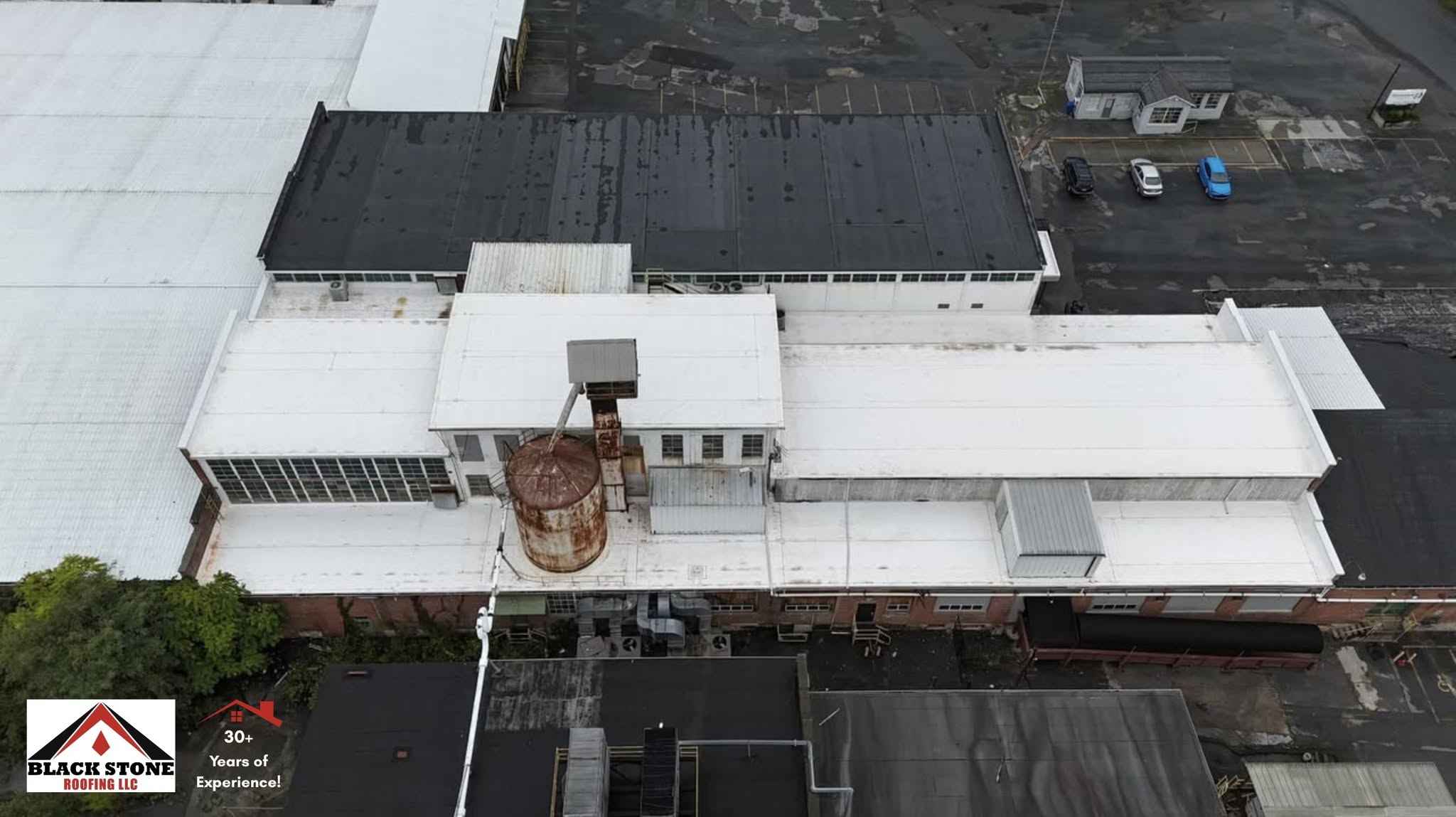
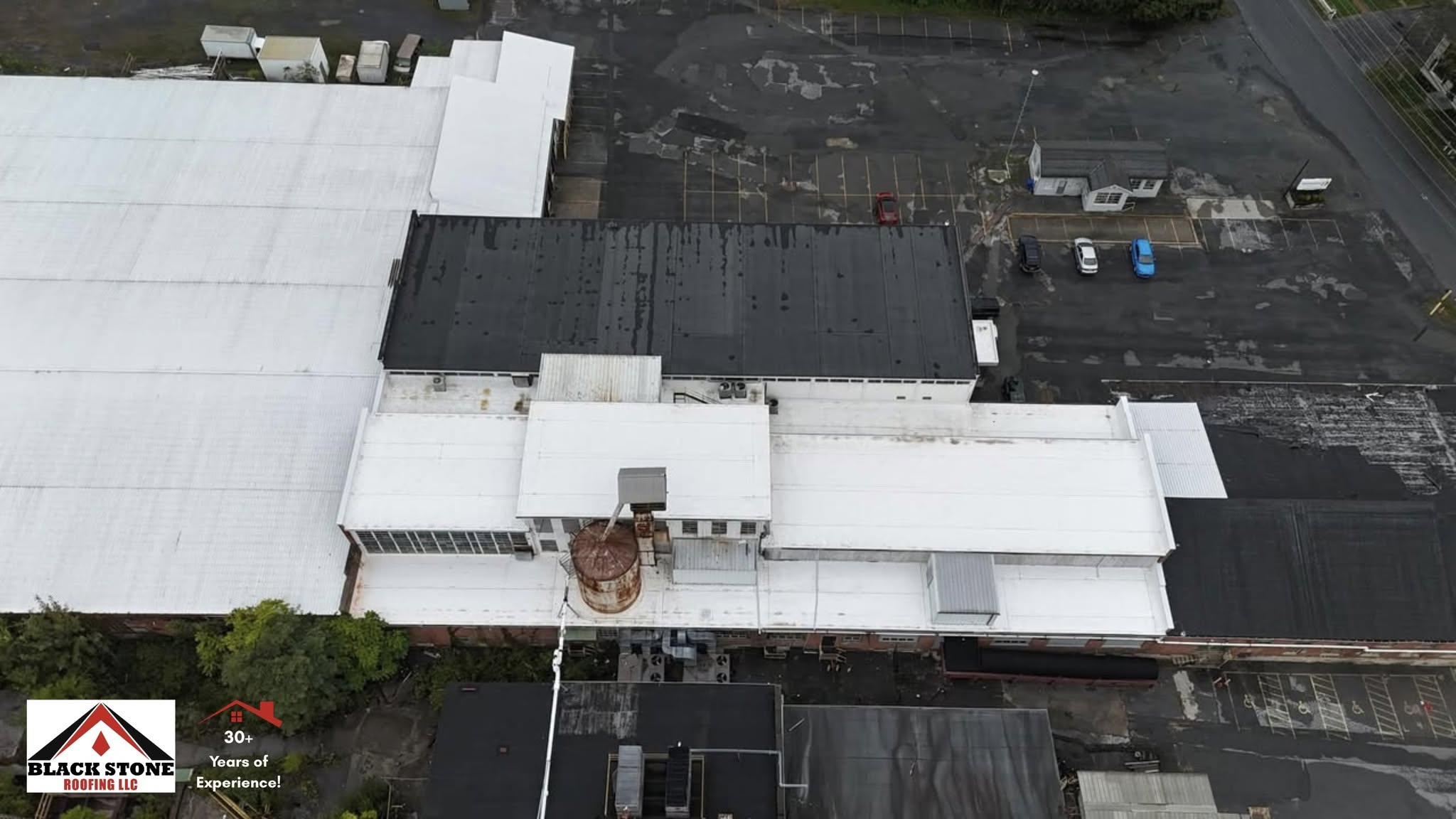
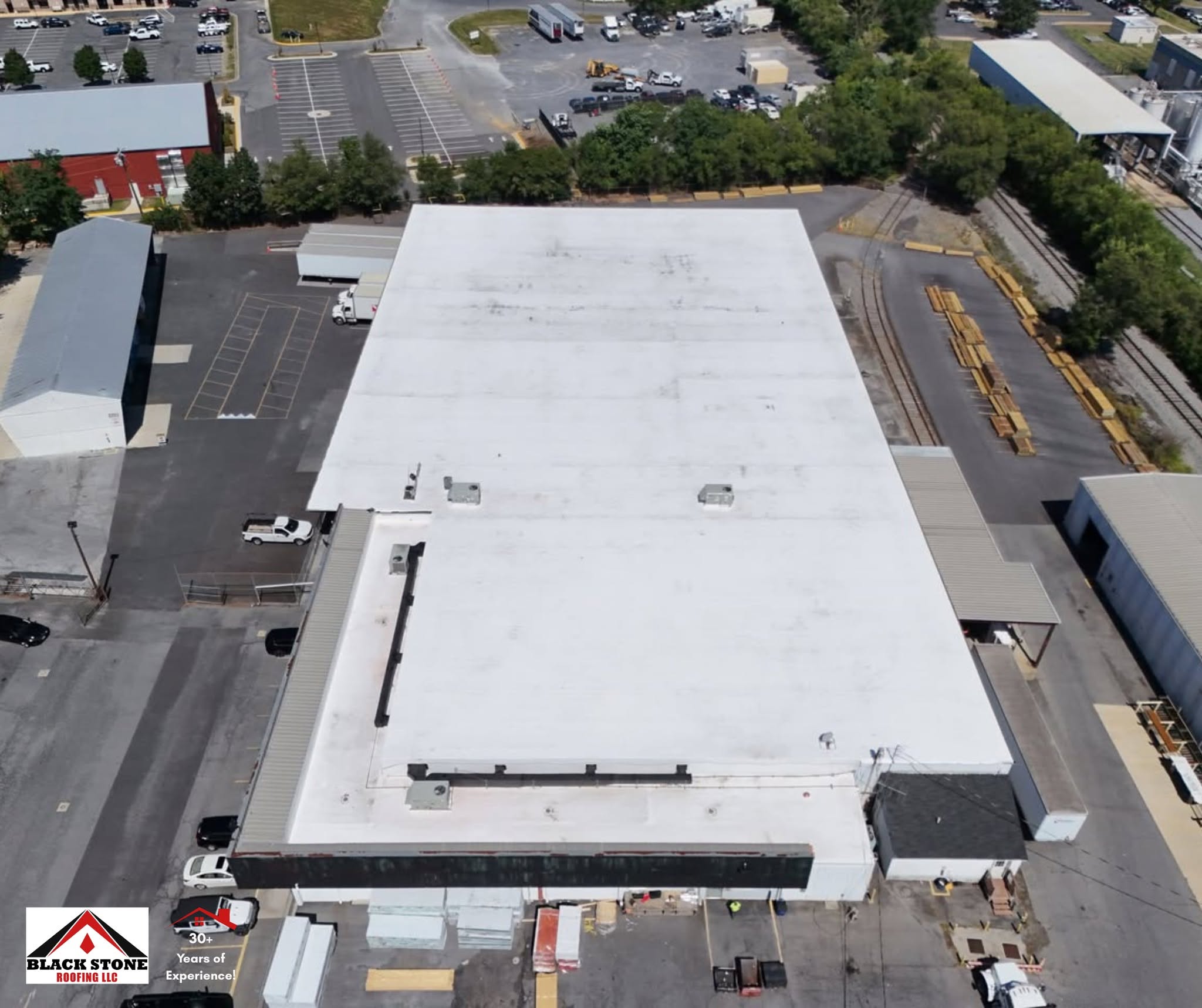
A low slope roof does not shed water, it routes it, so the whole system is drains, scuppers, and slope. In a commercial photo look for dark staining or rings on the membrane, which is the signature of water that sat. That is the one flaw a finished flat roof cannot hide from a camera, which is why it is worth knowing about before you look at ours.
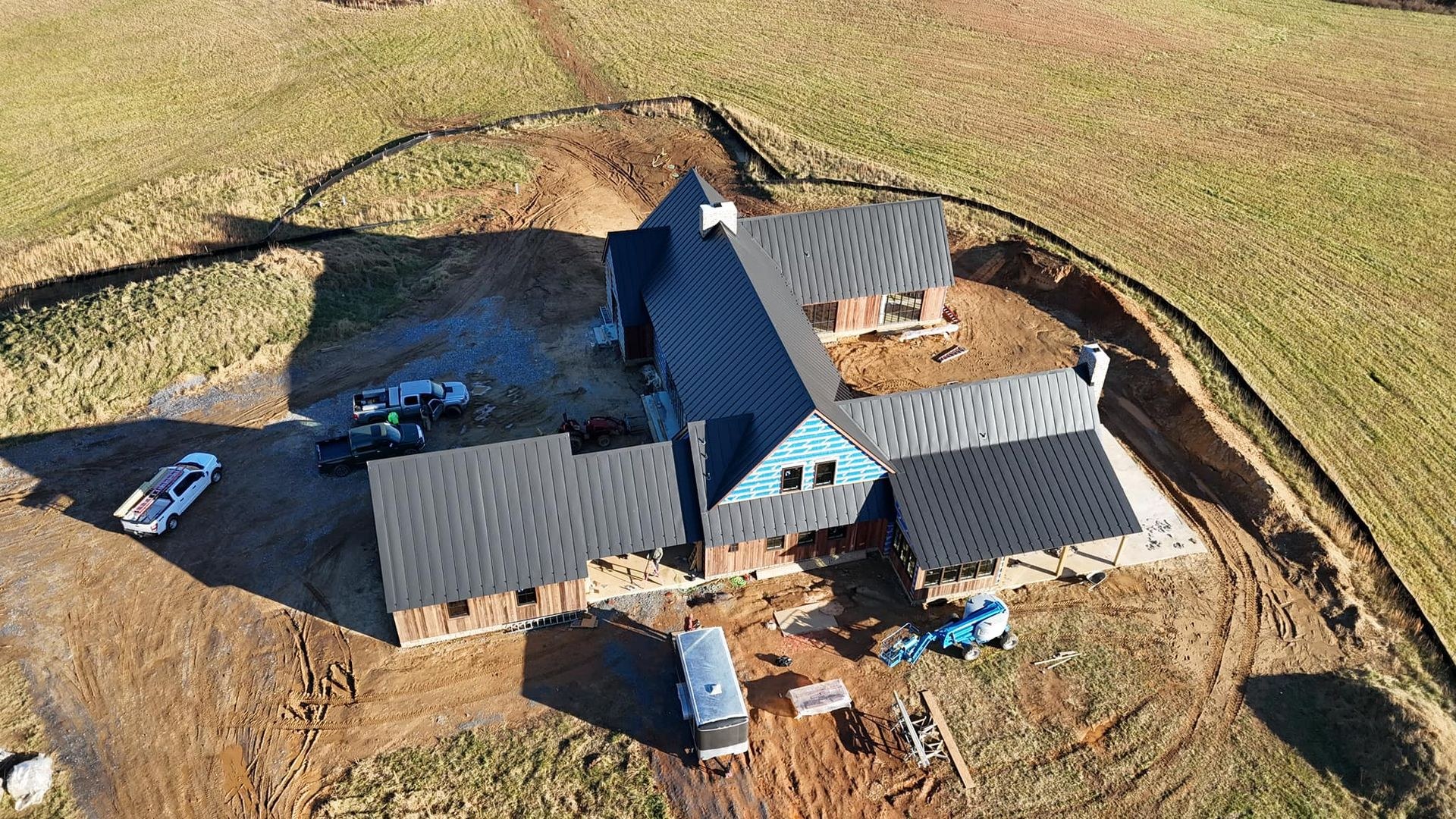
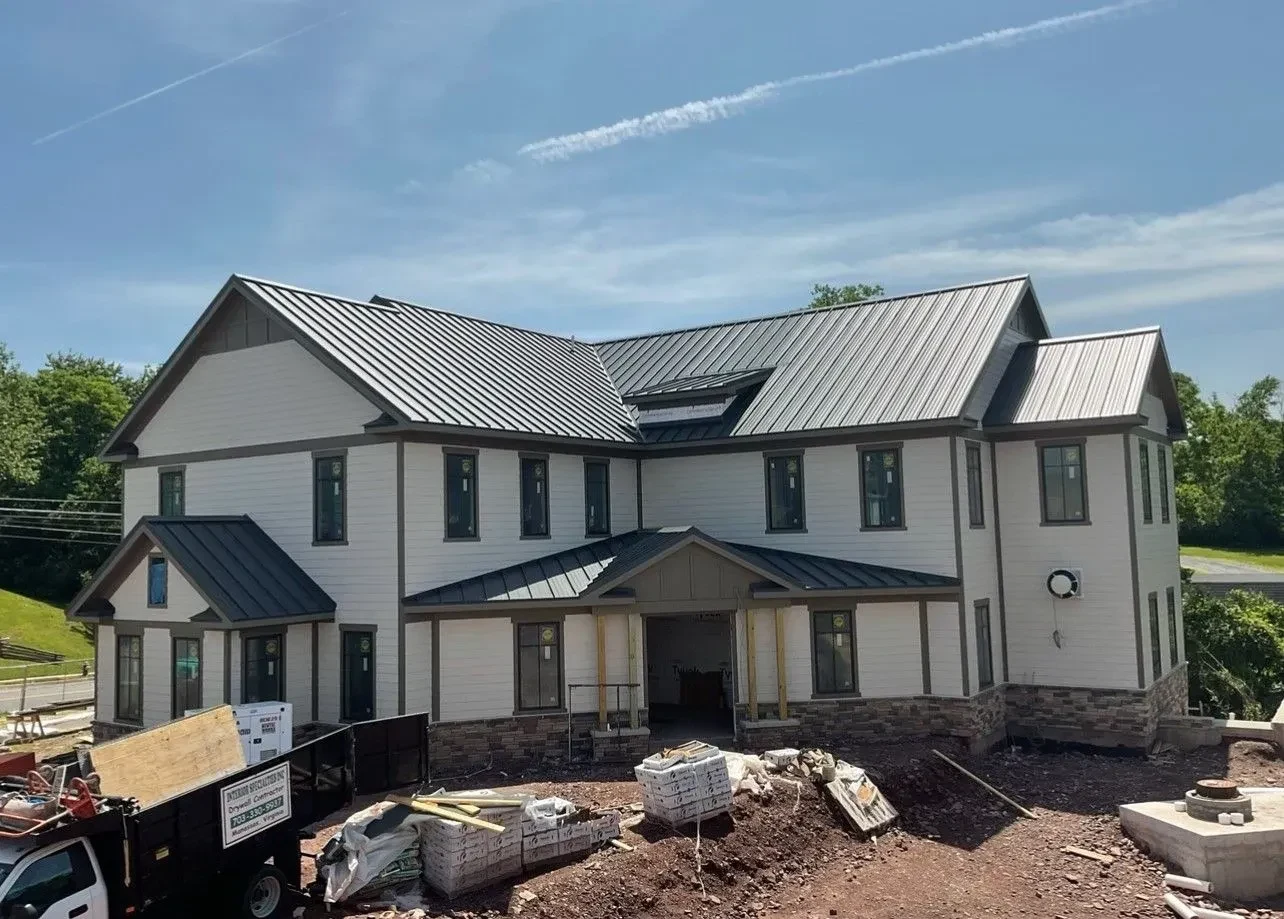
Standing seam metal roofs on homes
Custom builds, new construction, and replacements on existing houses. These are the jobs where the seam layout has to be right the first time, because on a metal roof the layout is the finished appearance and there is no hiding it under a texture.

Shingle roofs, repairs, and specialty work
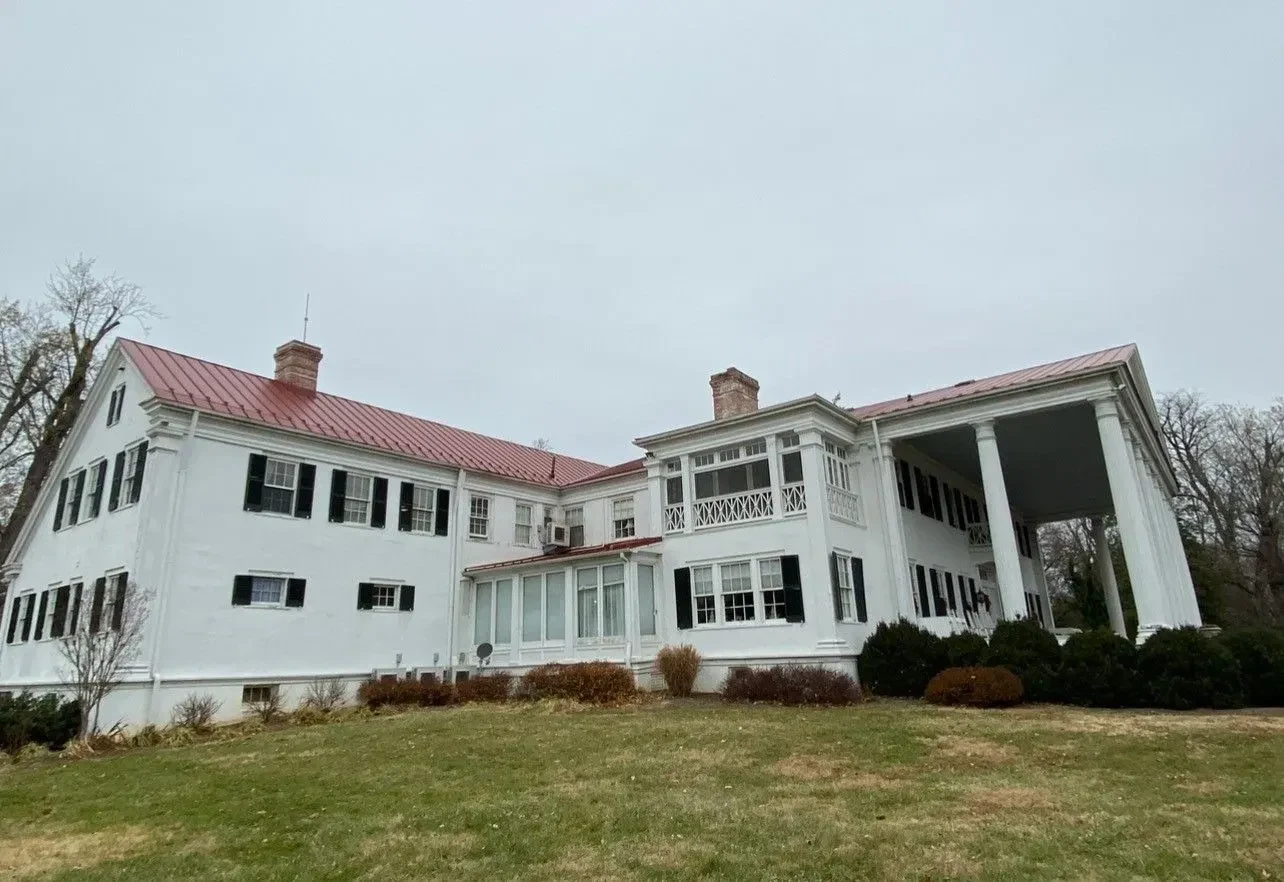
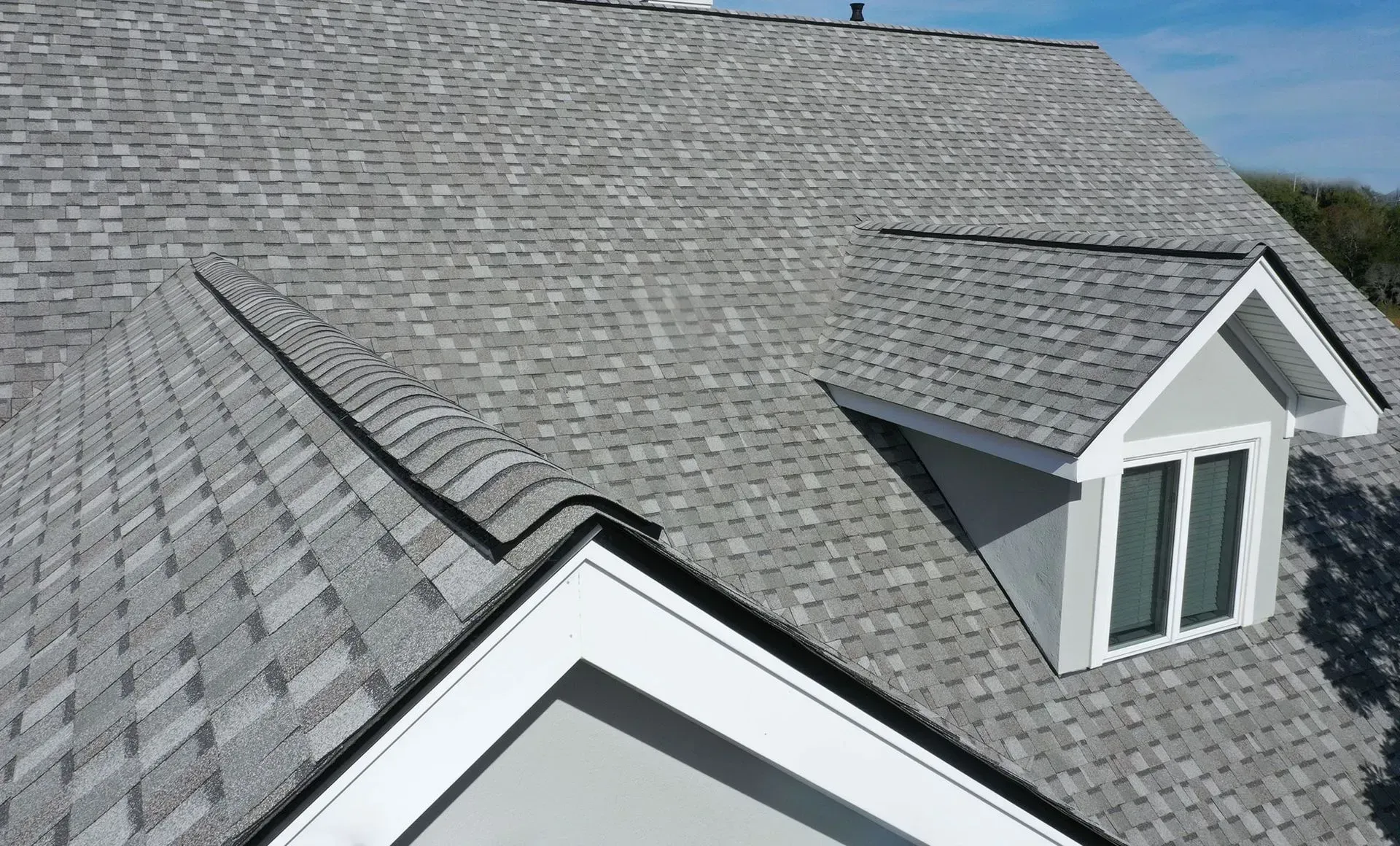
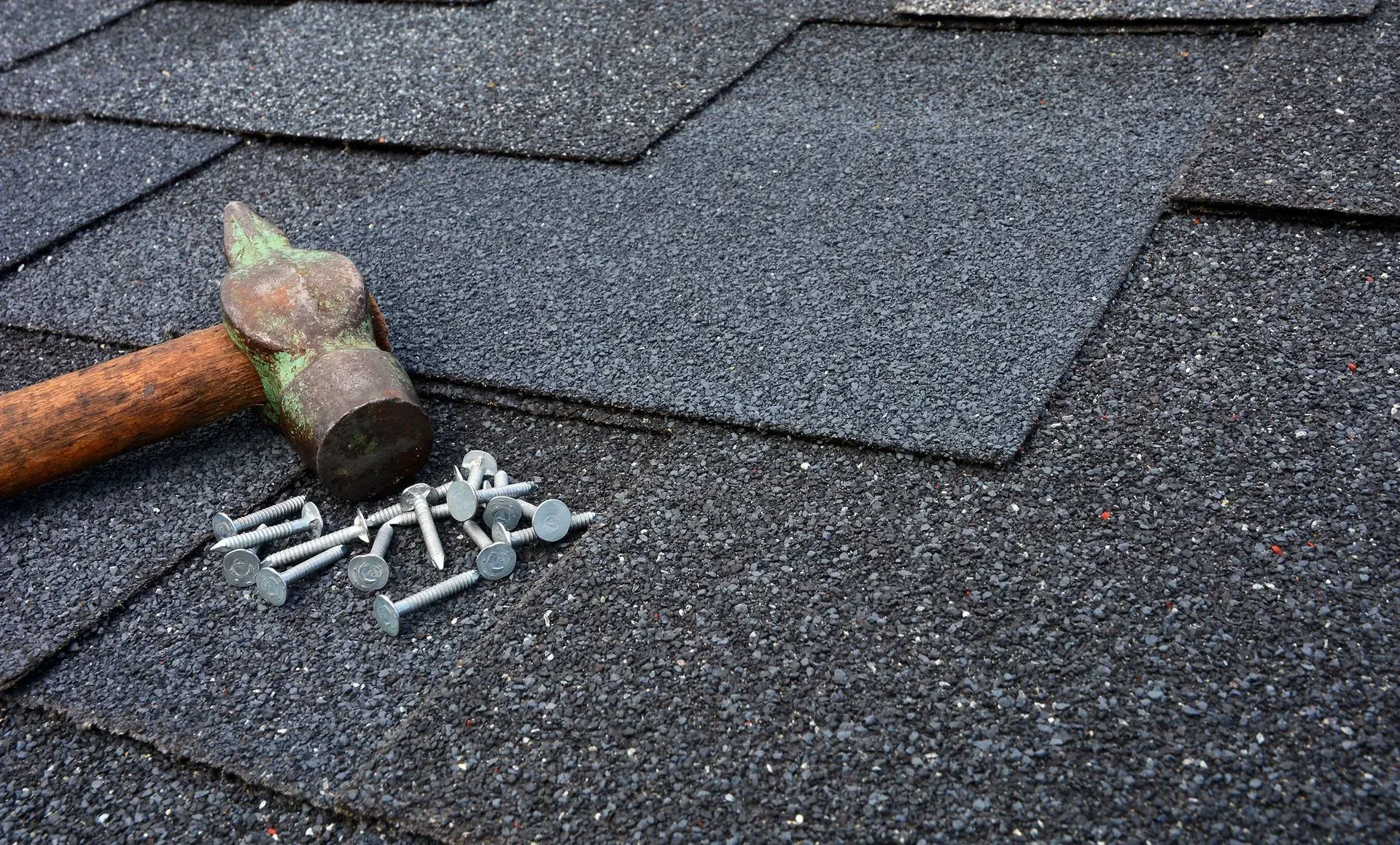
Not every job is a full replacement and not every roof is metal. This group covers asphalt shingle work, targeted repairs, and the older houses where the roof is part of the architecture and the material choice is not entirely up to the homeowner.
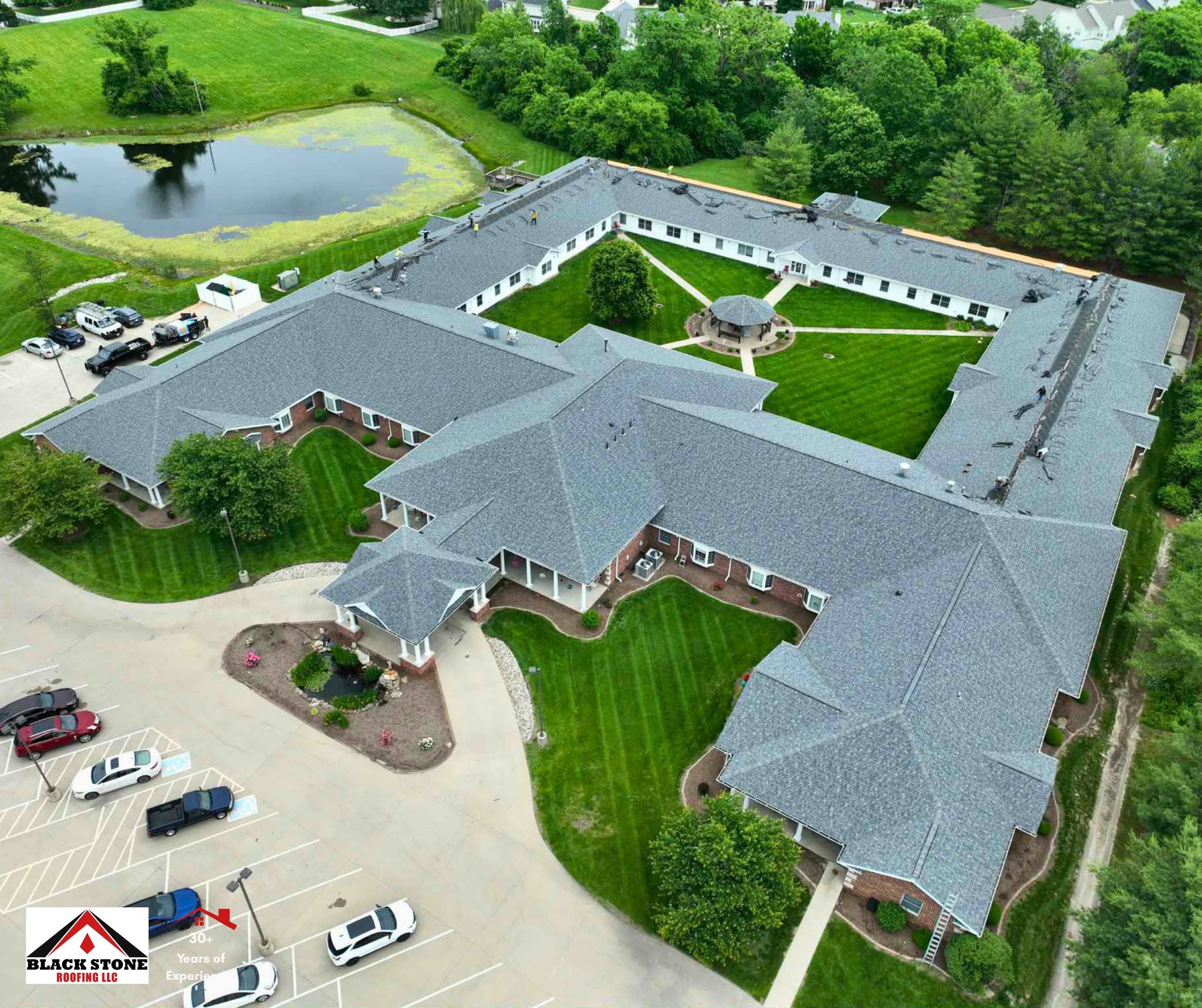
Churches, schools, and institutional buildings
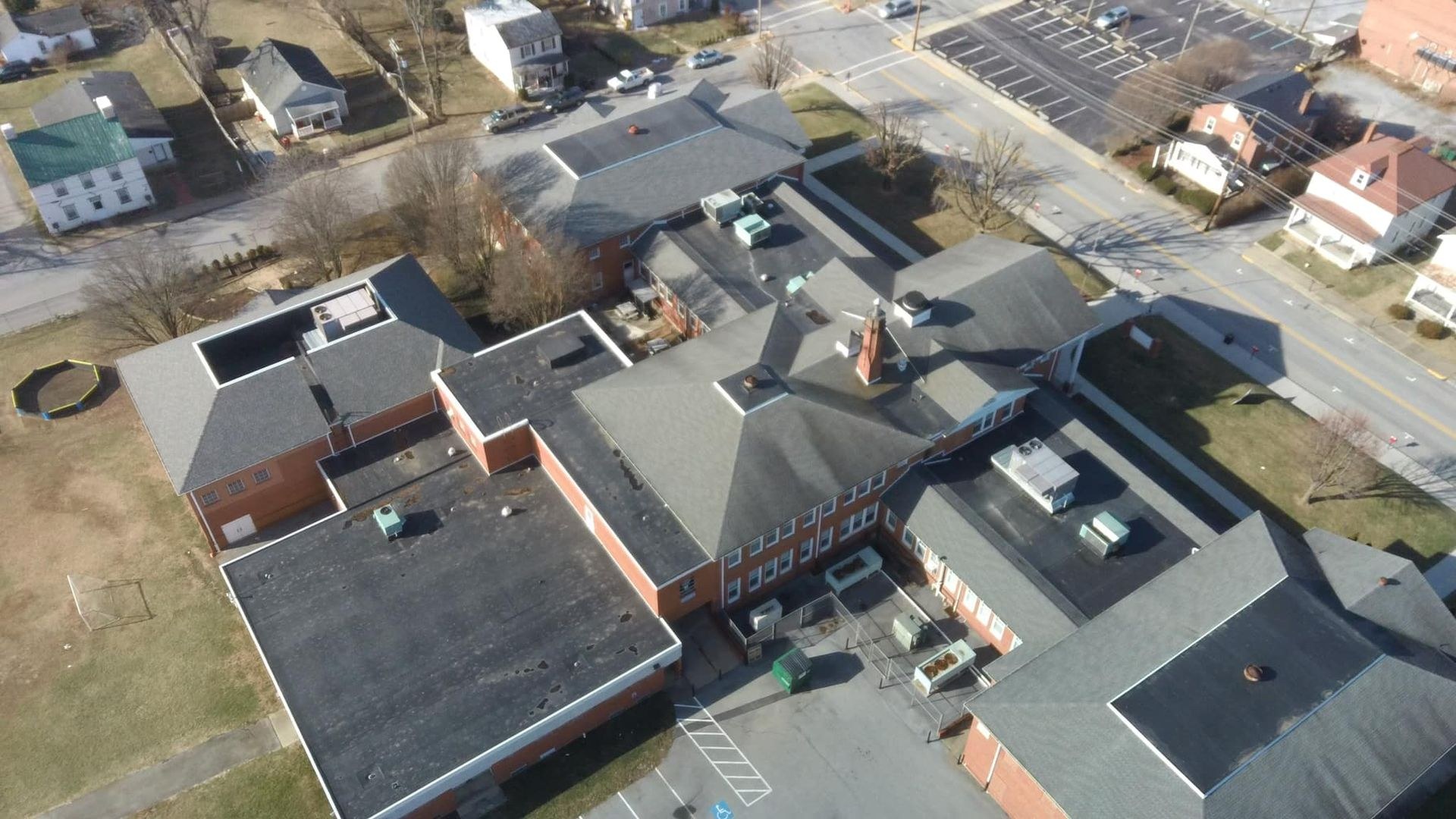
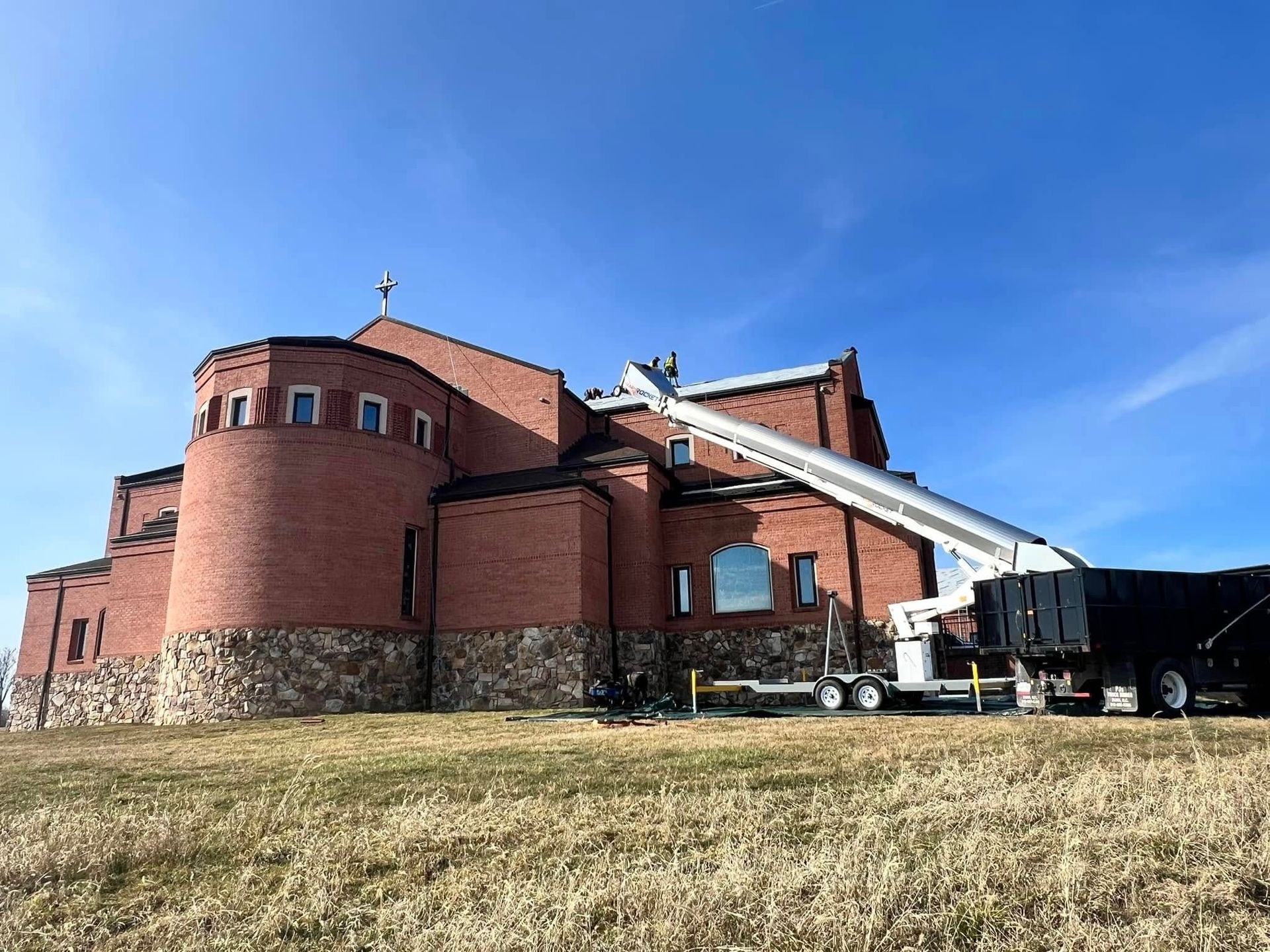
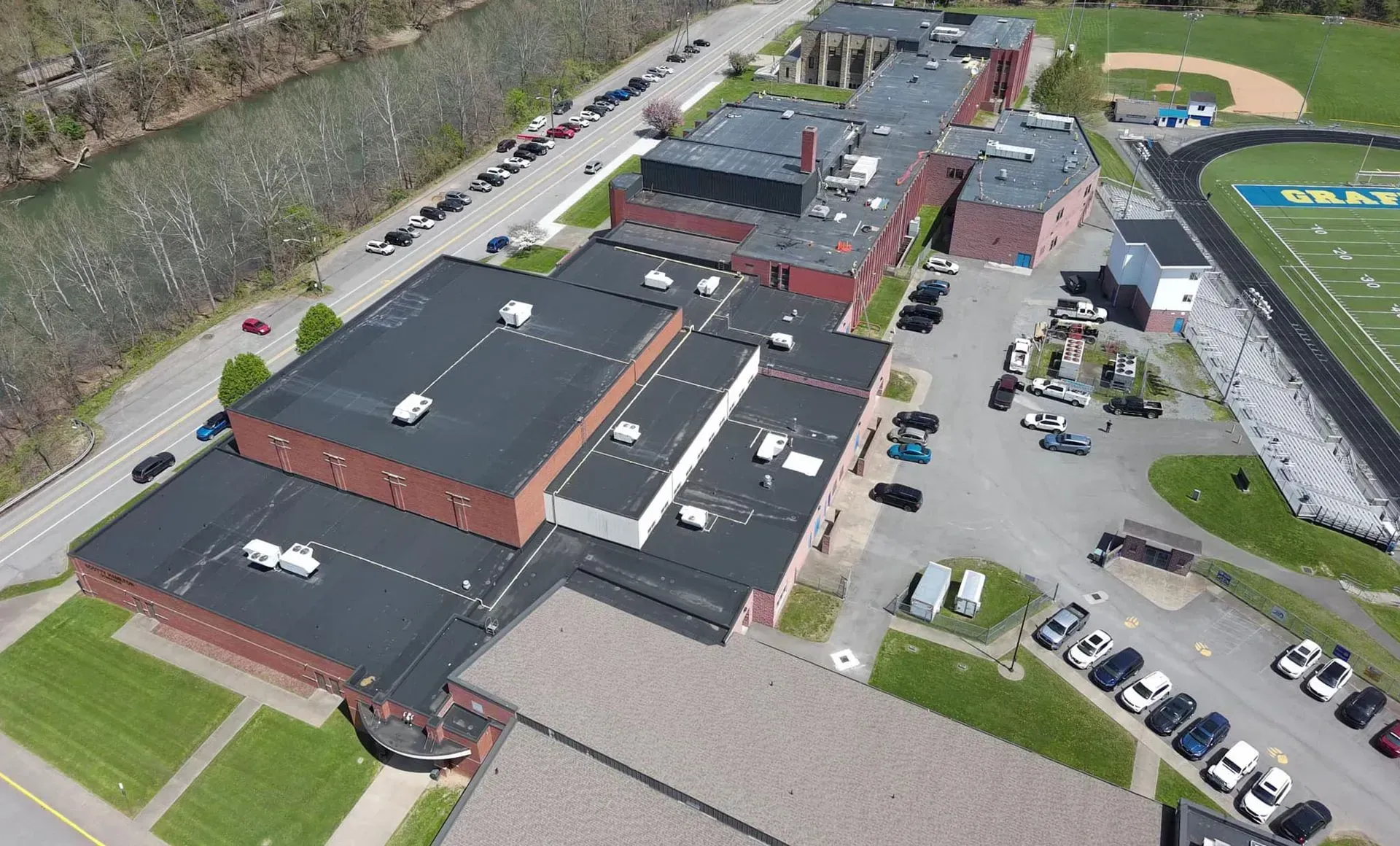
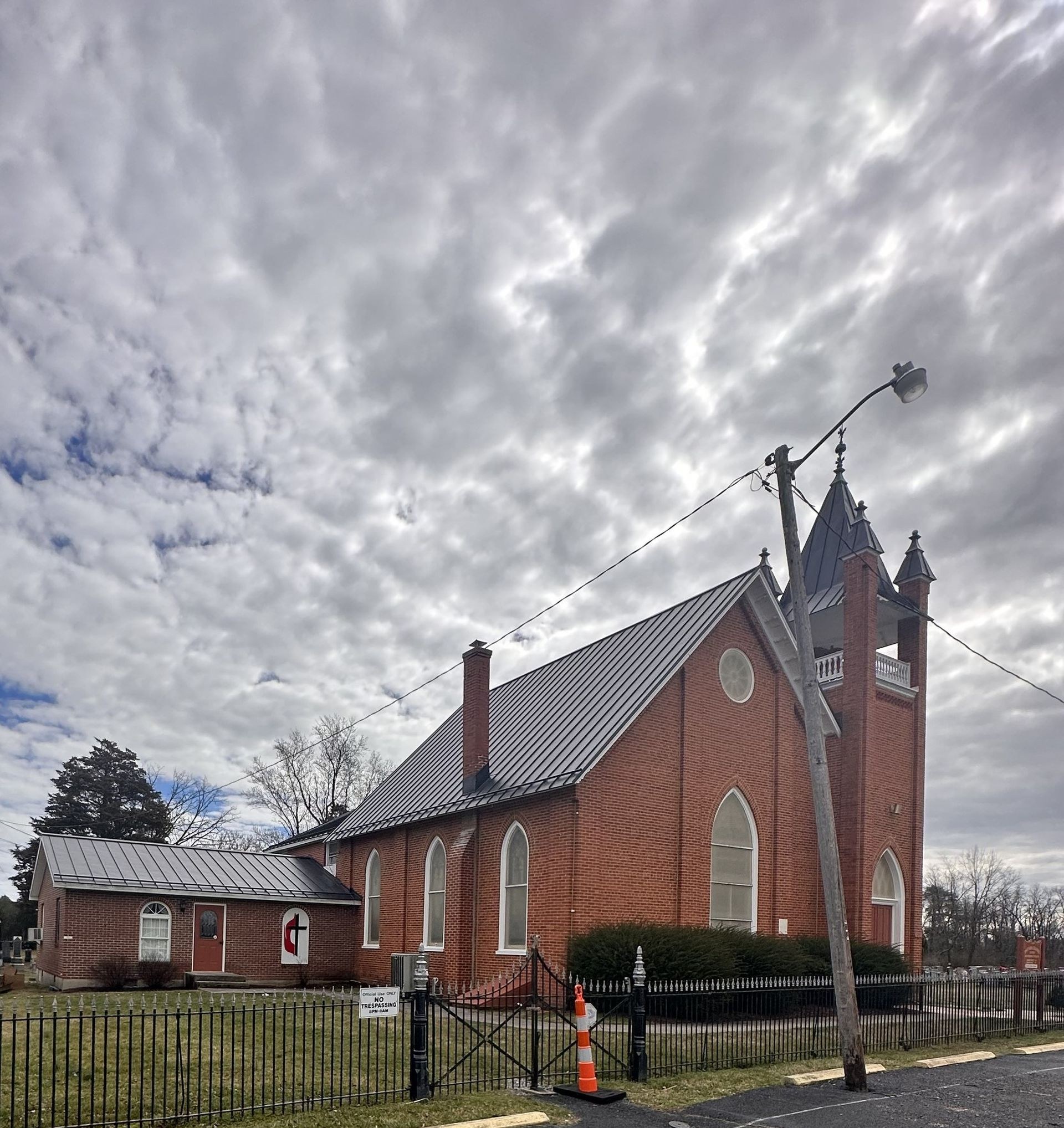
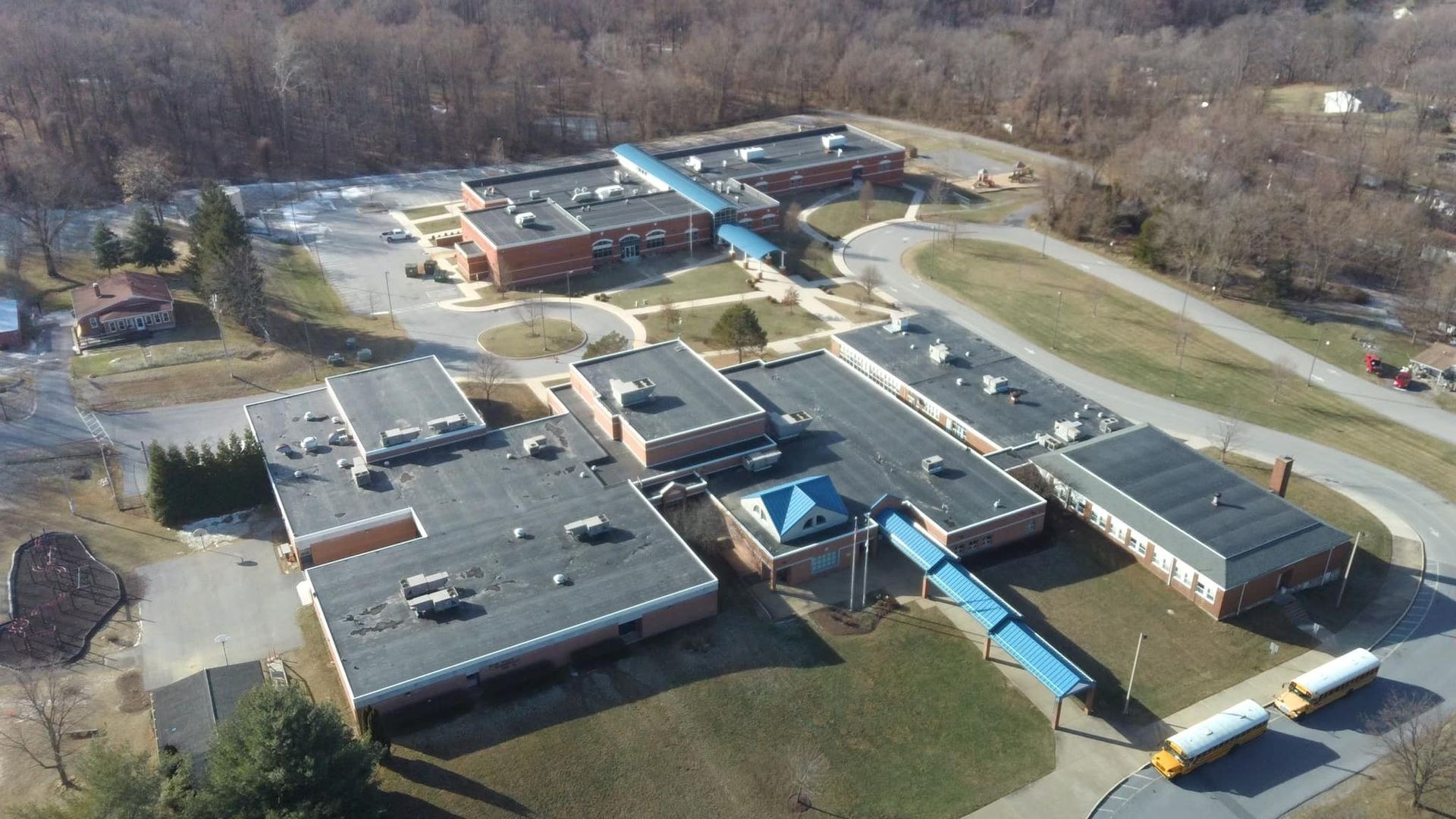
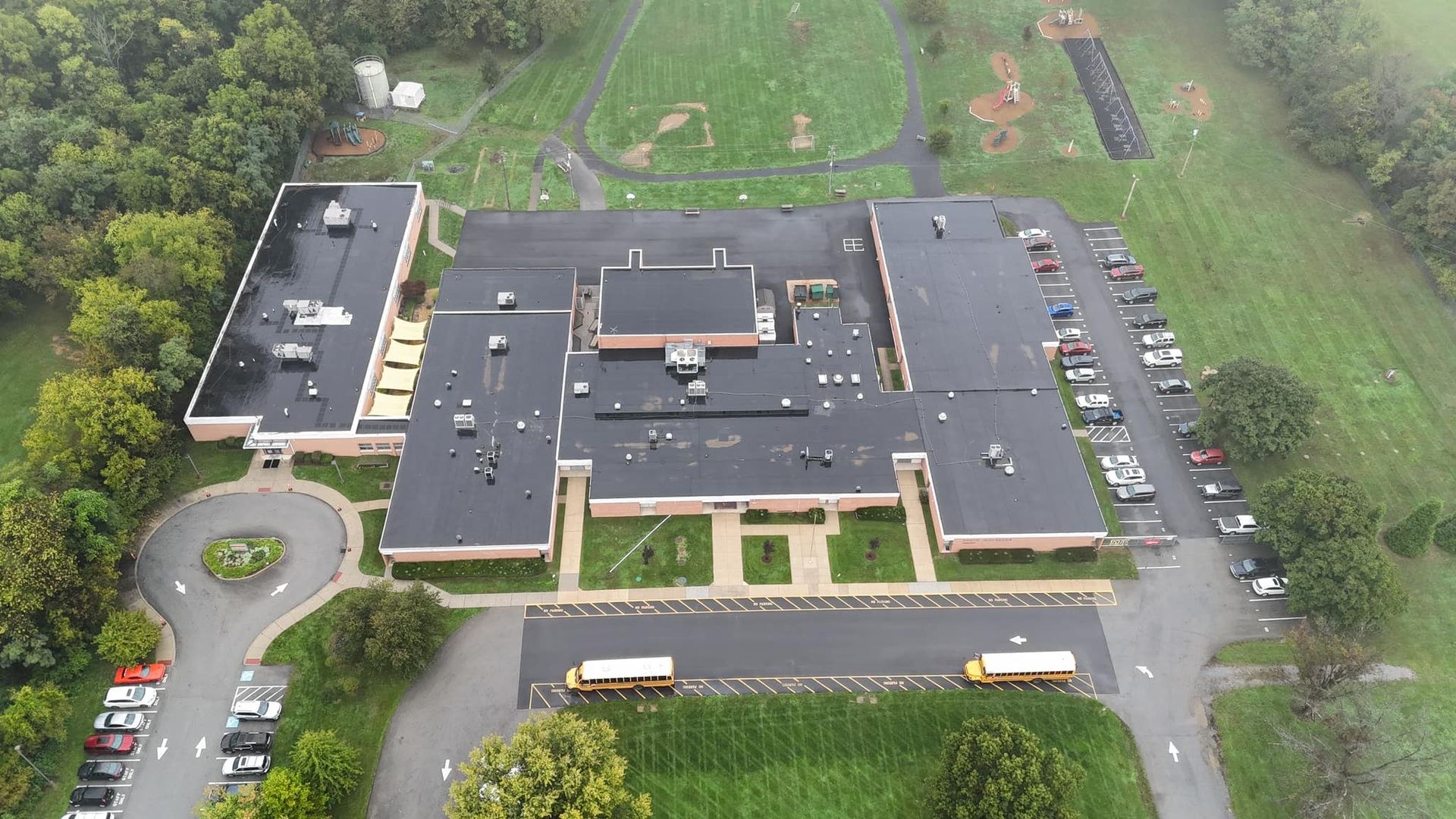
These buildings are their own category because almost nothing about them is standard. A church is a steep slope job at height over a sanctuary that has to stay dry and in use. A school is a sprawling low slope roof that can only be worked around a calendar. Both are usually decided by a committee reading a written scope, which suits us.
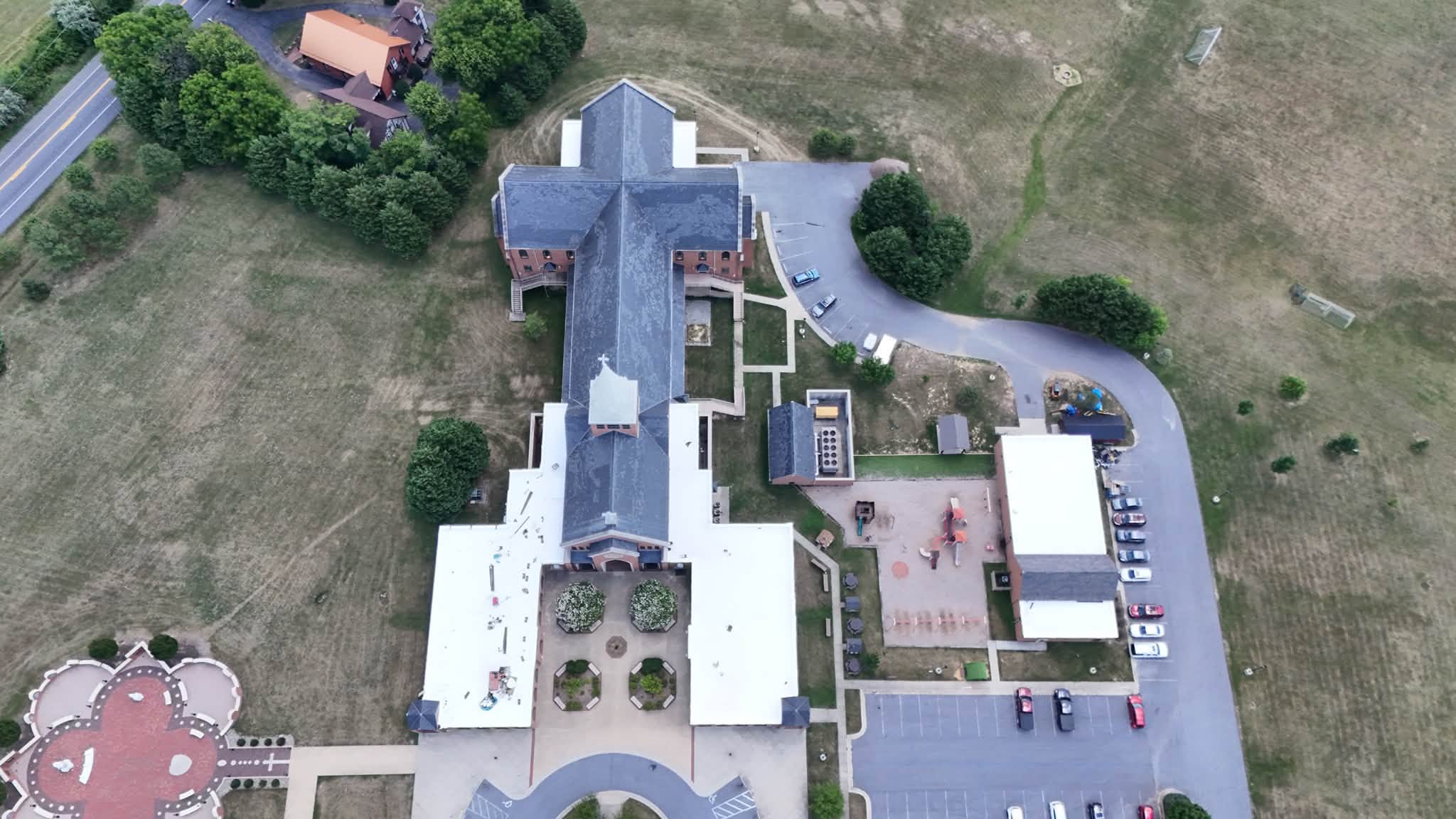
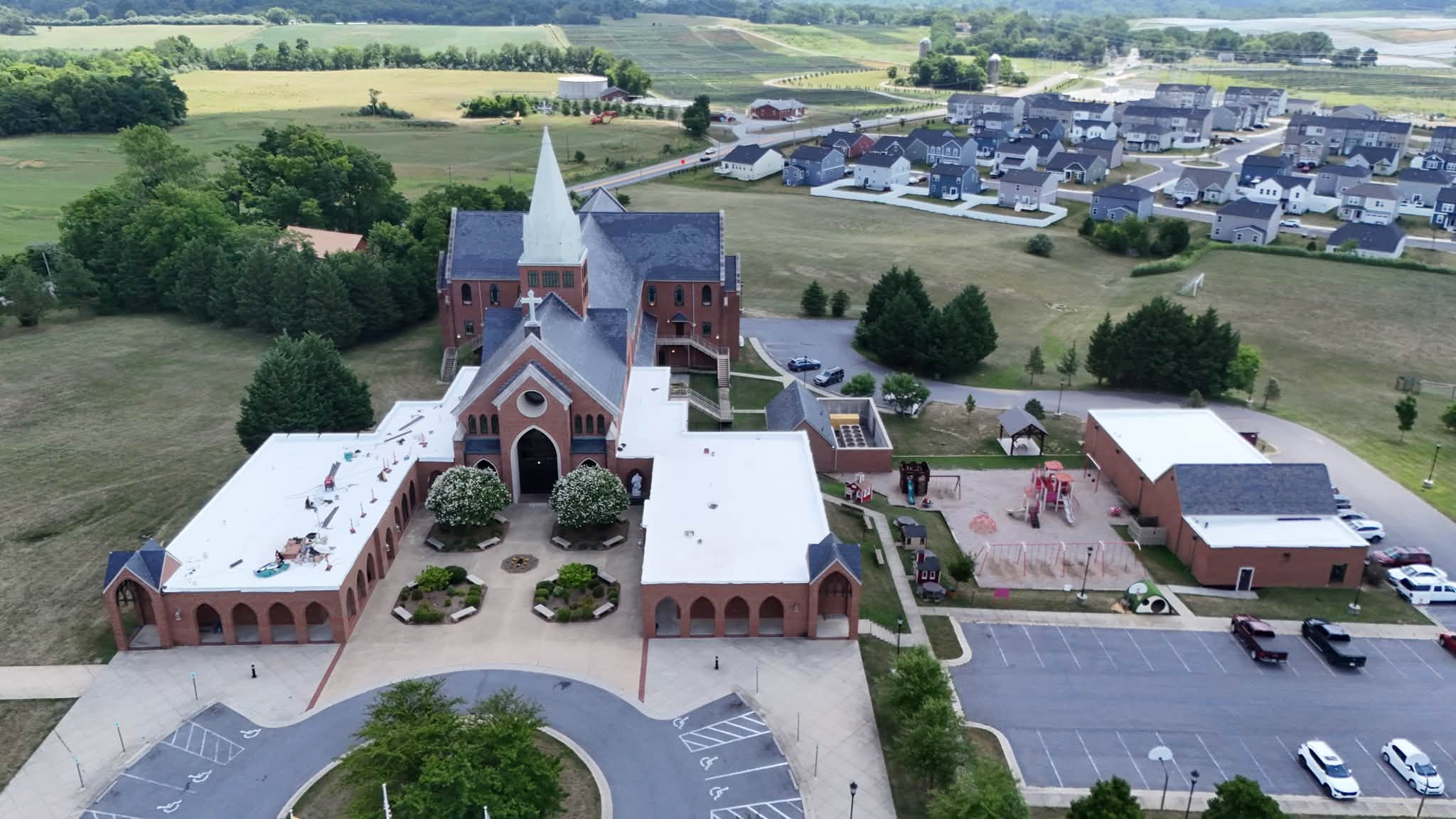
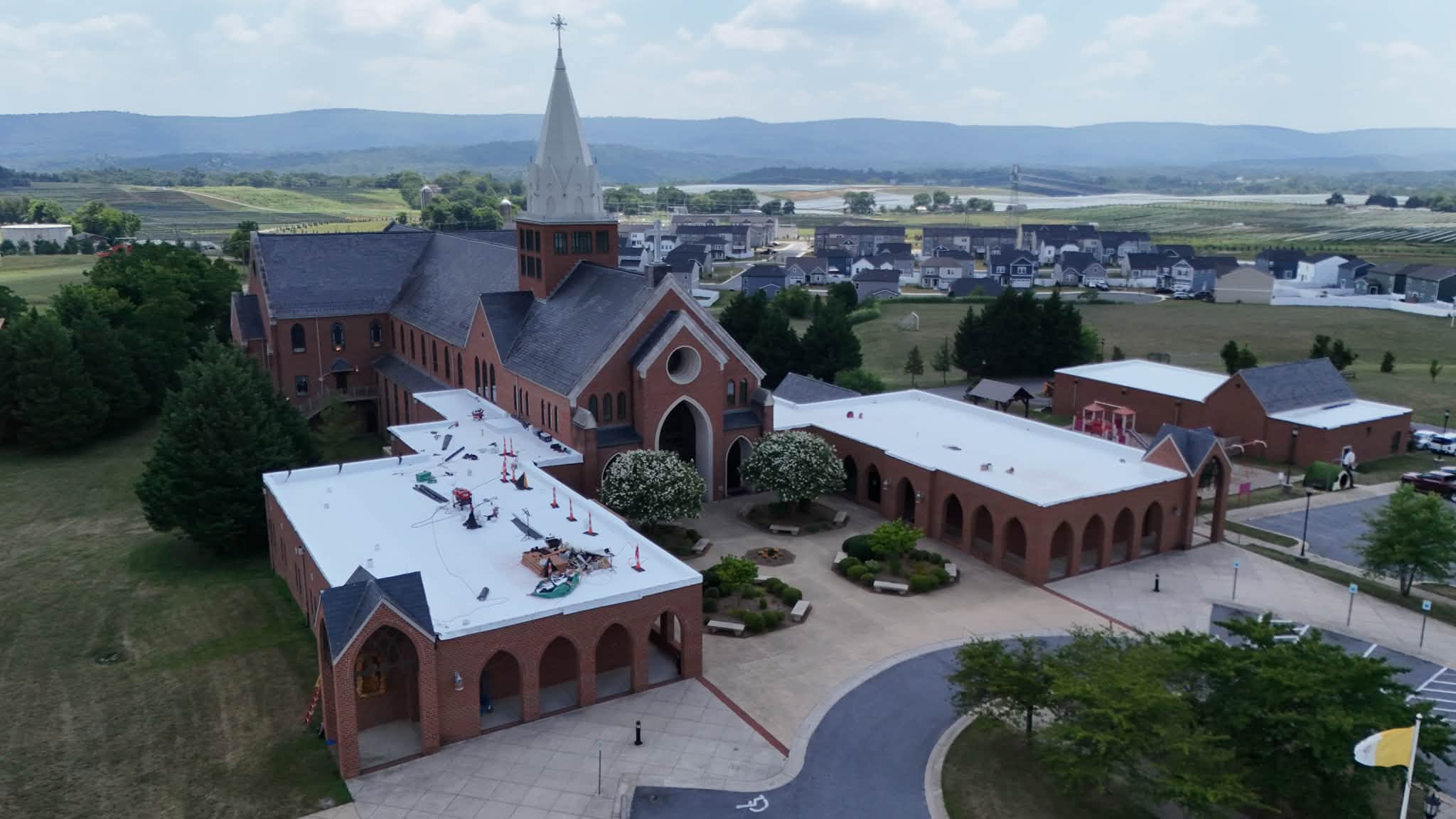
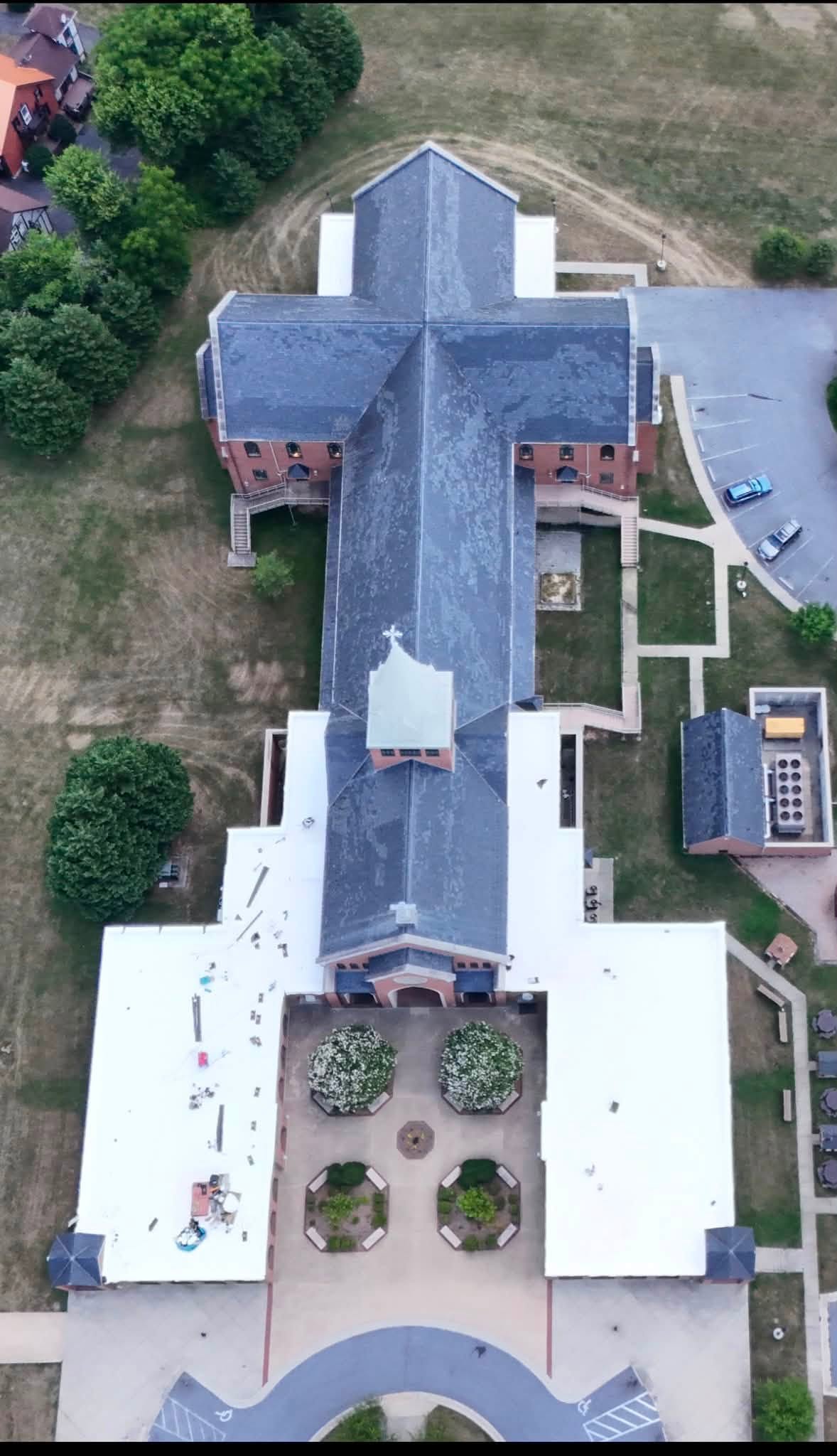
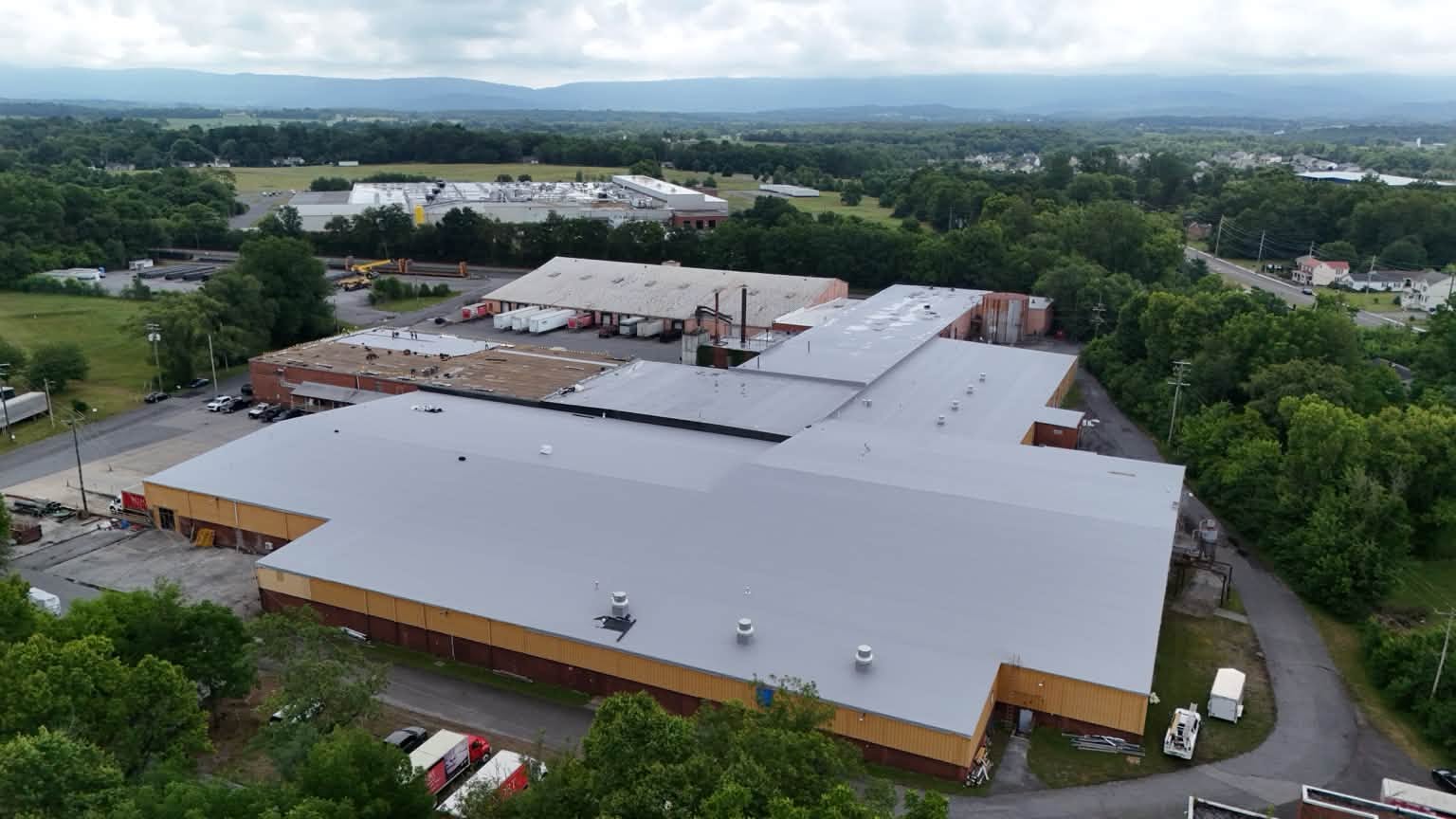
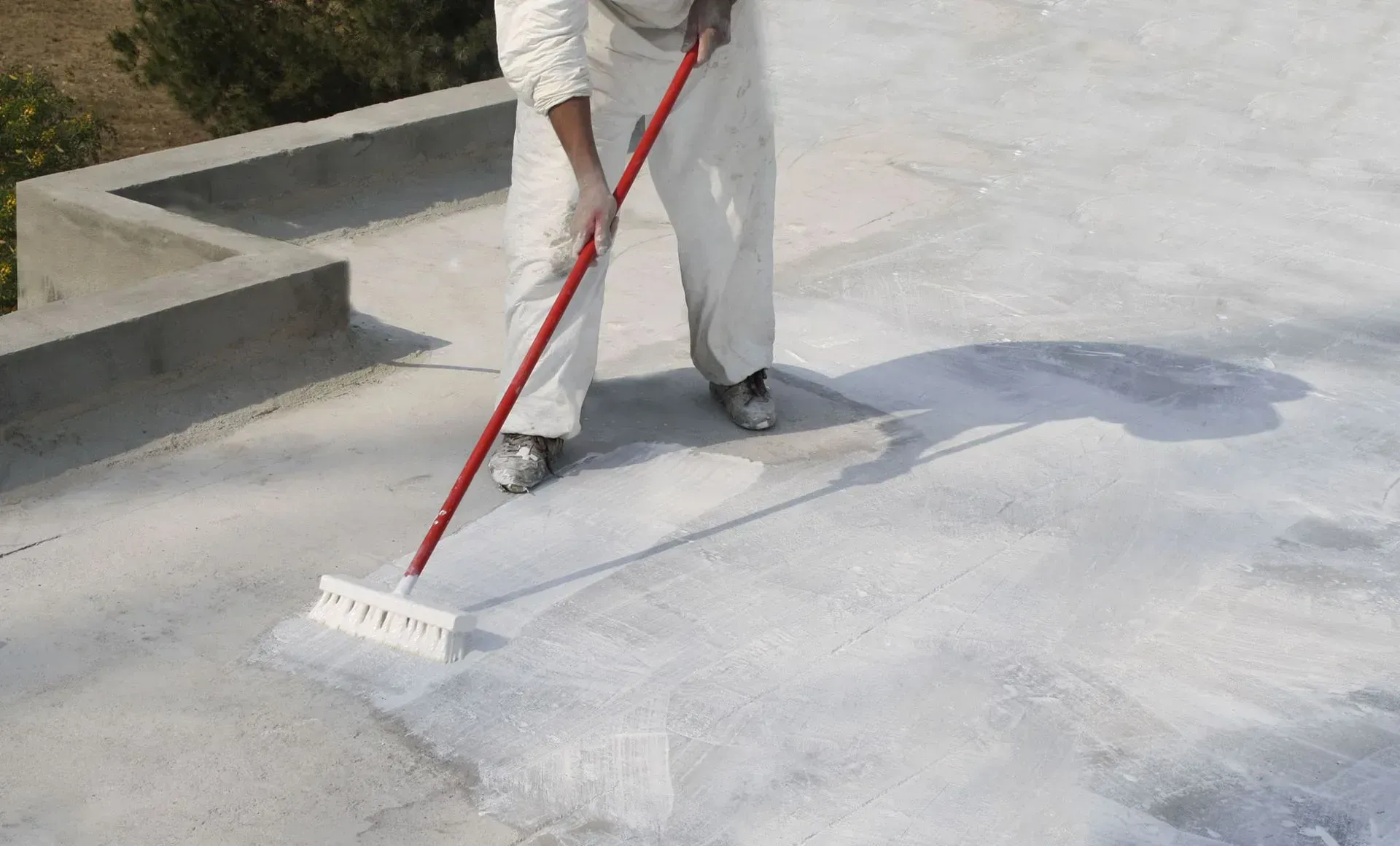
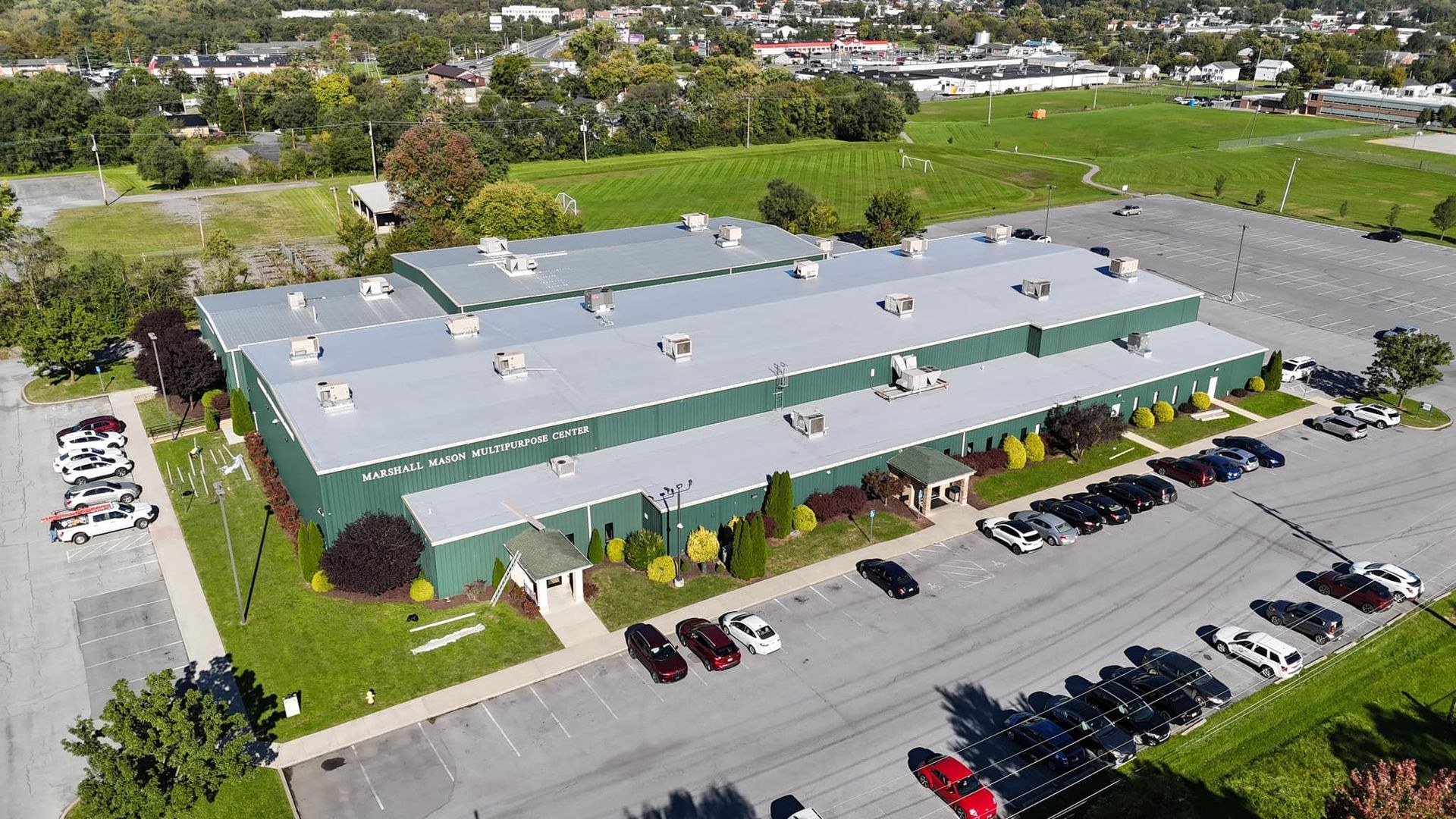
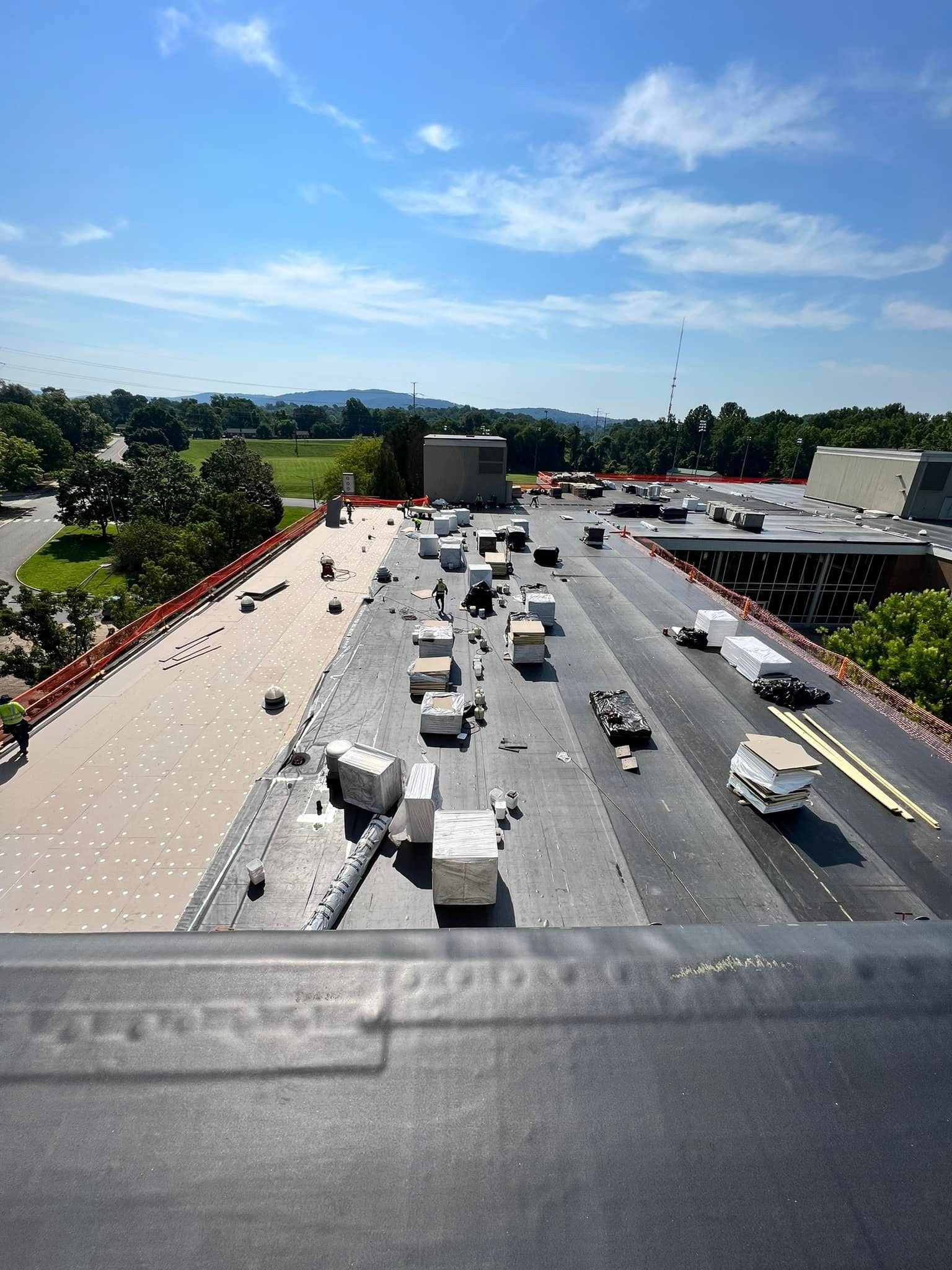
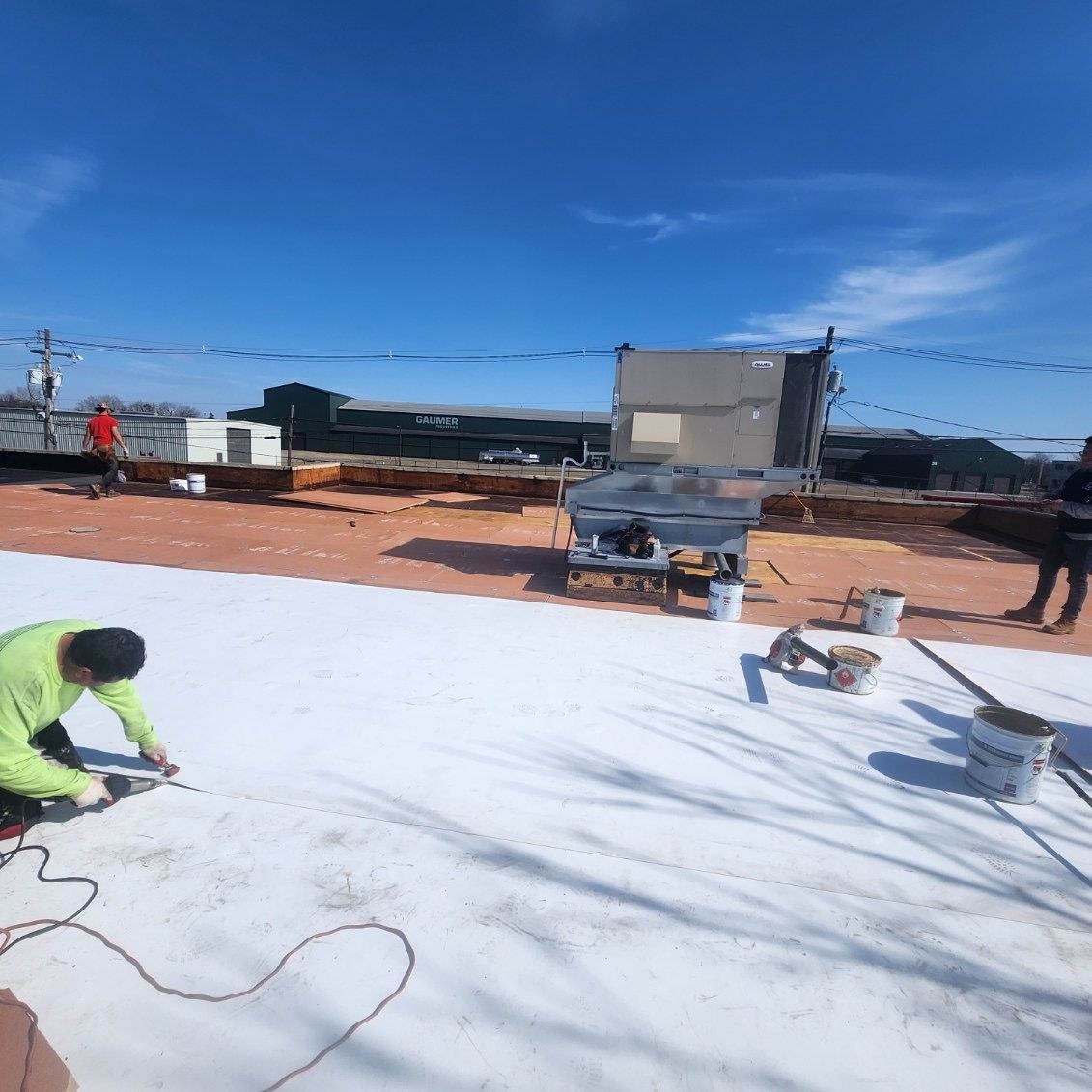
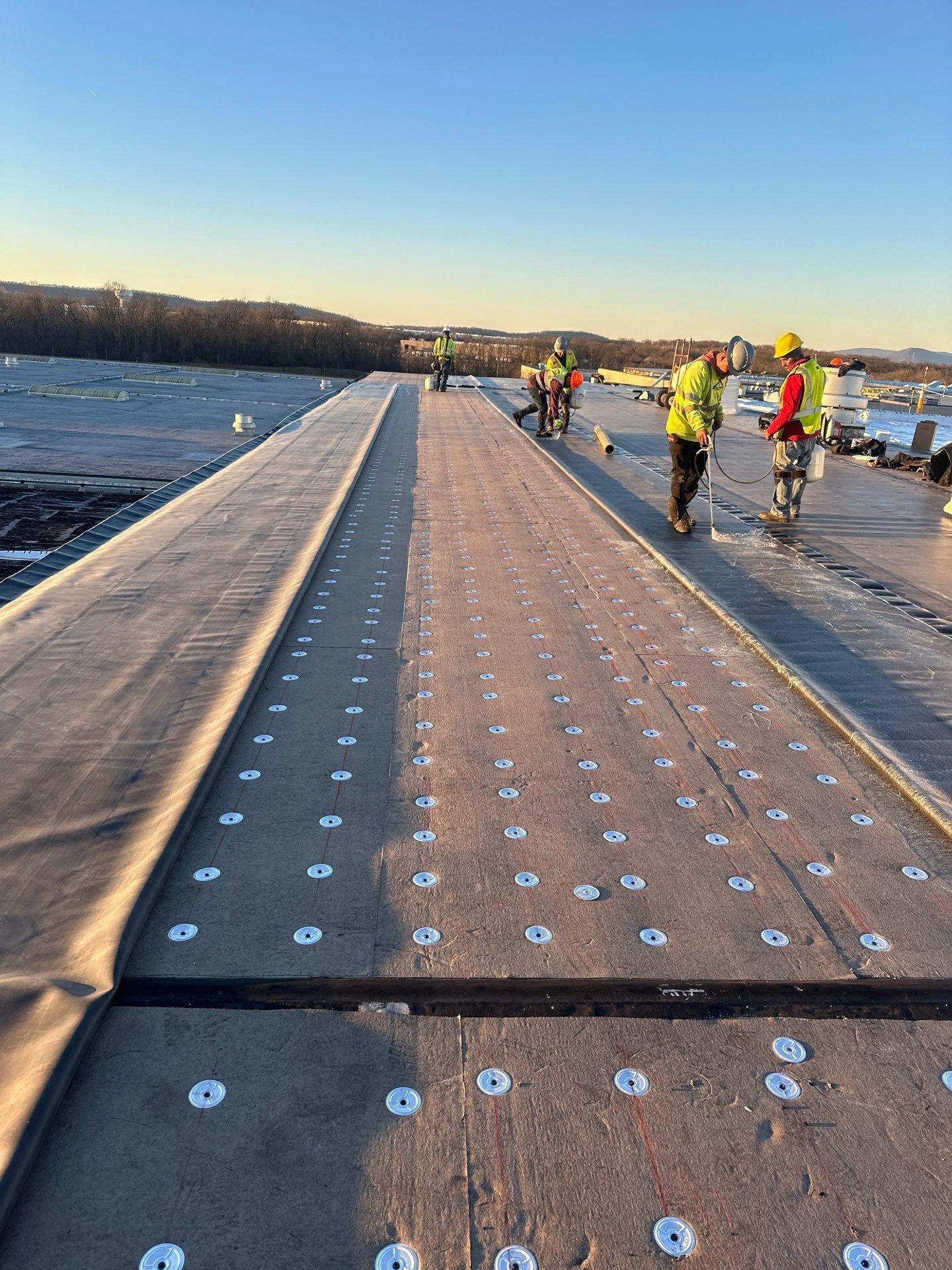
Commercial flat and low slope membrane
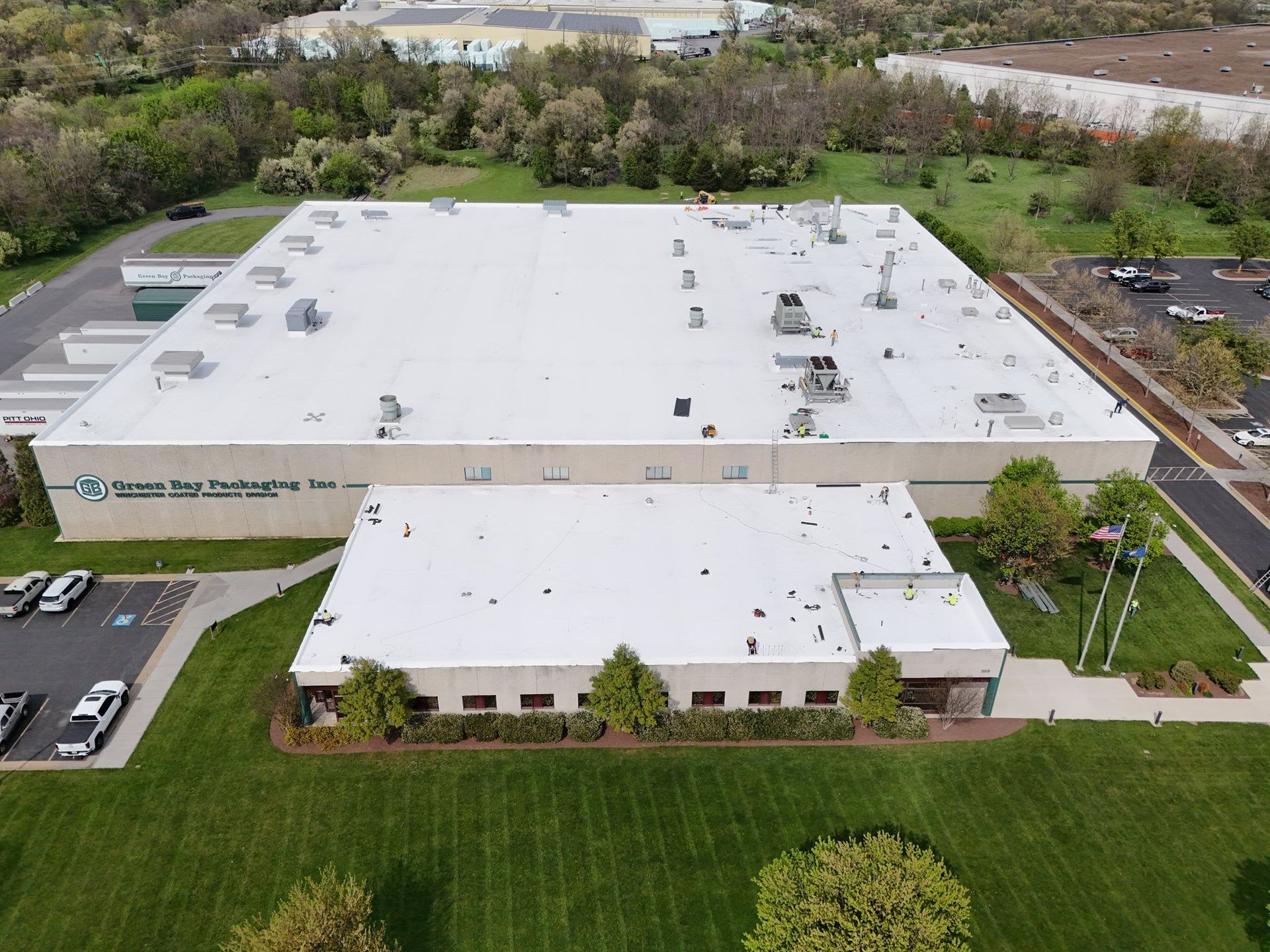
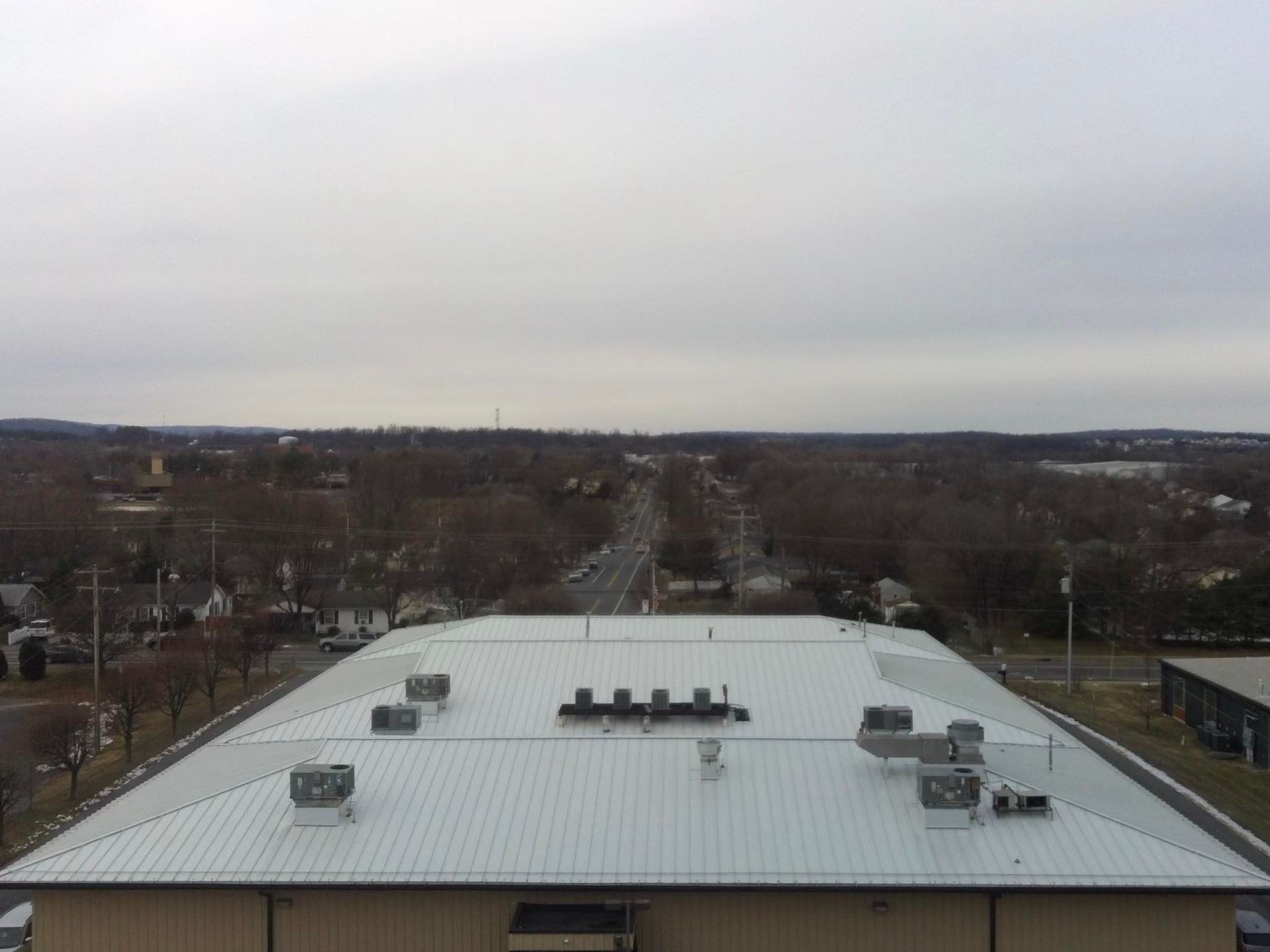
Warehouse, manufacturing, and office roofs along the Interstate 81 corridor, where the buildings are measured in acres and the work happens over an operation that cannot shut down. This is the side of the business most residential roofing companies in this area never touch.
The photos that matter are the ones of your roof
A gallery is marketing. A photo file on your own address is evidence, and it is the thing that settles arguments with adjusters, with future buyers, and with us. Here is the sequence we shoot on a job, and it is a fair list to hold any contractor to.
Before anything is touched
The inspection comes with photographs of the existing roof, the flashing, the edges, and the attic where there is access. You keep that set whether you hire us or not. If what you have turns out to be a mason’s problem or a gutter problem, that shows up here and you hear it on the first visit.
The deck, once the old roof is off
This is the photo almost nobody takes and the one that costs money. Soft or rotted sheathing gets photographed and shown to you before anything covers it back up, because on older houses this is the line item most likely to move between the estimate and the final invoice. Nothing goes over rot quietly.
Ice barrier and underlayment down
The eaves, the valleys, and the penetrations get shot with the barrier visible, then the field with the underlayment run out. Once the finish material lands, no one can tell from the outside what is under it. Fifteen minutes with a camera is the only way that layer ever gets proven.
Every piece of flashing
Valleys, chimneys, sidewalls, skylights, pipe boots, and on low slope work every curb and drain. New flashing photographed in place is the direct answer to the most common shortcut in this trade. If you ever have a leak, this folder is the first place we look before anybody gets back on the roof.
The finished roof, from the ground and from the air
Ground shots for the edges, the gutter line, and how the roof meets the walls. Aerials for the field, the ridge, and the planes you cannot see from the driveway. On a commercial low slope roof the aerial is also how we document that water is leaving where it is supposed to leave.
The file, handed to you
Photos plus the manufacturer documentation for the products that went on your roof. If you are running the work through insurance, that same documented set is what your adjuster needs, and our roof insurance claims page covers what a roofer may and may not do on your behalf in West Virginia.
What you are actually hiring
A real address you can drive to
1886 Winchester Ave, Martinsburg, WV 25405. Not a mailbox and not a service radius drawn on a map so a page can claim your town. Look it up before you look at another photograph.
Family owned since 2016
Same family, same phone number, still answering it the spring after the job when the callbacks start. Photographs are cheap. Being reachable in year four is not.
Licensed, bonded, and insured
Licensed in Virginia, West Virginia, Maryland, Pennsylvania, and Florida. Ask for the certificate of insurance to come to you from the insurance agency rather than as a file forwarded by us, and call the agent to confirm it is in force today.
4.9 stars from 50 Google reviews
Written by people who had us on their roof rather than by anyone looking at a picture of it. Read them, then read the ones for whoever is bidding against us.
Go deeper on any project type above
Residential Metal Roofing
Standing seam on houses, from new construction to replacing a failing shingle roof for good.
Asphalt Shingle Roofing
The most common roof in Berkeley County, and the one where the layers underneath decide everything.
Specialty Roofing
Slate, tile, and the older buildings where the roof is part of the architecture.
Roof Replacement
Full tear off and rebuild when patching has stopped being worth the money.
Roof Repair
Flashing, leaks, and storm damage handled before a repair turns into a replacement.
Commercial Roofing
Membrane, coatings, and structural metal for warehouse, retail, church, and institutional buildings.
Single Ply Membrane Roofing
The low slope systems on most of the flat roofs pictured on this page.
Commercial Metal Roofing
Structural standing seam over the large spans that a membrane roof cannot cover.
Roof Coatings
Restoration for a low slope roof that still has life in it and does not need a tear off.
Roof Inspection
A free documented inspection, photos you keep, and an honest answer on repair versus replacement.
Steel Building Construction
New pre engineered steel buildings, roof and shell together.
About Black Stone Roofing
Who we are, how a job runs, and how to check out any roofer standing in your driveway.
Martinsburg first, then the Panhandle and the valley
Do not see your town? We work the whole corridor, so ask or call (540) 550-9703.
Questions people ask about this page
-
Are these your own photographs or purchased stock images?
They are our own job photographs. You do not have to take that on faith, and you should not take it on faith from anybody. Save any image off this page and run it through a reverse image search. If it belongs to a manufacturer, a supplier, or another roofing company, that search will find it in seconds. We would rather you spend two minutes checking than assume, because the assumption is exactly what makes stock photography work for the companies that use it.
-
Where were these roofs?
These are jobs out of the Martinsburg area and the surrounding region we cover from here. We are not going to attach a different city name to a photograph just because a page is about that city, which is a common trick and an easy one to catch once you know to look for it. If a specific roof on this page matters to you, call (540) 550-9703 and ask about that one. We can tell you what kind of building it was, roughly when it was done, and what system went on it.
-
Why are there no before and after pairs?
Because a before and after pair is the most persuasive thing a roofer can publish and one of the easiest to assemble dishonestly, since nothing in the pair proves the two photographs are the same building. We would rather put our effort into the documentation of your roof, where the before photos, the exposed deck, the flashing, and the finished work all carry your address. That set is worth something to you. A pair of images on a marketing page is not.
-
Can I go see one of these roofs in person?
Ask us and we will try. What we will not do is hand out a customer’s address so a stranger can park outside their house, so the answer depends on the owner saying yes first. For commercial and institutional buildings that is usually straightforward. For homes it is a conversation. If you want to see standing seam or membrane work up close without waiting on that, tell us what system you are considering and we will find you something publicly visible in the area.
-
Why is so much of this gallery standing seam metal?
Partly because we do a lot of it across houses, churches, farm buildings, and commercial buildings, and partly because metal is honest in a photograph. Every seam is a straight line laid across the building, so sloppy layout has nowhere to hide. A shingle roof forgives a great deal visually, which is why we would rather you judge shingle work from a written scope and a documented deck than from a picture of the finished surface.
-
Do I get photographs of my own roof?
Yes, and you keep them whether you hire us or not. The free inspection comes with photographs of the existing roof, the flashing, the edges, and the attic where there is access. If you go ahead with the work, you also get the deck once it is open, the barrier and underlayment layers before they are covered, every piece of flashing in place, and the finished roof, along with the manufacturer documentation for what went on. That file is what settles questions later, with an adjuster, with a buyer, or with us.
-
Do you work on historic buildings in Martinsburg?
Yes, and the city has a lot of them. The Downtown Martinsburg Historic District alone takes in 281 contributing buildings and was listed on the National Register of Historic Places in 1980, and there are ten registered historic districts across the city in total. Martinsburg is also home to the B and O Railroad Shops, a National Historic Landmark whose 1866 roundhouse has a cast iron frame that was cast in Baltimore and shipped here to be erected and bricked around, designed by the engineer Albert Fink and covering more than 20,000 square feet around a 50 foot turntable and sixteen locomotive bays. In a town with that much older building stock, roof material and detail are not always purely the owner’s choice, and confirming what applies at your address is a step that belongs before the estimate rather than after the tear off.
-
What should I ask for instead of a gallery?
Four things, from every bidder. A written scope that lists what is coming off, what is going back on, which layers are included, and what happens if the deck opens up rotted. A license number, which West Virginia law requires to appear in contracting advertisements. A certificate of insurance sent to you by the insurance agency rather than forwarded by the contractor. And the workmanship coverage written into the contract in plain terms before you sign. Read those four documents against each other and the photographs stop mattering very much.
Ask about any roof on this page
Free documented inspection anywhere we work, with photos you keep whether you hire us or not. Call (540) 550-9703 or email Info@BlackStoneRoofing.org. Open 24 hours a day, seven days a week, and somebody picks up at 2 a.m.