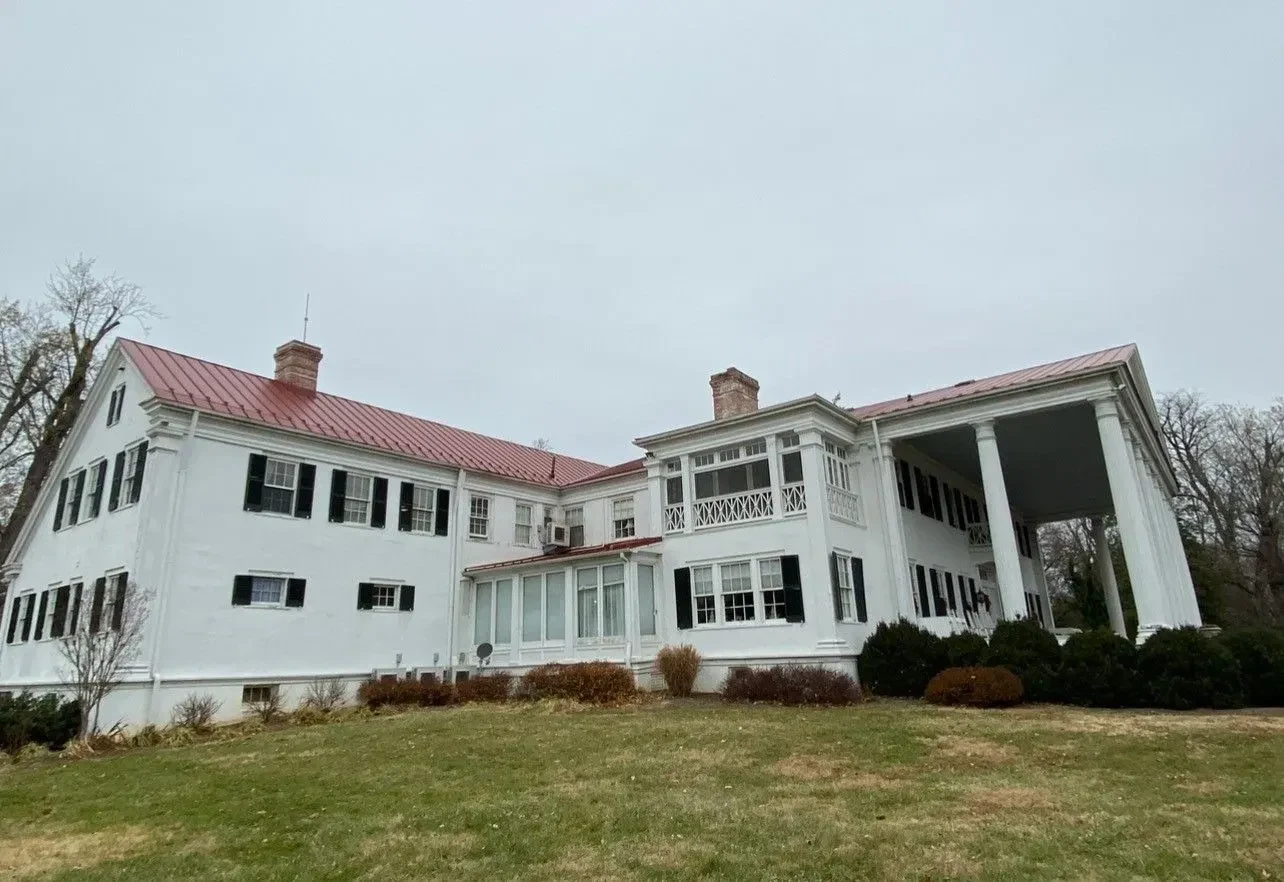
Home/Service Areas/Winchester, VA
WINCHESTER, VIRGINIARoofing Contractor in Winchester, VA
Winchester is an independent city. It is the county seat of Frederick County and it is politically separate from it, which means Frederick County does not issue your roof permit and the historic review that governs a downtown roof has no equivalent out in the county. We are based at 1886 Winchester Ave, Martinsburg, WV 25405, roughly 23 miles up I-81 with Bunker Hill at the halfway mark, so a Winchester call is about a 25 to 30 minute drive for us. We do not have a Winchester office and we are not going to pretend otherwise.
Leaking right now
Emergency response
We answer 24 hours. I-81 South from the shop, tarped and stabilized before it reaches lath and plaster.
Planning ahead
Free inspection
Written scope, photos, and a straight answer on whether your address triggers city review.
Request your free estimate
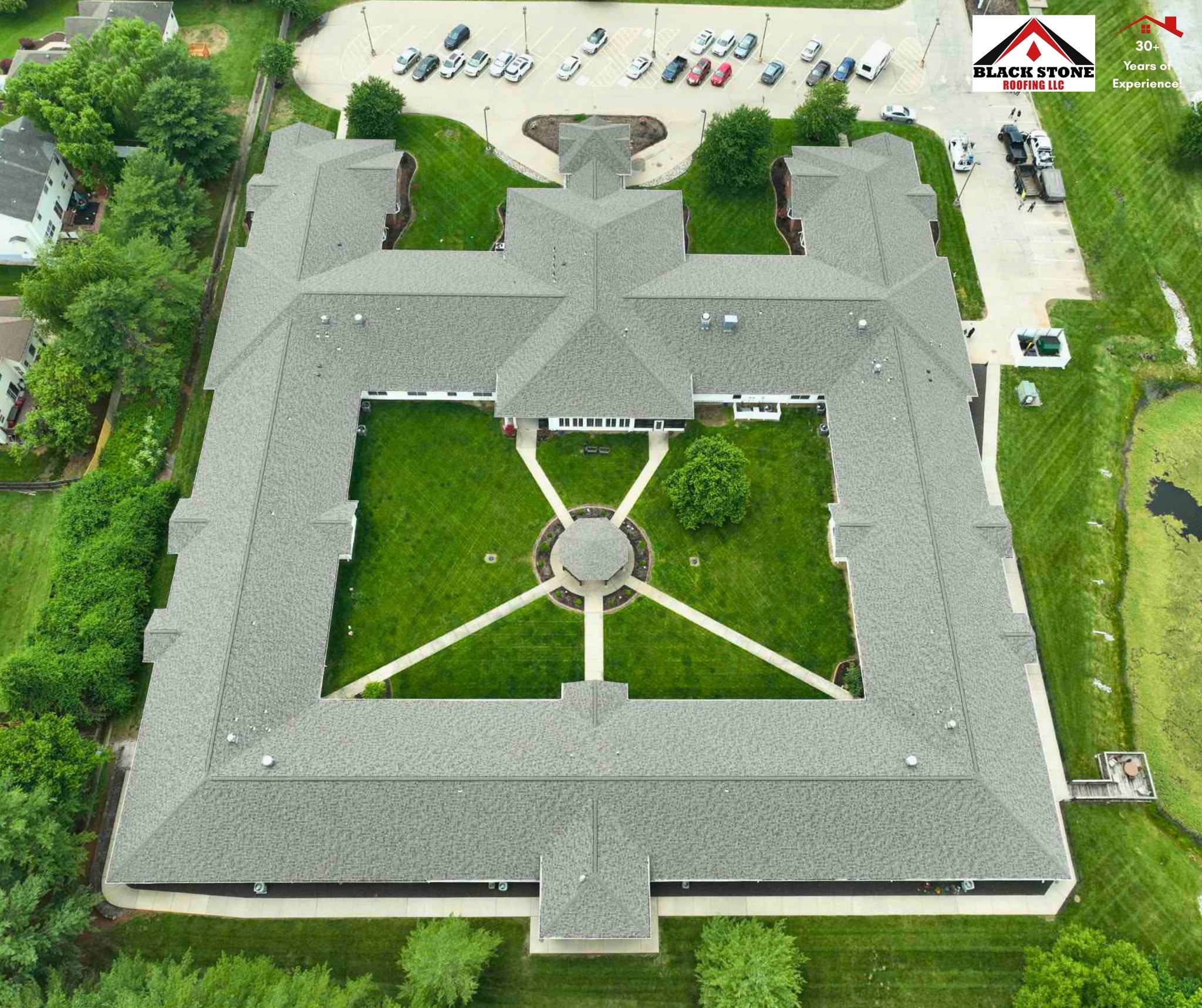
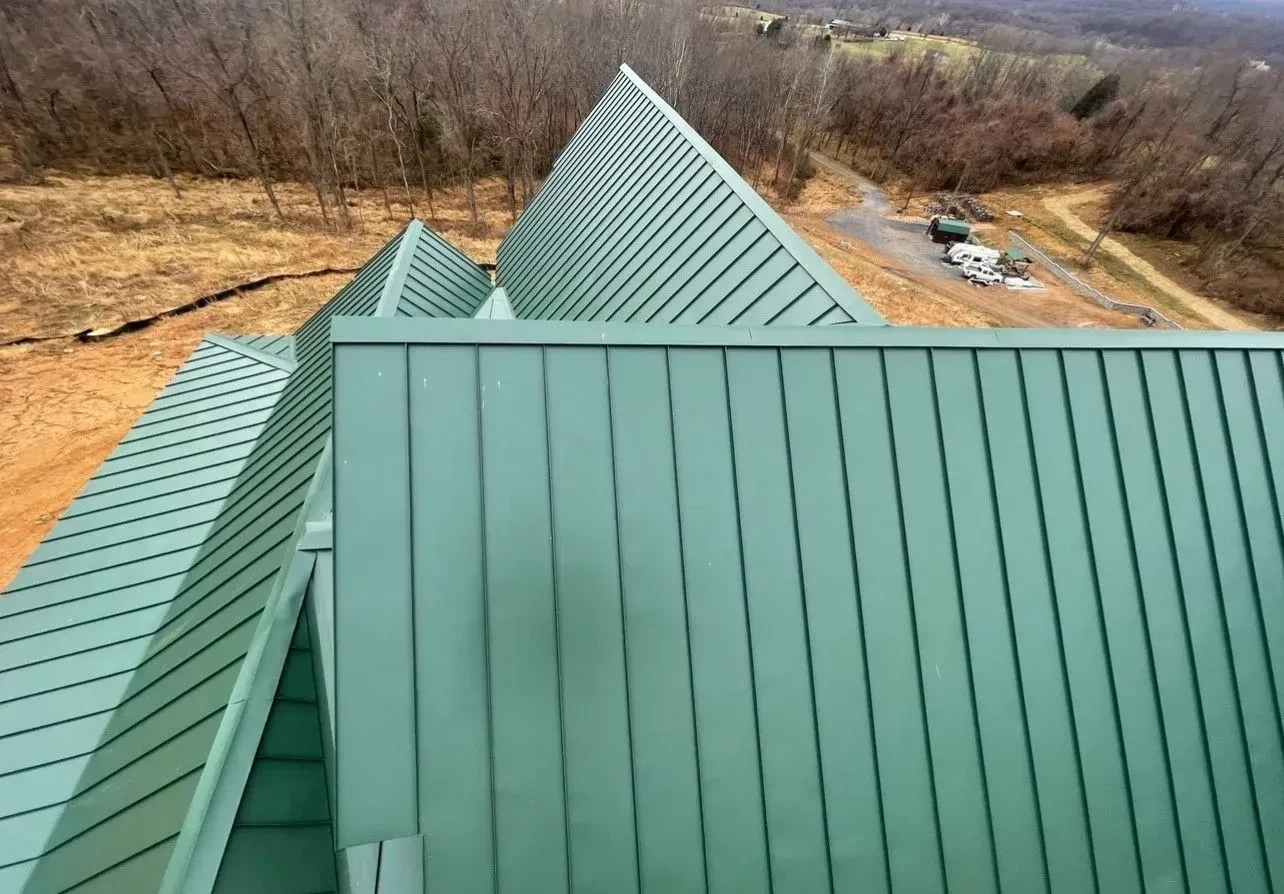
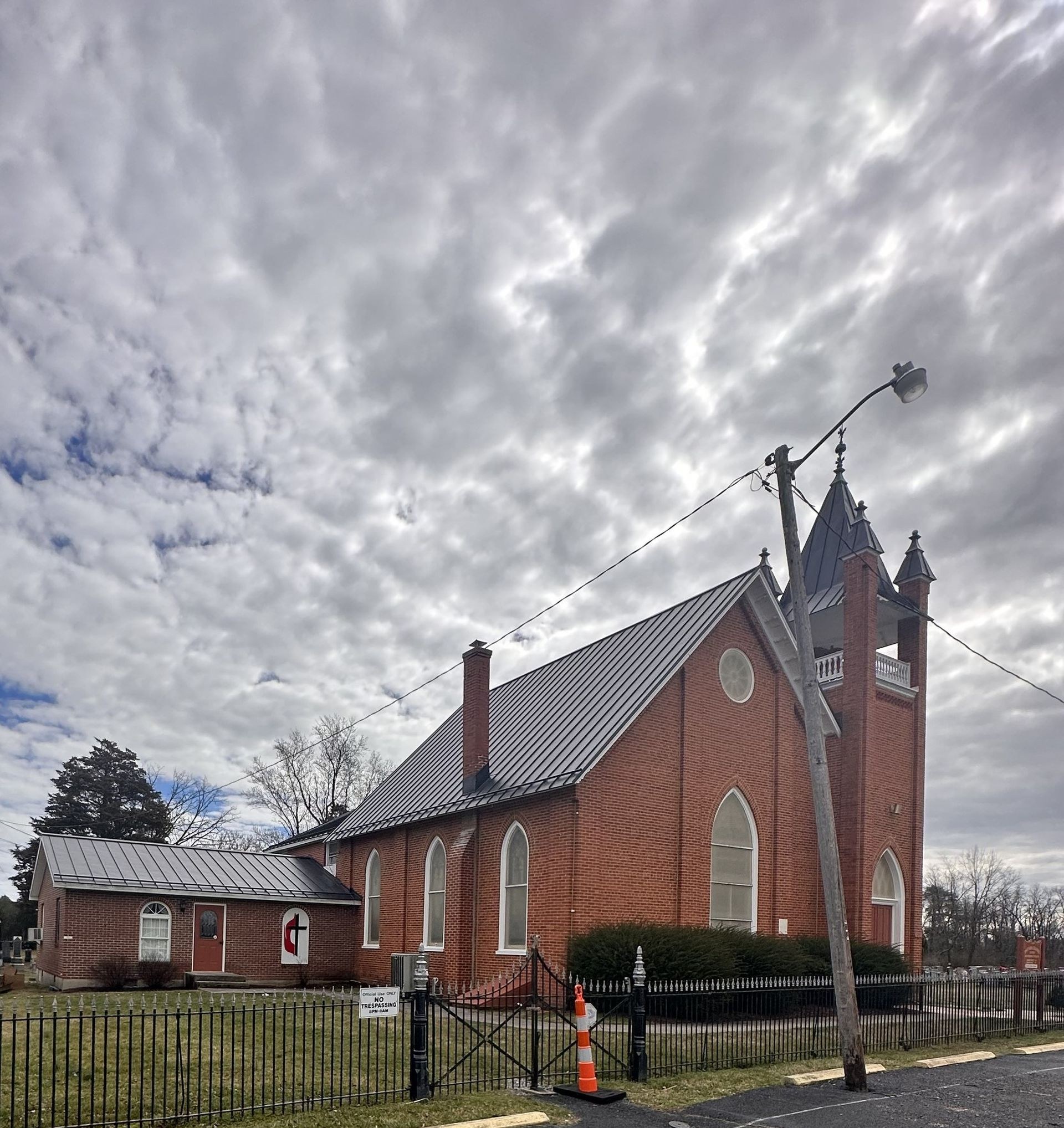
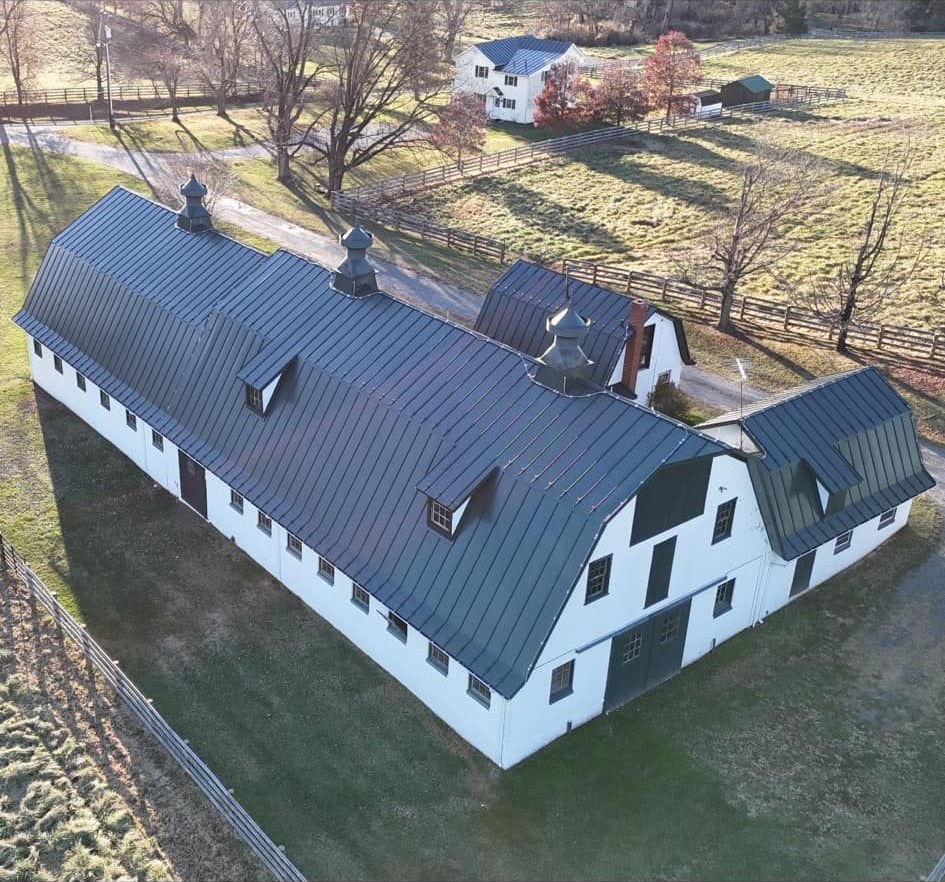
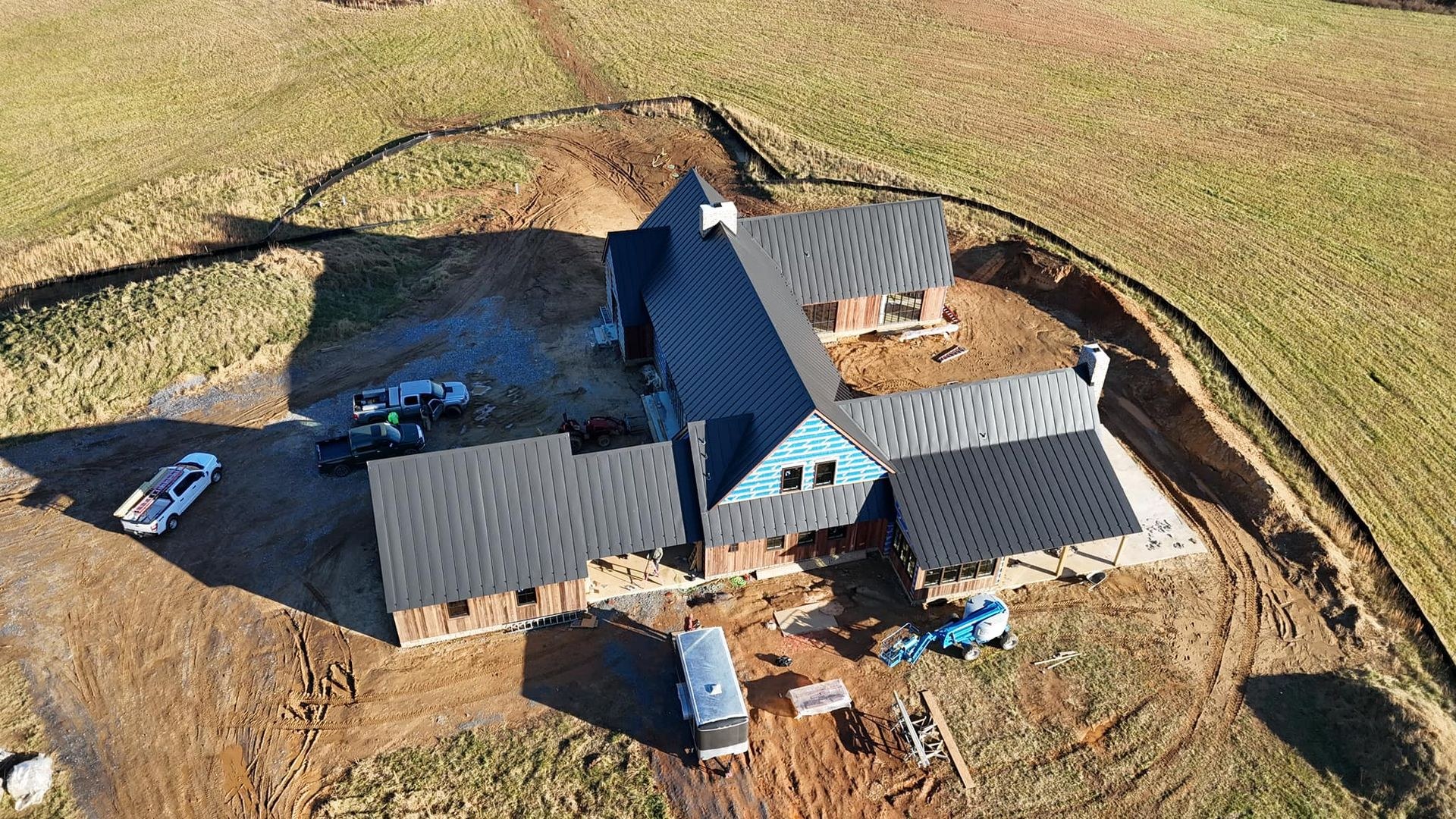
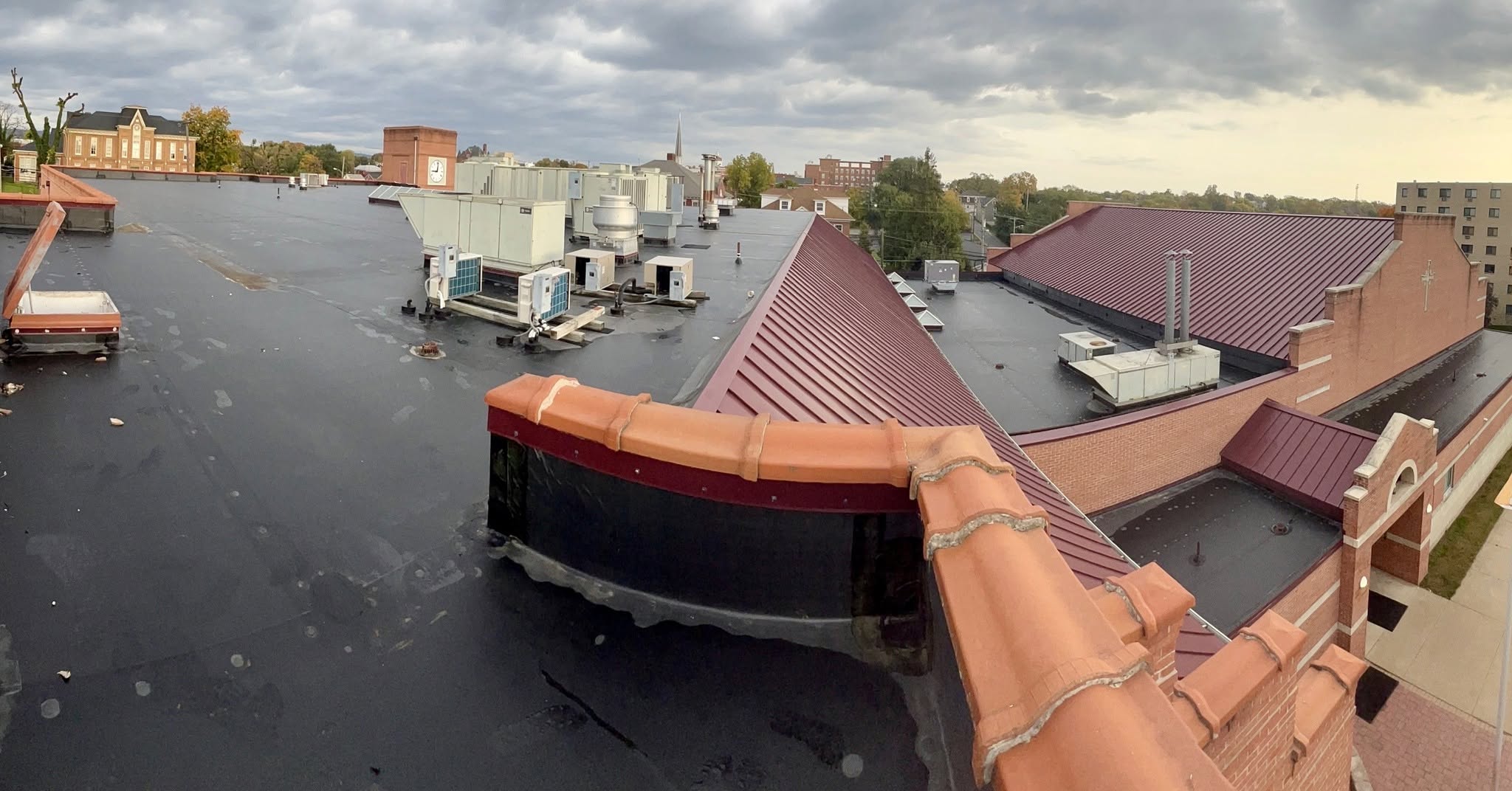
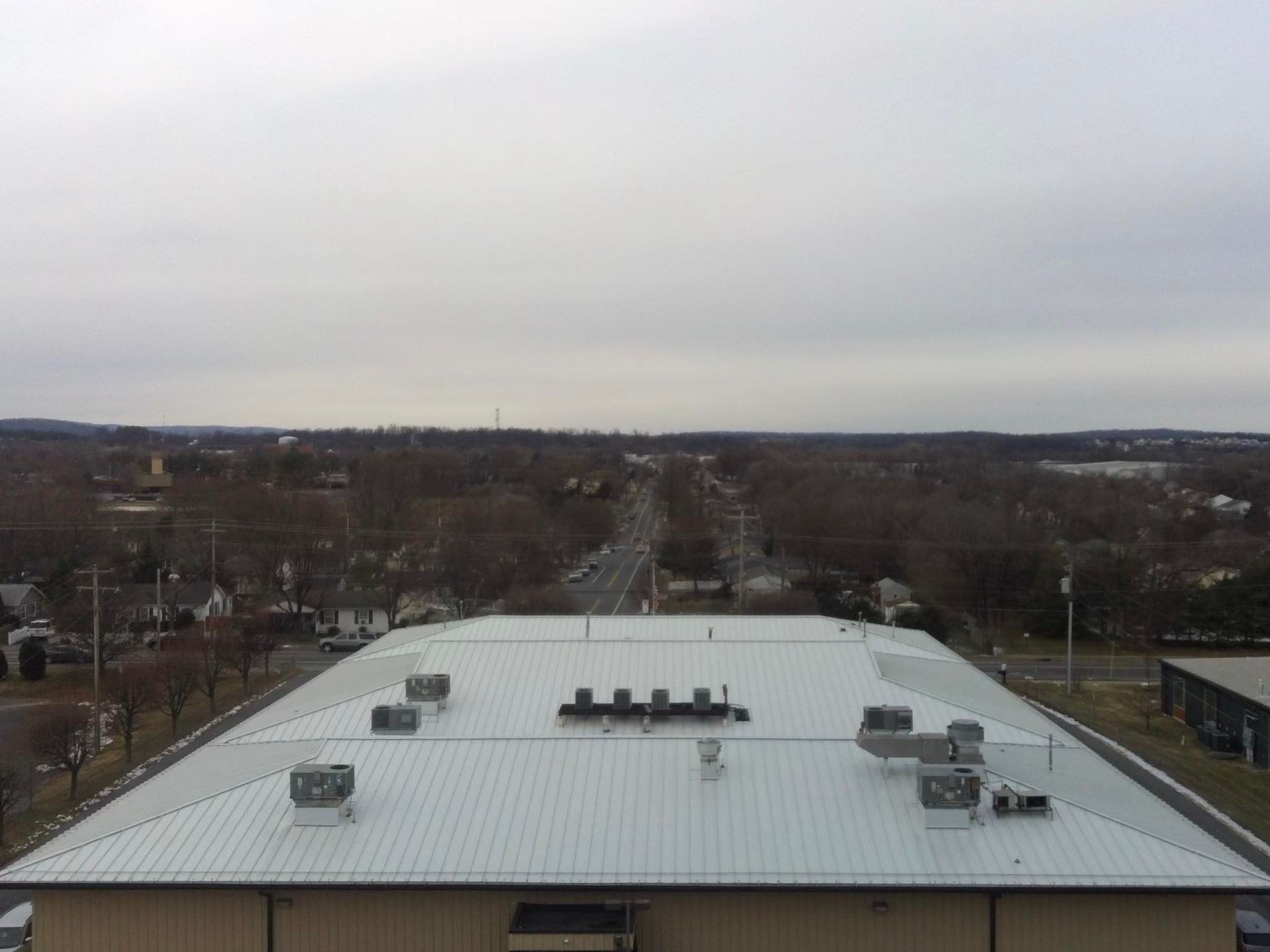
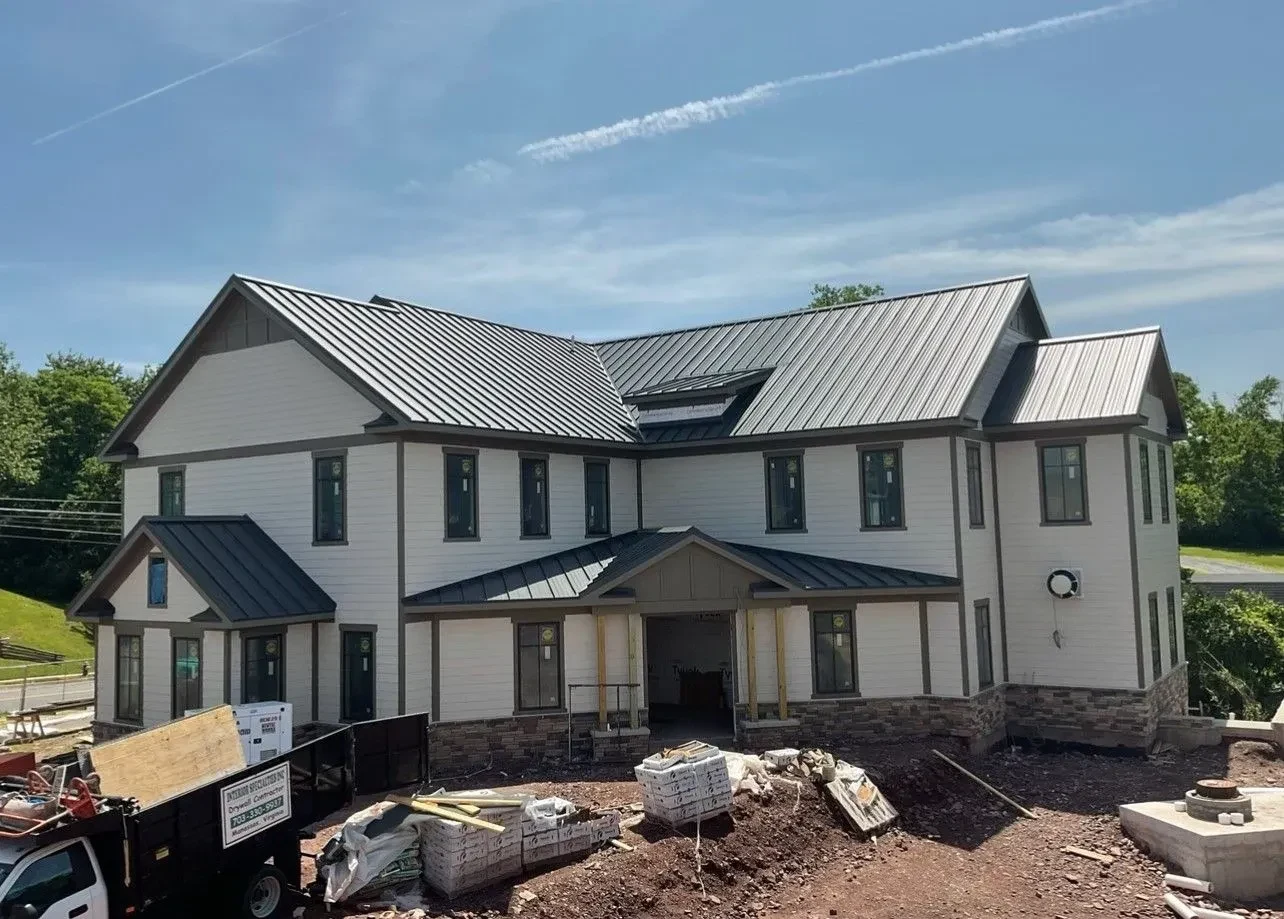
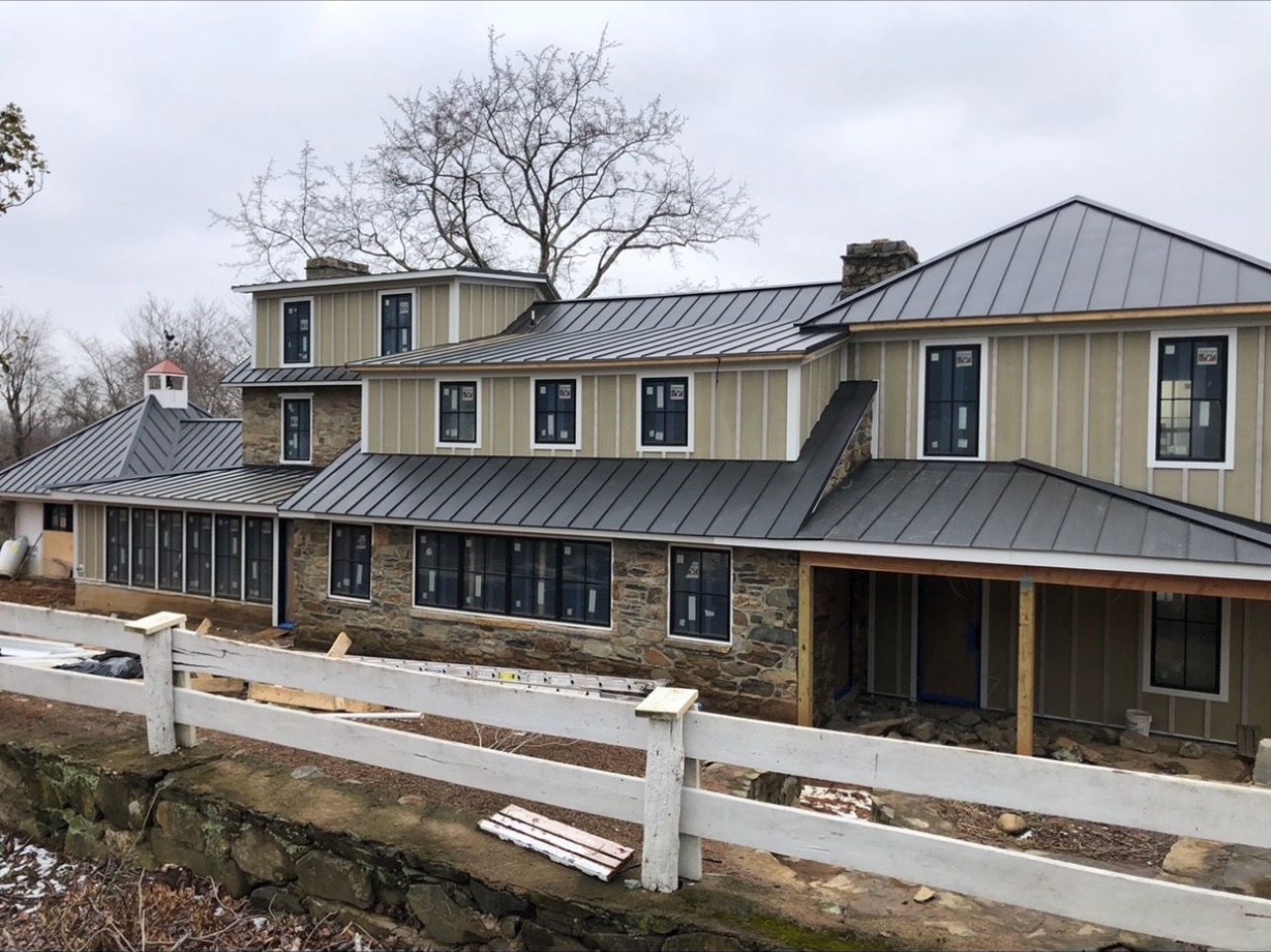
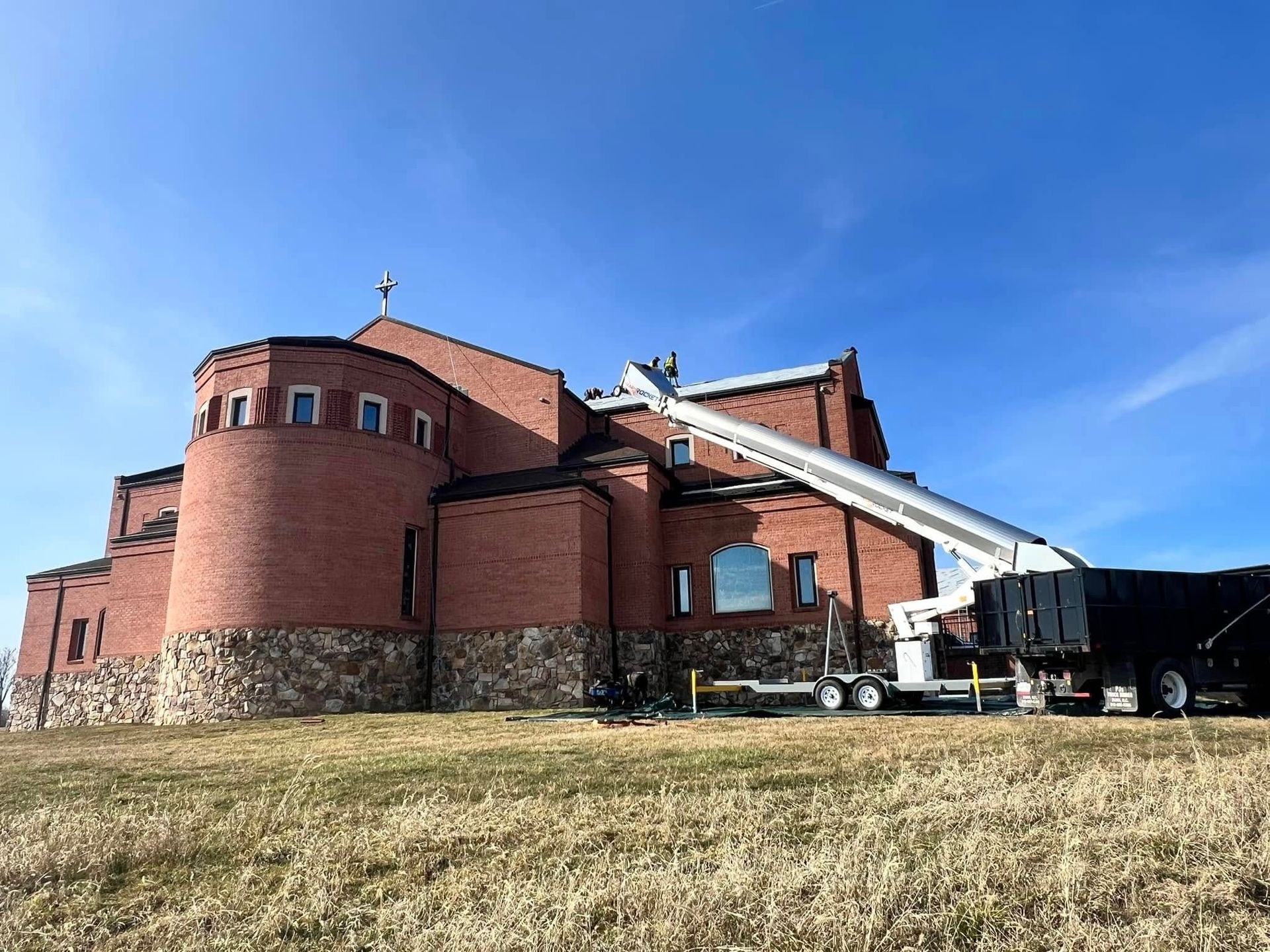
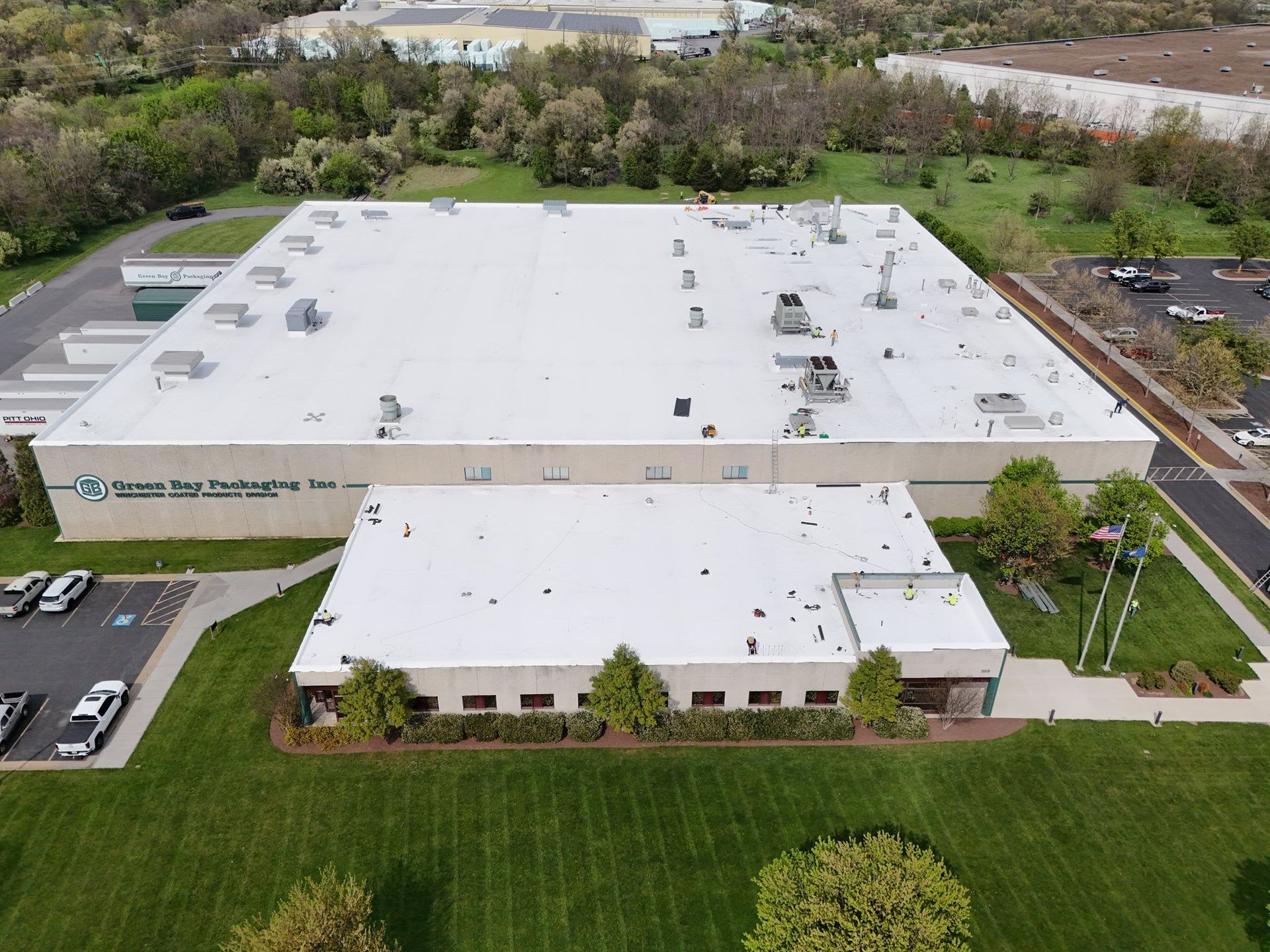
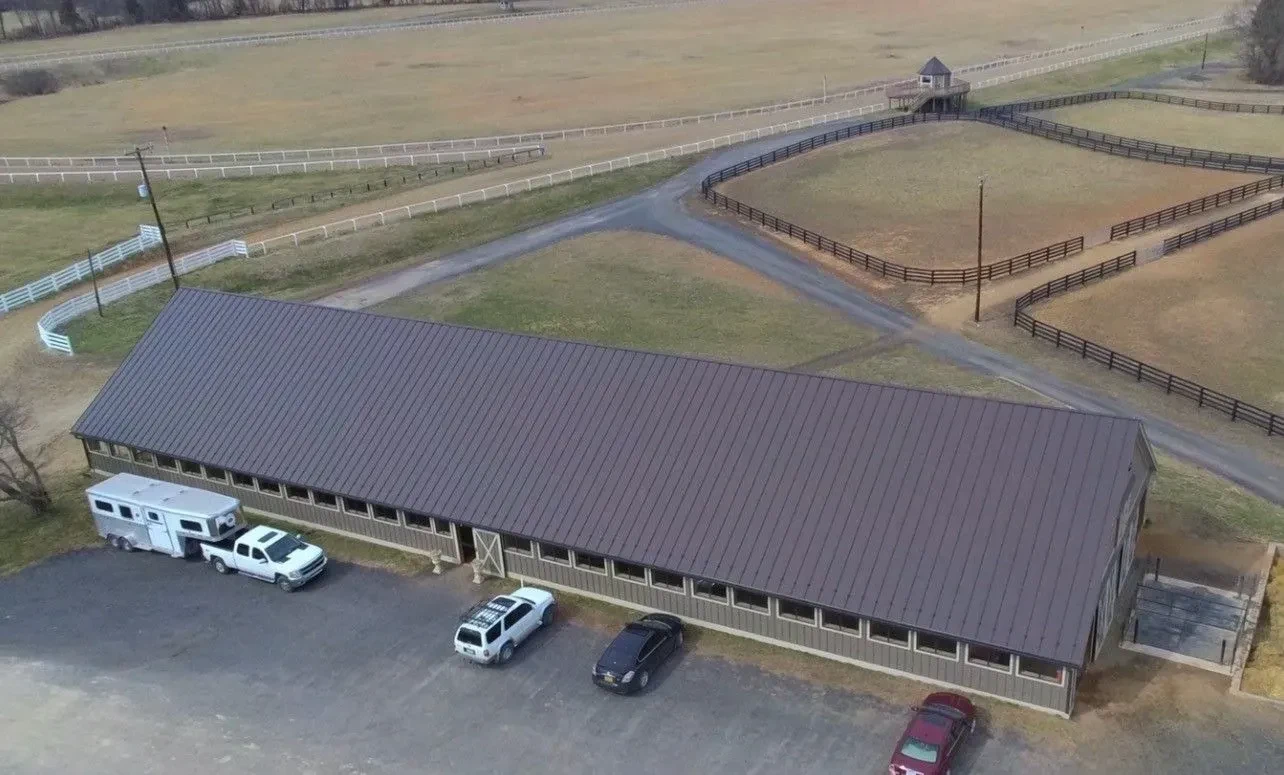
Roofs we have finished, 25 minutes north of Winchester
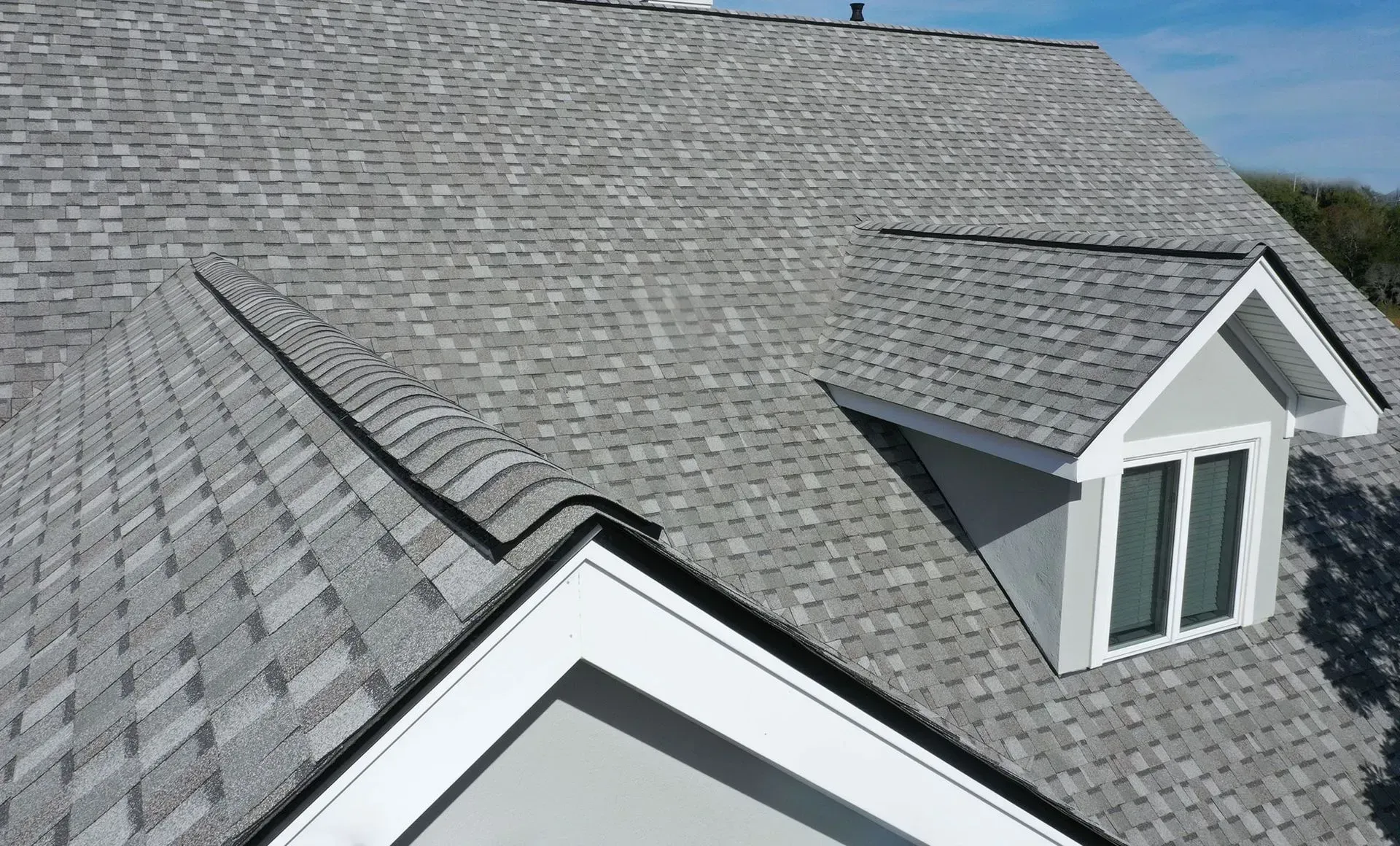
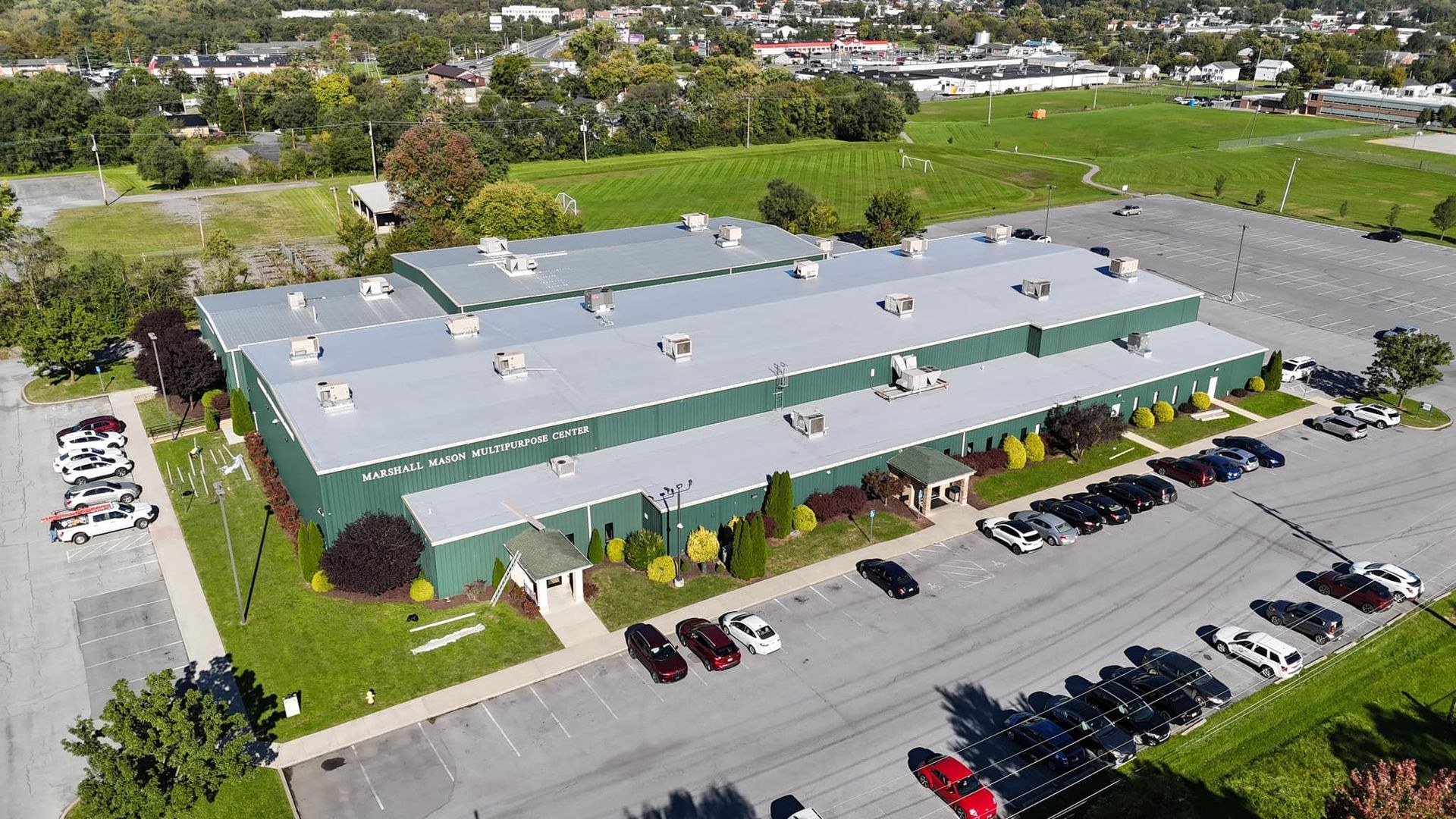
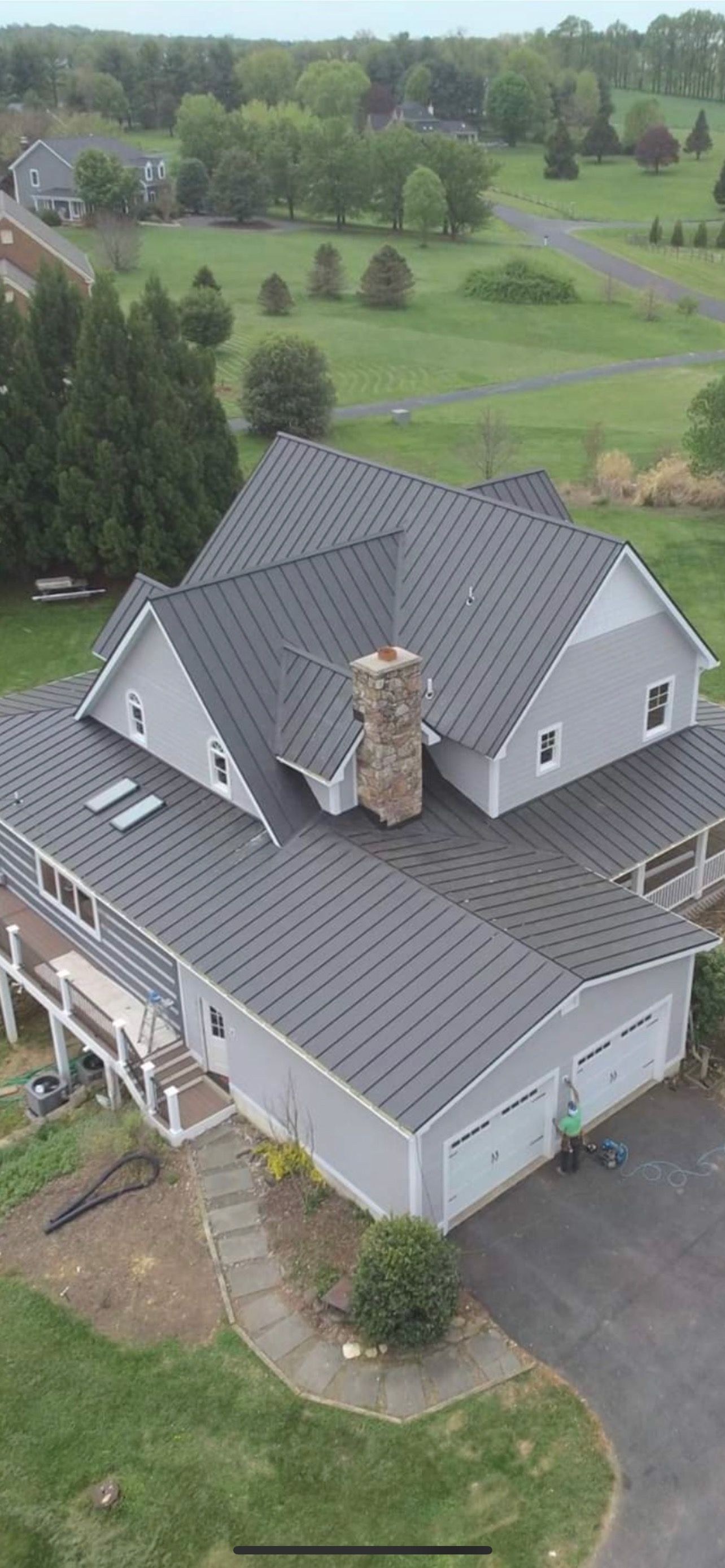
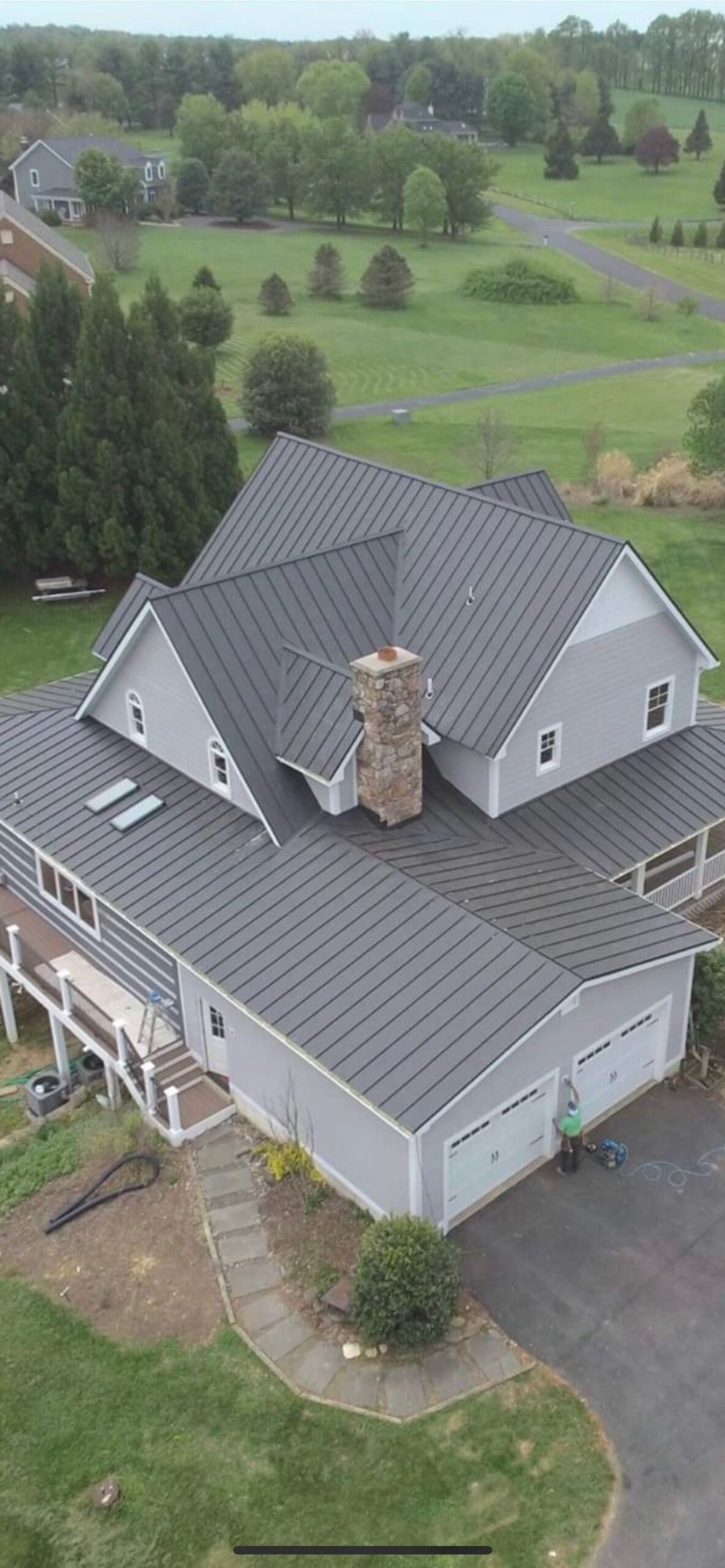
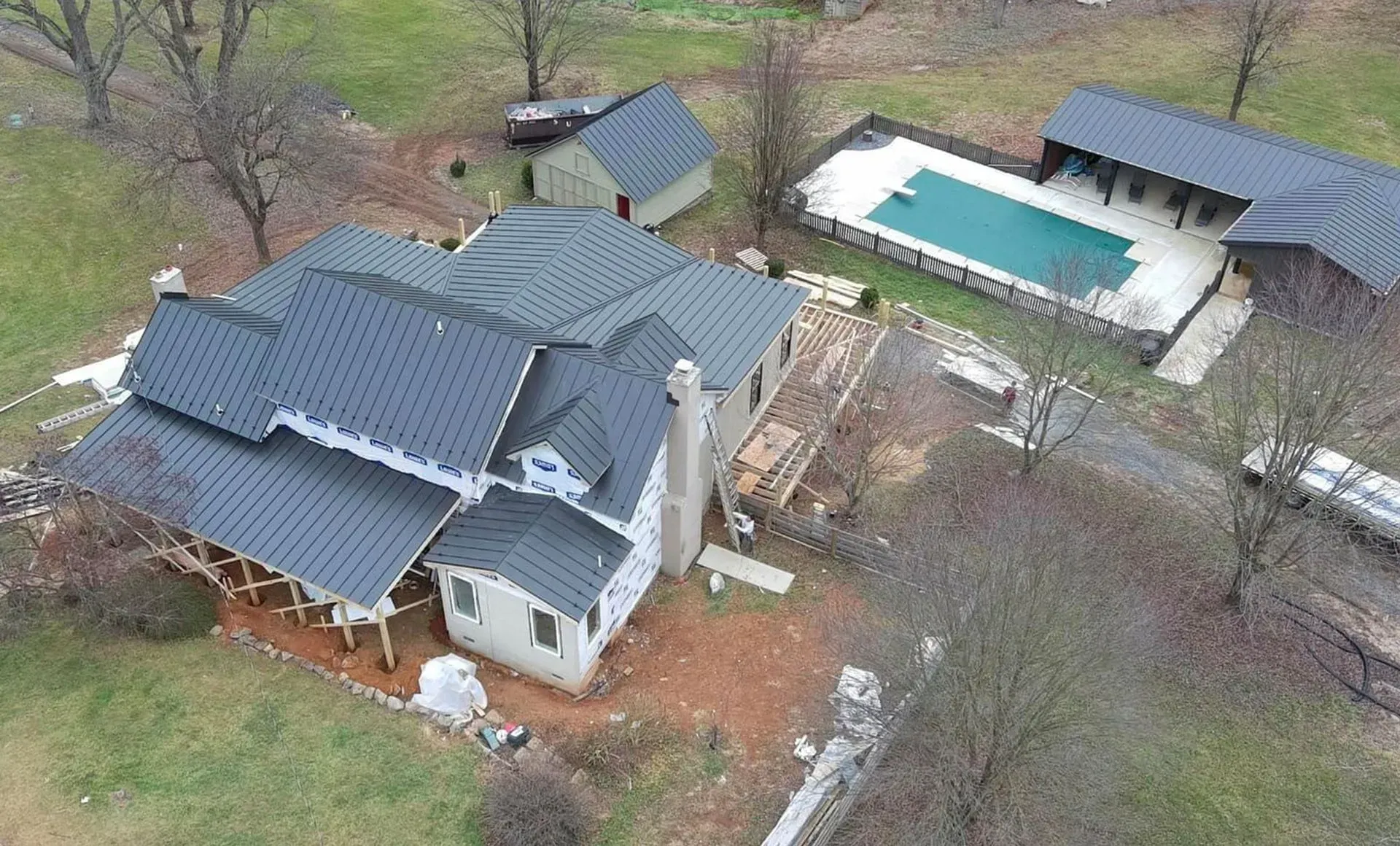
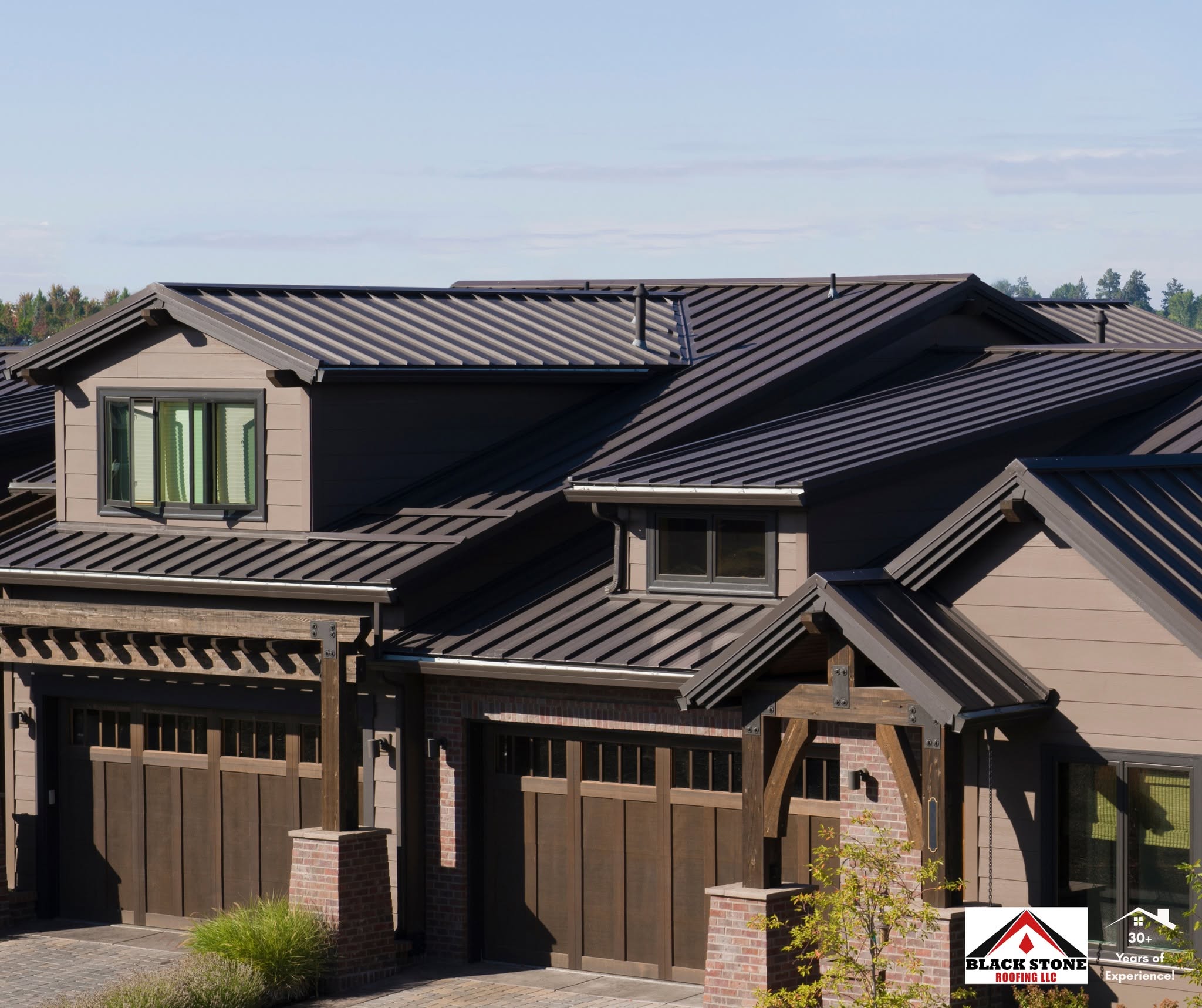
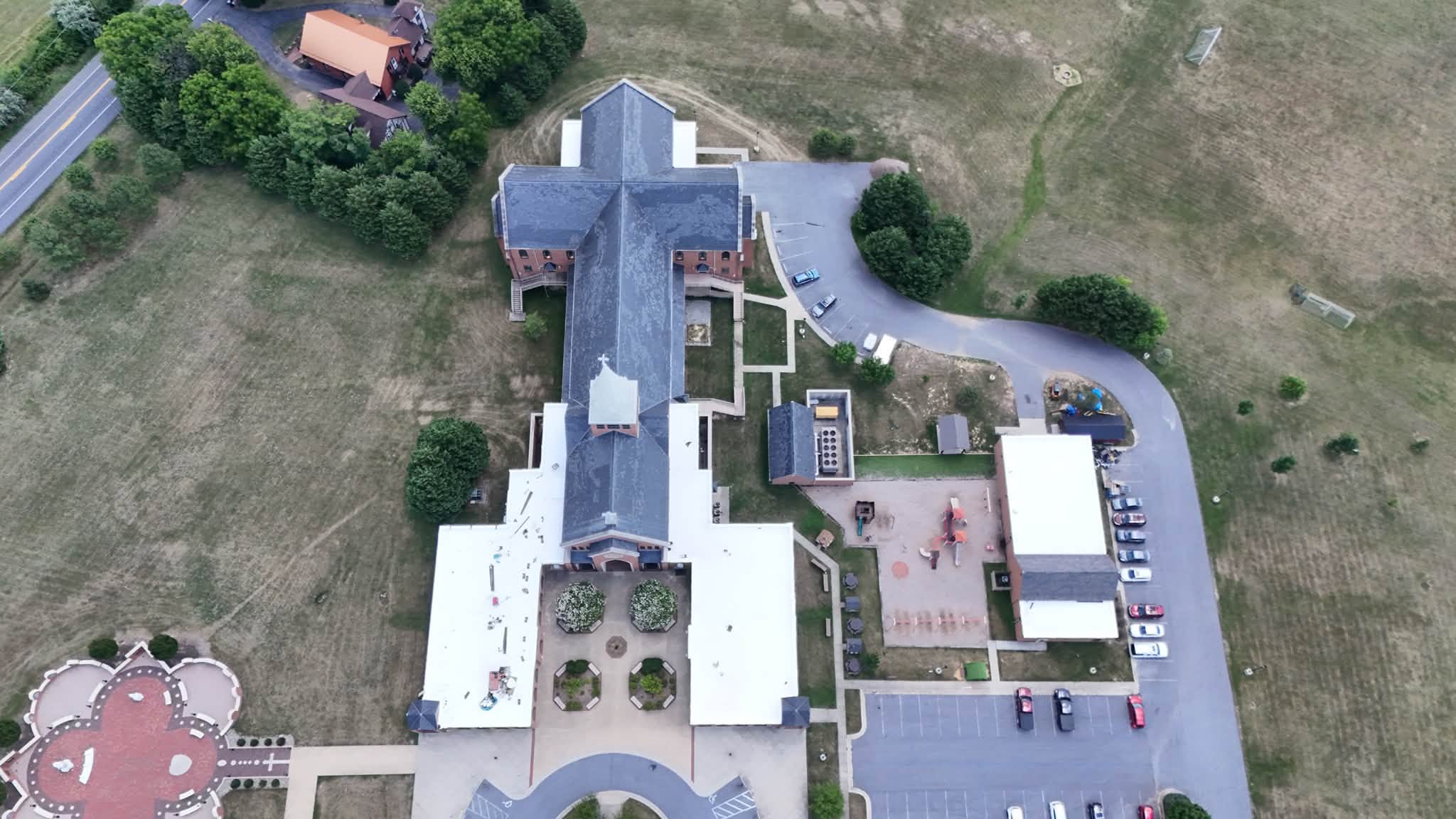
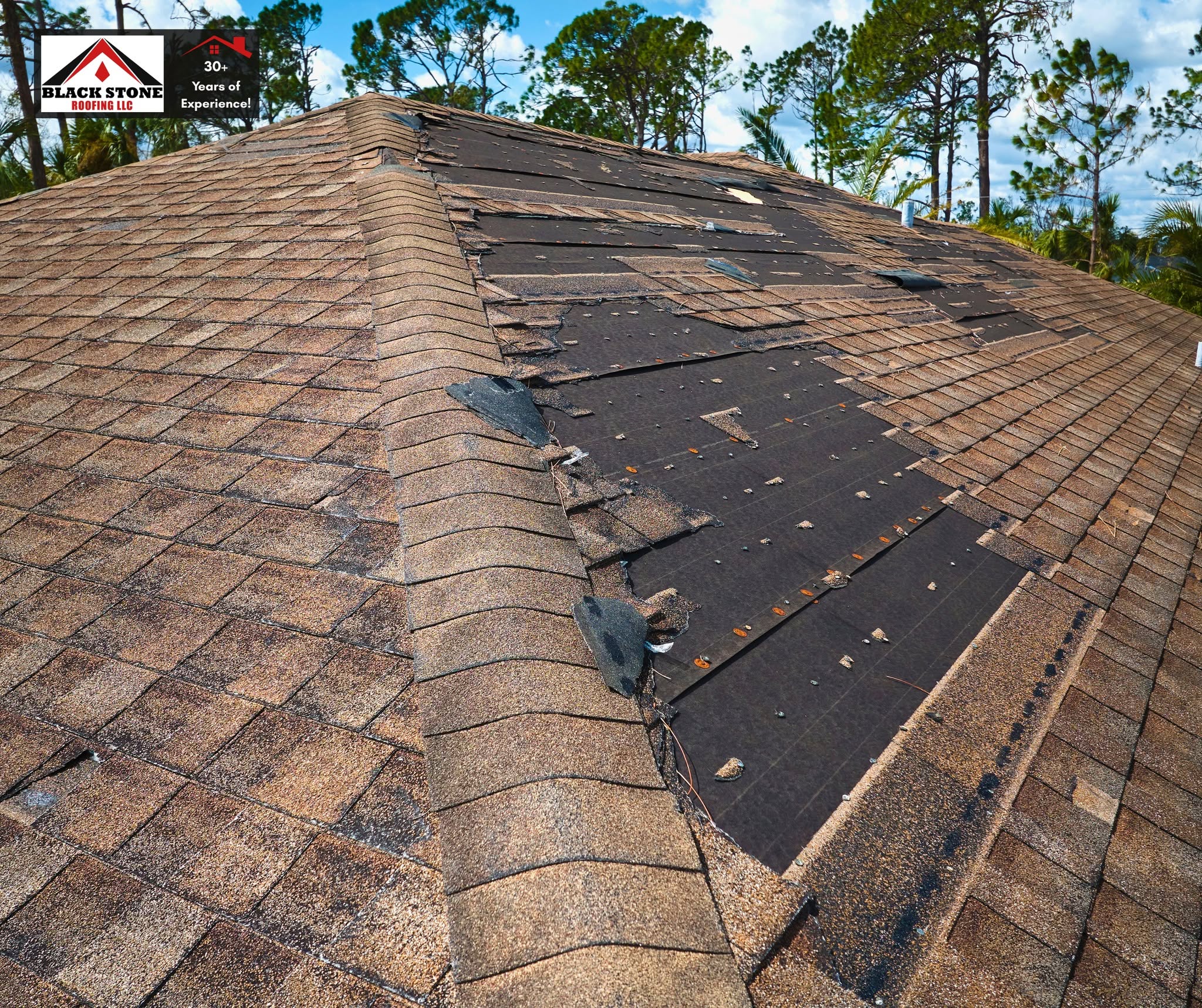
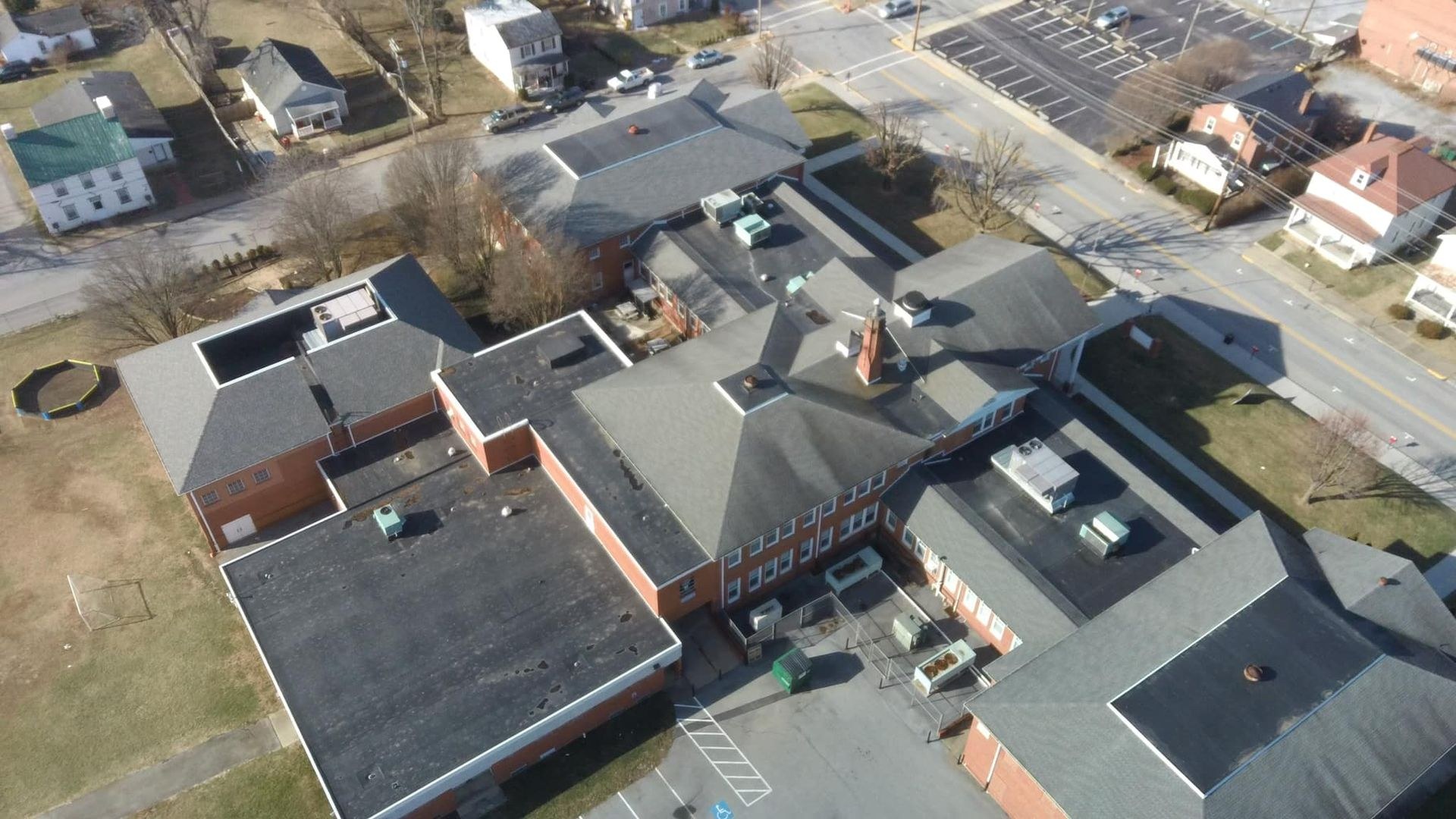
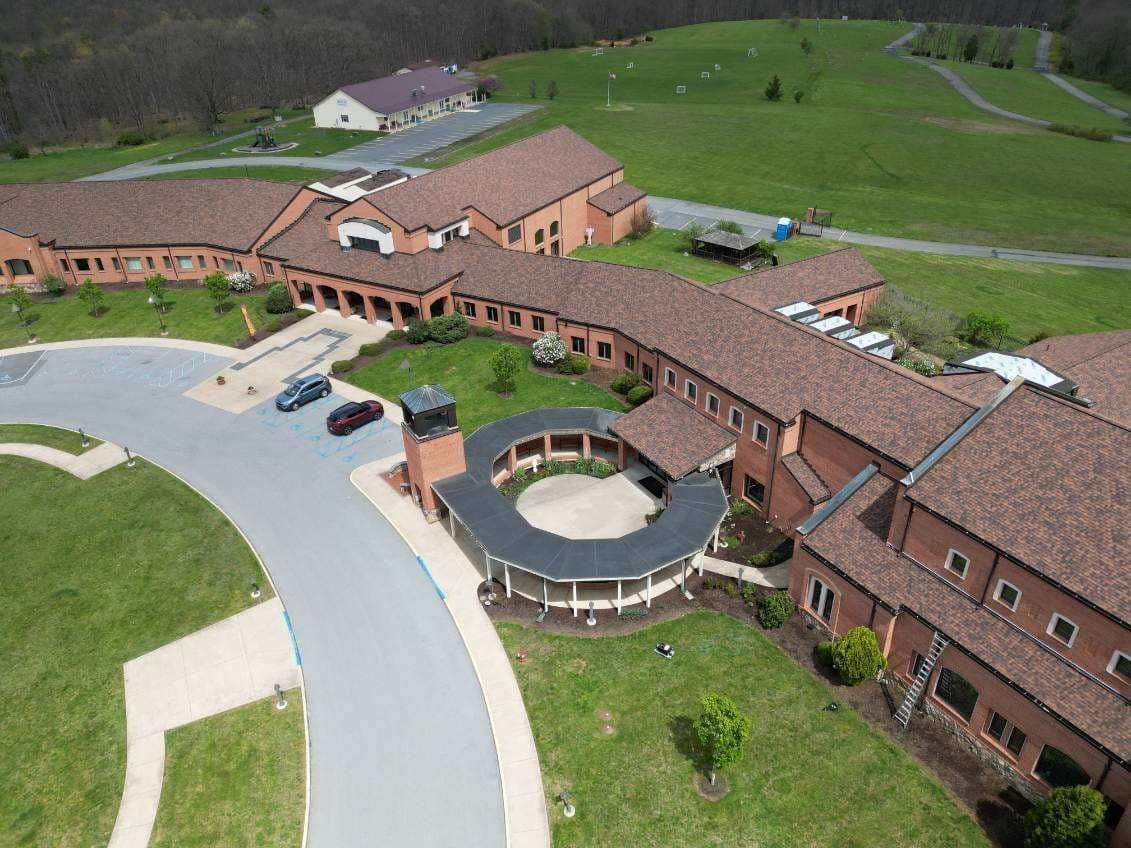
What Winchester roofs actually do
Winchester covers 9.3 square miles at roughly 720 feet, sitting at the north end of the Shenandoah Valley between the Blue Ridge and Great North Mountain. It was founded in 1744 and calls itself the oldest Virginia city west of the Blue Ridge Mountains, and you can read that in the roof forms. Census figures put the city at about 12,541 housing units with 18.5 percent built in 1939 or earlier, 30 percent built before 1950, and a median year built of 1968. That is two very different roofing problems in one small city: 18th and 19th century slate and standing seam inside the review boundary, and a huge bulge of 1950s and 1960s asphalt now on its third or fourth covering out past it. Snowfall runs around 18 inches a season with about 38 inches of total precipitation, which is normal for this stretch of the valley and not a reason for anyone to sell you a scare.
Slate shedding onto the sidewalk downtown
Before anybody quotes you a tear off, find out which slate you have. The city’s own design guidelines say Buckingham slate, quarried in Buckingham County Virginia and used on many local structures, should last about 175 years or longer, while Pennsylvania slate lasts roughly 75 years before it starts to delaminate. Those two numbers point at completely different jobs. The guidelines also tell owners to confirm the slate is actually deteriorating and not just failed flashing, because a flashing repair on a Buckingham roof is a fraction of a replacement and buys you decades.
A low slope standing seam roof somebody wants to shingle
Plenty of the oldest Winchester houses carry standing seam metal on shallow side gabled roofs, and the Italianate and Villa examples run shallow hipped metal behind heavy bracketed eaves. Asphalt shingles are only permitted at 2:12 and steeper, and between 2:12 and 4:12 they require double underlayment. On a genuinely low slope historic roof, shingles are not a legal swap no matter what the historic board would or would not allow. Anyone bidding shingles on that roof has not pitched it.
Valleys and cross gables on the Victorian brick stock
The mid to late 1800s brick houses here run side gabled with a centered cross gable and slate shingled jerkinhead dormers, and the Queen Anne examples add turrets and towers finished in square butt and fishscale slate. Every one of those intersections is a valley, and valleys are where these roofs give up first. The failure almost never starts in the open field. It starts at a dormer cheek or a valley metal that was face nailed on a repair twenty years ago.
The 1930s gambrel that leaks at the break
Colonial Revival is described in the National Register documentation as the dominant domestic style in the City of Winchester, showing up on Amherst, Boscawen, Braddock, Cecil, Clifford, Cork, Fairfax, Germain, Kent, Leicester, Loudoun, Monmouth, North, Peyton, Stewart and Washington. The Dutch Colonial Revival variant from around the 1930s carries a gambrel, and the Cape Cod variant from the 1930s and 40s carries dormers. Gambrel breaks and dormer sidewalls are the two spots where a Winchester roof of this era usually starts staining a bedroom ceiling.
Shallow front gables on the postwar streets
The Minimal Traditional houses that went up in the late 1940s and 50s along South East Lane, Fairmont Avenue, East Germain, East Leicester and West Monmouth are documented as carrying a dominant front gable with a shallower roof pitch than what came before. Then the mid 1950s and 60s ranches on West Fairfax Lane, West Germain, South Kent, West North Avenue and South Washington dropped the silhouette lower still. Shallower pitch means water moves slower, so underlayment choice, valley detail and eave protection matter more on these than they do on a steep Tudor Revival cross gable two blocks away.
Flat and shallow roofs in the commercial core
The mid century commercial buildings along Loudoun, Cameron, Cecil, Cork and Piccadilly are concrete block faced with brick or metal panel, carrying flat or shallow pitched roofs. Those are membrane and coating decisions, not shingle decisions, and they sit inside the same downtown review boundary as the houses around them. That work is covered on the commercial roofing page and the single ply membrane page.
The part of a Winchester roof that has nothing to do with shingles
Your permit office is the City, and the address trap is real
Residential roof permits inside Winchester go through City of Winchester Community Development, Building Inspections and Enforcement, on the third floor of Rouss City Hall at 15 North Cameron Street, Winchester, VA 22601. Here is where out of town contractors get it wrong: Frederick County’s Building Inspections office is physically located inside Winchester at 107 North Kent Street, a few blocks away. Same city, different jurisdiction, wrong counter for a city address. Winchester is an independent city and the county has no authority over your reroof.
Whether you even need a permit depends on your address
Virginia runs a statewide uniform code, and 13VAC5-63-80 Section 108.2 item 14.5 exempts replacement of an unlimited amount of roof covering on Group R-3, R-4 and R-5 buildings as long as the nominal design wind speed is not greater than 100 miles per hour. Item 14.6 exempts replacement of 256 square feet or less of roof decking, which means once we are replacing more decking than that, the job crosses into permit territory. So anyone who tells you a Winchester reroof always needs a permit, or never needs one, is guessing. It is scope dependent and address dependent.
The historic district exception almost nobody reads
Exception 1 to that same section says a permit may be required by the building official for the installation of replacement siding, roofing and windows in buildings within a historic district designated by a locality under section 15.2-2306 of the Code of Virginia. The Historic Winchester District is exactly that kind of locally designated district. So the Winchester building official has explicit statutory authority to require a permit for a reroof inside the district even though the identical reroof one block outside it is exempt. We confirm with the building office for your specific address rather than assuming either way.
Certificate of Appropriateness, if you are inside the local district
The City is direct about this: properties inside the Historic Winchester District must seek approval for any change to the exterior visible from a public street, public way or other public space as determined by the Zoning Administrator, and all properties in the district must receive a Certificate of Appropriateness before exterior alterations are made. The COA application form carries a checkbox labeled Roofing, and an office use line reading Review BAR or Administrative Review per Section 14-5. That is not paperwork we hand to you. It is part of the job.
Staff review or the full Board, and what each costs you in time
A COA is approved either by the Zoning Administrator or by the Board of Architectural Review. In practice, in kind replacements are often handled at the staff level, and material changes typically go to the Board. We do not promise anyone administrative approval, because that call belongs to the city. The Board meets the first and third Thursday of the month at 4:00 PM in Council Chambers at Rouss City Hall, so a Board track roof can add two weeks or more to your start date. If your roof is failing, that timeline is the reason to start the conversation now instead of in November.
What a real Board application looks like
In February 2023 the Board took up a Certificate of Appropriateness request filed by a roofing contractor for a property on West Boscawen Street, proposing to remove an existing copper roof system and install dimensional asphalt shingles in a black finish. We are not going to tell you how that one came out, because the decision is not in the record we pulled. The point is simpler: a metal to asphalt change on a visible downtown slope is a Board conversation, not a truck roll, and the contractor is the one who files it.
The National Register district is a different thing entirely
Winchester also sits inside a National Register historic district, listed in 1980 under reference number 80004318, with 1,116 contributing buildings across an original 236.5 acres and boundary increases in 2003, 2008 and 2016 that added roughly 170 acres, largely along the Amherst and Stewart Street corridors. The City states plainly that owners in the national district are not subject to Certificate of Appropriateness review, and that they can apply for state and federal tax credits for qualifying improvements. Two districts, similar names, completely different consequences for your roof. City GIS puts the local historic district polygon at roughly 327 acres touching about 1,300 tax parcels, so a lot of Winchester addresses need this sorted out before a ladder goes up.
What goes back on, and what the district lets you use

Repair it before you replace it
The Winchester design guidelines tell owners to verify the slate is failing and not the flashing before replacing anything, and they name the lifespan gap directly: Buckingham slate roughly 175 years or longer, Pennsylvania slate roughly 75 years before delamination. Where full replacement is unavoidable and cost is a hardship, the guidelines allow artificial slate in place of the original, and mention standing seam metal as a possible substitute. That is written permission for a substitute material, which is more room than most homeowners assume they have.
The default finish on the oldest stock here
Log and frame houses from the late 1700s and early 1800s, the circa 1900 vernacular I houses with limestone foundations and German siding, and the shallow hipped Italianate roofs all carried standing seam metal, and the guidelines list it as a historic roofing material still available today. Gauge, finish, panel width, clip spacing and thermal movement are all live decisions on a job like this, and they are covered on the residential metal roofing page.
Where asphalt is simply not allowed
Asphalt shingles require a slope of 2:12 or greater, and from 2:12 up to 4:12 a double layer of underlayment is required. We do not publish a typical Winchester pitch number because no honest source gives one. We pitch your roof and tell you what the number allows. If it comes back under 2:12, the answer is metal or membrane, and the historic conversation gets easier rather than harder because you are no longer proposing a material change to asphalt.
The line most roofers cross without knowing it
The guidelines say do not add new elements such as vents, skylights or additional stories that would be visible on the primary elevations. That makes a ridge vent, a new bath fan penetration or a new kitchen vent on a street facing slope a live Certificate of Appropriateness issue, not a detail. It also means the ventilation math has to be solved with intake and with exhaust placed where it is allowed to go. We work that out before we quote, not after the shingles are off.
Roof components count as roof work here
The same guideline chapter asks owners to match or reuse original materials as closely as possible when replacing roofs or roof components including downspouts and gutters, to retain chimneys, skylights and light wells that contribute to the building’s character, to maintain flashing at joints, and to keep the attic ventilated so condensation does not do the damage rain was blamed for. If your gutters are part of the scope, that is gutter repair or gutter installation, and downtown it may be part of the same review.
Secondary slopes, low visibility
Winchester’s guidelines address solar directly, asking that panels go on non character defining or secondary roof elevations with visibility from the public right of way minimized, and they specifically note products that mimic shingles and panels designed to fit between standing seam panels. If solar is part of your plan, the roof design and the array design have to be settled together. See solar panel installation.
Numbers we verify against the city, not assume
The nearest published local design criteria we can cite are Frederick County’s, not the City’s: a 35 pound per square foot ground snow load, 40 at higher elevations in northwestern Frederick County, basic wind speed of 115 mph at Risk Category II, Exposure Category C, Seismic Design Category B, and a 24 inch frost depth. Worth knowing: the Virginia Construction Code lists Frederick County in Table 1608.2 as a case study jurisdiction, meaning the state does not assign a snow number and the locality sets it from historical performance. For a city address we confirm the criteria with Winchester rather than borrowing the county’s.
Standard practice, and we will not misquote the code to you
Self adhering ice barrier at the eaves, in valleys, at roof to wall transitions and behind chimneys is how we build, and it is what shows up on real Winchester scopes. What we will not tell you is that the code mandates it here. The requirement applies where there is a documented local history of ice at the eaves as designated in the local table, and we could not find a published Winchester designation either way. It goes on because it is right for a valley roof, not because we are quoting you a rule that may not exist.
What to ask every roofer bidding your Winchester job
Virginia licenses contractors through the DPOR Board for Contractors, and the class is set by contract value rather than trade. Class C covers a single contract over $1,000 and under $30,000, Class B covers $30,000 to under $150,000, and Class A covers $150,000 and up. On top of the class, a roofer needs the roofing specialty classification, code ROC. A typical residential reroof lands in Class B or C by dollar value. Ask for the DPOR number, look it up, and confirm the classification actually includes roofing before you sign anything.
Why Winchester homeowners call us
We are based in Martinsburg, and we say so
1886 Winchester Ave, Martinsburg, WV 25405. About 23 miles from Winchester straight down I-81, roughly 25 to 30 minutes, with Bunker Hill at the midpoint. We reach Winchester off exits 313, 315 and 317. That is a real drive, not a local address on a map pin, and it is short enough that a warranty call does not turn into a project.
Licensed in Virginia and four other states
Virginia, West Virginia, Maryland, Pennsylvania and Florida, and we are licensed, bonded and insured. Virginia work runs under a DPOR contractor license with the roofing classification. Ask us for the number and look it up.
We handle the city side of the job
The permit question, the Certificate of Appropriateness question, and which office actually has jurisdiction over your address. Family owned since 2016, with the scope written before the ladder goes up so you can set our estimate next to anyone else’s line for line.
Somebody answers the phone
Open 24 hours, 7 days a week, rated 4.9 stars from 50 Google reviews. Read them on our reviews page.
Services we bring into the city
Roof Replacement
With a citywide median year built of 1968, a lot of Winchester houses are on their third or fourth covering. Full tear off, per sheet decking rate written up front.
Roof Repair
Valley metal, dormer cheeks, chimney counterflashing. On the brick stock with centered cross gables and jerkinhead dormers, leaks start at an intersection, not the field.
Specialty Roofing
Slate, Certificates of Appropriateness, and the artificial slate substitution the Winchester design guidelines specifically permit.
Residential Metal Roofing
Standing seam, the original finish on the log and frame houses and the circa 1900 I houses here, with an honest talk about oil canning first.
Asphalt Shingle Roofing
The right call on the Minimal Traditional and ranch streets like Fairmont Avenue, West Germain and South Kent, where nothing is under review.
Roof Inspection
Free, with photos, your slope actually measured against the 2:12 asphalt floor, and a check of whether your address sits inside the district boundary.
Storm Damage Roof Repair
Wind and hail documented with the storm date on it. On a slate or copper roof downtown, the repair and the review both have to be handled.
Roof Insurance Claims
Photo reports for your carrier plus ordinance and law line items, which on a Historic Winchester District address can include the cost of matching materials.
Commercial Roofing
Flat and shallow pitched buildings, including the block and brick commercial core along Loudoun and Cameron.
Siding Installation
Replacement siding falls under the same Certificate of Appropriateness review as roofing inside the district.
Window Replacement
Windows are the third item named in the historic district permit exception, right beside roofing and siding.
Emergency Roof Repair
Answered 24 hours a day, dispatched south on I-81 to stop water before it reaches plaster.
Where we work in and around the city
We work the whole city, from the recorded subdivisions on the edges to the blocks inside the review boundary. That includes Meadow Branch, Abrams Creek, Orchard Hill, Harris Orchard, Baker Orchard, Merrimans Estates, Battle Park Estates, Fort Braddock Heights, Handley Heights, Academy Heights, Morlyn Hills, Shannon Hills, Northwestern Hills, Cedarmeade, Early’s Green, Willow Lawn Cottages and West Clifford Estates, along with the historic streets: North and South Loudoun, Braddock, Cameron, Kent and Washington, plus Amherst, Boscawen, Piccadilly, Cork, Peyton and Sharp. We reach all of it off I-81 exits 313, 315 and 317, US 11, US 50, US 522, VA 7 and the VA 37 bypass. If you are near the Loudoun Street Pedestrian Mall, Handley Library, Rouss City Hall, Old Town Spring, Abram’s Delight, Glen Burnie, Star Fort, Fort Collier, Jim Barnett Park, Shenandoah University, Winchester Medical Center or Apple Blossom Mall, we know the block.
Do not see your town? We work the whole corridor, so ask or call (540) 550-9703.
Winchester roofing questions we actually get
-
Do I call Frederick County or the City of Winchester about my roof permit?
The City, every time, if your address is inside Winchester. Winchester is an independent city. It is the county seat of Frederick County but it is politically separate from it, and the county has no permit authority over a city address. Roof permits go through City of Winchester Community Development, Building Inspections and Enforcement, third floor of Rouss City Hall at 15 North Cameron Street, Winchester, VA 22601. The confusing part is that Frederick County’s own Building Inspections office sits inside the city at 107 North Kent Street, so people walk into the wrong building all the time. If your address is in the county rather than the city, then the county office is the correct one.
-
Do I need a permit to replace my roof in Winchester?
It depends on your scope and your address, and anyone who answers with a flat yes or no is guessing. Virginia’s statewide code at 13VAC5-63-80, Section 108.2, item 14.5 exempts replacement of an unlimited amount of roof covering on Group R-3, R-4 and R-5 buildings where the nominal design wind speed is not greater than 100 miles per hour. Item 14.6 exempts replacement of 256 square feet or less of roof decking, so a job that replaces more decking than that moves into permit territory. Separately, if your house is in the Historic Winchester District, the building official has authority to require a permit anyway. We confirm with the city building office for your specific address before work starts, and we file whatever the job needs under our license.
-
My house is in the Historic Winchester District. Do I need a Certificate of Appropriateness for a new roof?
If the roof is visible from a public street, public way or other public space as determined by the Zoning Administrator, yes. The City states that all properties in the Historic Winchester District must receive a Certificate of Appropriateness before alterations are made to exterior features, and the COA application form has a checkbox specifically for Roofing. A COA is approved either by the Zoning Administrator at staff level or by the Board of Architectural Review. In kind replacements are often handled administratively and material changes typically go to the Board, but that call belongs to the city, so we will never promise you staff approval up front.
-
How much time does the Board of Architectural Review add to my start date?
Plan on two weeks or more if your project goes to the Board rather than staff review. The Board of Architectural Review meets the first and third Thursday of the month at 4:00 PM in Council Chambers at Rouss City Hall, 15 North Cameron Street. Depending on where your request lands relative to those dates and the application deadline, you can lose a couple of weeks before anyone touches the roof. That is the single best argument for calling about a downtown roof while it is still merely old rather than waiting until it is actively leaking into plaster.
-
I am in the National Register district. Is that the same review?
No, and this trips up a lot of Winchester owners because the two districts have nearly identical names. The Winchester Historic District listed on the National Register in 1980 under reference 80004318 covers 1,116 contributing buildings, and the City states plainly that property owners in the national district are not subject to seeking a Certificate of Appropriateness from the Board of Architectural Review. It also notes those owners can apply for state and federal tax credits for qualifying improvements. The local Historic Winchester District overlay is the one with review authority over your roof. Same city, two boundaries, very different requirements.
-
Can I replace my slate roof with asphalt shingles in Old Town?
The Winchester Historic District Design Guidelines advise against it, saying replacing slate or standing seam metal with asphalt shingles would dramatically alter the building’s appearance. They allow artificial slate in place of the original, and in cases of extreme financial hardship mention substitute materials including artificial slate or possibly standing seam metal. Before you replace anything, the guidelines ask you to confirm the slate is actually deteriorating and not just the flashing, and they note that Buckingham slate, used on many local structures, should last about 175 years or longer while Pennsylvania slate lasts roughly 75 years before it begins to delaminate. A material change like this is a Board of Architectural Review conversation.
-
Can you put a ridge vent on a historic Winchester house?
Not automatically on a street facing slope. The city’s design guidelines say not to add new elements such as vents, skylights or additional stories that would be visible on the primary elevations, which puts ridge vents and new bath or kitchen vent penetrations squarely into Certificate of Appropriateness territory. That does not mean your attic goes unventilated. It means the exhaust has to be placed where it is allowed and the intake has to be sized to match, and we solve that before quoting rather than discovering it with your roof already open.
-
Is ice and water shield required by code in Winchester?
We install it, and we are not going to tell you the code forces us to. The residential code requires an ice barrier only in areas with a documented history of ice forming along the eaves, as designated in the local criteria table, and we could not find a published City of Winchester designation either way. The closest published local design criteria we can cite belong to Frederick County, which lists a 35 pound per square foot ground snow load, 115 mph basic wind speed at Risk Category II, Exposure Category C and a 24 inch frost depth, and which the Virginia Construction Code treats as a case study jurisdiction for snow. Self adhering membrane at eaves, valleys, roof to wall transitions and behind chimneys is how we build a valley roof regardless.
-
You are based in Martinsburg. How fast can you get to Winchester?
Our office is at 1886 Winchester Ave, Martinsburg, WV 25405, about 23 miles from Winchester straight down I-81 with Bunker Hill at the halfway point. Normal traffic puts that at 25 to 30 minutes, and we come into the city off exits 313, 315 and 317. We are open 24 hours a day, 7 days a week, so an emergency call at 2 a.m. gets a person, not a voicemail box. We are not going to claim a Winchester office we do not have. What we will tell you is that a 25 minute drive is short enough that warranty calls and punch list items actually get handled.
-
How do I check that a roofer is licensed to work in Virginia?
Virginia licenses contractors through the DPOR Board for Contractors, and the license class is set by contract value rather than by trade. Class C covers a single contract over $1,000 and under $30,000, Class B covers $30,000 up to $150,000, and Class A covers $150,000 and above, with annual volume thresholds attached to each. On top of the class, the license needs the roofing specialty classification, code ROC. A typical residential reroof lands in Class B or C by dollar value. Ask any contractor bidding your Winchester roof for their DPOR license number, look it up, and confirm the classification actually includes roofing. Black Stone Roofing is licensed, bonded and insured, and licensed in Virginia, West Virginia, Maryland, Pennsylvania and Florida.
Get a written estimate for your Winchester roof
A real scope you can compare line by line, plus a straight answer on whether your address sits inside the Historic Winchester District and what that does to your timeline. No pressure and no expiring offer. Call (540) 550-9703 or email Info@BlackStoneRoofing.org and we will come down I-81 and get on your roof.