Home/Commercial Roofing/Roof Coatings
COMMERCIAL ROOFINGCommercial Roof Coatingsin Martinsburg, WV
Silicone and acrylic restoration systems for low-slope roofs across Berkeley County. We scan and core cut the roof before we write a number, because coating a wet assembly seals the water in and costs you the tear off twice. Our shop sits on Winchester Avenue in Martinsburg, so the survey is a short drive and not a scheduling favor.
Leaking right now
Emergency response
We answer 24 hours. Tarped and stabilized before more gets inside.
Planning ahead
Free inspection
Written scope and photos so you know what the roof actually needs.
Request your free estimate
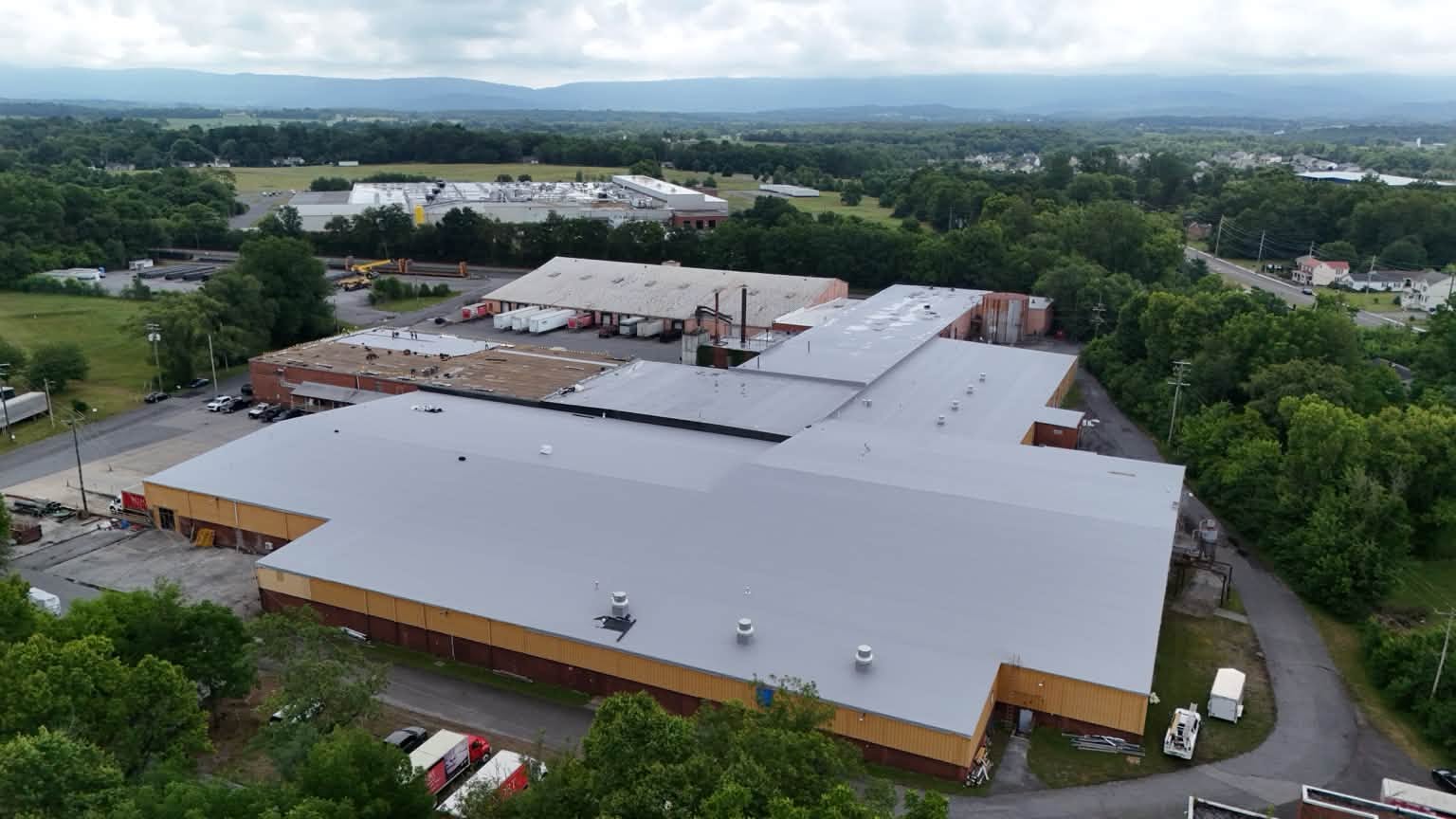
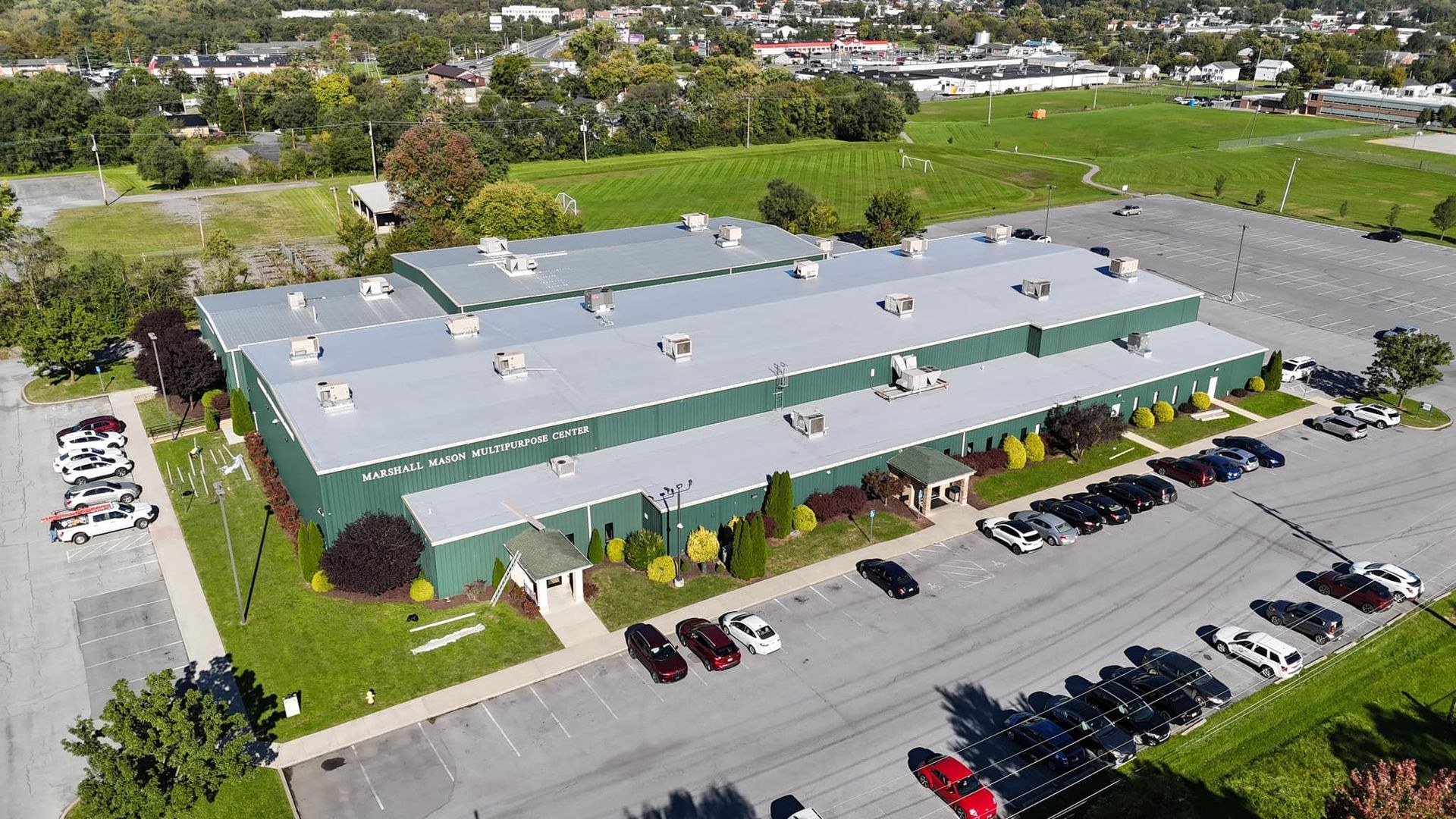
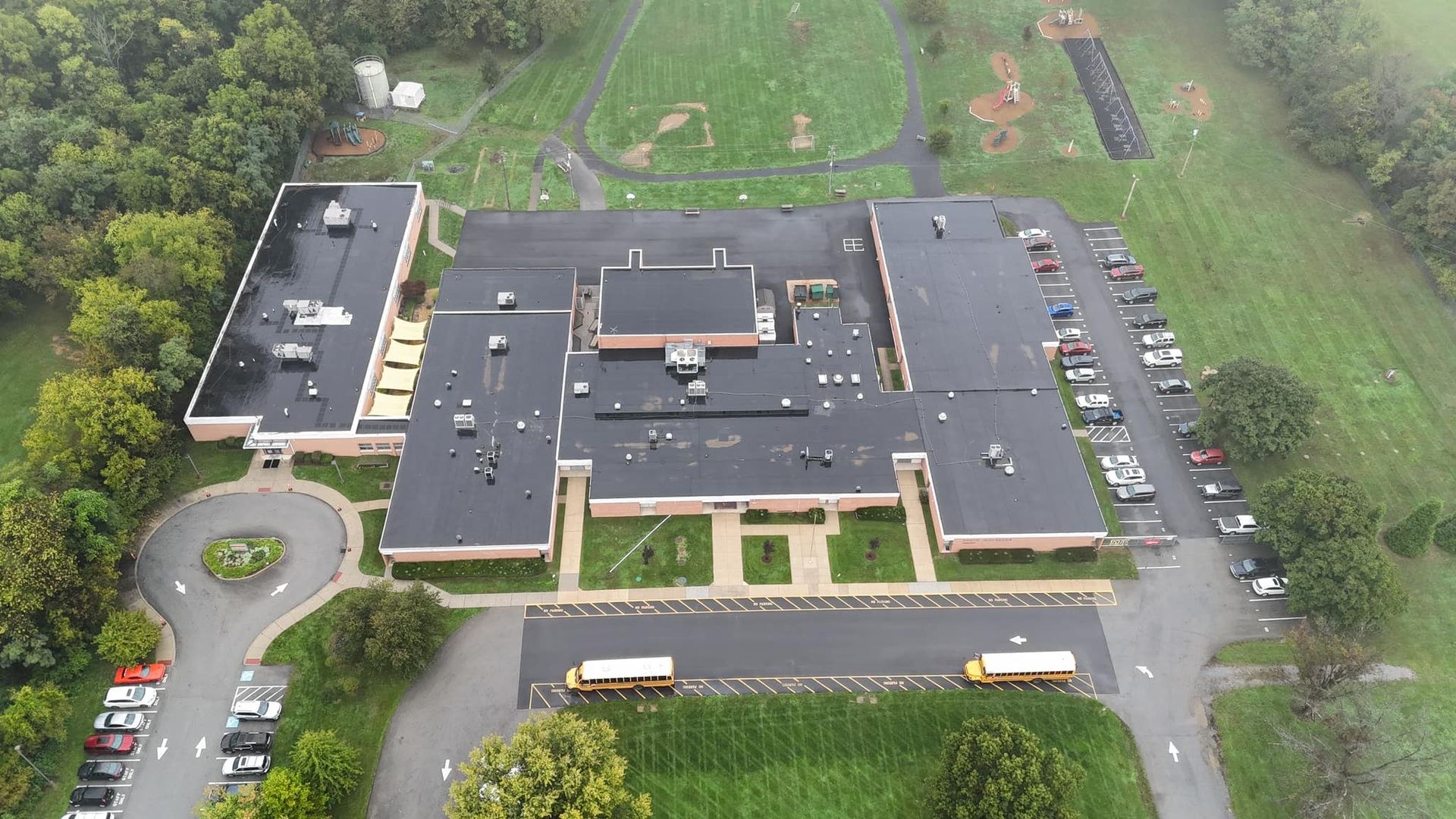
Coating and low-slope work across Berkeley County
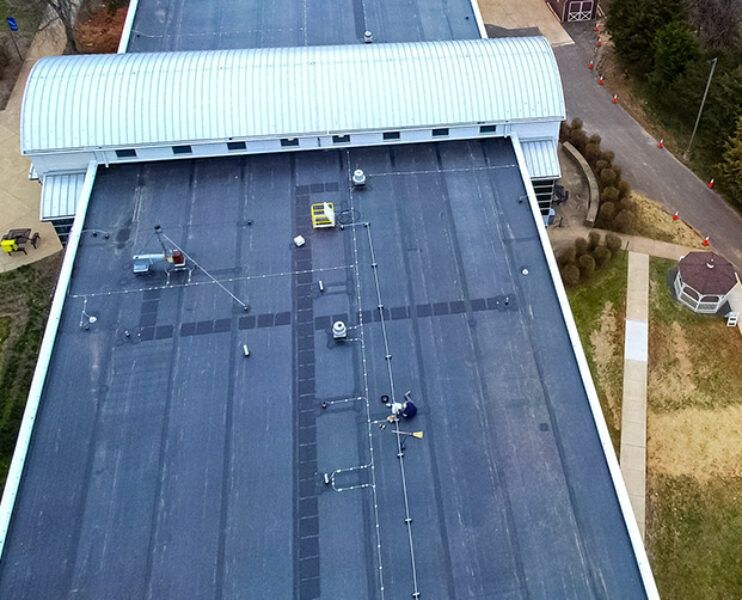
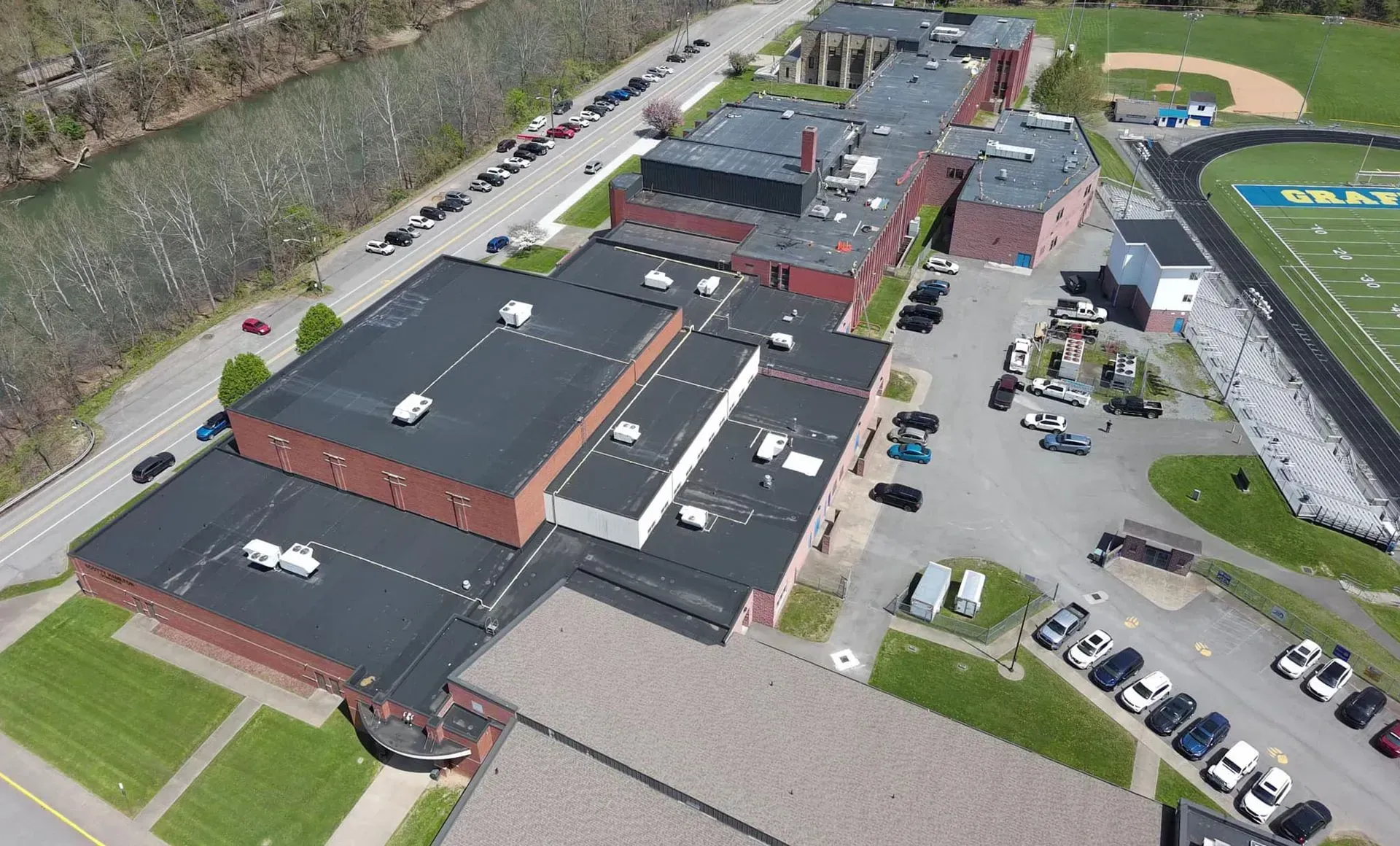
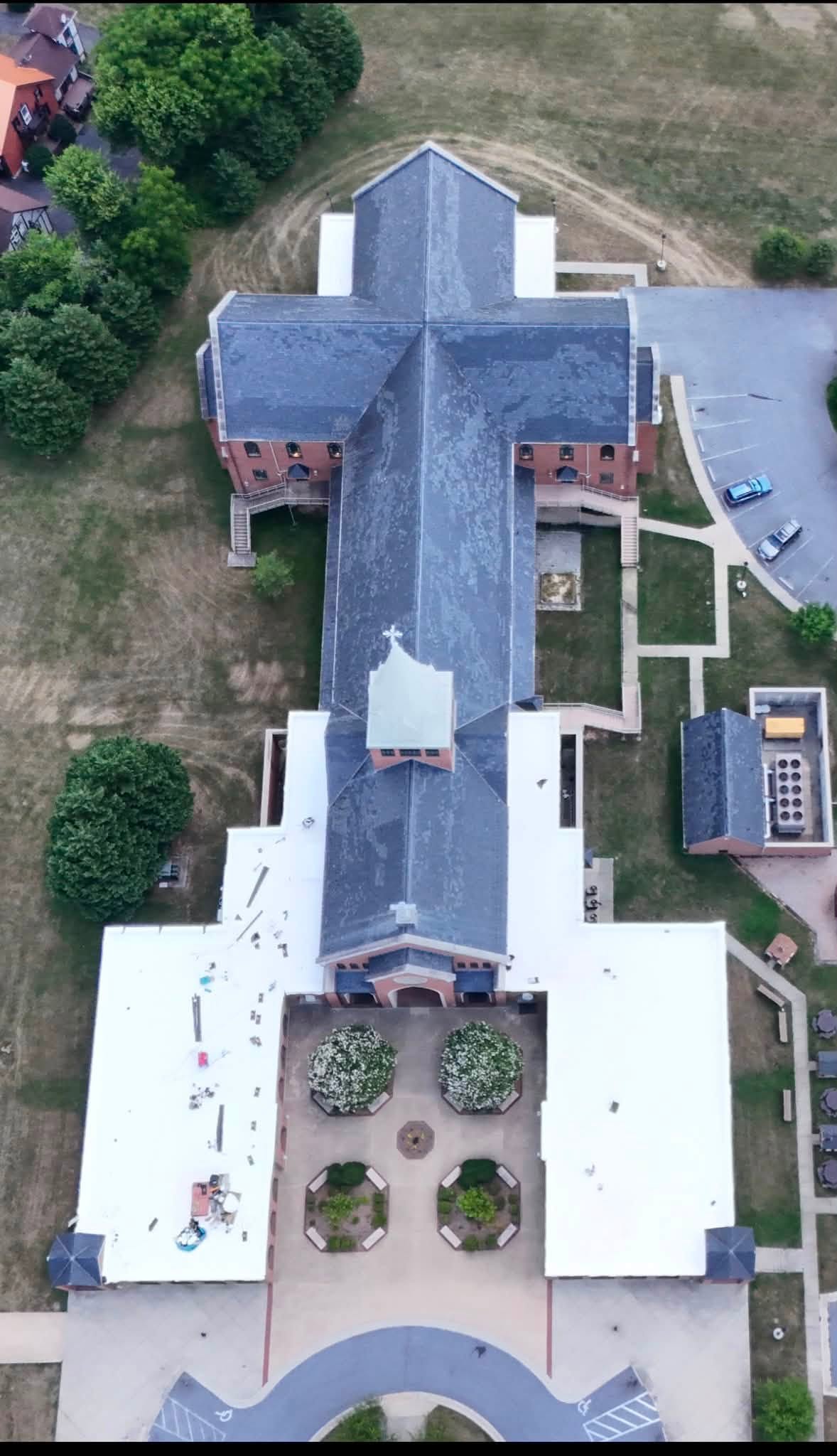
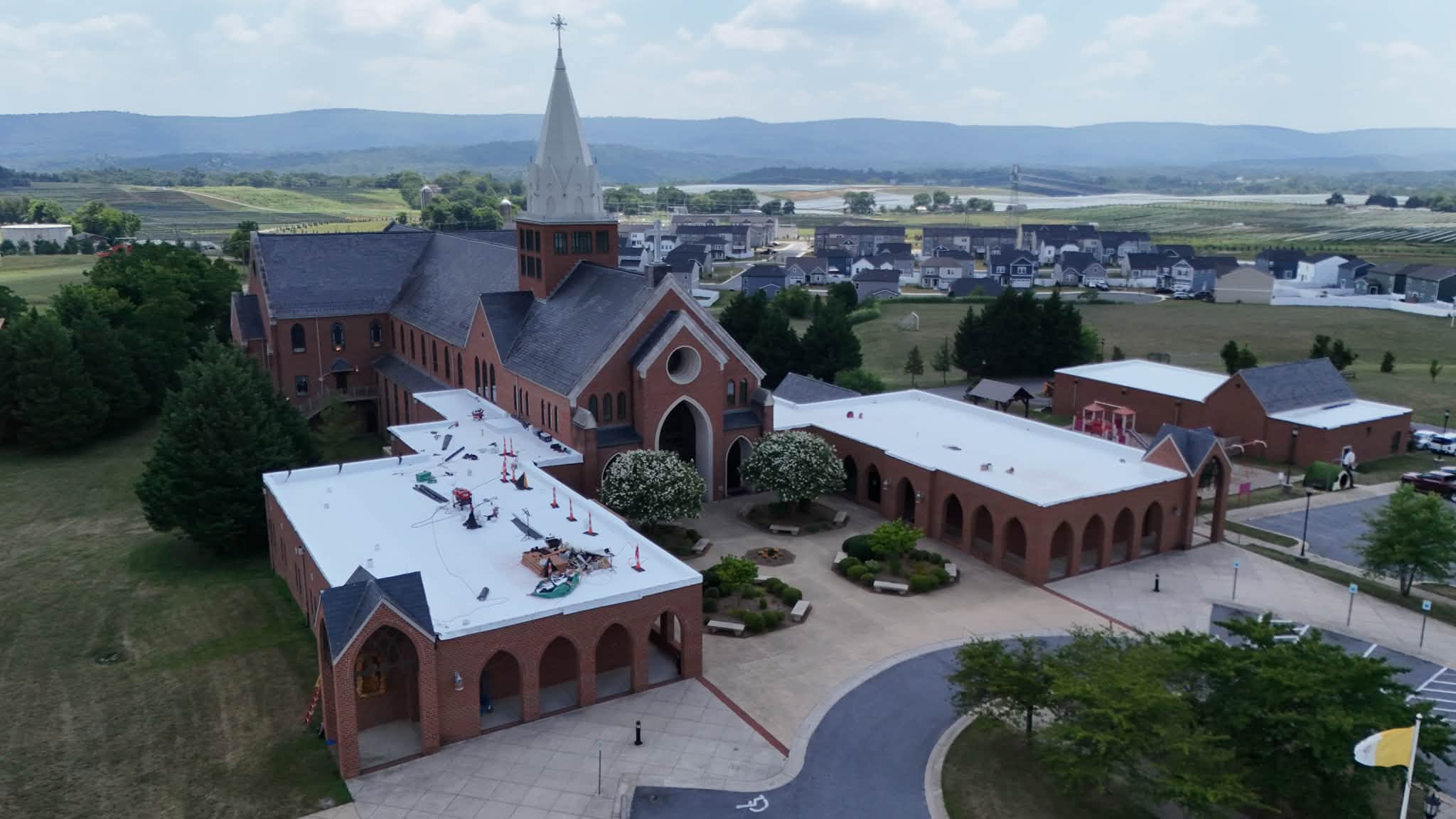
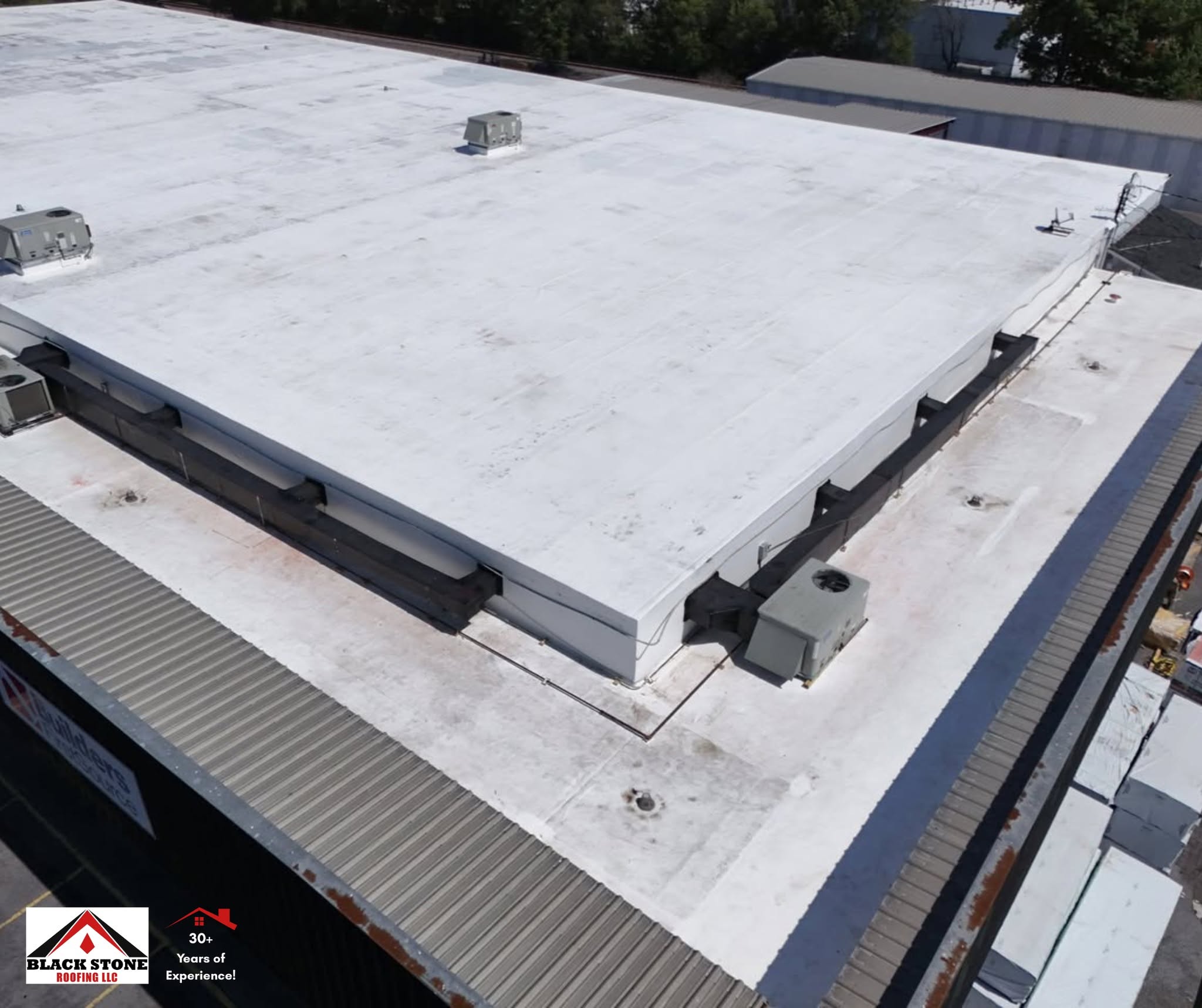
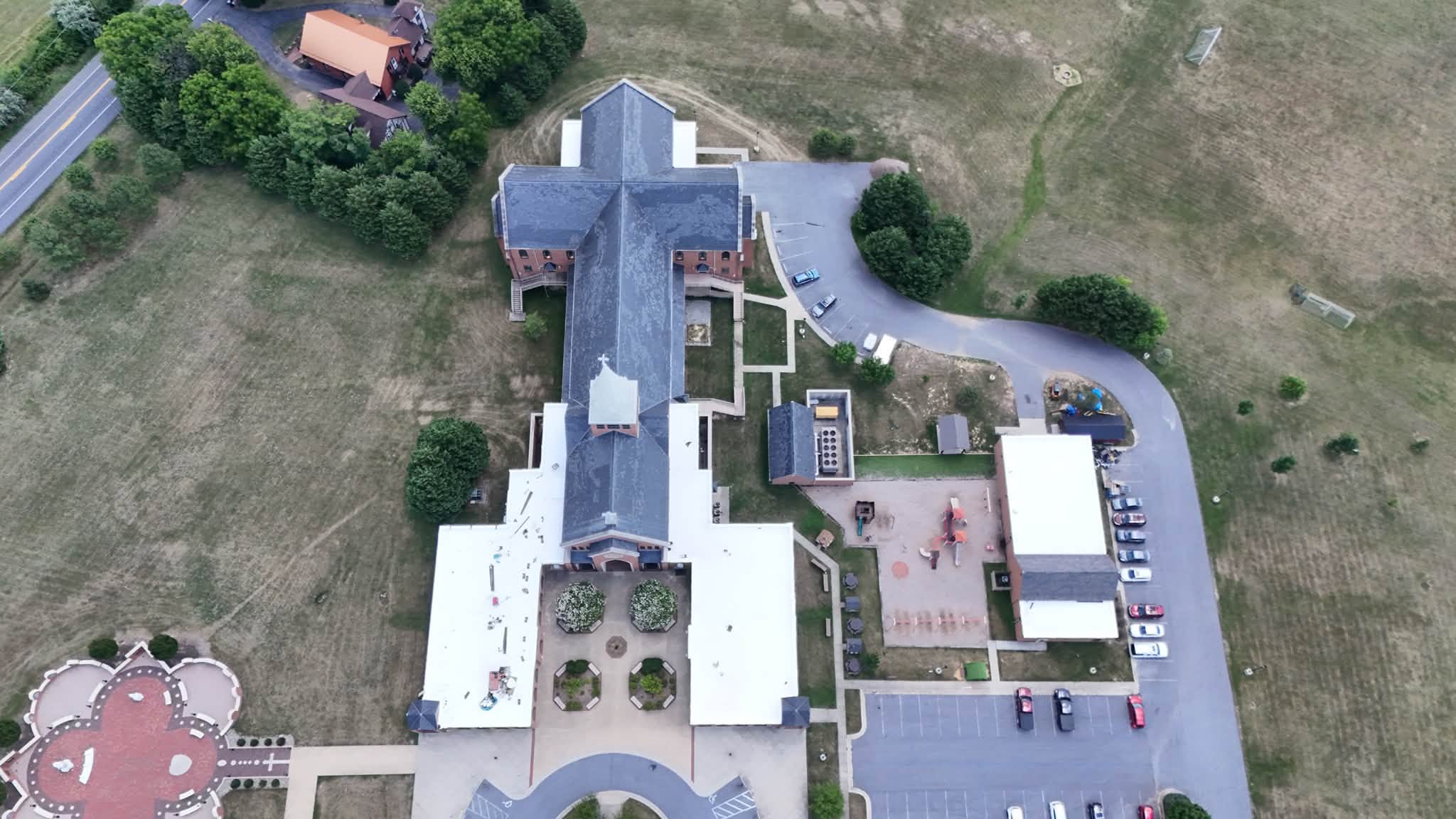
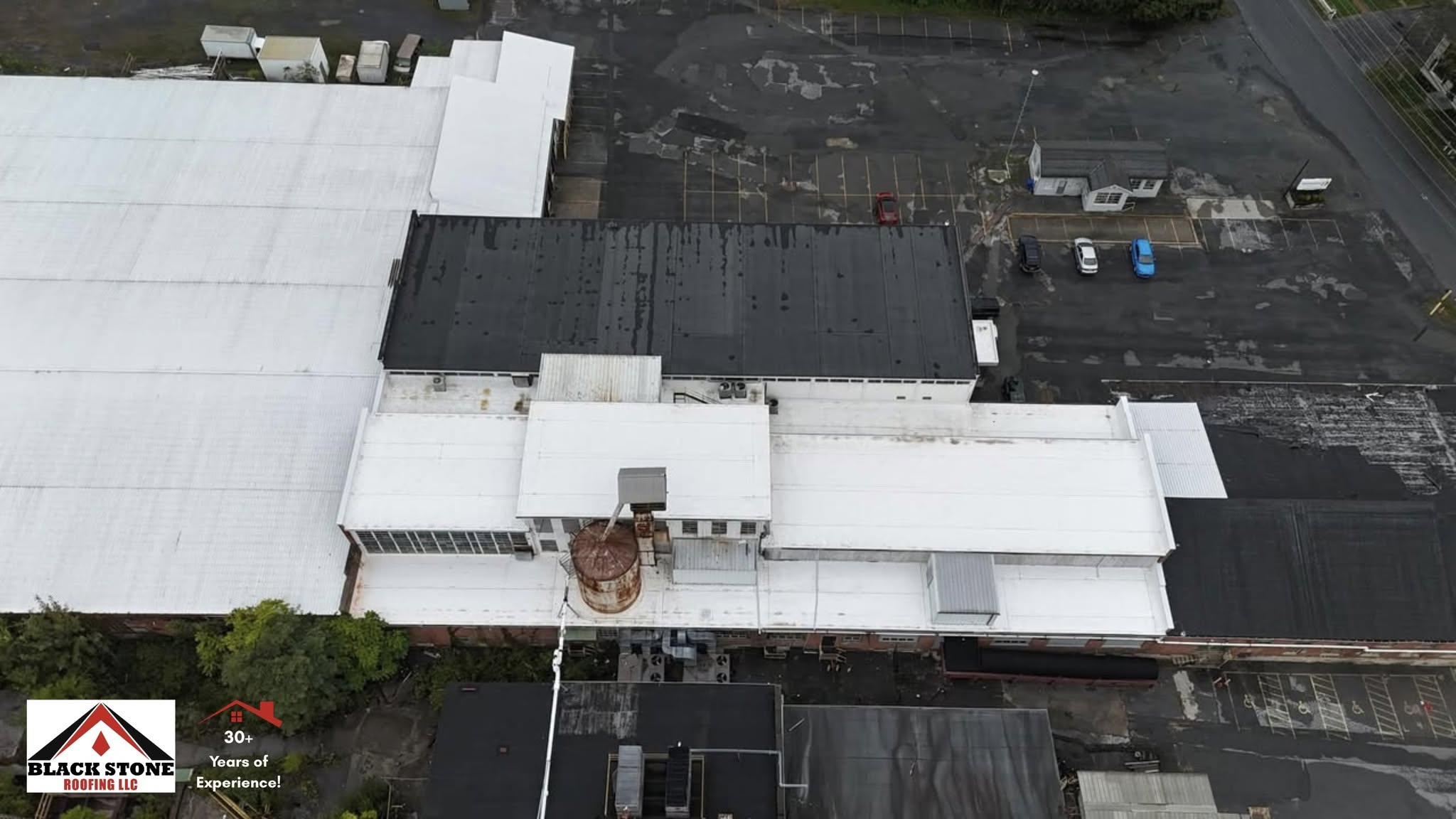
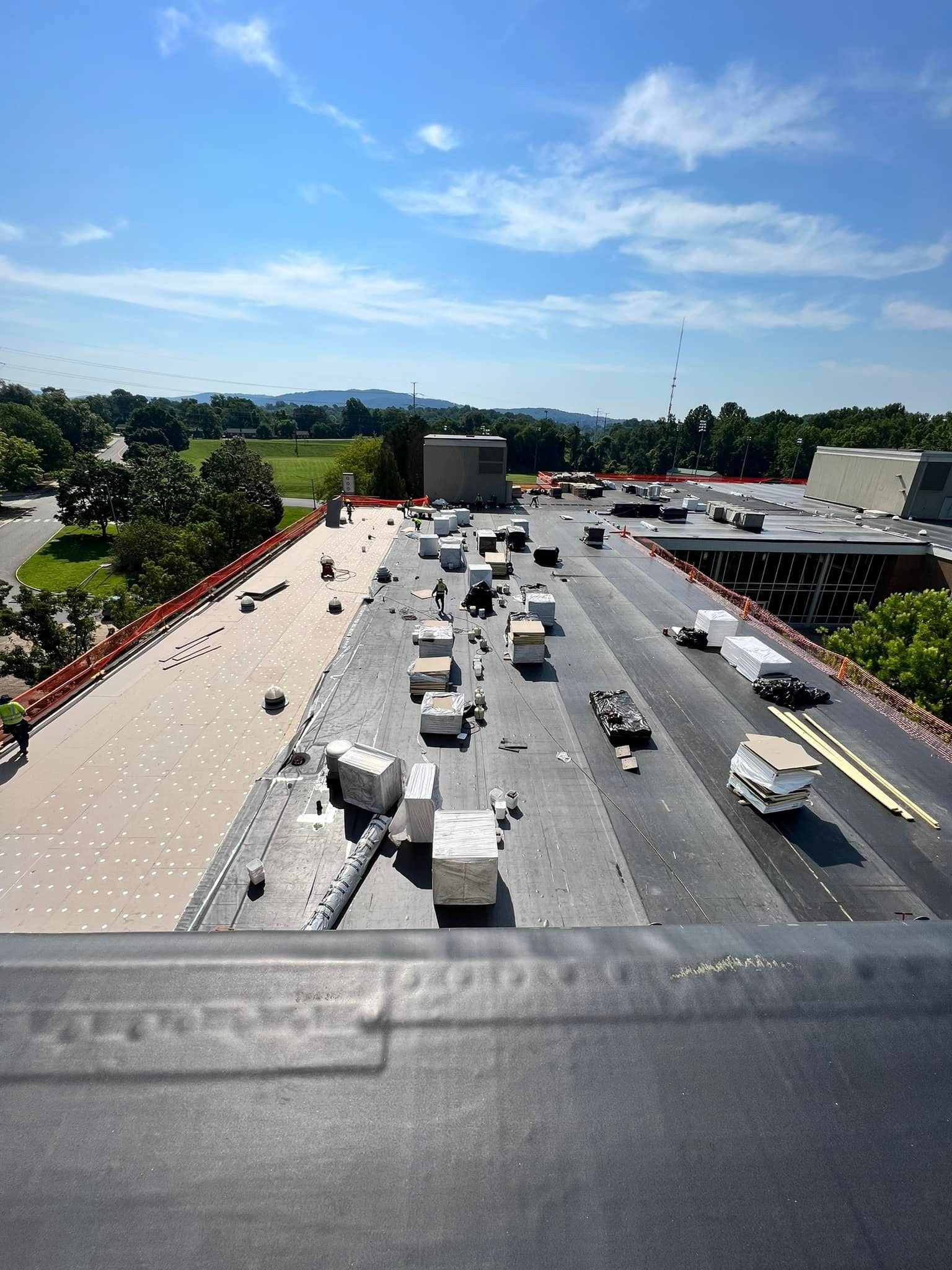
What is actually happening up there
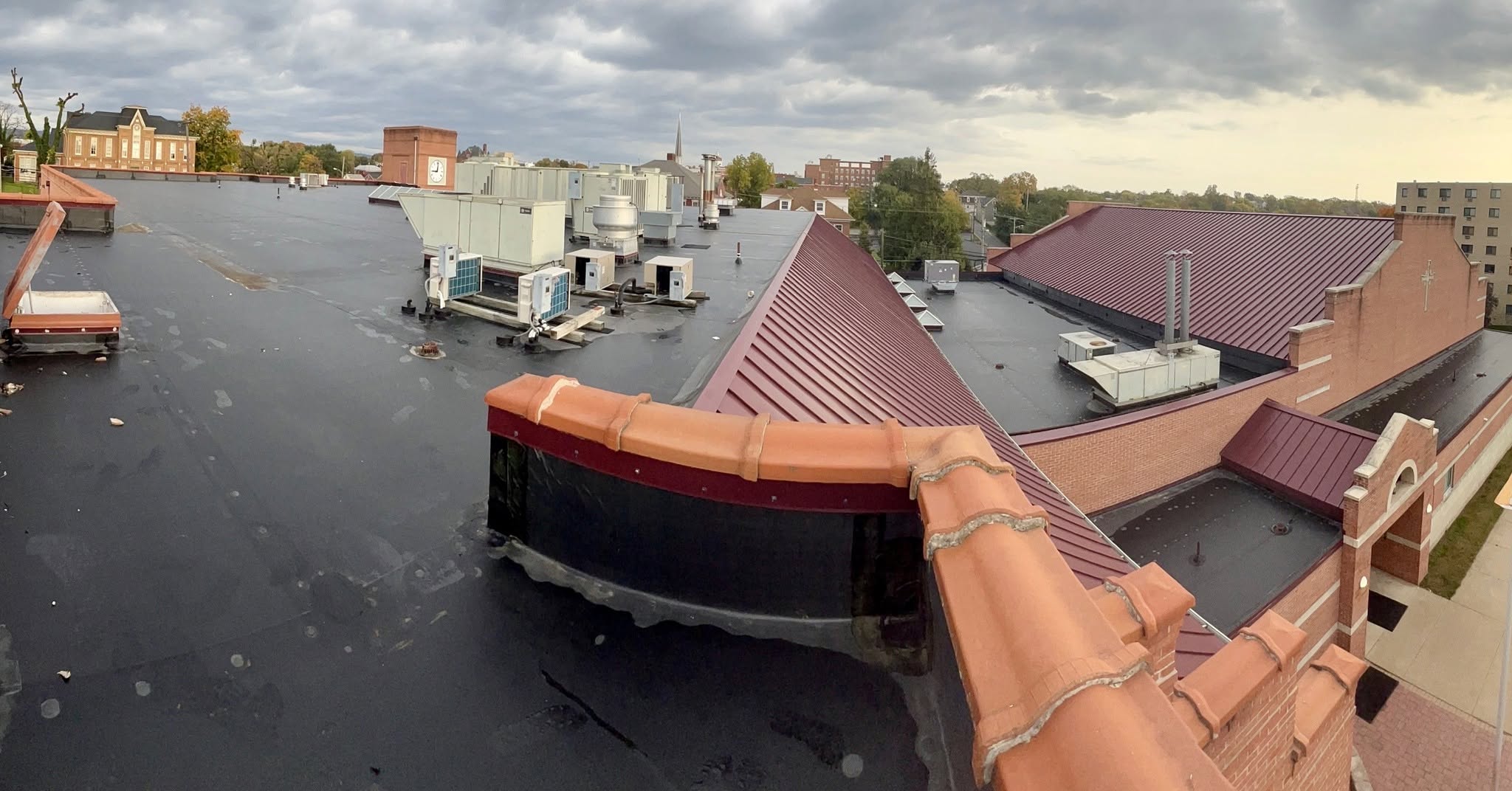
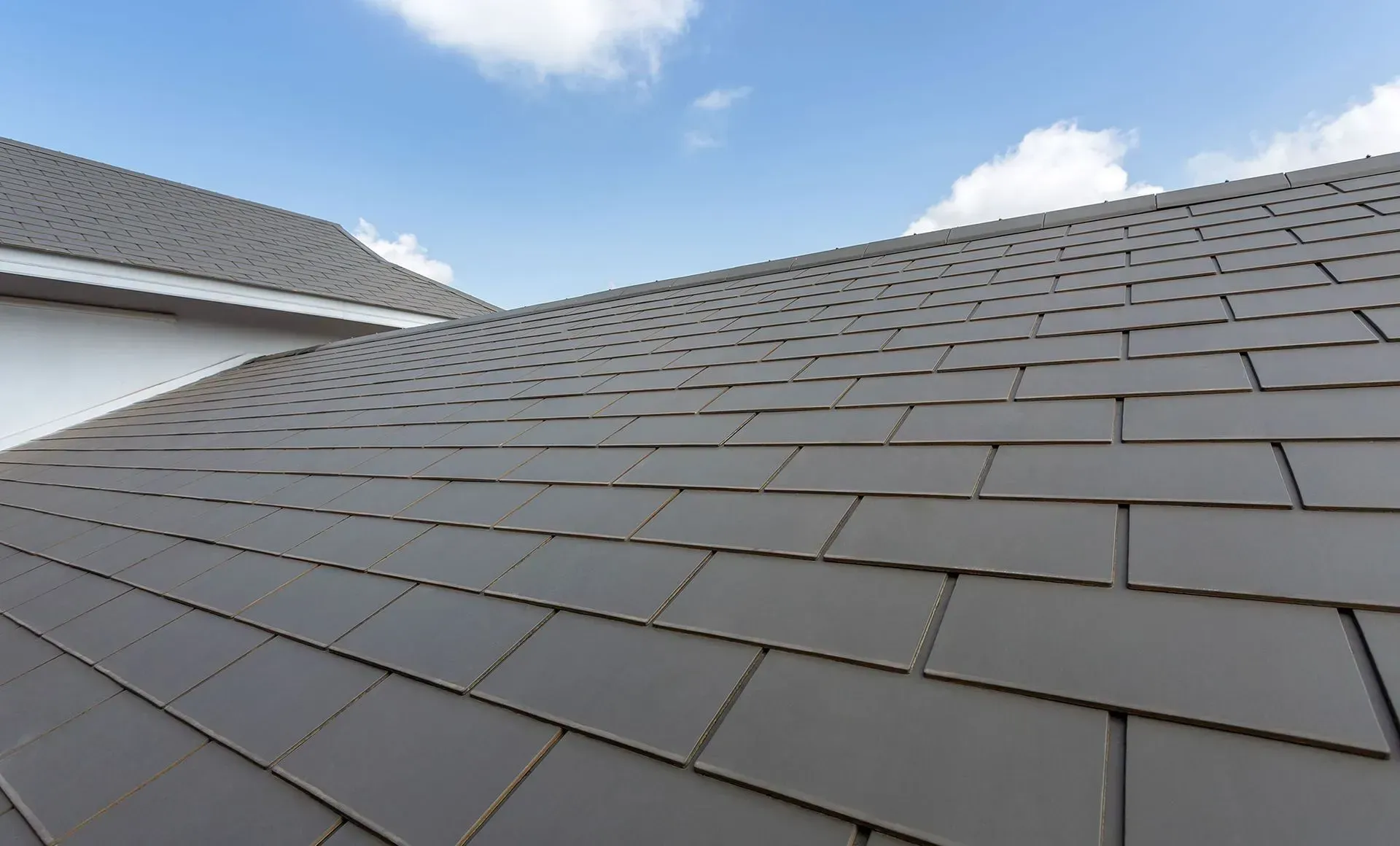
A coating is not a cheaper roof. It is a different transaction. Restoration buys additional service life out of a membrane that still has integrity left, without a tear off, without a dumpster in the dock, and without your deck open to the sky overnight. Whether your building qualifies comes down to what the survey finds. Here is what we are looking for and what each finding means for the number.
Water still standing 48 hours after the rain
That is ponding, and it weighs 5.2 pounds per square foot per inch of depth. A 40 by 40 low spot averaging two inches is over 16,000 pounds of live load feeding a deflection loop that deepens every season. Silicone tolerates ponding. It does not cure it. Sumps at the drains, crickets behind the RTU curbs, and tapered work come first.
Seams and laps that have already let go
Coating is a film, not an adhesive. It will not bridge a seam that failed. Those get repaired and proven first, or the roof is not a candidate at all. If leaks are the reason you are calling, that is commercial leak isolation and repair, and it happens well before any restoration conversation.
Insulation holding water under the membrane
The most expensive thing a coating can do is seal moisture in. Trapped water keeps eating the deck and destroying R value under a brand new white film. If more than roughly a quarter of the field reads wet, you are not coating this roof, you are tearing it off, and we will say so even though that is not the bid we came to write.
Scrim showing through the top layer
That membrane is at the end of its life and there is no wear layer left to protect. You would be coating fabric. Money spent there buys a white roof for a season and nothing structural, and the tear off still arrives on schedule.
Backed out fasteners and rust on a metal roof
Every fastener gets checked and reseated with an oversized screw before anything liquid goes down, because coating over a backed out fastener just puts a smooth white dome over an open hole. If the panels are corroded through at the laps, that is a metal panel retrofit or replacement, not a coating.
An edge, uplift, or code trigger the film cannot answer
A liquid coating does not give you perimeter edge metal that meets ANSI/SPRI ES-1, and edge failure is the most common initiating event in low-slope wind losses. When the scope trips a requirement a coating cannot satisfy, it is the wrong tool no matter how good the number looks, and you are usually looking at a single-ply membrane system instead.
From first look to final mil reading
1. Infrared moisture scan
Done on a clear evening after sundown, when saturated areas hold heat and read hot against the dry field. It is a fast way to map suspicion across a large roof. On its own it is a hypothesis, nothing more, which is why it is never the last step.
2. Core cuts to confirm it physically
Minimum one core per 10,000 square feet plus one in every area the scan flagged. The core is the evidence. You get photographs and marked core locations you can put in front of ownership, whether the answer is restore or tear off.
3. Adhesion test patch
On every substrate we put down a test patch and pull it before we commit your building to a system. EPDM will not hold a coating without an adhesion promoter. TPO and PVC are glossy and need aggressive cleaner or primer to give the film something to bite into. The patch settles that inside a week.
4. Written, itemized scope
Square footage sets the floor. After that it is the mil build the system requires, how many curbs and drains and penetrations need fabric detailing, how much prep the substrate demands, and how much seam and flashing repair happens before the first pail opens. A roof with sixty penetrations costs more per square foot than a clean field with six. All of it is on paper before anyone starts.
5. Prep and repairs, then photos
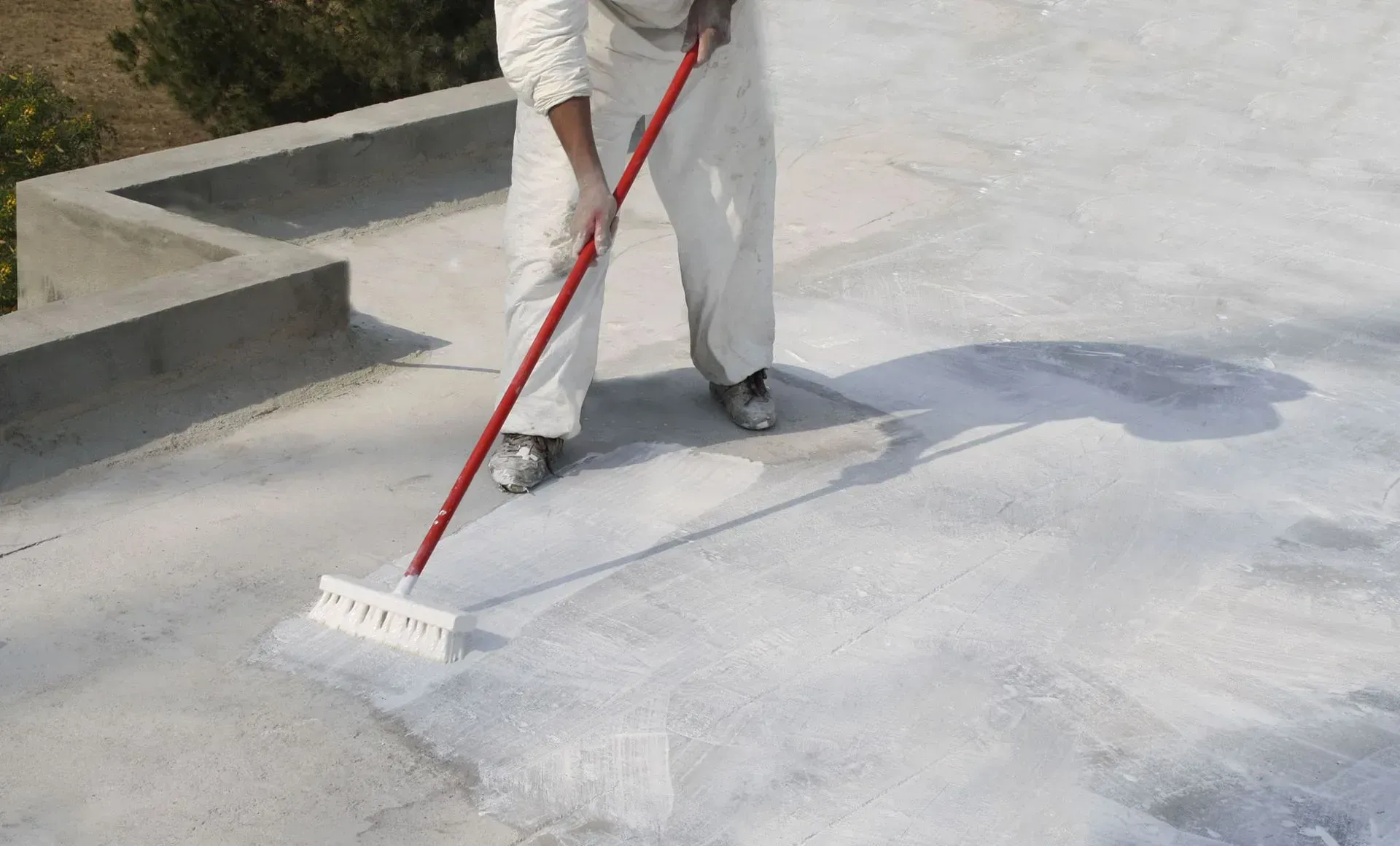
Prep is 60 percent of the job and it is where corners get cut, because nobody takes photos of prep. We take them. Cleaning, priming, rust conversion on metal, fastener reseating, seam and flashing repair, and drainage corrections all happen and get documented before any coating goes down.
6. Coating applied and verified with a gauge
Base coat and top coat to a finished 20 to 30 dry mils depending on the system, verified with a wet mil gauge while the crew is pulling material, not back calculated from how many pails came off the truck. A contractor who cannot hand you mil readings is telling you the build is whatever the material happened to cover that day.
Every layer that goes on your roof, named
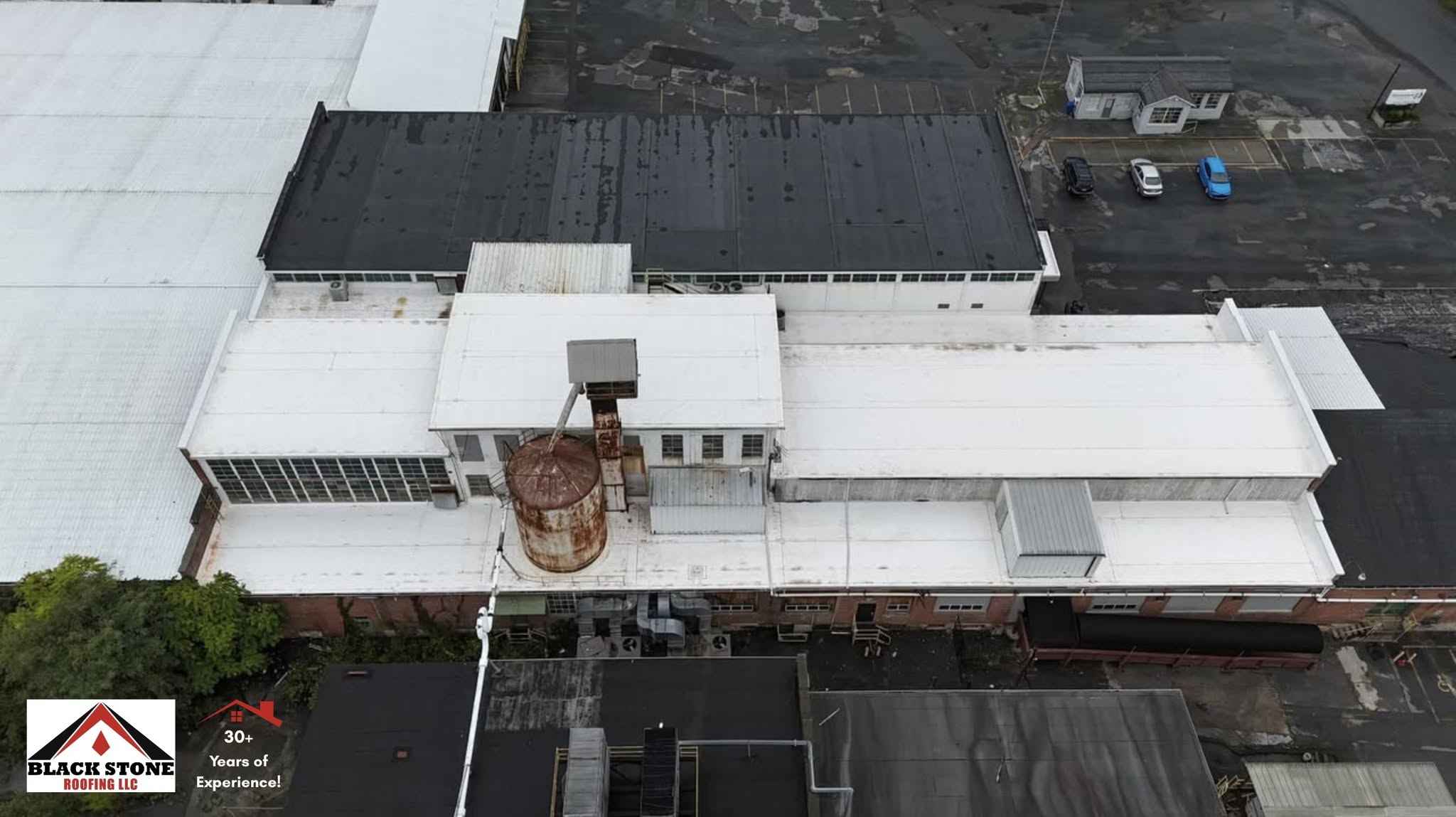
Cleaning, rust conversion, and fastener work
Power washing to a clean, sound surface, rust conversion where metal calls for it, and every fastener checked and reseated. Berkeley County roofs collect corridor grime and biological growth fast, and a coating bonded to dirt is a coating that peels.
Adhesion promoter matched to the membrane
EPDM needs a promoter or the film will not hold. TPO and PVC are glossy and need aggressive cleaner or primer. The test patch tells us which one your building takes rather than which one is on the truck.
Seams, flashings, and terminations proven first
Anything that already failed gets repaired and confirmed watertight before restoration starts. On a Martinsburg roof carrying rooftop units serviced year round, curbs and pitch pockets are where the history lives.
Embedded at every moving joint
Seams, penetrations, flashings, curbs, and terminations all get fabric embedded in coating. Those are the places that move and the places that already failed once. Skipping fabric is the single most common shortcut in this trade.
The first half of the mil build
Pulled to spec and read with a wet mil gauge as it goes down. Silicone runs 90 to 98 percent solids and cures by reacting with moisture already in the air, which matters when dew arrives most summer mornings here.
Finished to 20 to 30 dry mils
Silicone tolerates ponding, which is the entire reason the product exists, but it holds dirt and gives up reflectivity over time. Acrylic sits around 50 to 60 percent solids, makes the tougher film, and keeps reflectivity far longer. The cure window decides it.
Granules broadcast where people actually walk
Silicone is slick when wet. Every hatch and every unit your techs service gets granules broadcast into the walk path, so the roof stays safe for the people who have to go up there in February.
Why building owners here call Black Stone
Licensed in five states
VA, WV, MD, PA, FL. West Virginia requires a contractor license, requires the number in the advertising, and requires it posted at the job site. Ask every roofer bidding your building for theirs.
A Martinsburg address, not a service radius
1886 Winchester Ave, Martinsburg, WV 25405. Berkeley County is where we are, not a market we drive to when the calendar allows, so a survey here is a short trip and a callback is a short trip too.
Family owned since 2016
Licensed, bonded, and insured. Open 24 hours, seven days a week, with emergency response. Roofs on occupied buildings do not fail during business hours as a courtesy.
4.9 stars from 50 Google reviews
Read them before you call anybody, us included. We survey before we quote, because a coating proposal written off a walk around and a satellite measurement is a guess with a price on it.
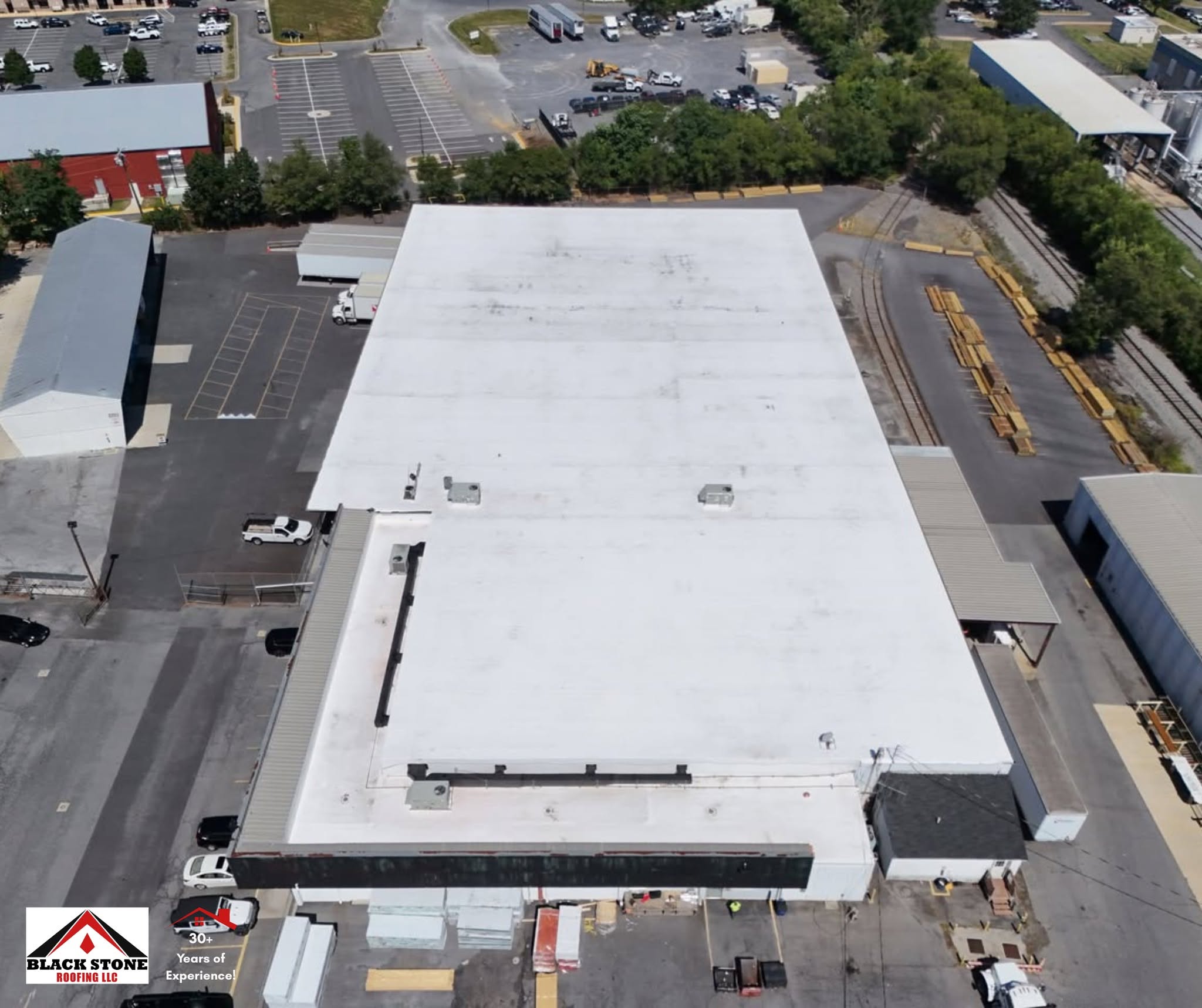
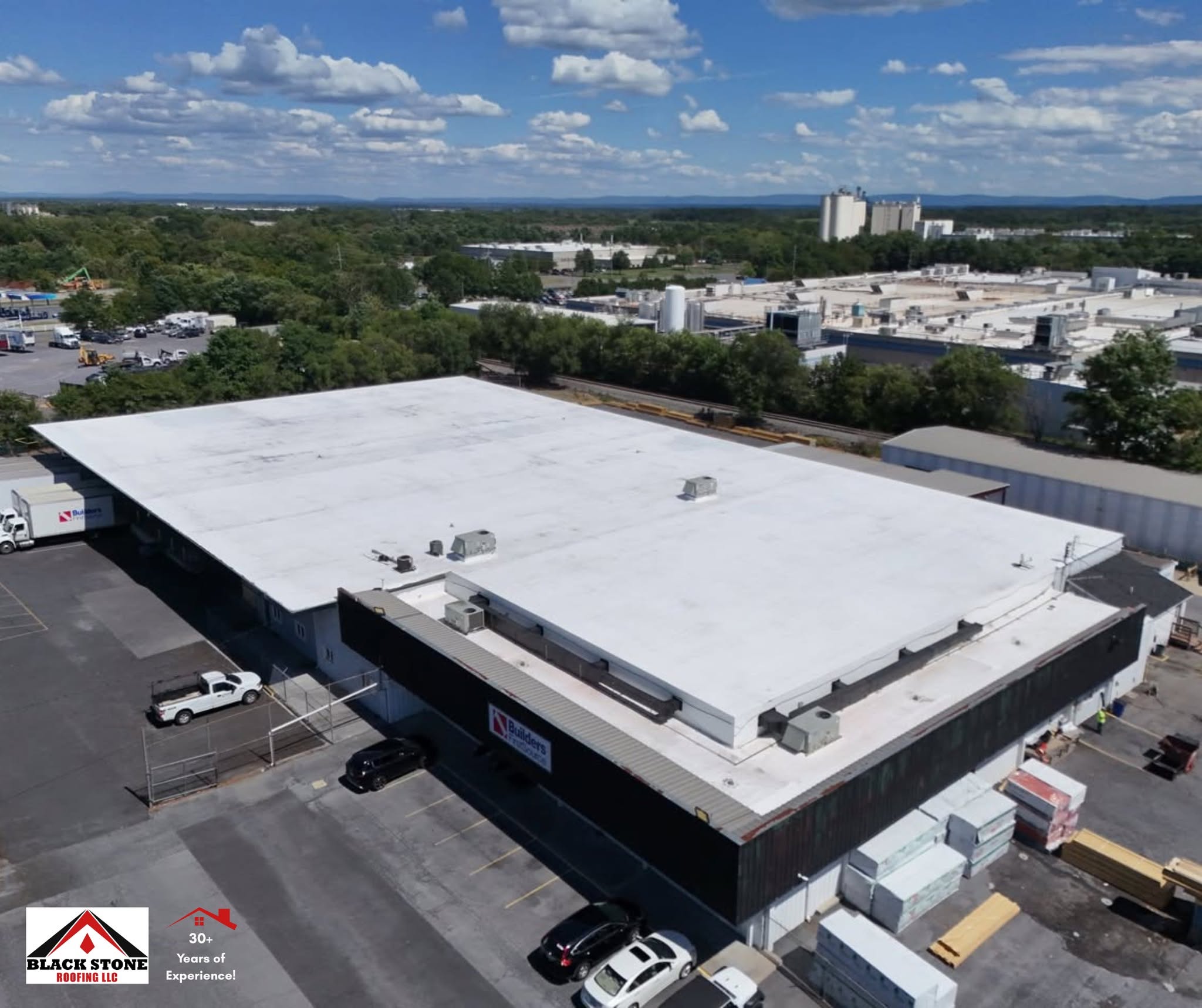
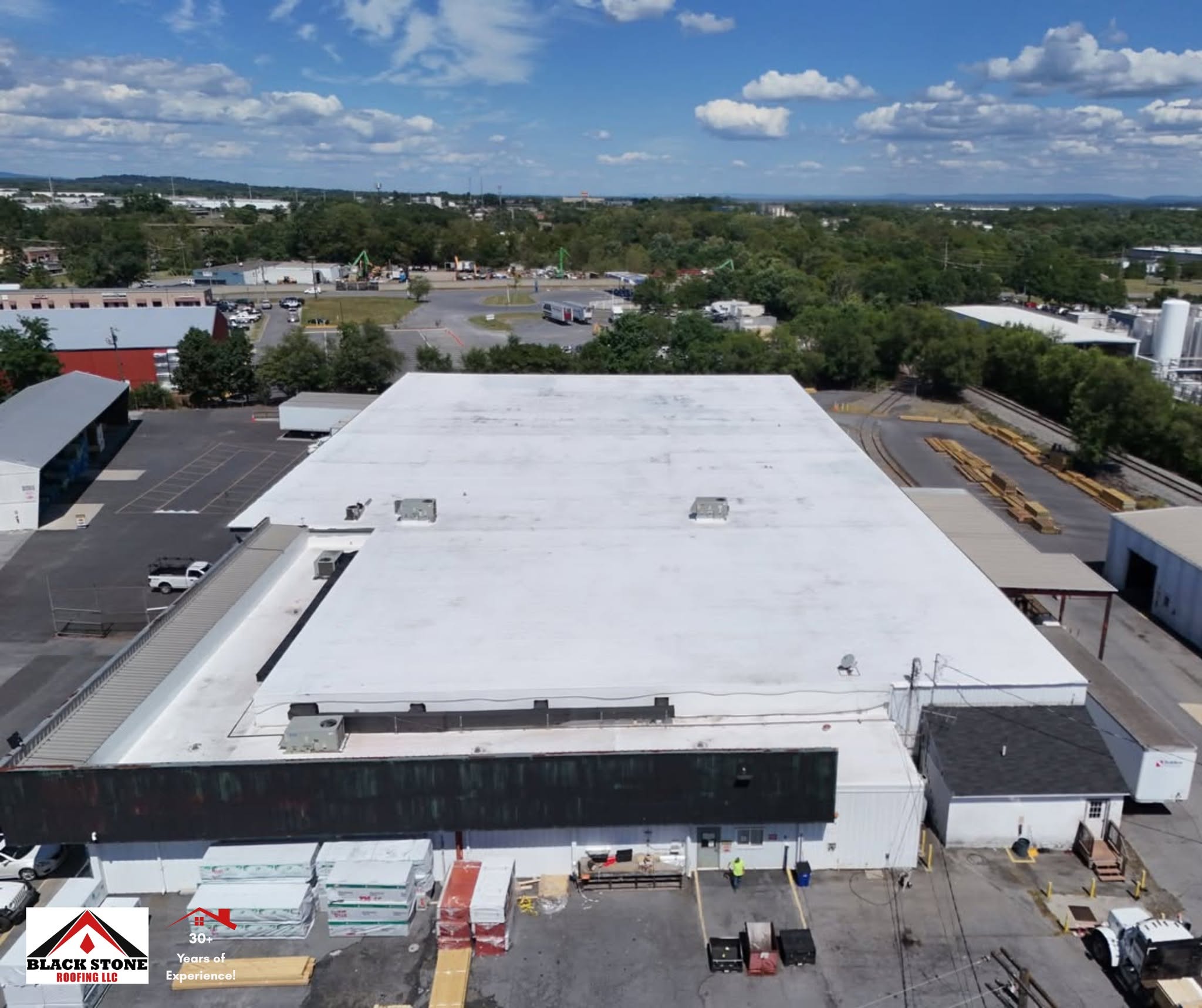
Related commercial roofing services
Commercial Roofing Overview
Start here if you are weighing tear off against recover against restore, or budgeting several roofs at once.
Single-Ply Membrane Roofing
When the assembly is past restoring, TPO, EPDM, and PVC compared honestly with insulation and tapered drainage.
Commercial Metal Roofing
Standing seam, the exposed fastener re-screw cycle, retrofit framing, and curb and end lap detailing.
Commercial Roof Repair
Leak isolation on a large roof, aged seam welding, pitch pocket failures, and abandoned penetrations.
Roof Inspection
The infrared moisture survey and core cut testing that decides whether your roof is a coating candidate.
Preventative Roof Maintenance
The scheduled program a restoration belongs inside, since renewable coverage only works if maintenance happens.
Emergency Roof Repair
Answered 24 hours. Tarped and stabilized first, then the permanent repair gets scoped in daylight.
Storm Damage Roof Repair
Wind and hail assessment on low-slope assemblies, documented for the building file and the adjuster.
Roof Insurance Claims
Photo documentation, scope language, and adjuster meetings when the loss is covered rather than deferred.
Gutter Installation
Where the roof drains matters as much as what it is coated with. Same crew, same envelope.
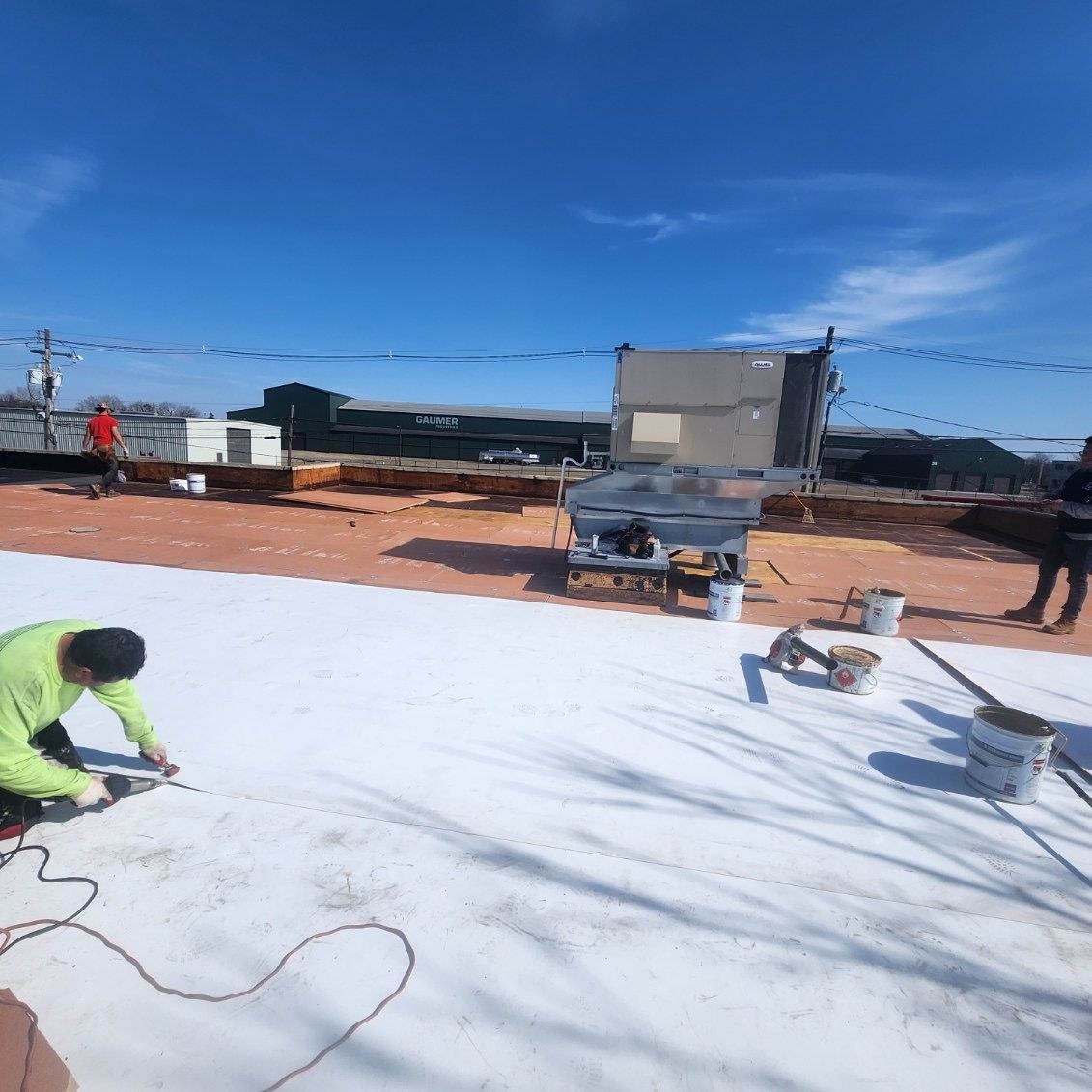
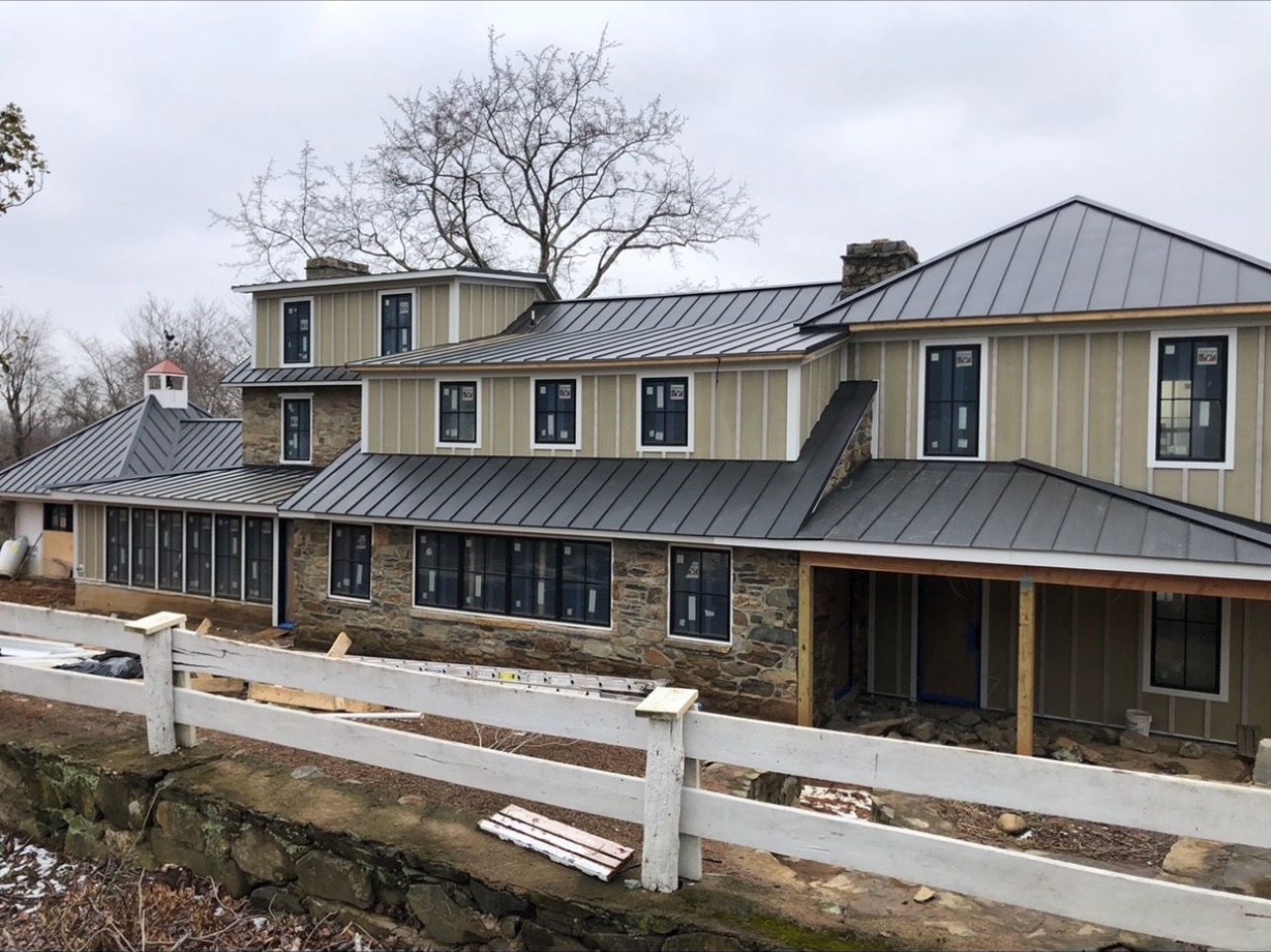
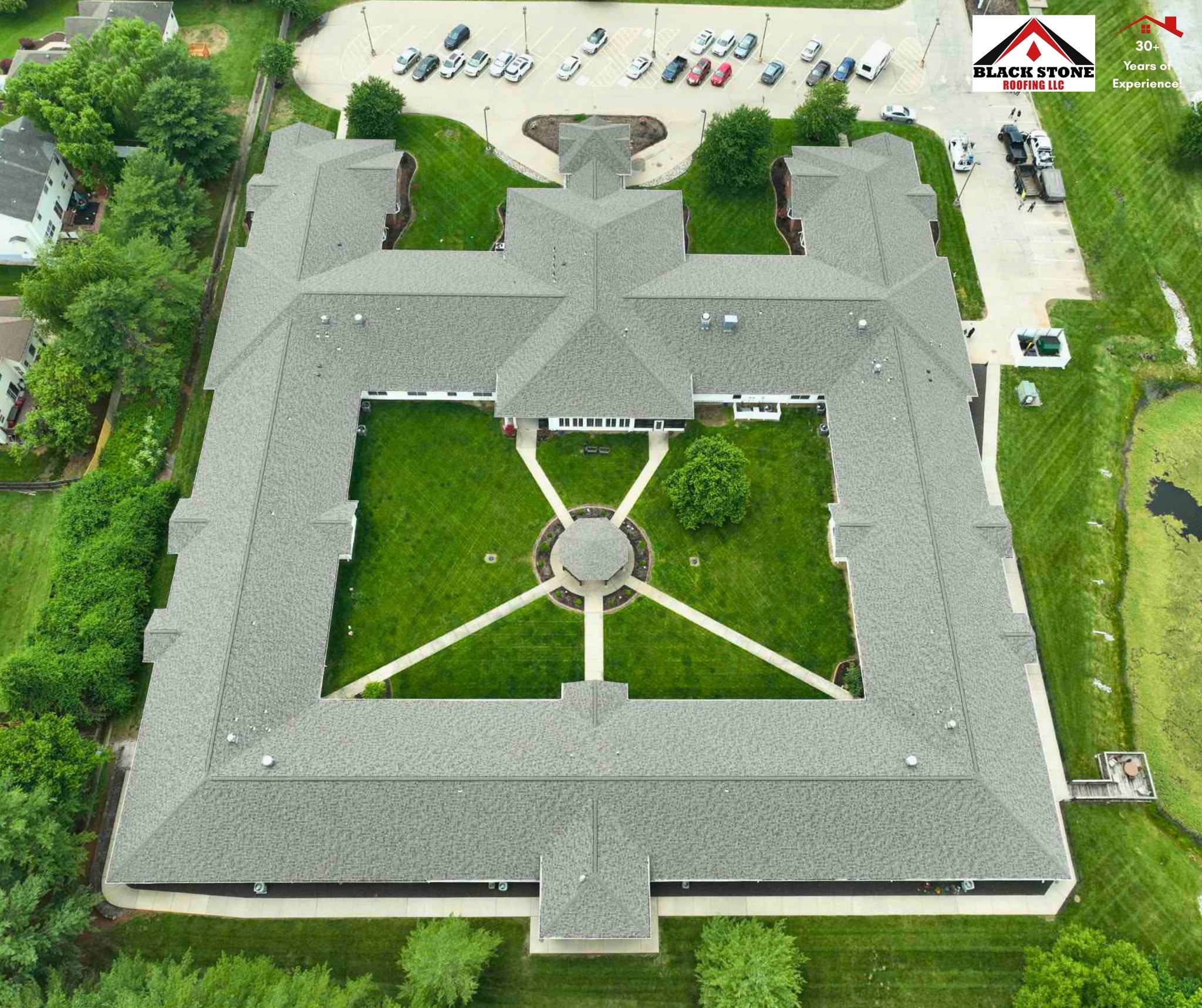
Where we coat roofs
Do not see your town? We work the whole corridor, so ask or call (540) 550-9703.
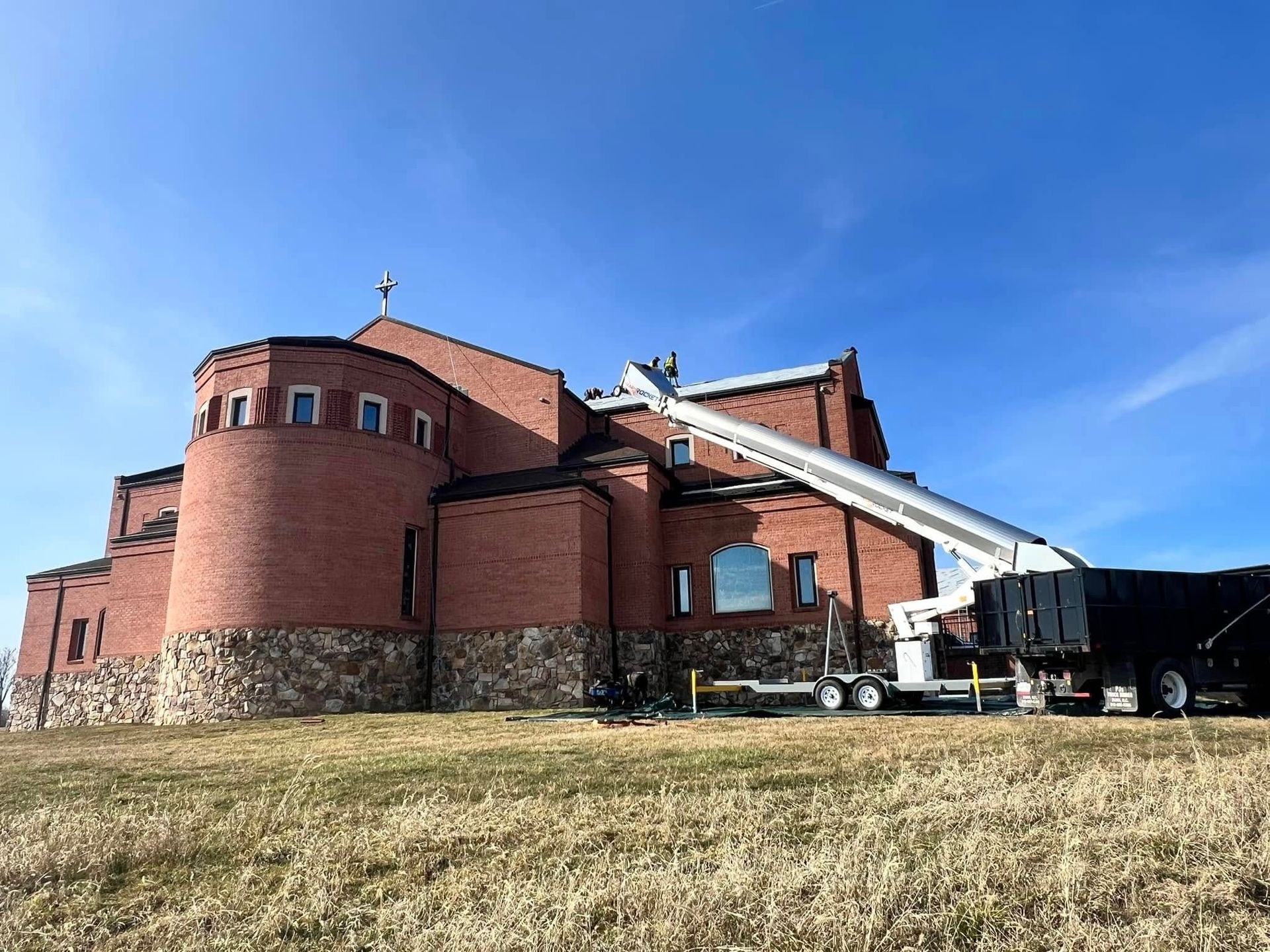
Roof coating questions we get from building owners
-
Will a coating stop the leaks we already have?
No. A coating is a film, not an adhesive, and it will not bridge a seam or a lap that has already let go. We repair the active leaks first and confirm the repairs hold, and only then does the restoration conversation start. If leaks are the reason you are calling, that is a commercial roof repair call, not a coating call.
-
How do you know whether the insulation under our membrane is wet?
Infrared scan on a clear evening after sundown, when saturated areas hold heat and read hot against the dry field, then core cuts to confirm it physically. Minimum one core per 10,000 square feet plus one in every area the scan flagged. Infrared by itself is a hypothesis. The core is the proof. If more than roughly a quarter of the field is wet, we recommend tear off instead of coating.
-
Silicone or acrylic on a building in Martinsburg?
Usually silicone, and the reason is the weather calendar. Silicone cures by reacting with atmospheric moisture and it tolerates ponding. Acrylic wants roughly 24 to 48 hours above 50 degrees with no rain and no dew, and January here averages 32.4 degrees with normal days running 25 to 41. That narrows the honest acrylic window considerably in the Eastern Panhandle. Acrylic still wins on long term reflectivity and toughness, so if the roof drains well and the schedule allows a real cure window, it is a strong choice.
-
Does the building have to shut down while you coat?
No. There is no tear off, no dumpster, no exposed deck overnight. The work happens above an operating building, and we schedule around shipping windows, shift changes, and outside air intakes. For a distribution or manufacturing building on the I-81 corridor, that is usually the deciding factor.
-
If we coat now, what are our options later?
That depends on what goes down. Once a roof is siliconed it can only ever be recoated with silicone, because nothing else adheres to cured silicone. That is a perfectly good long term path and many owners choose it deliberately, but it is permanent and you should choose it knowingly. Acrylic leaves more options open. Either way, a recoat at roughly half the original mil build renews the coverage rather than starting over from the deck.
-
Is a coating cheaper than replacing the roof?
On a roof that qualifies, restoration costs a fraction of what tear off and replacement costs on the same building, and the savings are mostly labor, disposal, and insulation you are not buying twice. We put both numbers in front of you for your actual building instead of quoting you a rule of thumb. Coating over wet insulation or failed seams does not save money, it delays the same tear off and makes it cost more. On how either option is treated on your books, ask your CPA.
-
Where is Black Stone Roofing based?
Our shop is at 1886 Winchester Ave, Martinsburg, WV 25405. That matters on a commercial roof because a restoration is not a one visit transaction. There is a survey, a core cut day, prep, application, and a return trip when something needs a look. Being in Berkeley County means all of that happens on your schedule instead of ours. We are licensed in West Virginia, Virginia, Maryland, Pennsylvania, and Florida, and we have been family owned since 2016.
Find out whether your roof is a coating candidate
We will scan it, core it, and tell you straight whether restoration is the right call or whether you are looking at a tear off. Either answer comes with photos and core locations you can put in front of ownership.