Home/Storm Damage Roof Repair
24/7 STORM RESPONSEStorm Damage Roof Repair in Martinsburg, WV
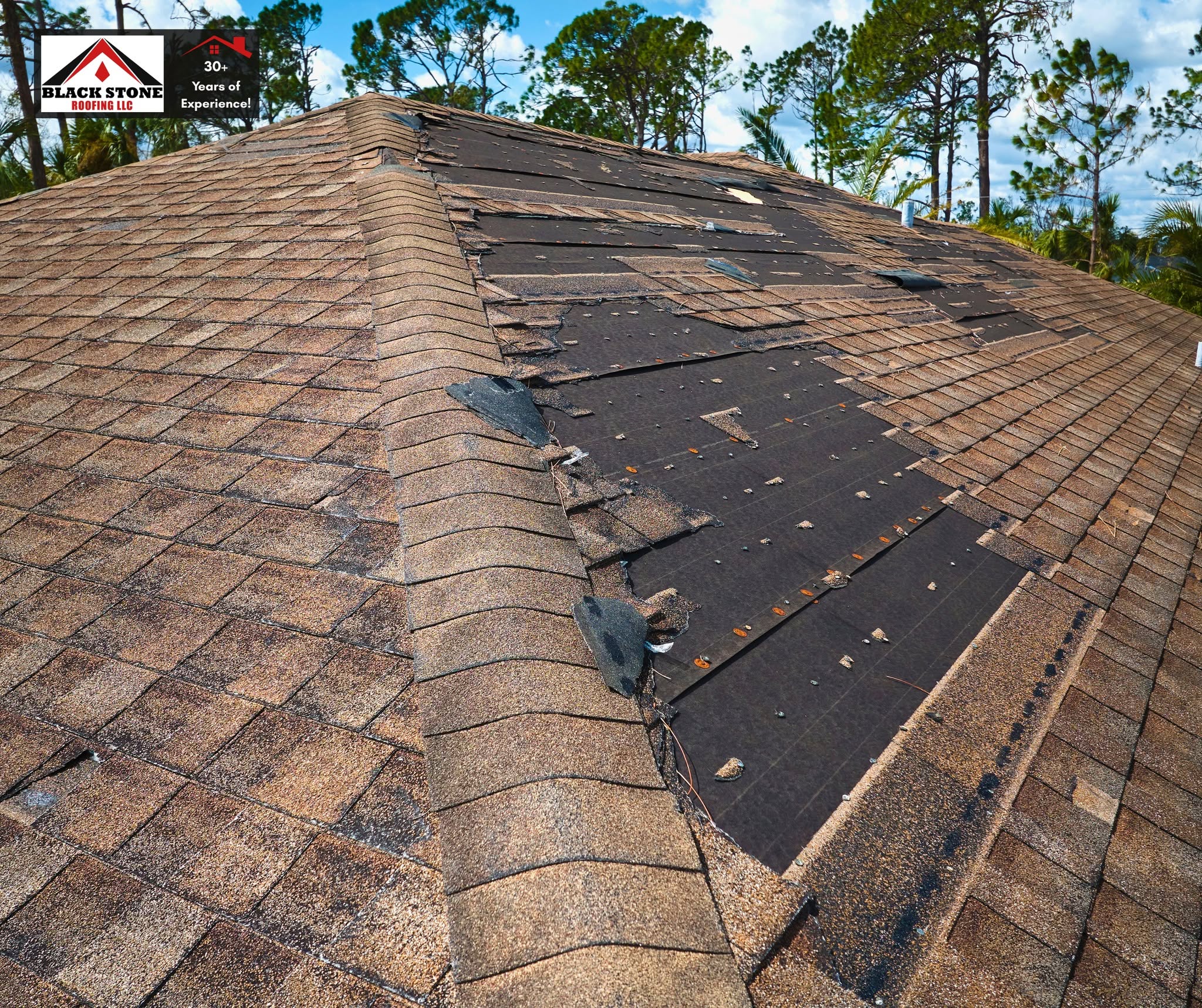
On the night of April 19, 2025, a wall of 60 to 75 mph wind moved through north Berkeley County, dropped about eight poles on WV Route 901, and tore the roof off the Hedgesville town hall. A roof can take a hit like that and never leak a drop, which is exactly how people lose the claim window without knowing it. We get on the roof, count what the storm actually did, and hand you a photo report with the date on it.
Leaking right now
Emergency response
We answer 24 hours. Tarped and stabilized before more gets inside.
Planning ahead
Free inspection
Written scope and photos so you know what the roof actually needs.
Request your free estimate
Storm work across Martinsburg and Berkeley County

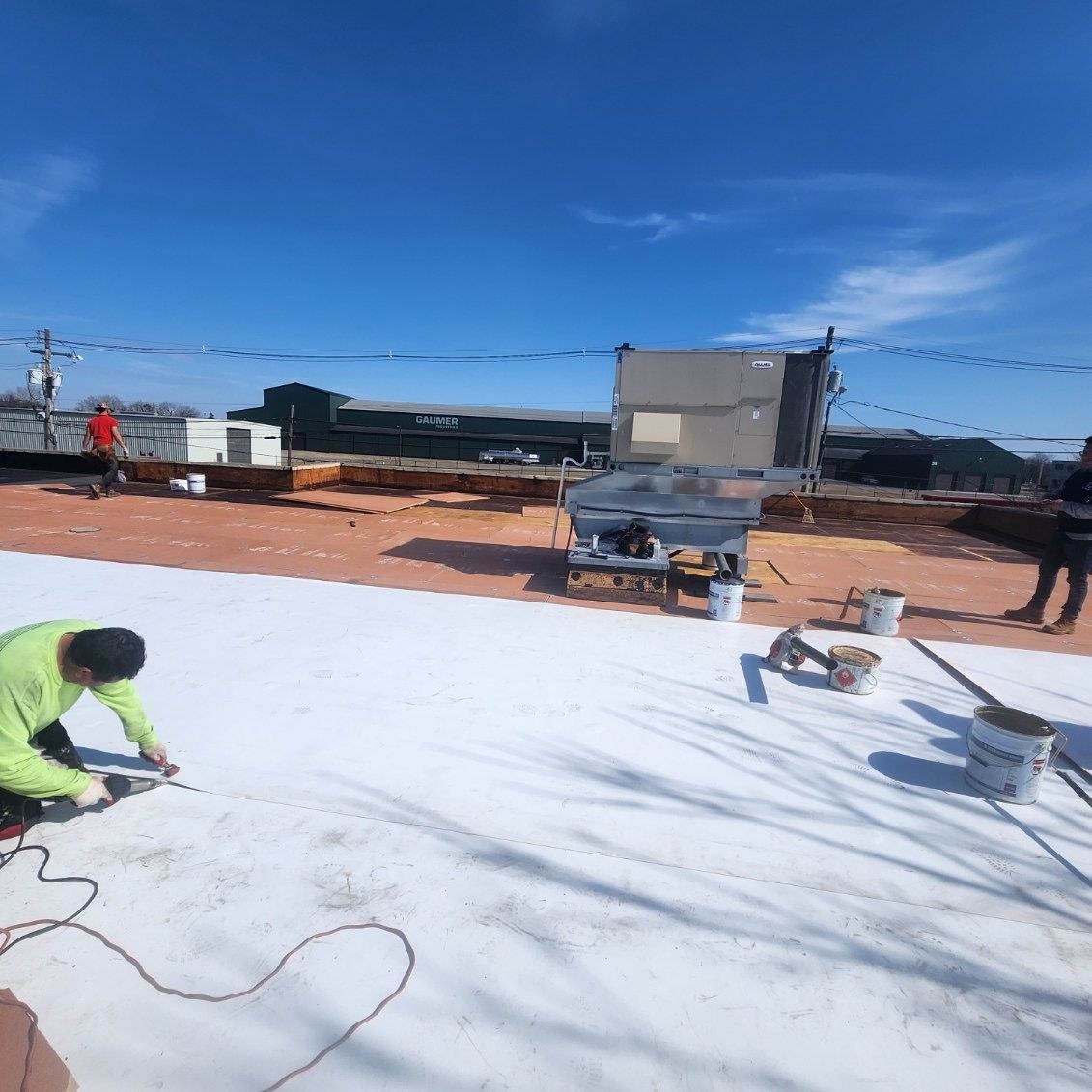
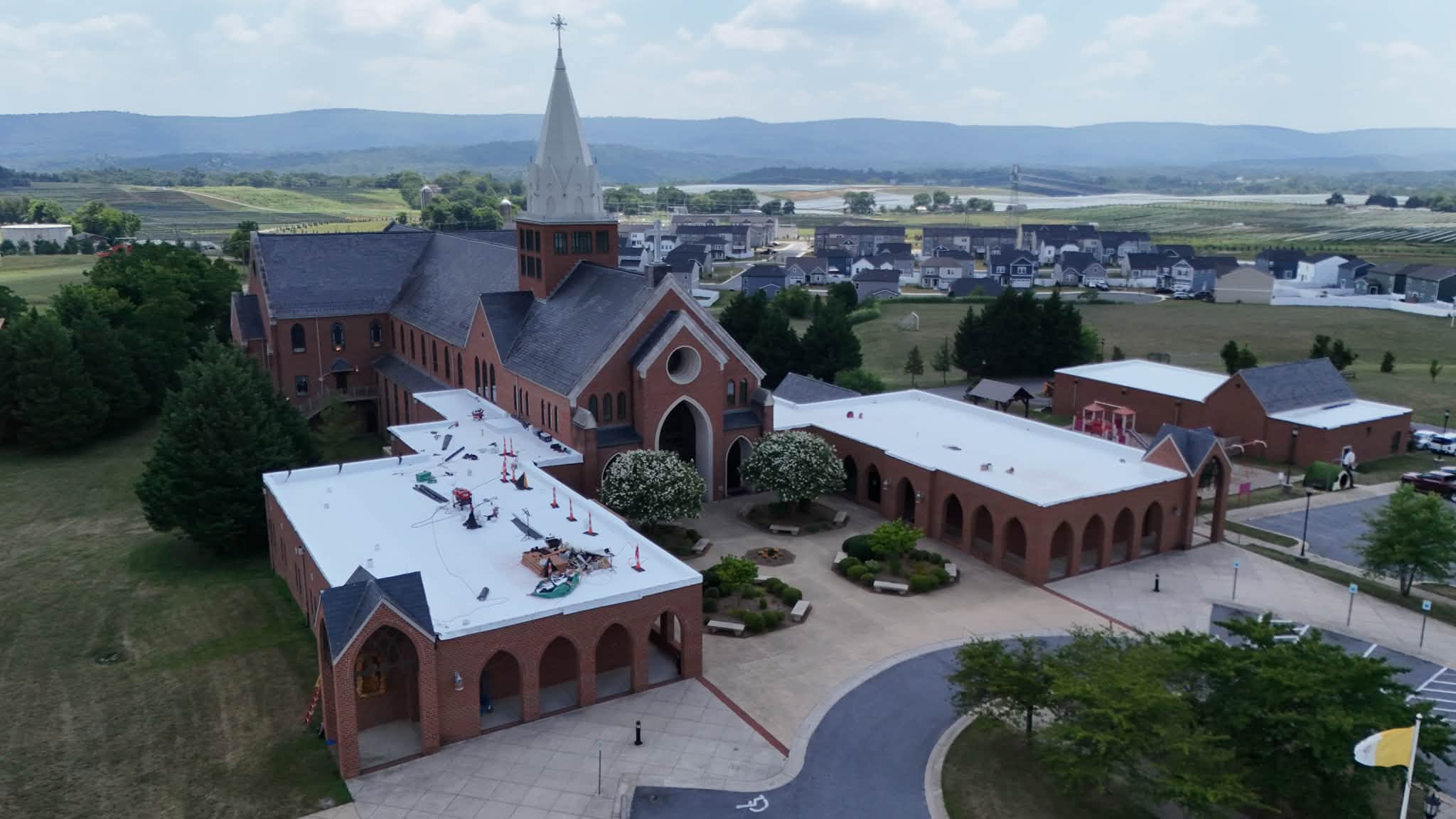
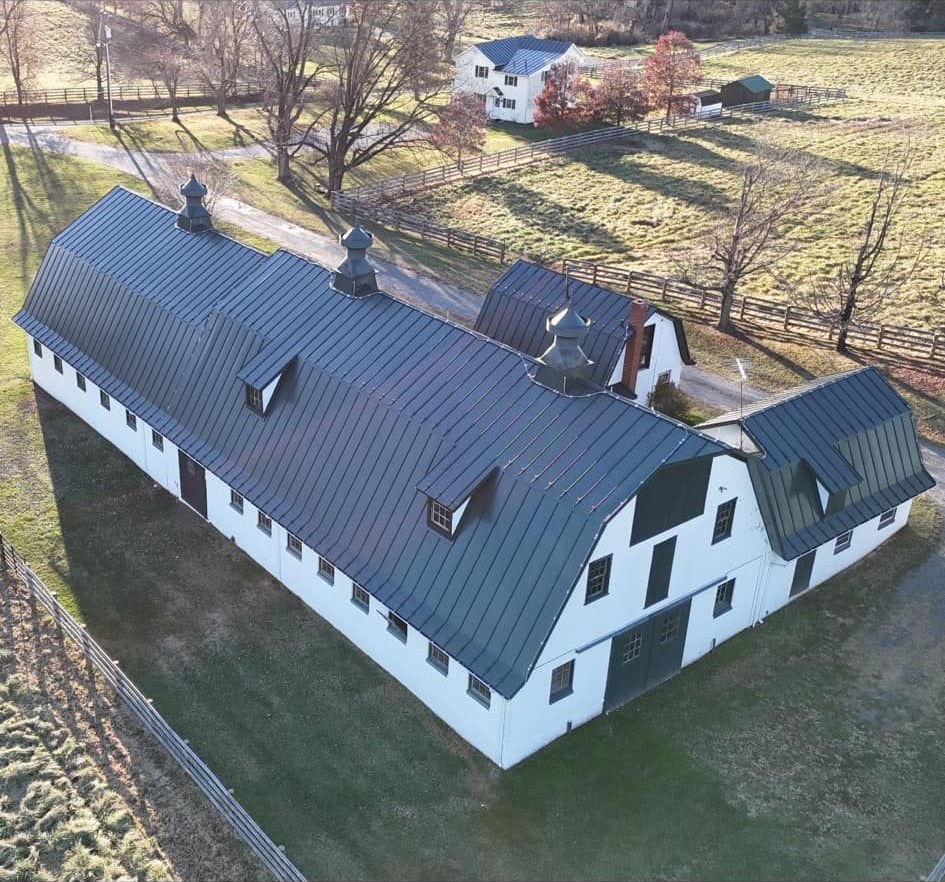
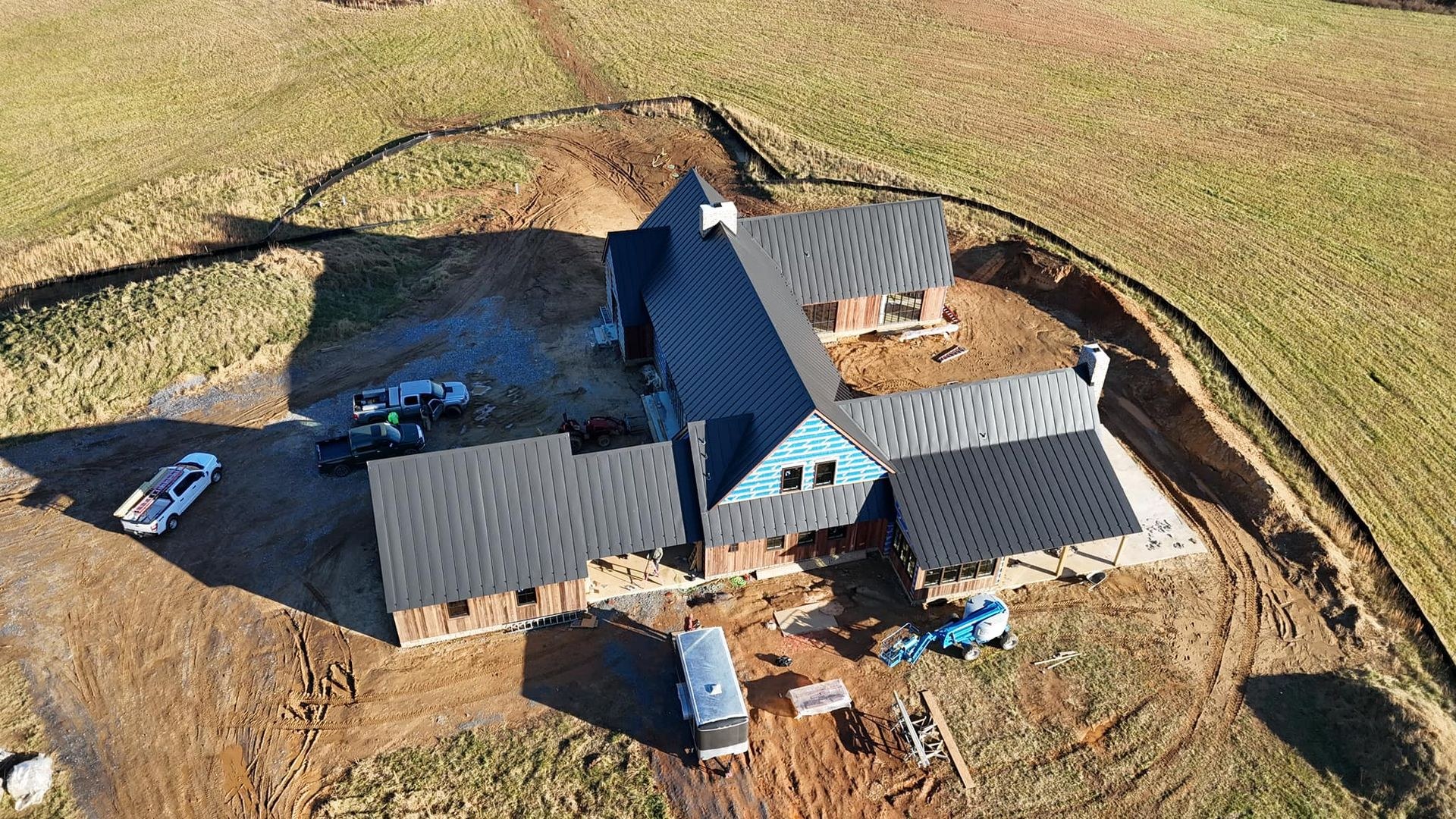
A storm can total a roof without ever leaking
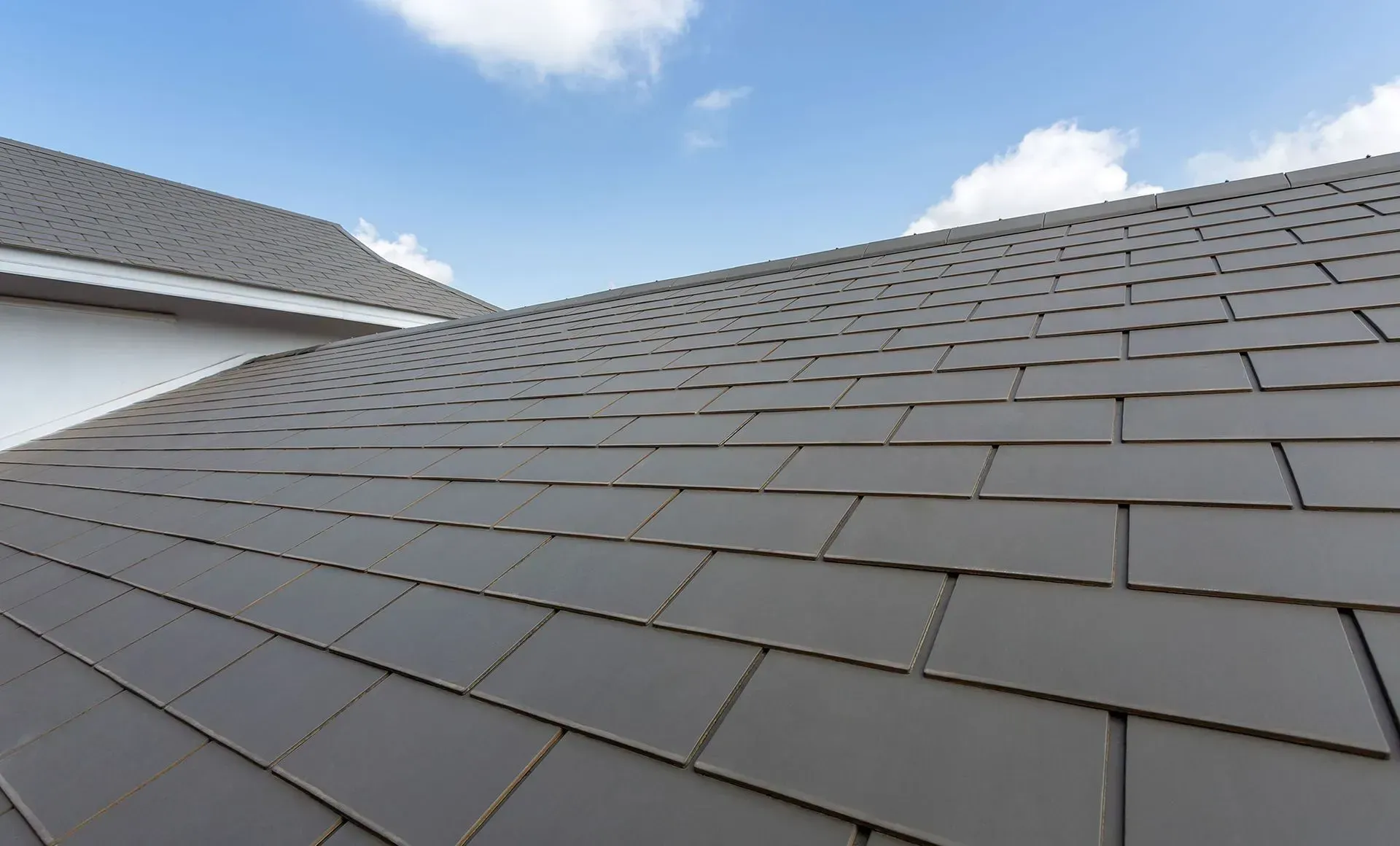
A roof can be badly damaged and not leak for two years. That is the part that costs people money. Between 2015 and 2025, Berkeley County recorded 27 hail events, every one of them three quarters of an inch or larger, plus 100 separate thunderstorm wind events. The question is almost never whether a storm came through. It is whether this one did anything to your roof, and you answer that by getting on the roof and counting.
Black spots on the shingle and granules in the gutter
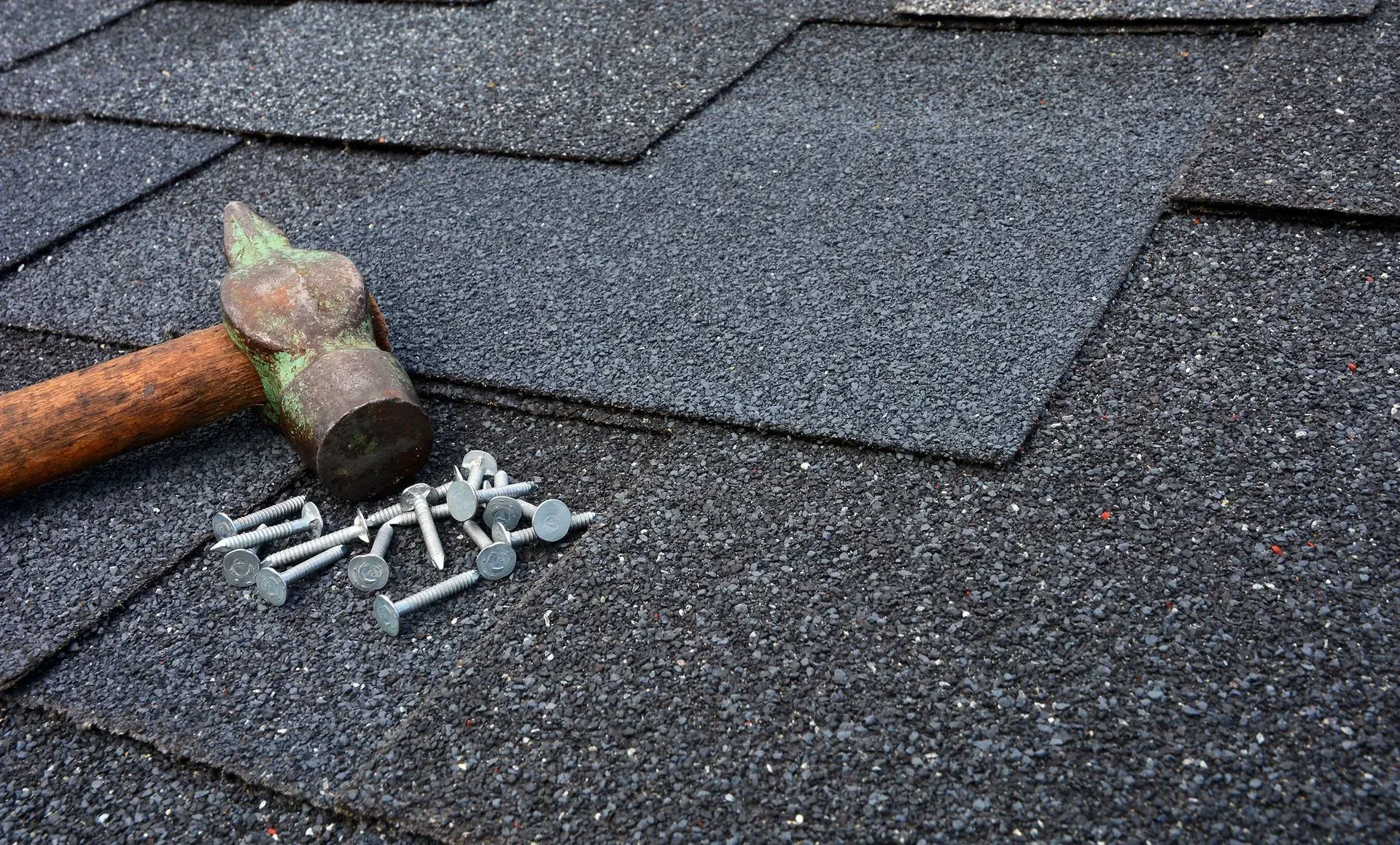
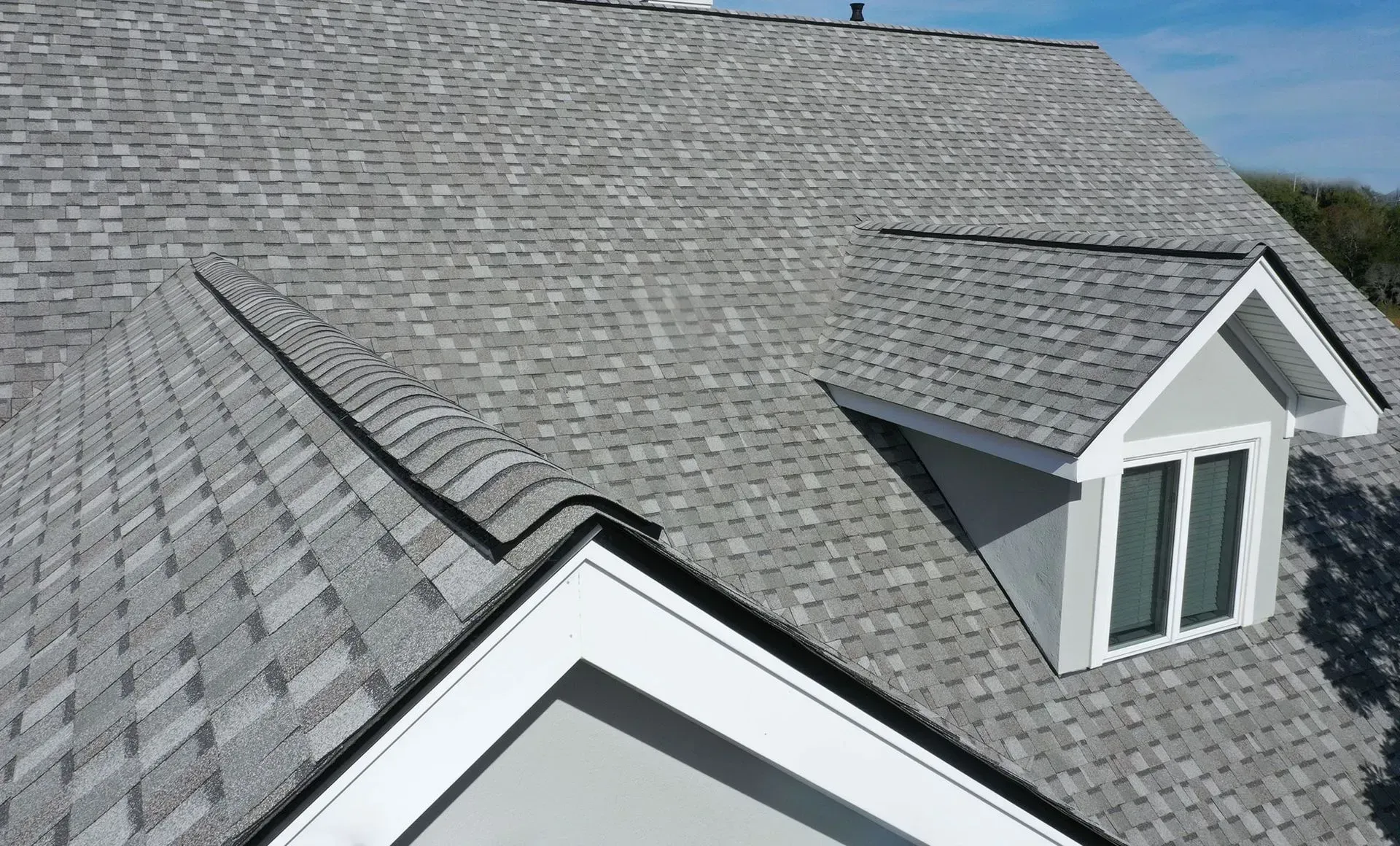
Hail knocks the granule layer outward and fractures the fiberglass mat underneath. The shingle keeps shedding water right up until the exposed asphalt weathers through, then it fails all at once, usually in February. Press the hit with your thumb. A functional strike feels soft, because the mat under it is broken.
Shingles that lie flat but lift with one hand
Wind breaks the seal strip and the shingle lies back down. From your driveway it looks like nothing happened. A shingle that is still sealed will tear before it releases. One that comes up clean is not attached to anything anymore, and it is waiting on the next gust to take it and the course above it.
A crease running across a shingle
Creased shingles get walked past constantly because they lie flat again. They are still damage. The mat fibers are broken across the crease and it will crack through within a year or two, which means you pay for the same storm twice, once now and once when the leak shows up out of warranty on the claim.
Dents in gutters, vent caps and condenser fins
Aluminum and painted steel record hail better than asphalt does. Spatter marks on soft metal establish size and direction and they corroborate the date. Your AC condenser fins are the most sensitive hail witness anywhere on the property, and a carrier that sees them takes the rest of the report more seriously.
Damage concentrated at rakes, eaves, corners and ridge
Under ASCE 7 those are the high uplift zones, because that is where pressure spikes when wind separates off the building. Real wind losses radiate in from the edges. Damage sitting in the middle of a slope with a pristine ridge above it is suspicious, and we treat it that way in the report.
Round, uniform, sharp rimmed marks on every slope
That is blistering, not hail, and it is worth knowing before an adjuster says it to you. Blisters are firm under the thumb and they show up on the north slope too, which hail does not do. It points at ventilation or manufacturing, and no carrier pays for it. If somebody is chalking circles on your north slope, you have a bigger problem than your roof.
What happens from the call to the finished roof
1. You call and a person picks up
We are open 24 hours, seven days a week. If water is coming in right now, say that first and we route you straight to emergency response so the roof gets tarped and stabilized tonight rather than scheduled for Thursday.
2. We read the ground before the ladder comes off the truck
We walk the perimeter and read the soft metals first: gutters, downspouts, gutter apron, vent caps, flashings, window wraps and condenser fins. That is where hail records its own size and direction, and it is what makes everything we find on the roof credible.
3. We chalk test squares and count by slope
A ten by ten test square goes on every slope and we count what is inside it. Eight to ten functional hits per hundred square feet is the trigger most carriers work from. Everything is recorded by slope and by elevation, north, south, east and west, because a carrier scopes what it can see documented and nothing else.
4. We name what is not storm damage too
Foot traffic leaves crescent scuffs with granules crushed into the mat instead of knocked off it. Tree limbs abrade in a line. Nail pops push a bump through the course above. Thermal splitting runs vertically. Damage with a repeating spacing to it is somebody with a tool, not weather. If your roof took a hard rain and nothing else, we tell you that and get off the ladder.
5. You get the photo report and it is yours either way
Overview shots of each slope, close ups with something in frame for scale, the soft metal corroboration, the slope by slope hit count, your address, and the National Weather Service event date that matches. You keep it whether you hire us or not, and you can hand it to your adjuster as is.
6. You file, we meet your adjuster on the roof
West Virginia law does not let a roofer represent you with your carrier, negotiate a settlement, or handle a claim for you, and any contractor who offers to is telling you something about how he operates. We meet the adjuster on the roof and put anything the scope missed in writing for you to submit. Then the same people who inspected the roof do the repair.
What a storm repair actually puts back
The sheathing under everything
Once wind peels a course, the plywood underneath has been taking rain. On a Martinsburg roof that has sat through a summer of storms we check for soft spots, delamination and fasteners that backed out, because new shingles over a bad deck will not hold a nail.
Self adhering membrane at the eaves and valleys
The Eastern Panhandle gets real freeze and thaw cycles, so meltwater backs up under the bottom courses. This layer seals around the fasteners and is the difference between a January ice dam and a ceiling stain in the front bedroom.
The secondary water barrier over the deck
It is the layer doing the work in the window between a storm stripping shingles and us getting back out to you. Felt tears when it gets wet and walked on. Synthetic holds, which matters when the next line of storms is 48 hours behind the one that hit you.
The sealed edge at eaves and rakes
This is the first thing wind attacks and the most common thing we find missing on a roof that lost shingles at the perimeter. A proper starter gives the first course something to bond to. Cut up field shingles used as starter put the seal strip in the wrong place entirely.
Fastened in the common bond area
A shingle nailed above the common bond area rotates off a completely intact fastener in a 50 mph gust. That is a workmanship failure, not a storm loss, and we write it up as what it is. Wind exposes bad installation, and we say so out loud when we find it.
Pipe boots, step flashing and chimney counterflashing
Most leaks we chase after a storm are not in the field of the roof at all. They are at a cracked boot, a chimney with no cricket, or step flashing that got face nailed years ago and finally moved. These get replaced during the repair, not caulked over.
Drip edge, gutter apron and the gutters themselves
Dented soft metal is evidence, but bent gutter apron is also a live water problem, because it lets runoff track behind the gutter and down the fascia. If hail hit hard enough to mark the metal, the metal gets scoped with the roof rather than left for later.
Who is actually on your roof
A Martinsburg address, not a storm chaser
We work out of 1886 Winchester Ave, Martinsburg, WV 25405. Berkeley County is where we live, so we are here in April and we are still here in November.
Licensed in five states
VA, WV, MD, PA, FL. Licensed, bonded and insured, and the West Virginia number is posted at the job the way the state requires.
Family owned since 2016
The people who inspect your roof are the people who repair it. Sixteen federally declared disasters have hit this area in twenty years and we have not left yet.
Open 24 hours, seven days a week
You call and a person picks up. After April 19, 2025 we were on roofs the next morning, not the next week.
Related roofing services
Emergency Roof Repair
Water is coming through the ceiling right now. Tarp first, diagnose in daylight.
Roof Insurance Claims
Replacement cost versus actual cash value, why the first check is never the whole scope, and the deadlines your carrier has to meet.
Roof Inspection
No storm required. What we check and in what order, and what an inspection will not tell you.
Roof Repair
Leak diagnosis when the cause is an aged pipe boot or a chimney with no cricket rather than a storm.
Asphalt Shingle Roofing
Fastener placement, the common bond area, and how a shingle roof is supposed to be nailed.
Roof Replacement
What a full replacement involves once the slope by slope hit count says repair is no longer the answer.
Residential Metal Roofing
Denting, coating fractures and seam damage read differently on metal than they do on asphalt.
Gutter Repair
Gutters, downspouts and gutter apron are soft metal, which is where hail records itself first.
Storm response across the Eastern Panhandle and the Valley
Do not see your town? We work the whole corridor, so ask or call (540) 550-9703.
Questions we get after every storm
-
My roof is not leaking. Can it still have storm damage?
Yes, and this is the most common thing we find. Hail fractures the mat under the granules while the shingle is still shedding water, so the roof performs normally for months or years and then fails all at once once the exposed asphalt weathers through. Wind damage is the same story. A shingle whose seal strip broke lies flat and looks untouched from the ground, but it is no longer attached and the next strong gust takes it and the course above it. Functional damage and an active leak are two different conditions, and a roof can absolutely have the first without the second.
-
Are you actually based in Martinsburg, or do you drive in after storms?
We are based here. Our address is 1886 Winchester Ave, Martinsburg, WV 25405, in Berkeley County, and we have been family owned and operated since 2016. That matters more than it sounds after a storm, because the crews that show up the week after a hail event with out of state plates are often three states away by the time your shingles start curling. We are licensed in West Virginia, Virginia, Maryland, Pennsylvania and Florida, and you can find us at the same address in January that you found us at in April.
-
How soon after a storm should I have the roof looked at?
Sooner than most people do. Two reasons. First, hail and wind evidence weathers, and granule loss from a storm gets harder to separate from normal aging as the months go by. Second, most policies contain a notice requirement and carriers enforce it, so a roof you get looked at in September for an April storm is a harder conversation than one you get looked at in April. Call us at (540) 550-9703 and we will get out and put a date on it.
-
Will you deal with my insurance company for me?
No, and neither can any other roofer in West Virginia. State law does not allow a contractor to represent you with your carrier, negotiate a settlement, or handle a claim on your behalf, and a roofer who offers to do it is telling you something important about how he operates. What we can do is document the damage thoroughly, give you a photo report with the storm date on it, meet your adjuster on the roof when he comes out, and put anything the scope missed in writing for you to submit yourself.
-
Someone knocked on my door after the storm and said my roof is totaled. Should I sign?
Not that day. Ask for his West Virginia contractor license number, since the state requires it in the advertising and posted at the job site, and you can verify it with the West Virginia Contractor Licensing Board, which keeps a public license lookup and will also confirm a license over the phone. Know that under West Virginia Code §46A-6M you have five business days to cancel after your insurer notifies you that all or part of the claim is not covered, and that no contractor may take payment from you before that period expires except for emergency repairs. If he offers to cover or waive your deductible, or throws in an upgrade for signing today, he is breaking that same law in front of you.
-
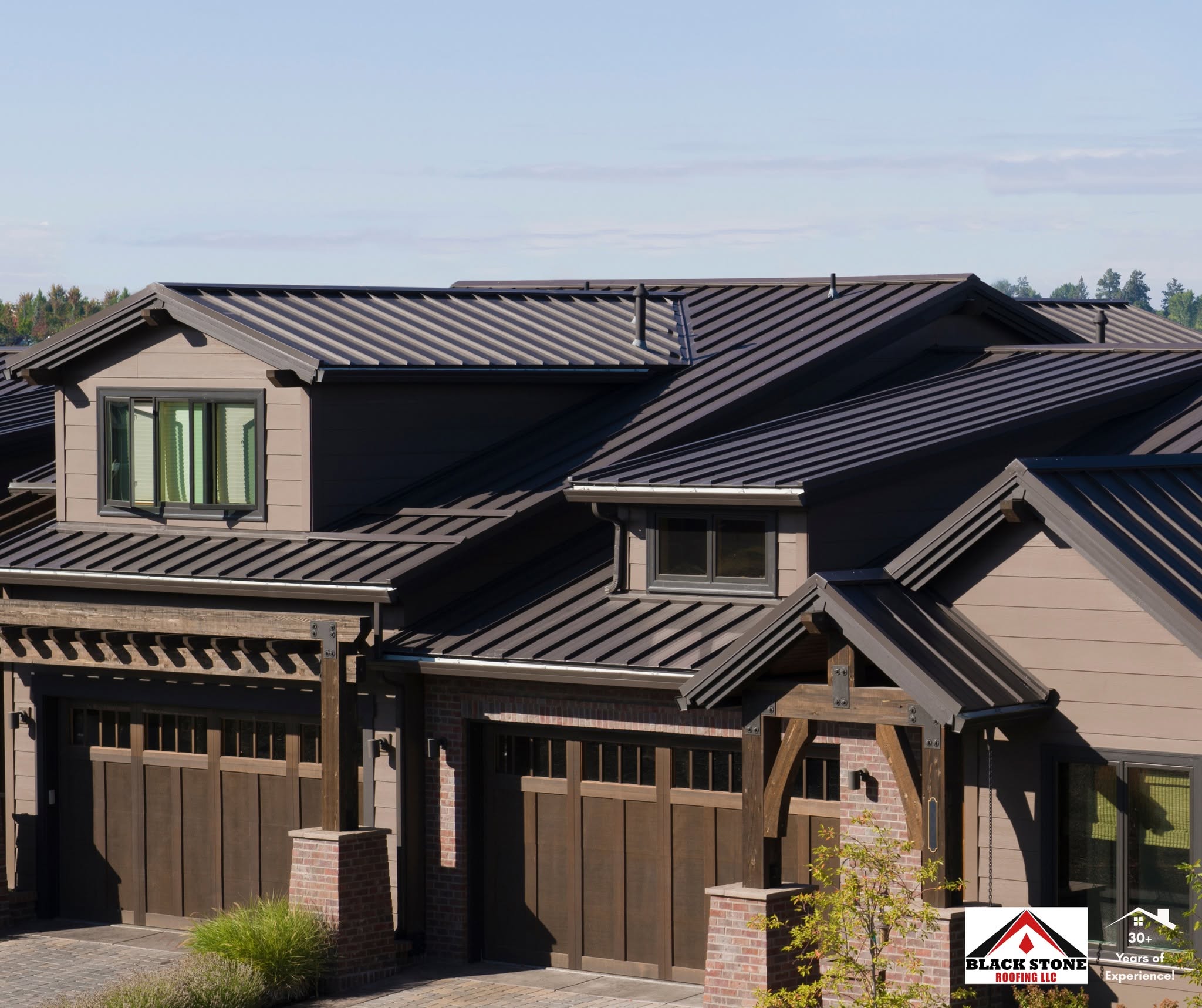
Can hail damage a metal roof, or only shingles?
It can damage both, but it damages them differently. On a metal roof most hail shows up as denting, which is usually a cosmetic condition on a panel that is still perfectly watertight, and a lot of policies carry a specific cosmetic damage exclusion you should look for in your declarations. Functional damage on metal is a different thing: fractured coating that opens the substrate to rust, panel deformation severe enough to affect the seam, and damage at flashings, boots and end laps. That is where we look, because metal almost never fails in the field of the panel.
-
What do I actually get from the free storm damage inspection?
A photo report you keep, whether you hire us or not. It includes overview shots of each slope, close ups with something in frame for scale, the soft metal corroboration off your gutters, vent caps, window wraps and condenser fins, a slope by slope hit count from a chalked ten by ten test square, your address, and the National Weather Service storm event date that matches. If we do not find storm damage, the report says that too and you have written documentation of the condition of your roof.
Free storm damage inspection, and the photo report is yours
We chalk the test squares, count the functional damage slope by slope, read the soft metals, and put the storm date on it. We are open 24 hours. If water is coming in right now, say that first and we will route you to emergency response.