Home/Commercial Roofing
COMMERCIAL AND INDUSTRIAL ROOFINGCommercial Roofingin Martinsburg, WV
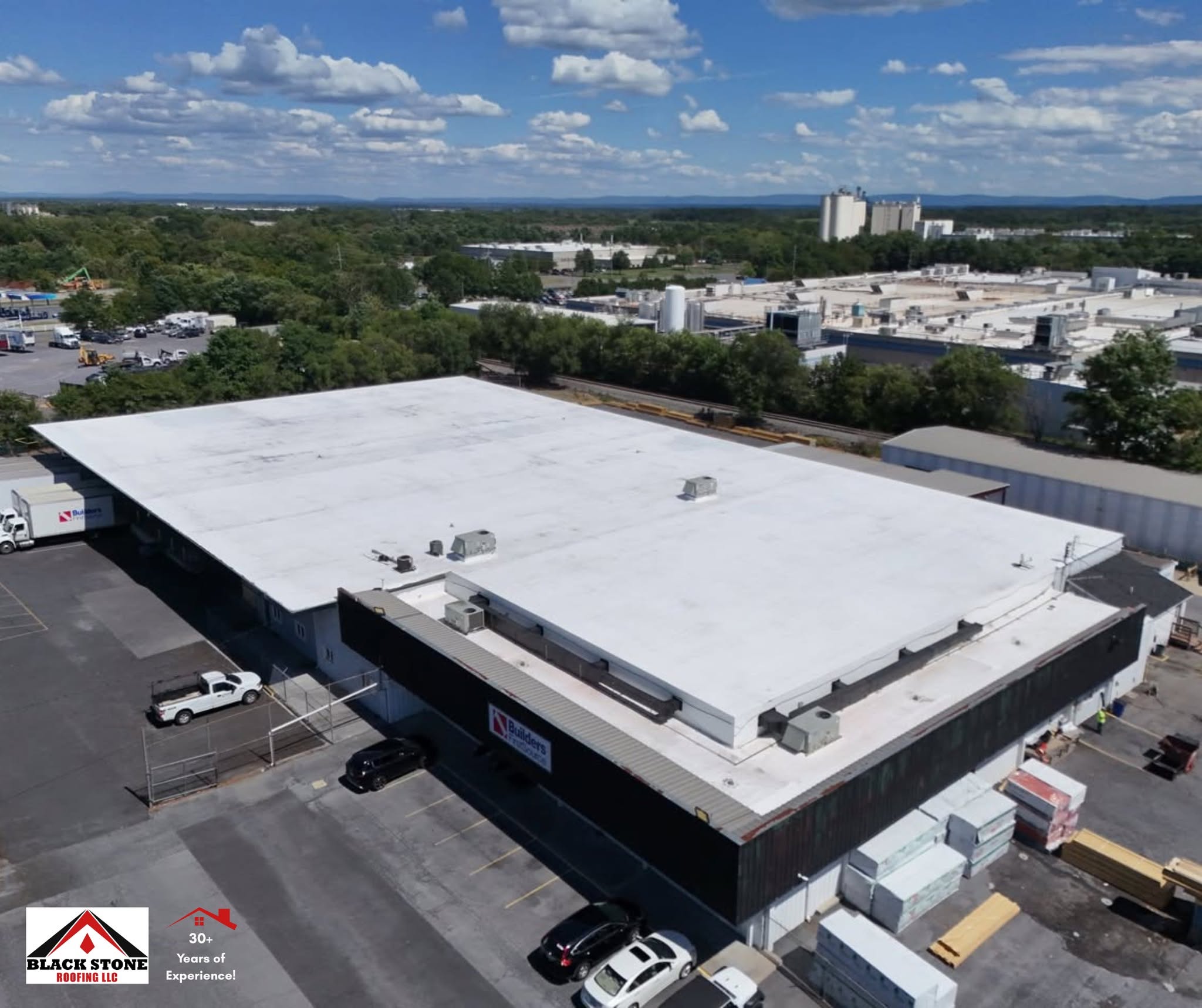
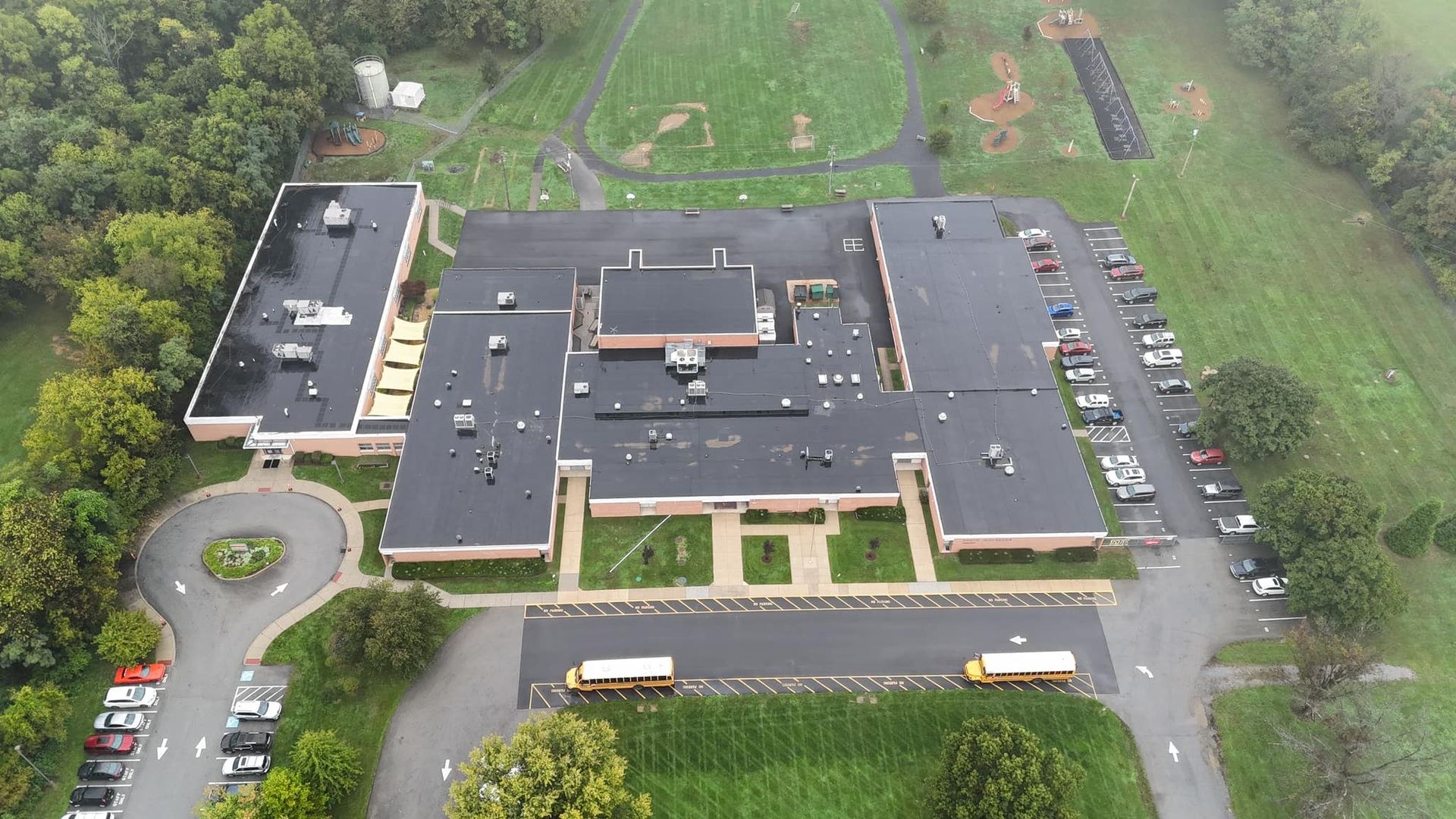
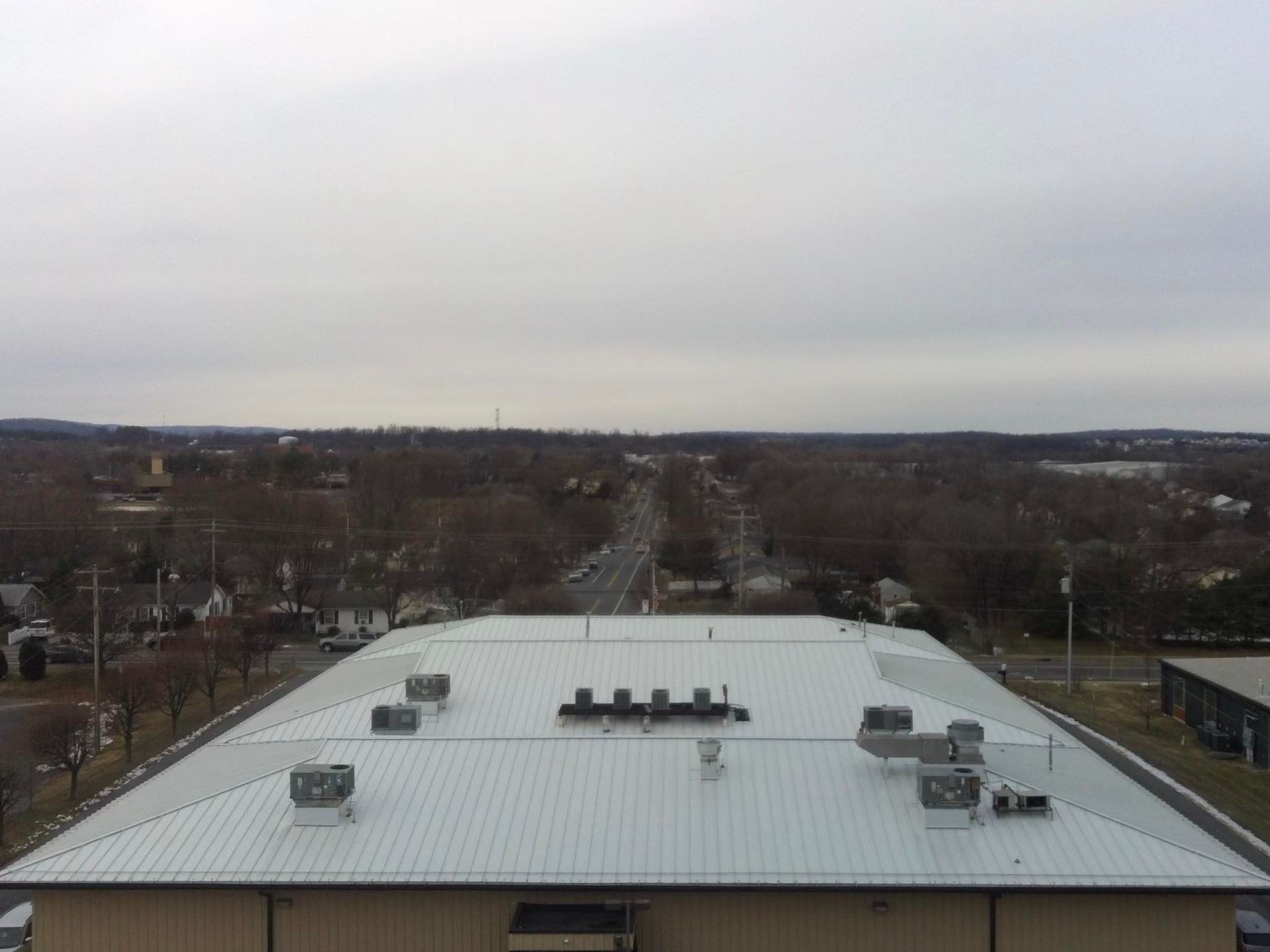
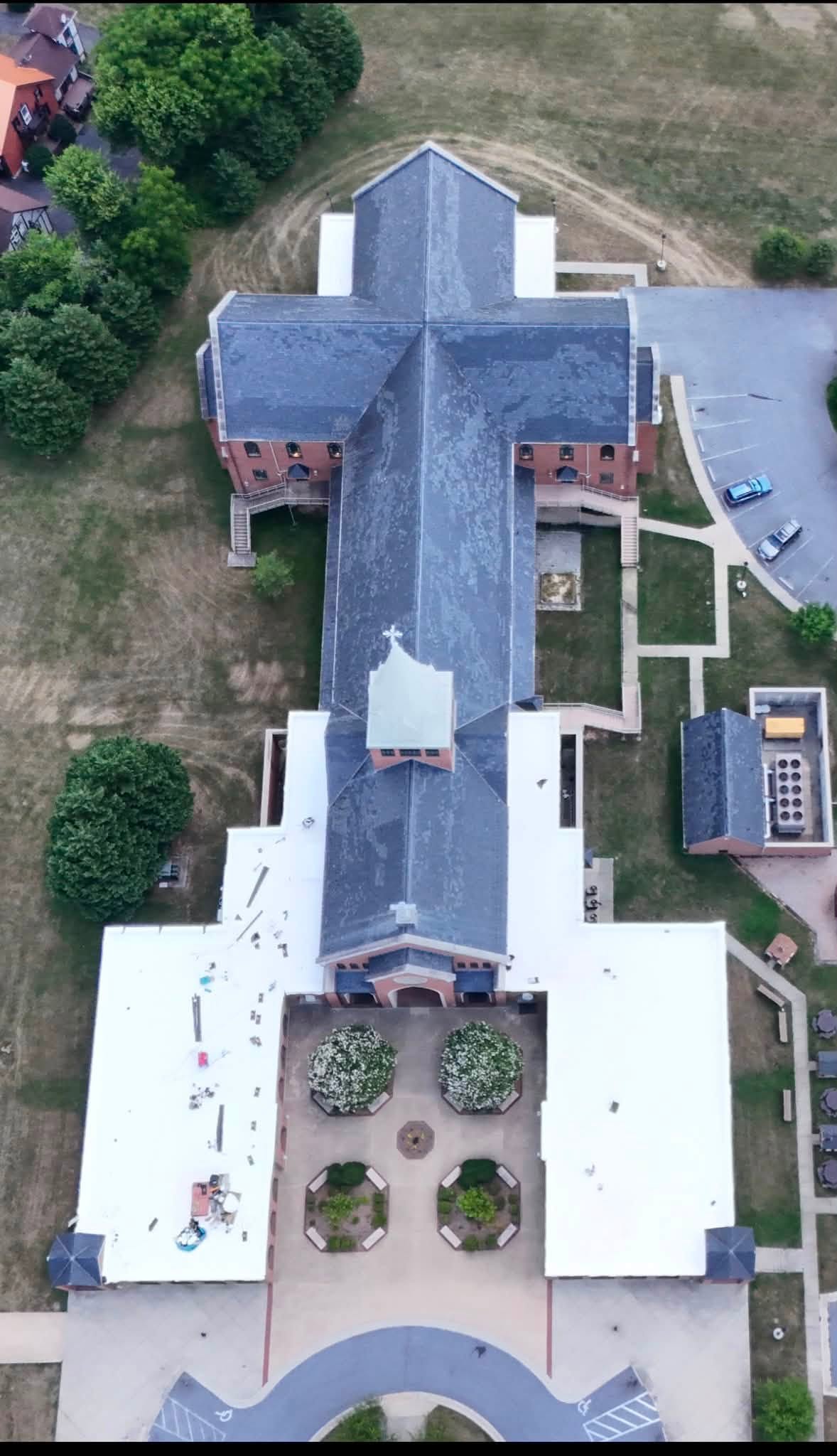
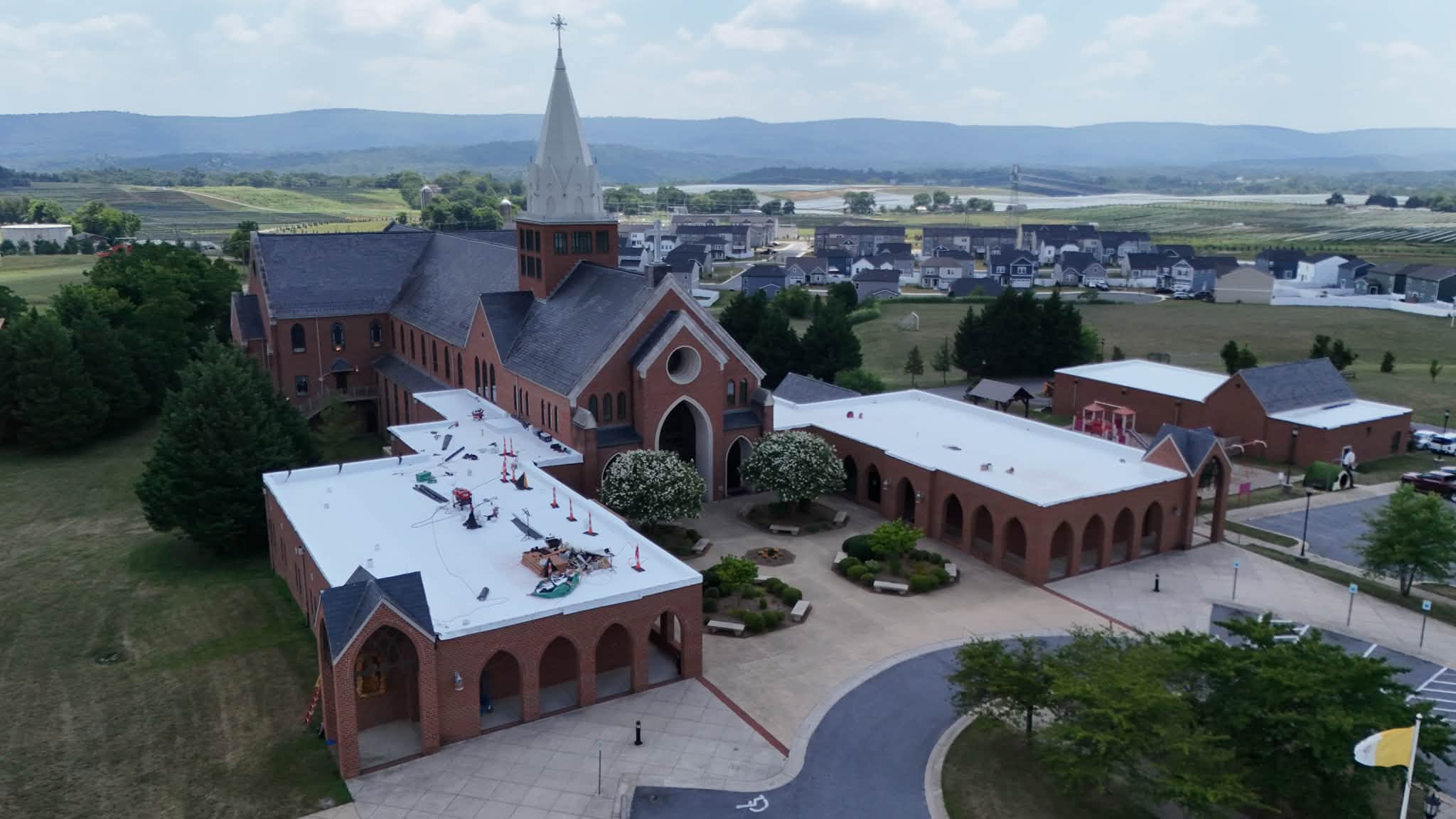
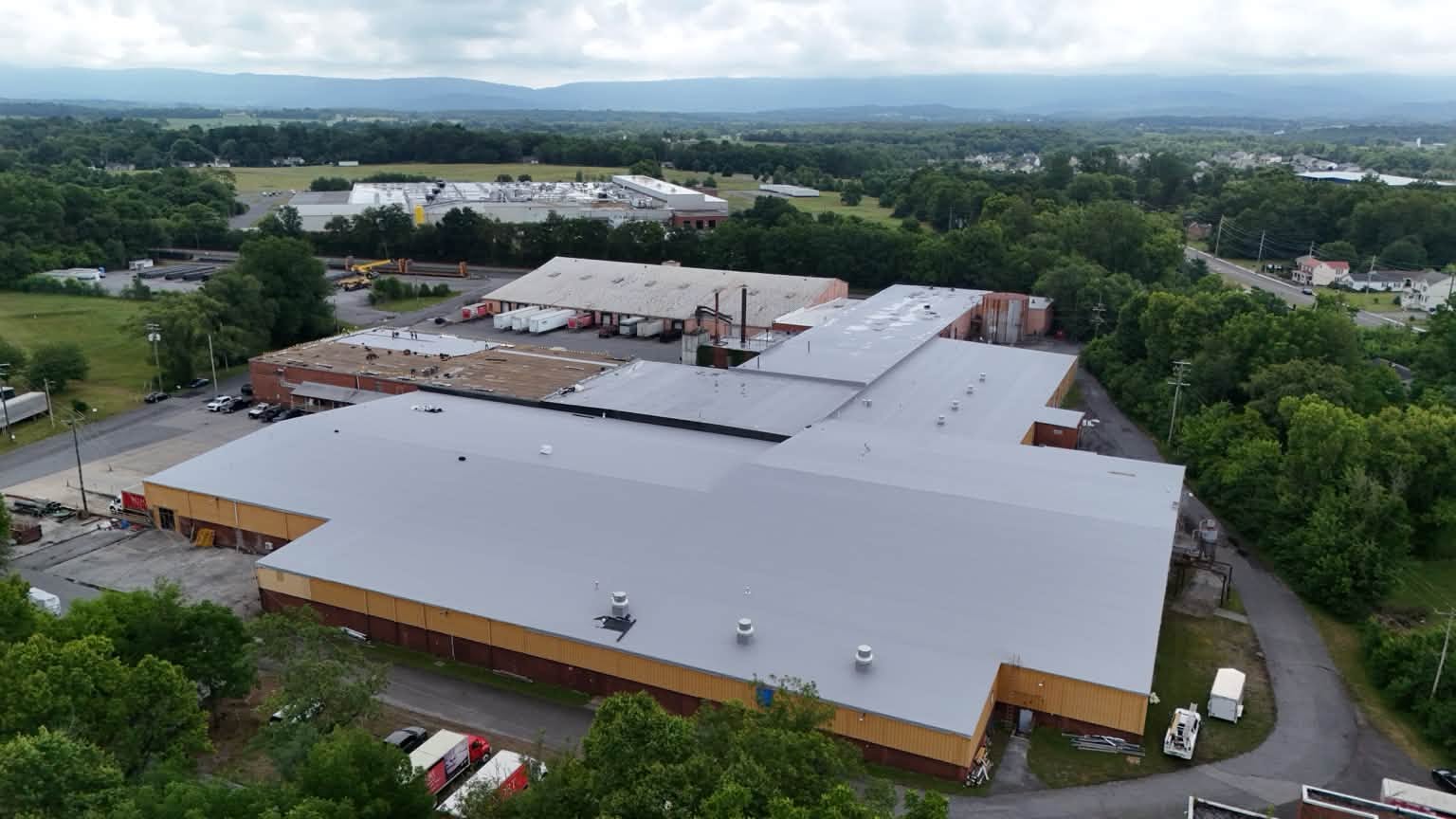
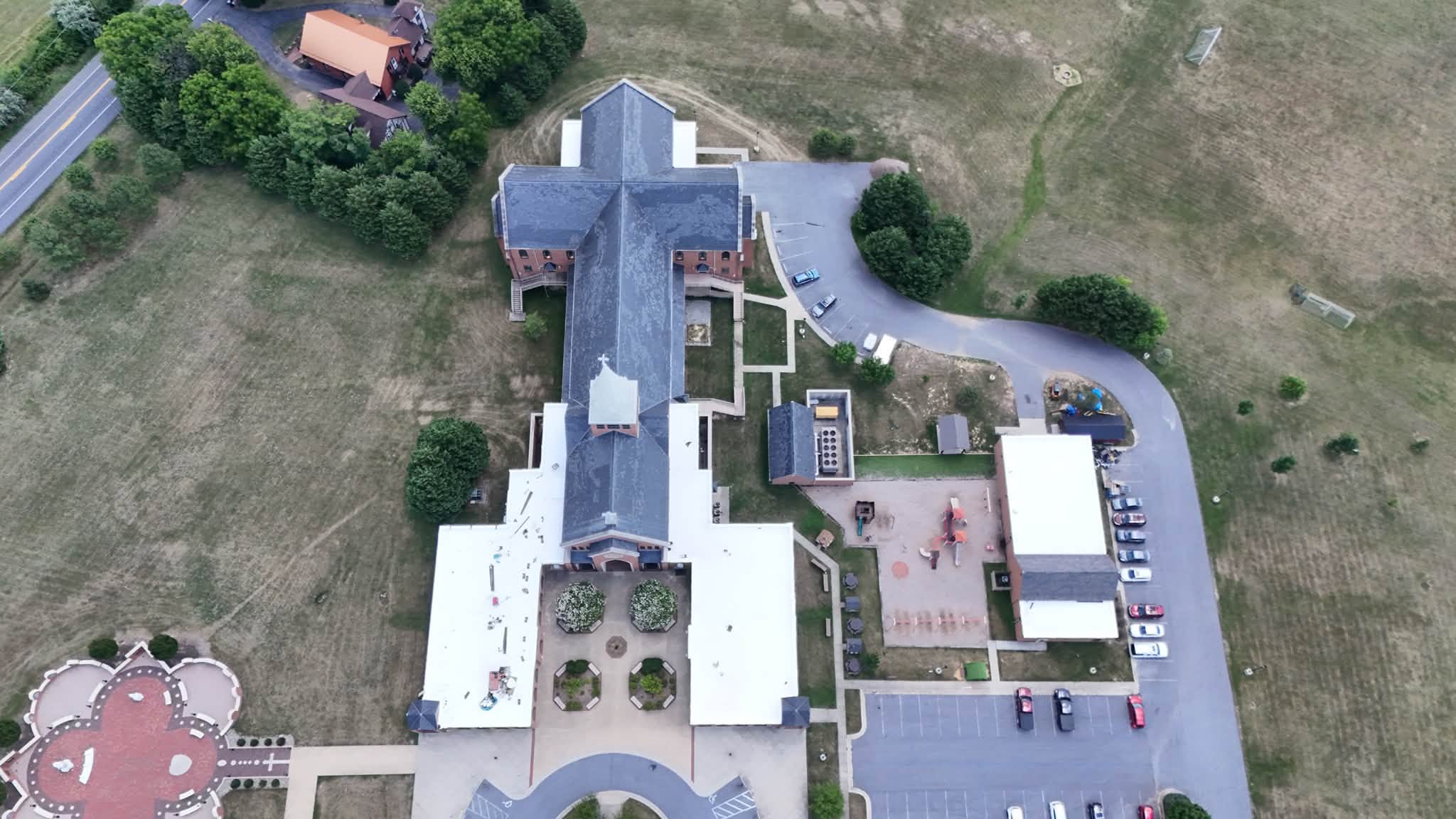
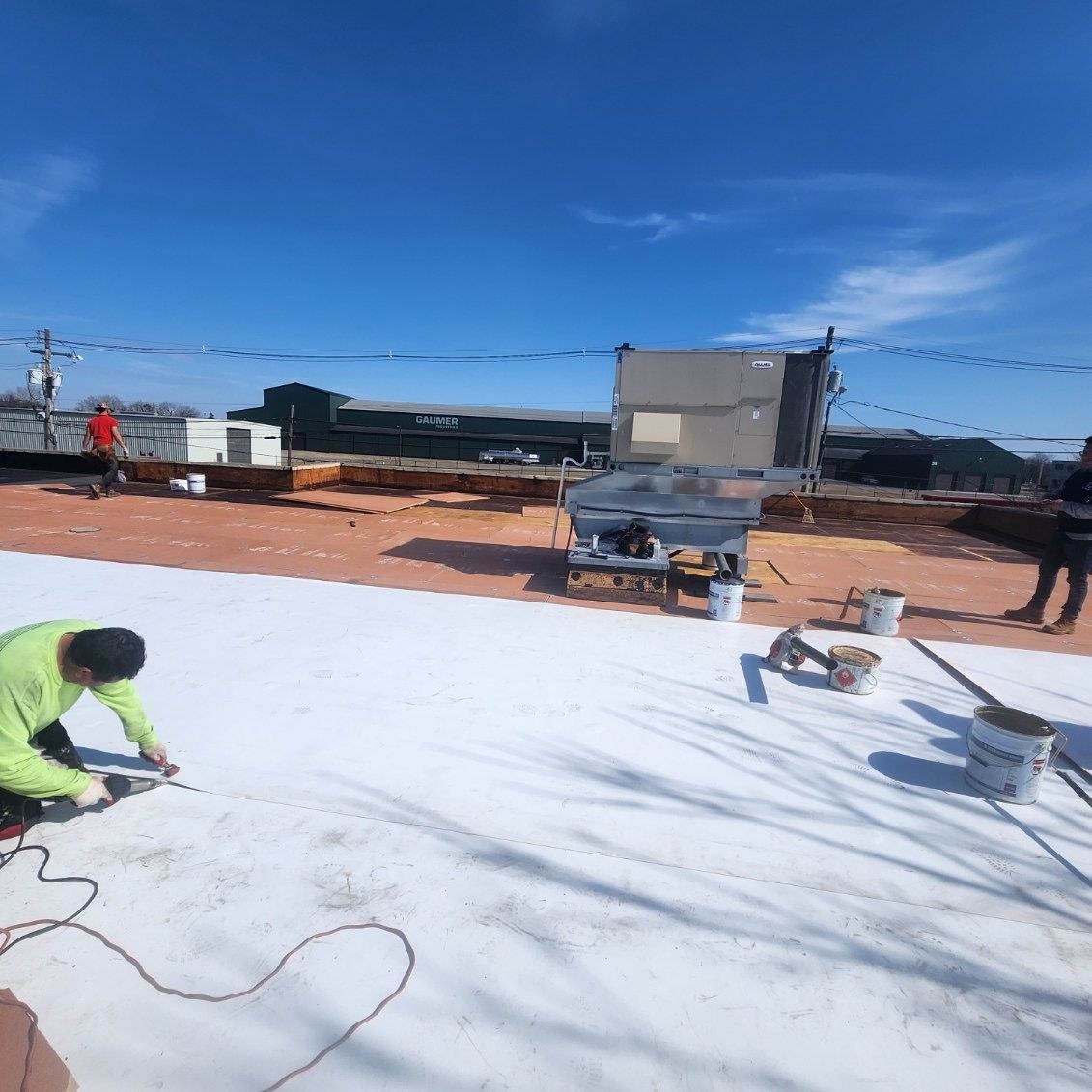
Warehouse, distribution, manufacturing, retail, church, school, medical, and multifamily roofs across Berkeley County. Our office is at 1886 Winchester Ave, Martinsburg, WV 25405, so your building is in our own market rather than on a route somebody drives in for. We survey the roof and put the scope in writing before anyone talks about a number.
Leaking right now
Emergency response
We answer 24 hours. Tarped and stabilized before more of it gets into your building.
Planning ahead
Free roof condition survey
Written scope, photos, and a section by section rating so you know what the roof actually needs.
Request your free estimate
Systems we install across Berkeley County
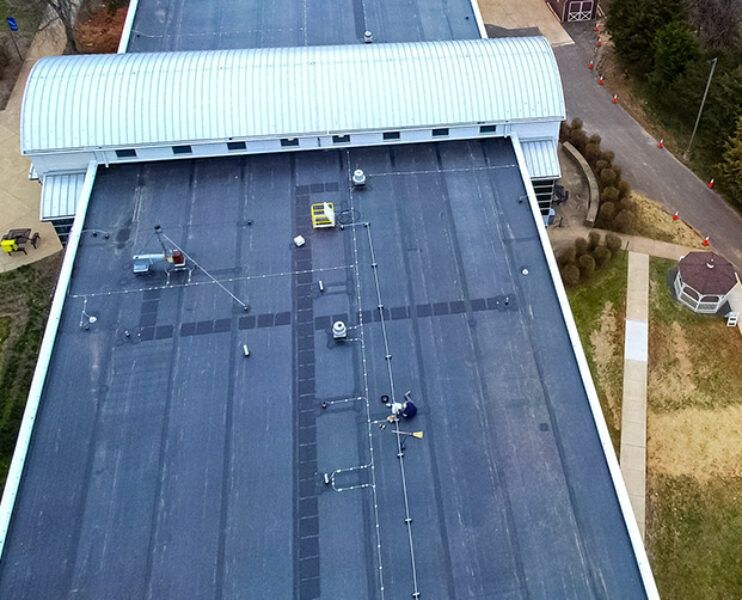
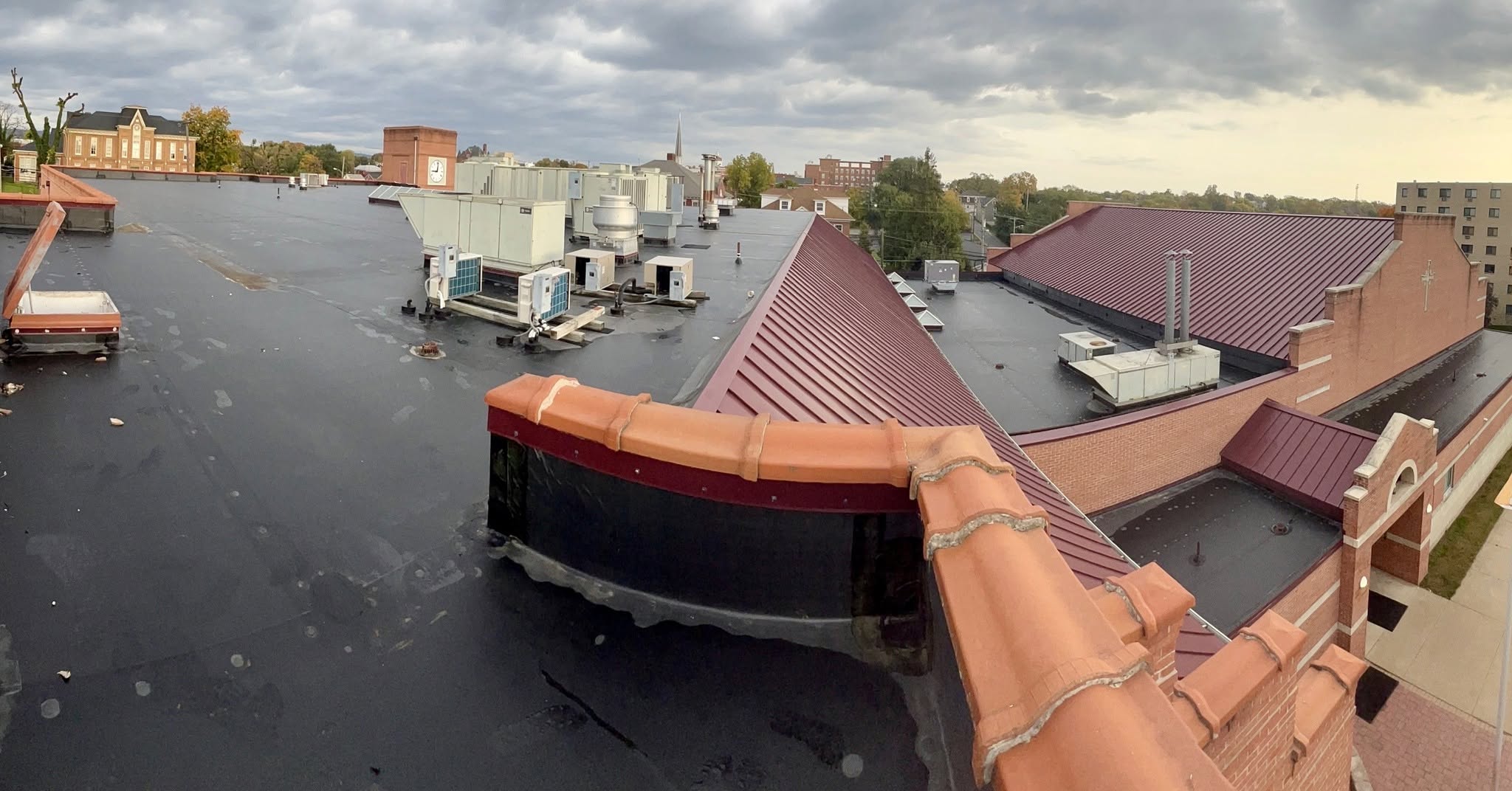
Low slope roofs rarely fail where you think they do
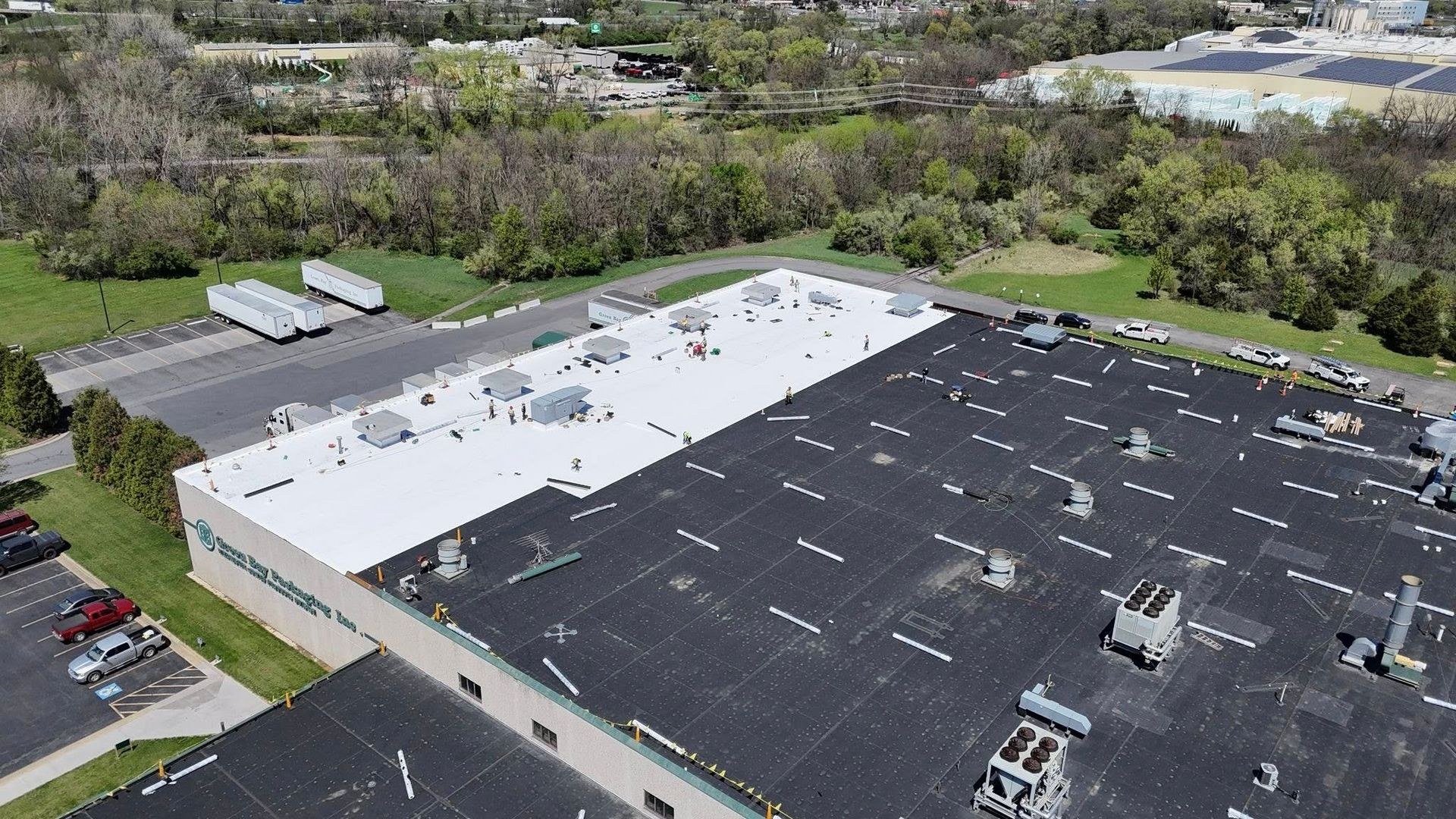
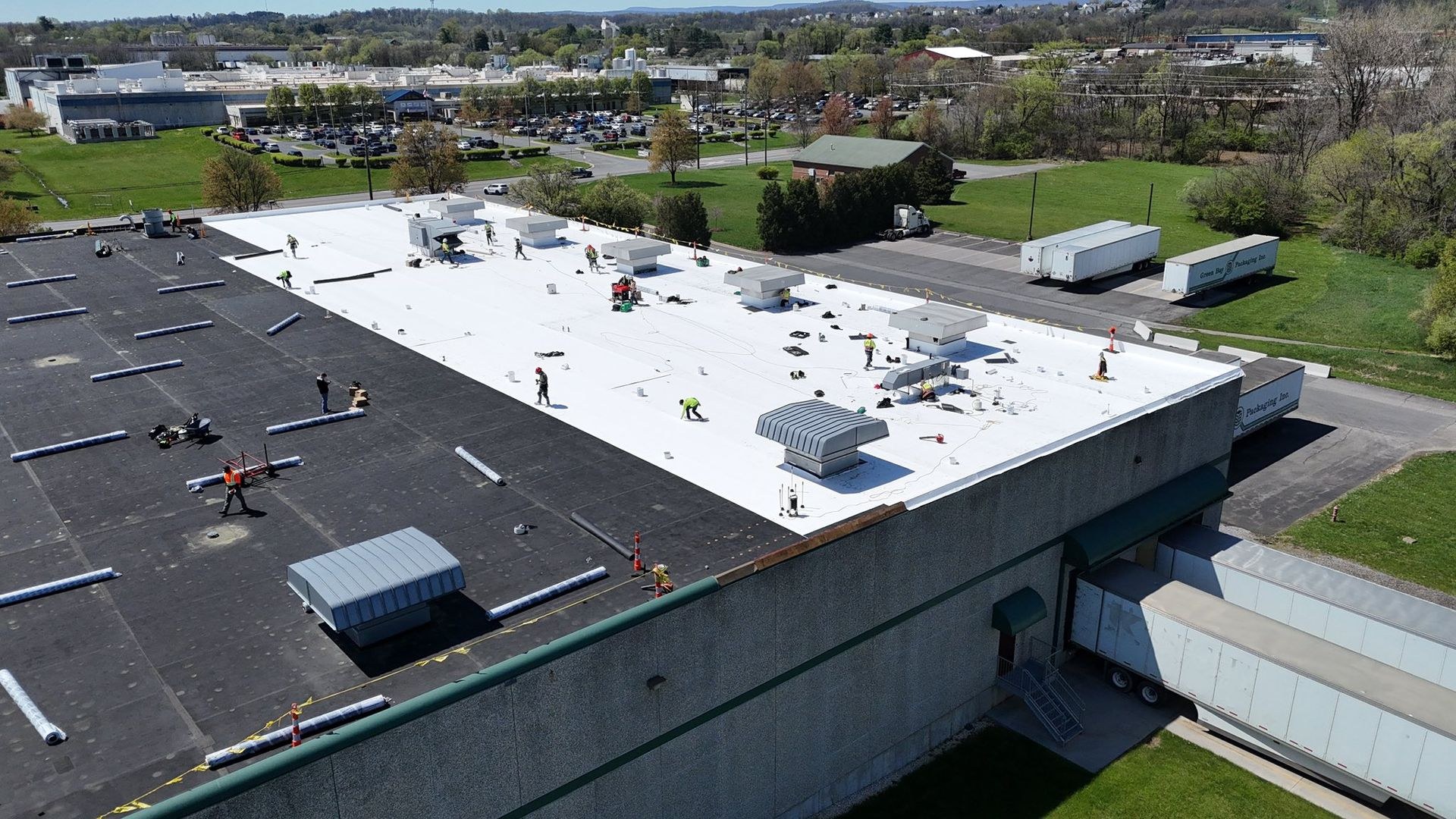
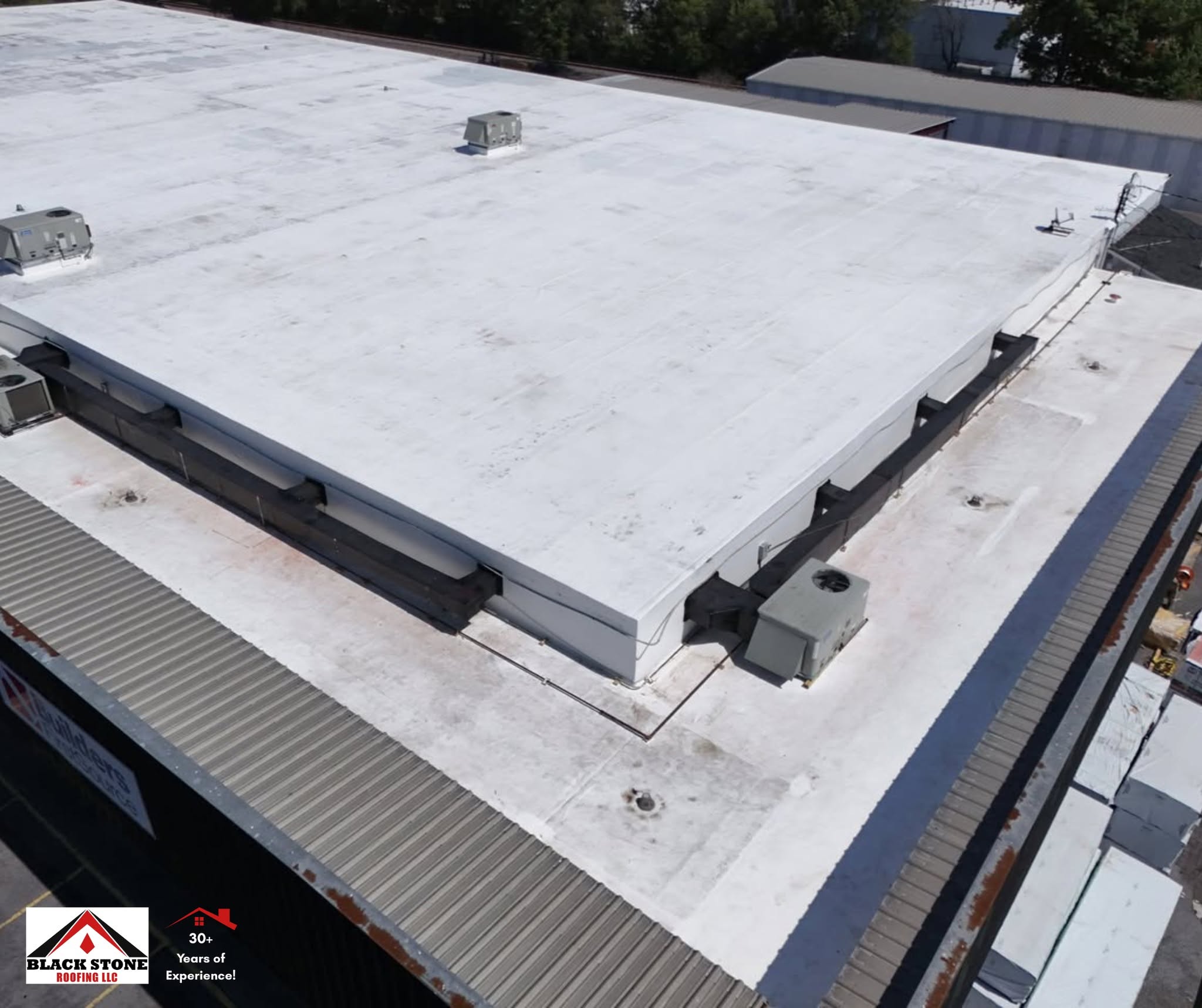
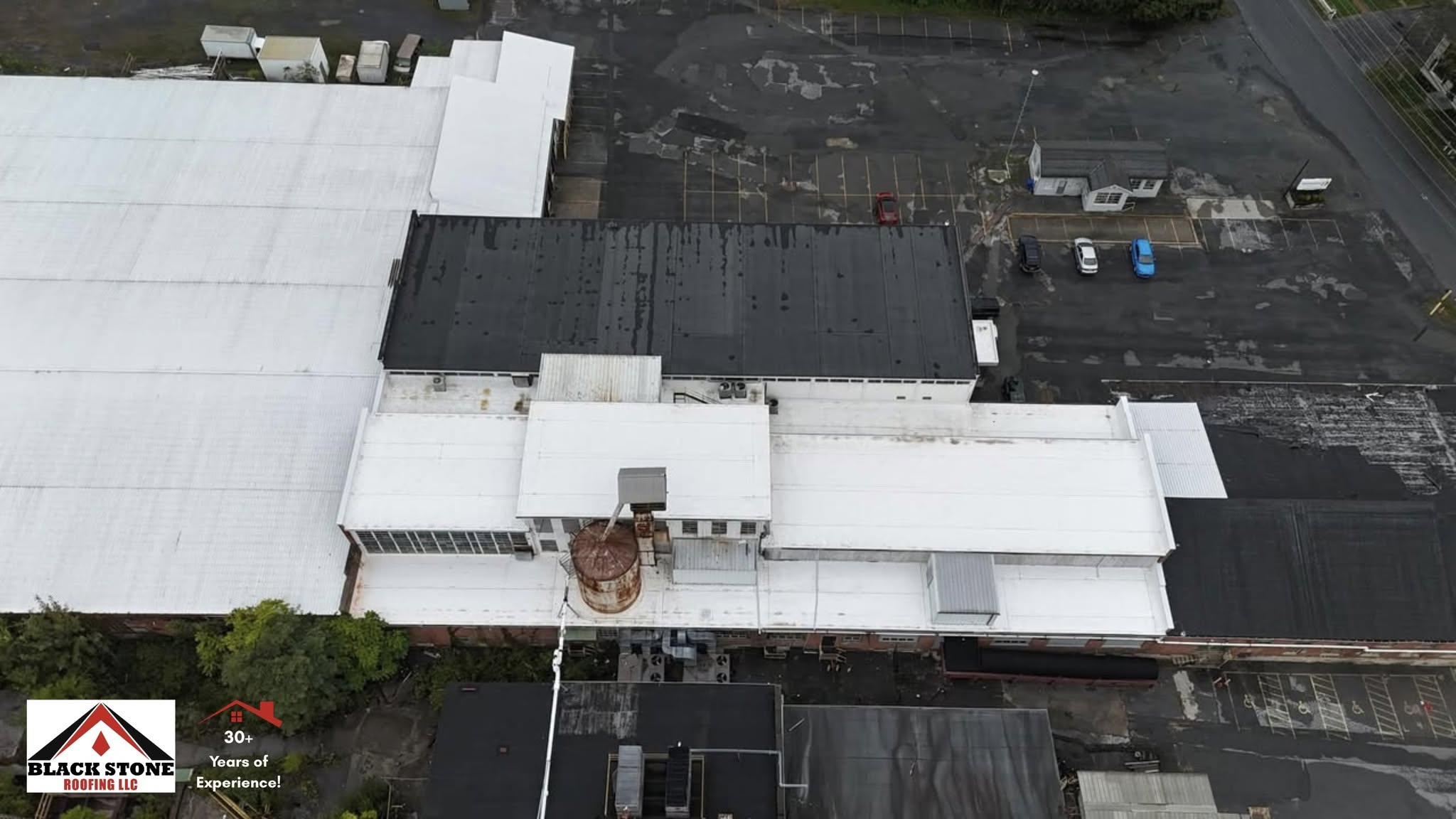
Most commercial roofs we survey in Berkeley County are not failing because the membrane wore out in the open field. They fail at the details. The field has years left, the details are gone, and that is a very different job and a very different number than the tear off somebody will quote you off a satellite photo. Here is what we look for and what it costs to leave it alone.
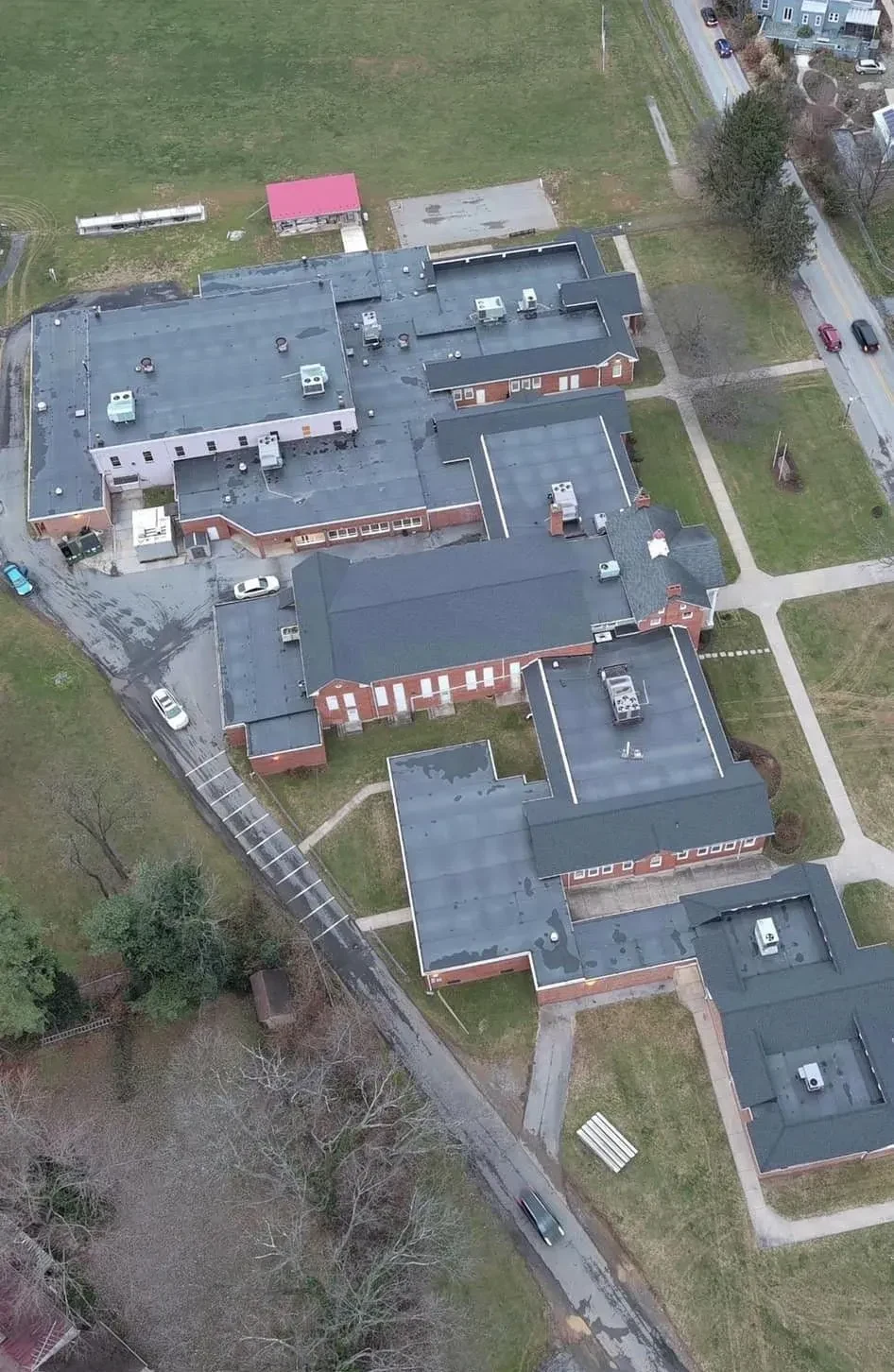
A stain in the ceiling grid
On a low slope roof the breach is almost never directly above the stain. Water runs the top of the deck or the bottom of the insulation until it finds a fastener or a joint to drop through. Chasing it from inside wastes money and usually ends with three patches and a leak that never stopped.
Edge metal working loose
Perimeter metal takes the highest uplift load on the whole roof and it is where most wind failures start. Once the coping or drip edge lifts, the membrane termination behind it is open to weather and the next real storm can peel a section rather than nick it.
Curbs cut in after the building opened
Every time a rooftop unit gets swapped, somebody cuts a new curb and flashes it in. Those field made details are the single most common leak source we find, especially where the flashing was tied back into an aging membrane that no longer welds cleanly.
Drains and scuppers that stopped draining
Standing water after 48 hours is ponding, and ponding voids the language in most membrane warranties. It also loads the deck, degrades the membrane faster in that spot, and turns a drainage problem into a structural conversation if it sits long enough.
Seams opening on aged membrane
Older TPO and EPDM lose the ability to take a clean weld or a reliable seam repair as the top layer weathers. When a probe walks a seam open across a whole section, spot repairs stop being economical and the section needs a real plan instead of another tube of sealant.
Insulation that gives underfoot
Soft, spongy areas mean the insulation is holding water. Wet insulation stops insulating, corrodes a steel deck from the top down, and cannot be coated over. Roughly a quarter of the field testing wet is the line where restoration stops being a real option.
Start with the roof, not with a proposal
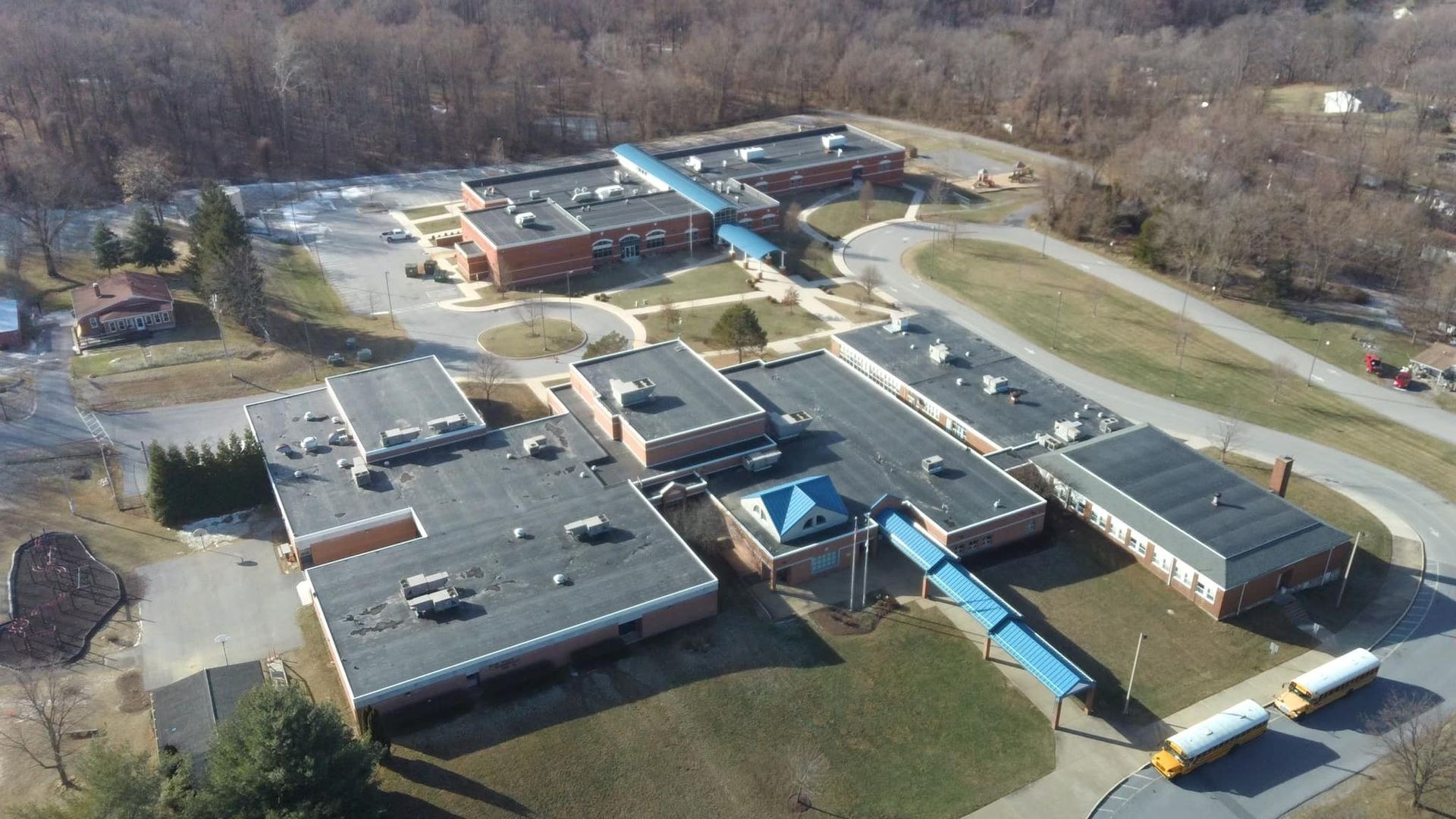
The call and the building walk
Tell us the building, the problem, and your operating hours. We walk the interior first where there is active water so we can see where it is showing up, what is under it, and what cannot be shut down while we work.
Roof survey and roof map
We walk the roof and map it. Drains, sumps, curbs, edge metal, and every penetration photographed and located on a plan, with each section rated on its own. Large roofs get managed by section and by year, not replaced in one shot.
Moisture verification
Infrared on a clear evening to flag wet areas, then physical core cuts to confirm what the assembly actually is. Building records are wrong more often than they are right, and nobody should be bidding an assembly they have not opened. Every core gets patched properly behind us.
Written scope with the options ranked
Tear off, recover, or restore, with the honest case for each. Tear off when the insulation is wet, the deck is compromised, or you are at the layer limit. Recover when the assembly underneath is dry and you have a layer left. Restoration with a coating when the membrane is sound and the roof already drains. You get all three in writing so you can compare our scope against anybody else’s.
Permits and code
Berkeley County builds commercial work to the 2018 IBC and prices a commercial permit off a base fee plus a rate per square foot, so roof area drives it directly. Outside city limits the permit comes from Berkeley County Building Permits and Inspections. Inside the City of Martinsburg it comes from the city Planning, Zoning and Building office. Starting without one adds an investigation fee, so we confirm the requirement before the schedule gets set.
Phased install and closeout
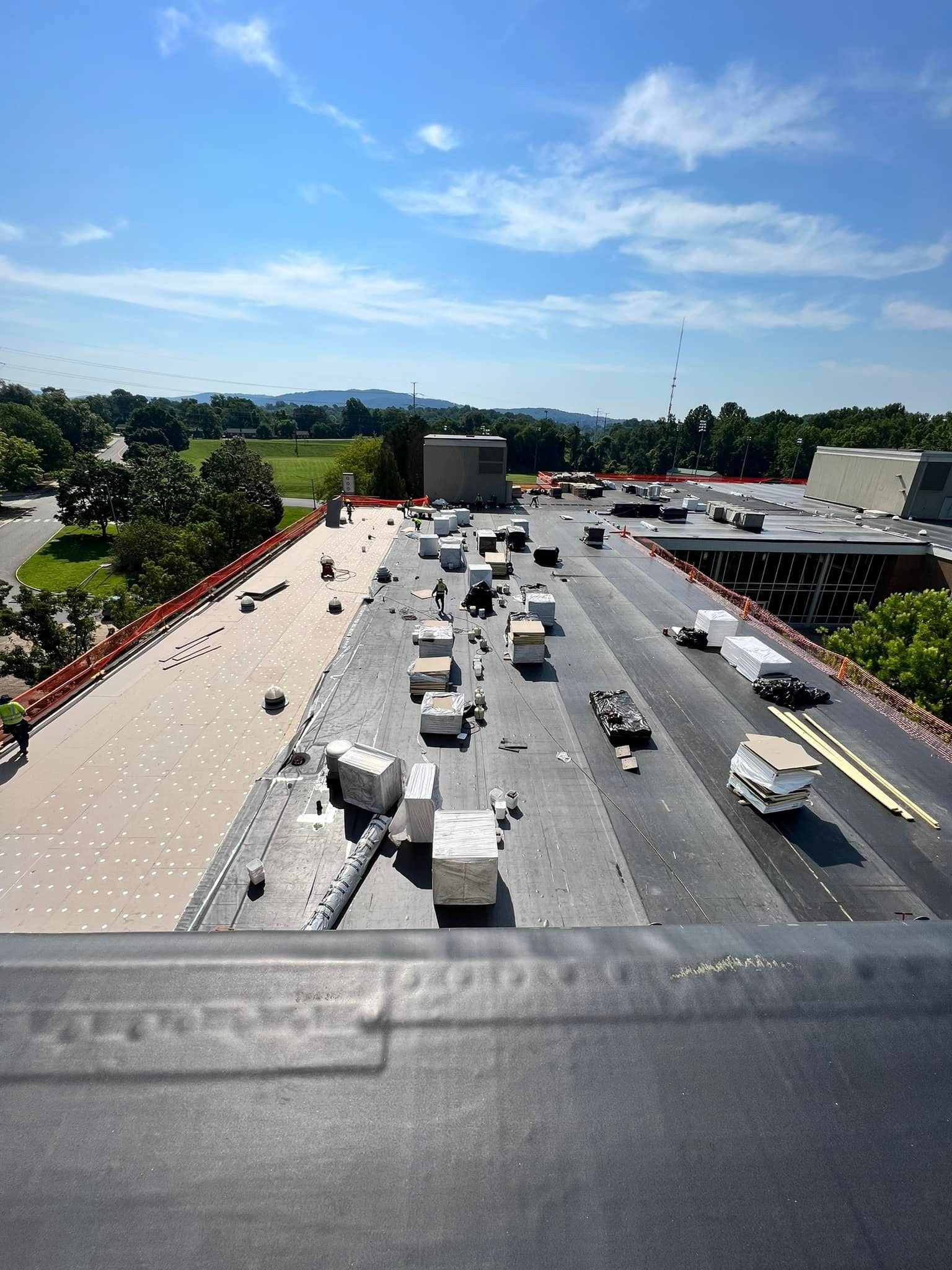
We sequence the roof so nothing is left open at the end of a day, stage material away from dock traffic and customer entrances, and run nights and weekends when the operation cannot take the noise. You get photo documentation at closeout, because the day you file a warranty claim is the day somebody asks for records.
What is in a commercial roof, layer by layer
Steel, concrete, or wood
Everything above it is specified off what it is and what condition it is in. Steel deck under wet insulation corrodes from the top side where nobody sees it, which is why the core cut happens before the proposal on any Martinsburg building with a soft field.
Vapor retarder where the building calls for it
Cold storage, high humidity manufacturing, and process exhaust change the moisture drive through the assembly. Getting this wrong puts water inside the insulation from the inside out, and no membrane on top will fix that.
Polyiso in staggered layers
Two layers with offset joints instead of one thick board, so there is no straight thermal path from the deck to the membrane. Thickness gets driven by code and by what the building is doing under the roof, not by whatever was up there in 1994.
The layer most bids quietly delete
A cover board over the insulation is what gives the membrane a hard substrate to sit on. It is the difference between a roof that survives hail, foot traffic, and service techs walking to a rooftop unit, and one that telegraphs every dent. When a competing number comes in low, this is often what is missing.
TPO, EPDM, PVC, or KEE
Chosen off the building, not off habit. Kitchen exhaust grease destroys an EPDM field, so restaurants and food processing go a different direction. Chemical and process discharge along the Tabler Station corridor belongs in the membrane selection conversation at the start rather than in a warranty argument later.
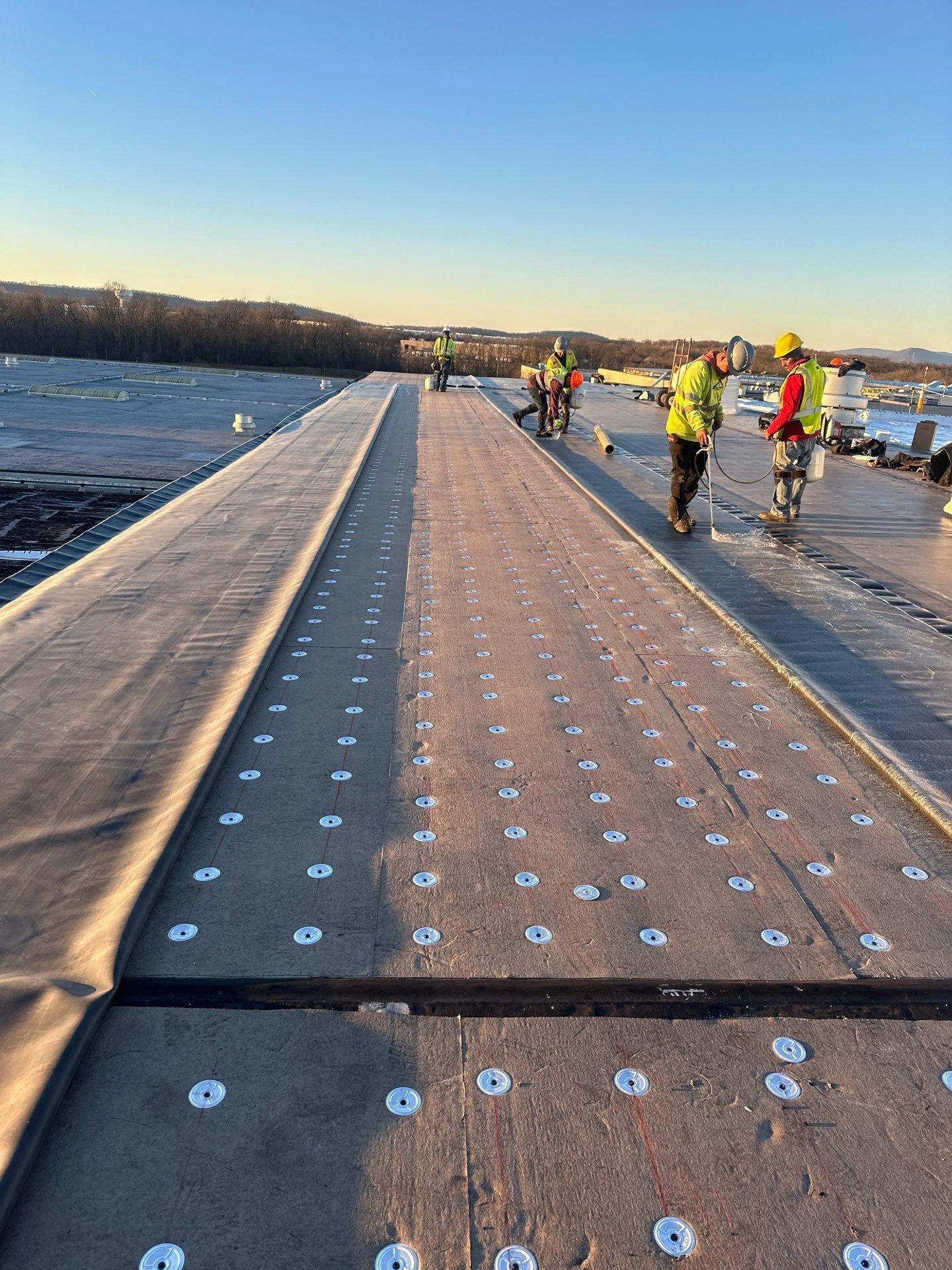
Mechanically fastened, adhered, or ballasted
Uplift requirements tighten at the corners and the perimeter, so the fastening pattern is not uniform across the roof. On an aging metal building the equivalent decision is a retrofit framing system over the existing panels instead of a membrane at all.
Edge metal, curbs, pitch pockets, and slope to drain
This is where Berkeley County roofs actually fail, so it is where the spec gets the most attention. Tapered insulation to move water where the original slope never did, pitch pockets rebuilt rather than topped off, and abandoned penetrations removed and patched instead of sealed around.
Local, licensed, and answered around the clock
Based in Martinsburg
1886 Winchester Ave, Martinsburg, WV 25405. Berkeley County is where we work from, not a territory we drive into.
Licensed in five states
VA, WV, MD, PA, FL. Licensed, bonded, and insured, with a West Virginia license number you can verify before you shortlist anybody.
Family owned since 2016
The same company answers the phone, walks your roof, and stands behind the work afterward.
Open 24 hours, seven days a week
If your building is occupied and water is coming through a ceiling grid at 2 a.m., somebody picks up.
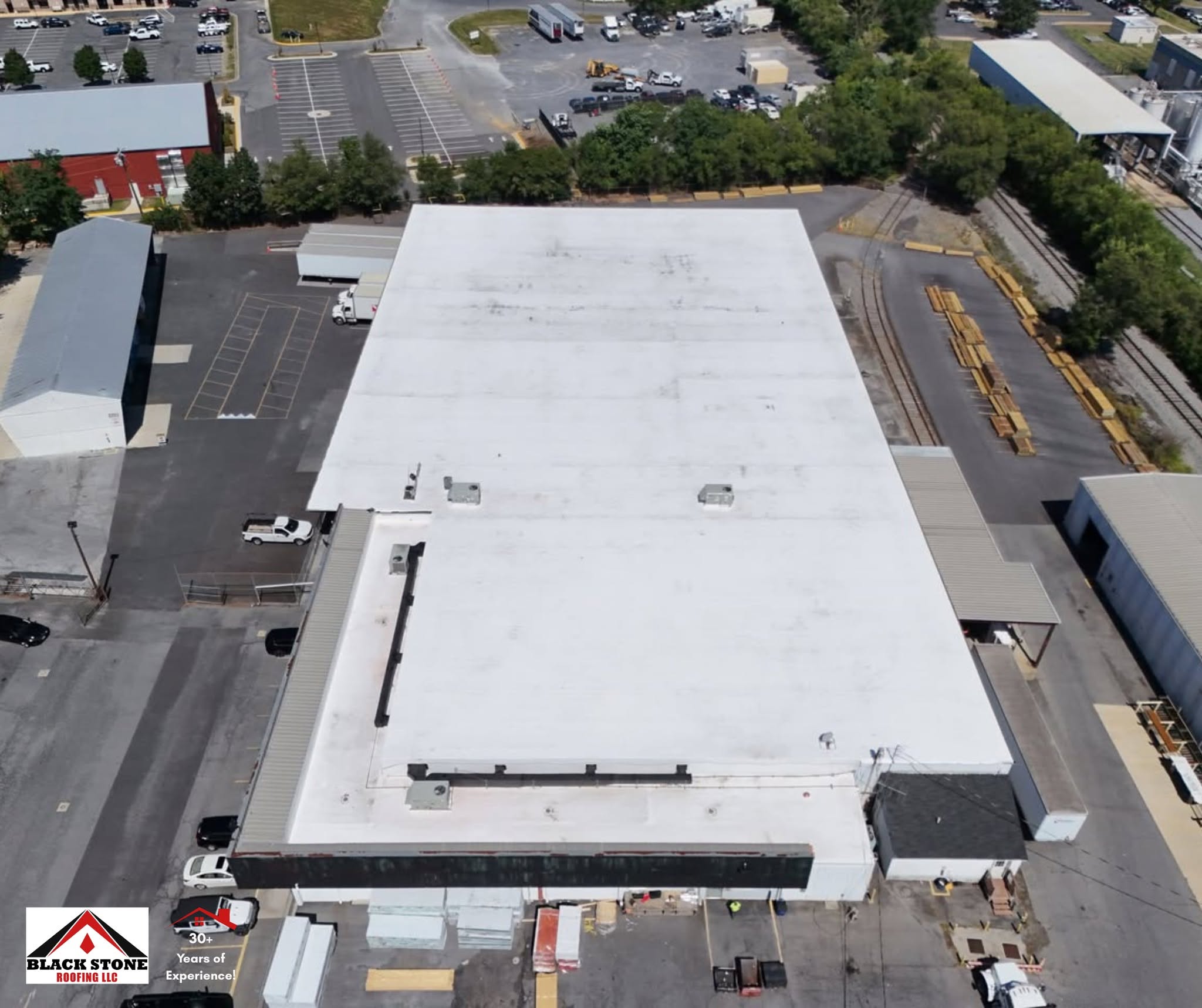
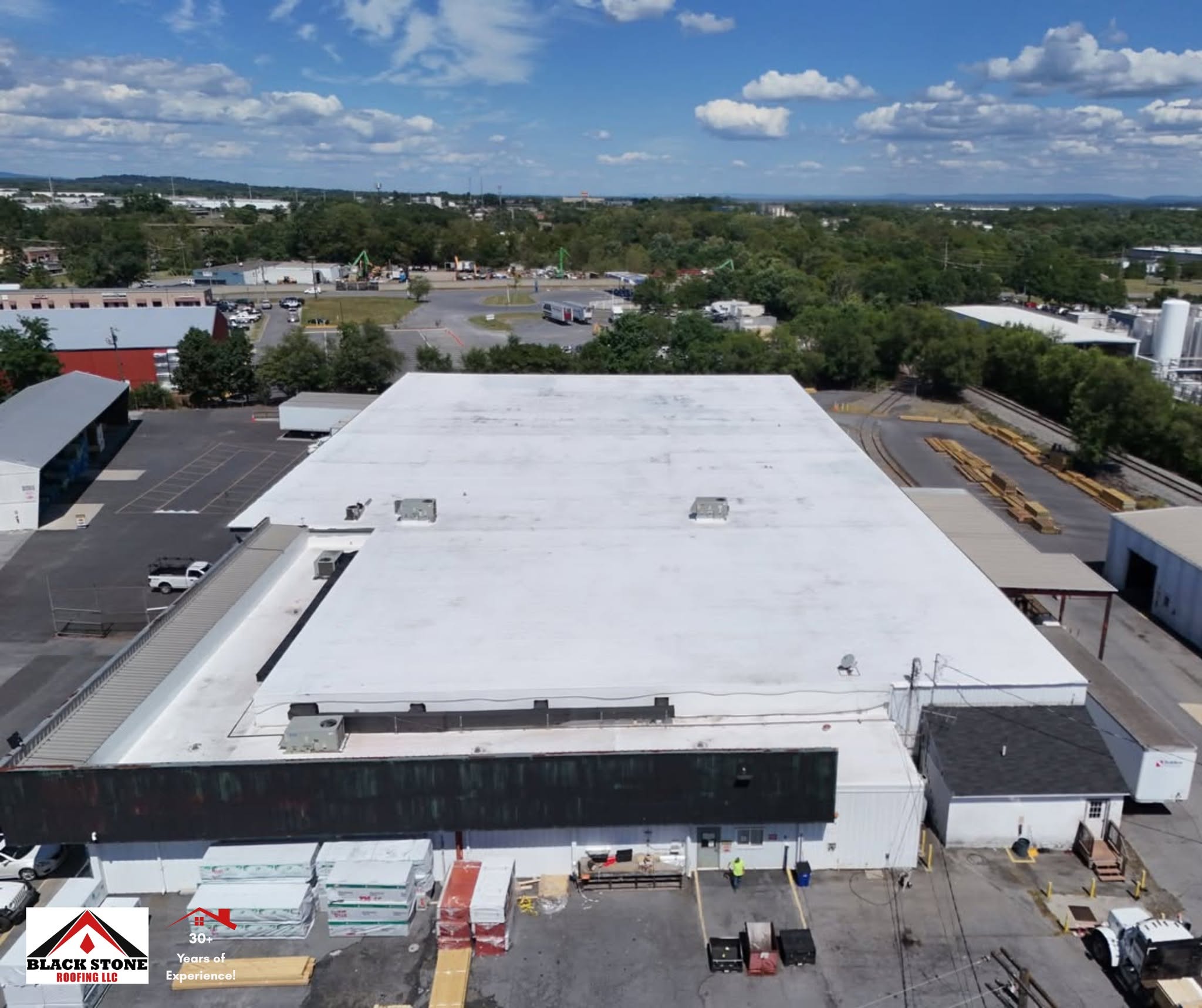
The work behind the survey
Single Ply Membrane Roofing
TPO, EPDM, PVC, and KEE compared honestly, plus welding standards, insulation layering, and why ponding voids most warranties.
Commercial Metal Roofing
Structural standing seam on long spans, expansion joints, floating clips, and retrofit framing over a failing metal roof.
Roof Coatings and Restoration
Silicone versus acrylic, mil build and reinforcing fabric, and the full list of conditions where a coating is the wrong answer.
Commercial Roof Repair
Leak isolation on large roofs, seam repair on aged TPO, curb and pitch pocket failures, and after hours work in occupied buildings.
Preventative Roof Maintenance
Spring and fall visits, drain clearing, sealant refresh, and the documentation your manufacturer warranty quietly requires you to keep.
Roof Inspection
A documented look at the whole roof with photos, condition notes, and what should be budgeted this year versus later.
Emergency Roof Repair
Answered 24 hours. Tarped, stabilized, and documented so the building keeps running while we plan the permanent fix.
Steel Building Construction
New pre engineered metal buildings from anchor bolts through the roof system. Shops, agricultural buildings, and small industrial.
Martinsburg, Berkeley County, and the Eastern Panhandle
Do not see your town? We work the whole corridor, so ask or call (540) 550-9703.
Commercial roofing questions
-
Can you work on our building while we stay open?
Yes, and on most occupied buildings that is the only way it works. We phase the roof by section so nothing is left open at the end of a day, stage material away from your dock traffic and customer entrances, and run nights and weekends when the operation cannot take the noise. Tell us your hours at the survey and we build the sequence around them.
-
How do I know if my roof needs replaced or if it can be coated?
Moisture in the insulation decides it, not the age on the membrane. A coating is topical, so it locks in whatever is underneath. We verify with an infrared scan on a clear evening plus physical core cuts, because infrared flags an area and only a core tells you what the assembly is. Dry field with sound seams and working drainage, restoration is usually the better move. Wet field, open seams, or scrim showing, that roof comes off.
-
Do we need a permit to reroof a commercial building in Berkeley County?
Assume yes and confirm before you schedule. Berkeley County builds commercial work to the 2018 IBC and prices the permit off a base fee plus a rate per square foot, so your roof area drives the cost. Whether your scope needs one depends on the work, so call the Berkeley County building office outside city limits or the City of Martinsburg planning office inside them. Work started without a permit picks up a county investigation fee on top of the permit, so the call is worth making first.
-
Where is Black Stone Roofing located?
Our office is at 1886 Winchester Ave, Martinsburg, WV 25405. Berkeley County is where we work from rather than a territory we drive into, which is not true of a fair number of the out of state companies bidding your roof. Either way, what actually protects you is a West Virginia contractor license number you can verify, a current certificate of insurance, and a written scope. Ask every bidder for all three.
-
What does a roof condition survey cost and what do I get?
We do not charge to walk your roof and give you a written condition report with photos, a section by section rating, and what you should be budgeting for. A full moisture investigation is a separate scope, because infrared equipment and core cuts take time and every core has to be patched properly behind us. We quote that in writing first.
-
We own several buildings. Can you plan the whole portfolio instead of one roof at a time?
That is the better way to do it. We survey every roof, rate each by section, and give you a sequenced multi year plan that puts capital into the worst roofs first while the sound ones go on maintenance to hold condition. The point is to stop replacing roofs a year early and stop getting surprised by the ones that failed quietly.
Get the roof surveyed before you get a number
Tell us the building and the problem. We will get on the roof, map it, and come back with a written condition report and the options ranked honestly. Open 24 hours, seven days a week, for emergency leaks in occupied buildings.