Home/Commercial Roofing/Commercial Roof Repair
BERKELEY COUNTY AND THE I-81 CORRIDORCommercial Roof Repairin Martinsburg, WV
A ceiling tile is dripping in an occupied suite and nobody can tell you where the water is getting in. That is the job. We isolate the breach, fix it correctly for the system you actually have, and work nights and weekends when your tenants cannot lose a floor. Our shop is on Winchester Avenue in Martinsburg, so the roof you are calling about is in our own county.
Leaking right now
Emergency response
We answer 24 hours. Tarped and stabilized before more gets inside.
Planning ahead
Free inspection
Written scope and photos so you know what the roof actually needs.
Request your free estimate
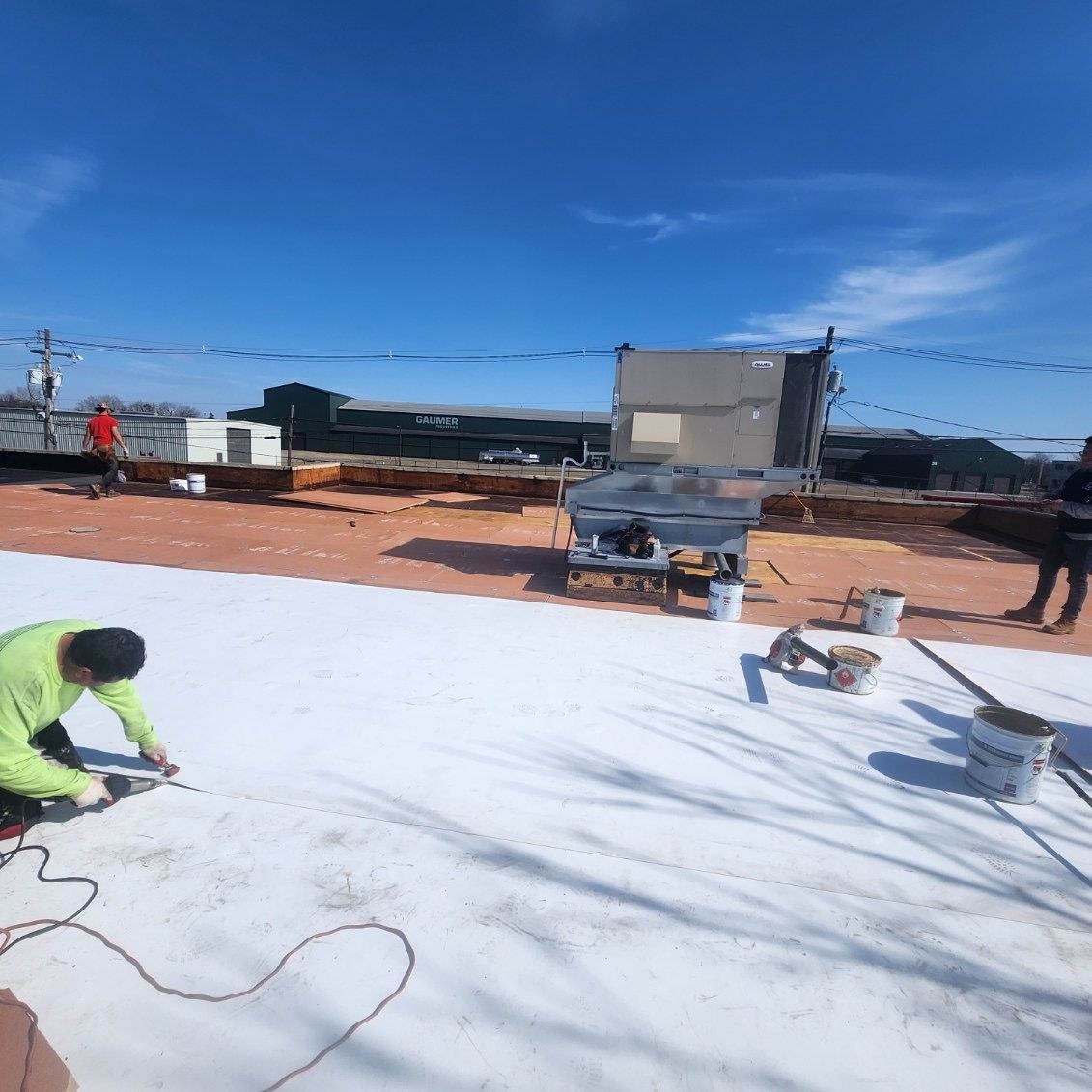
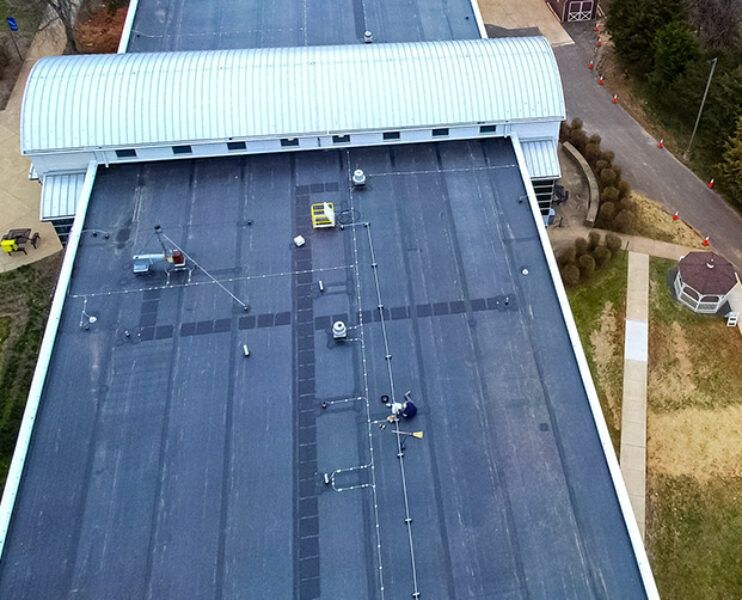
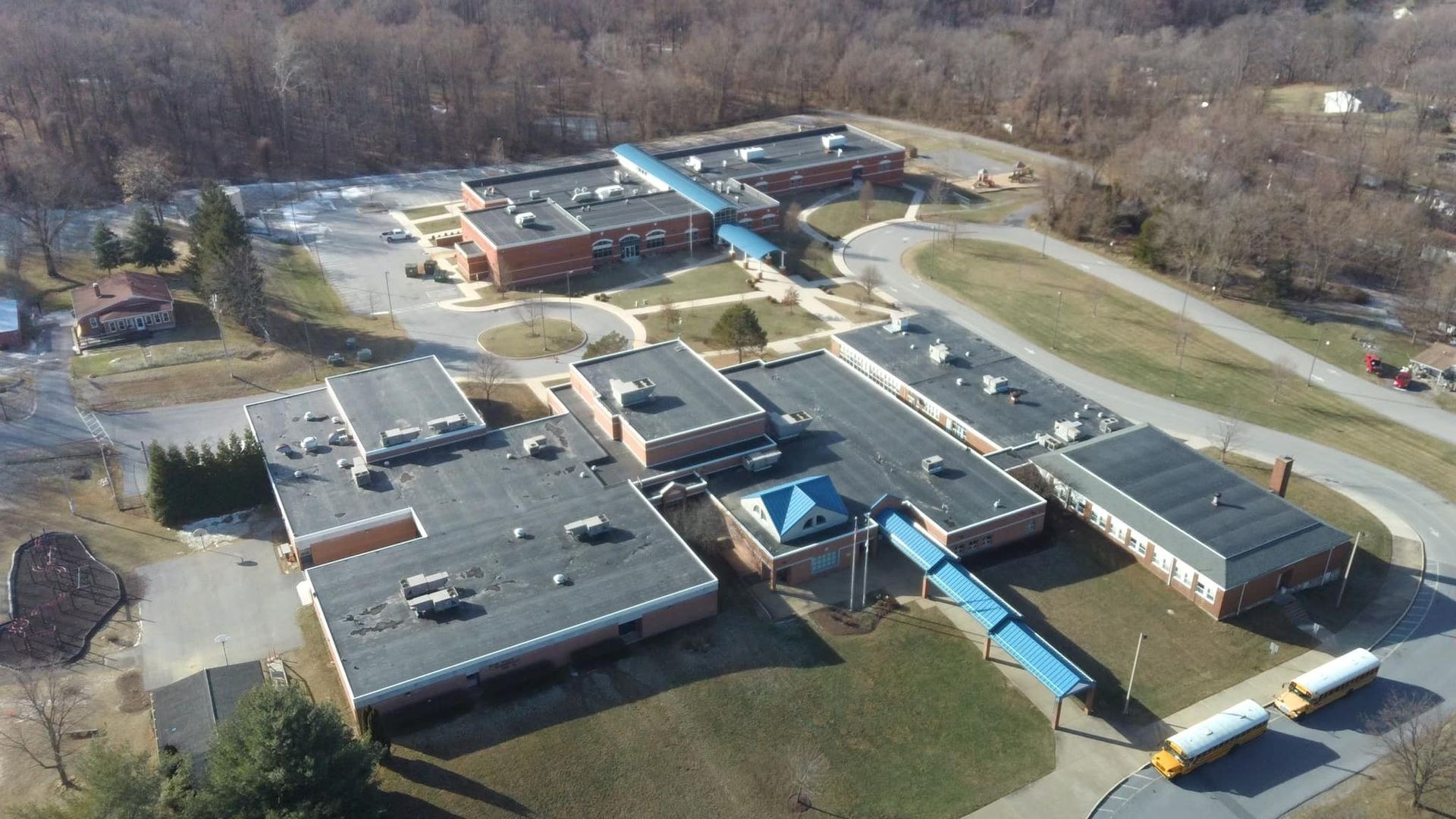
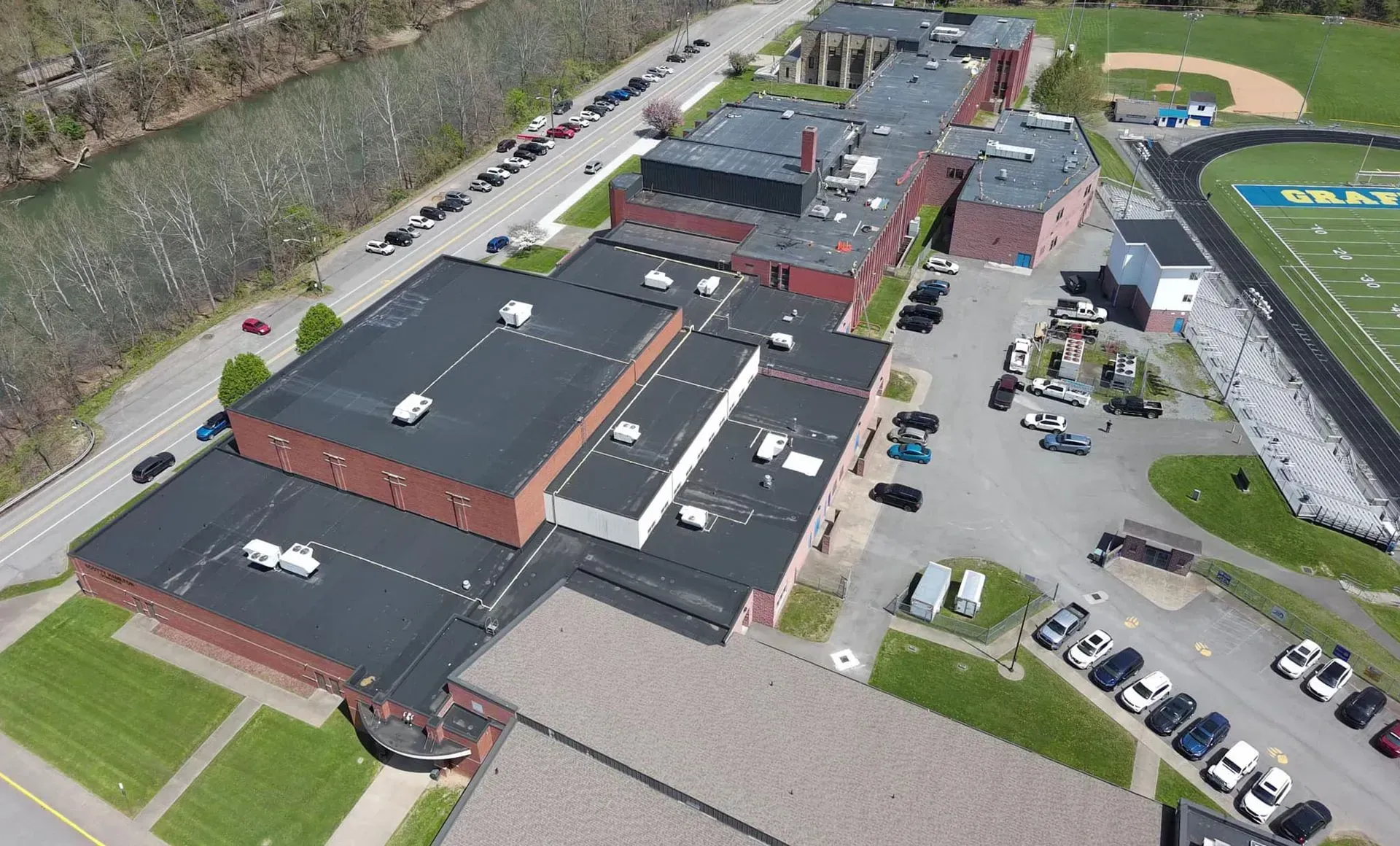
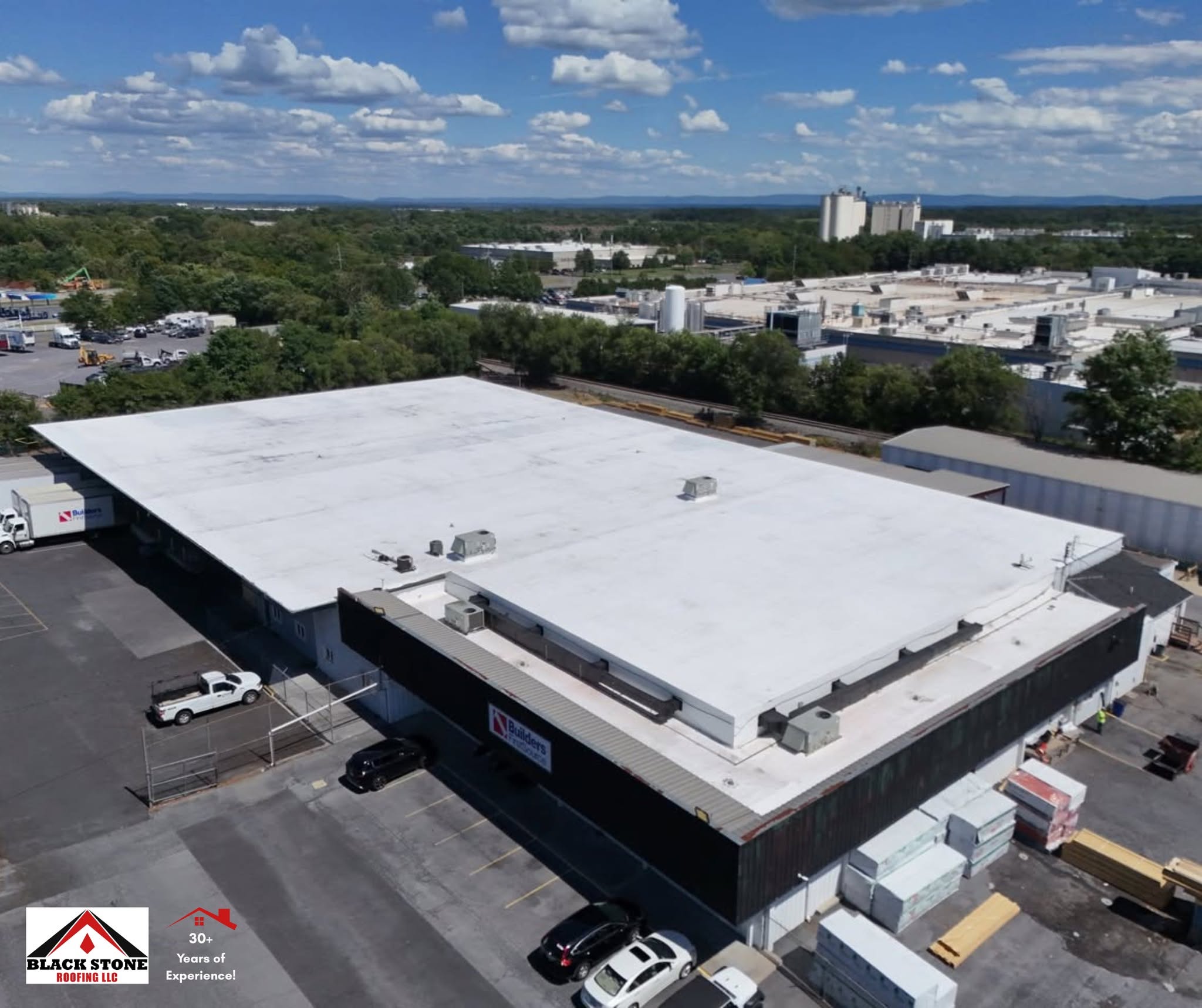
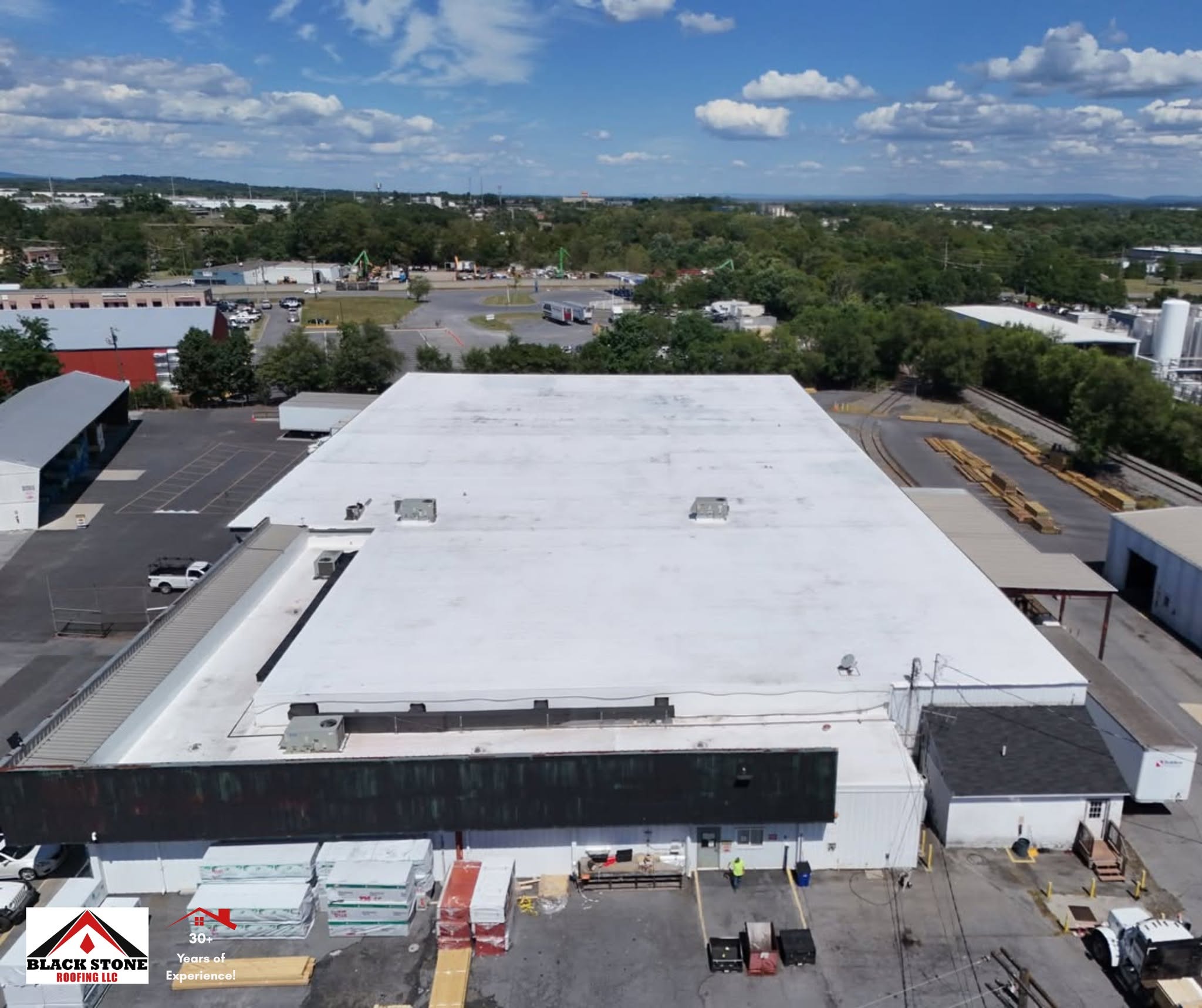
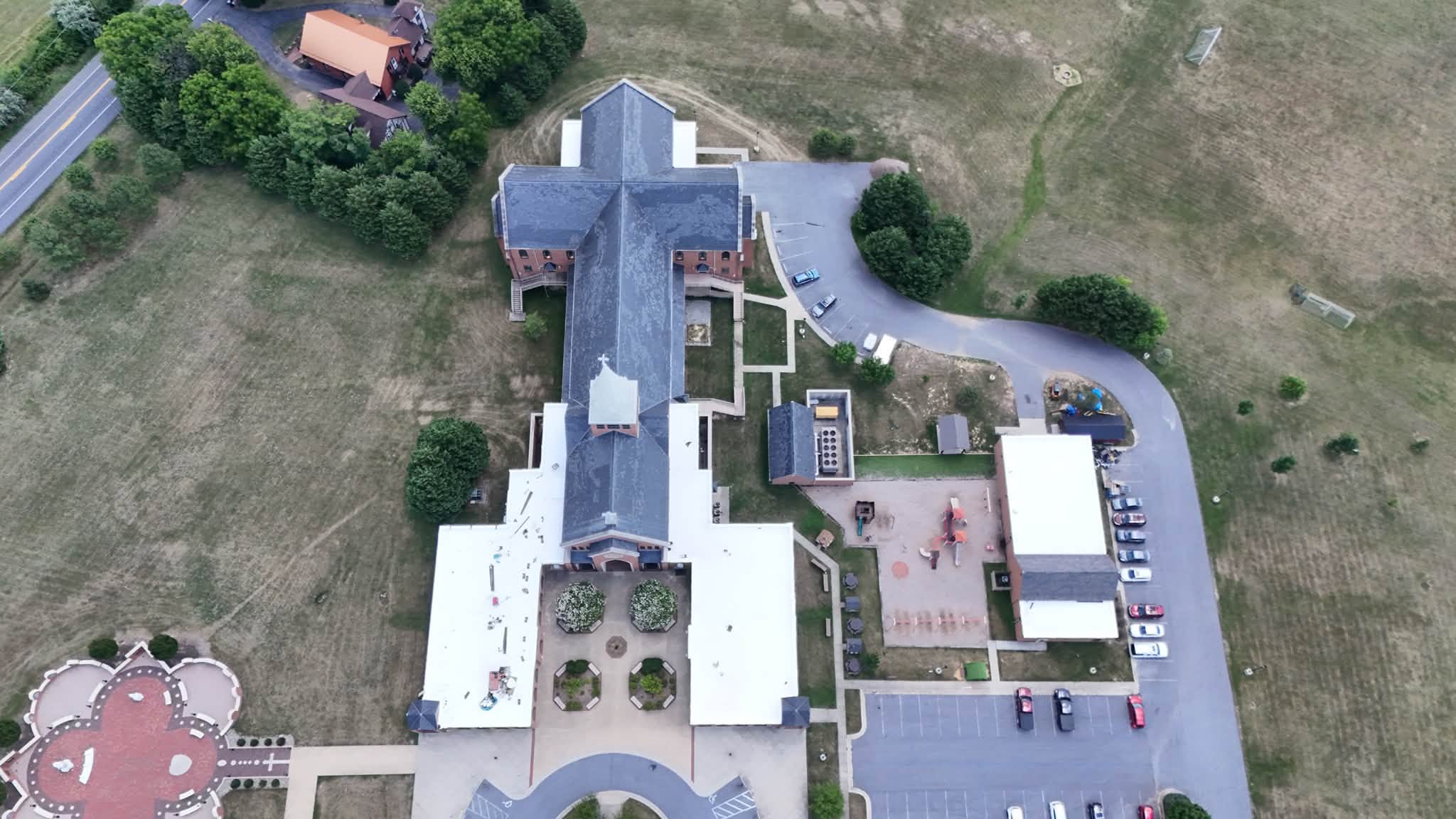
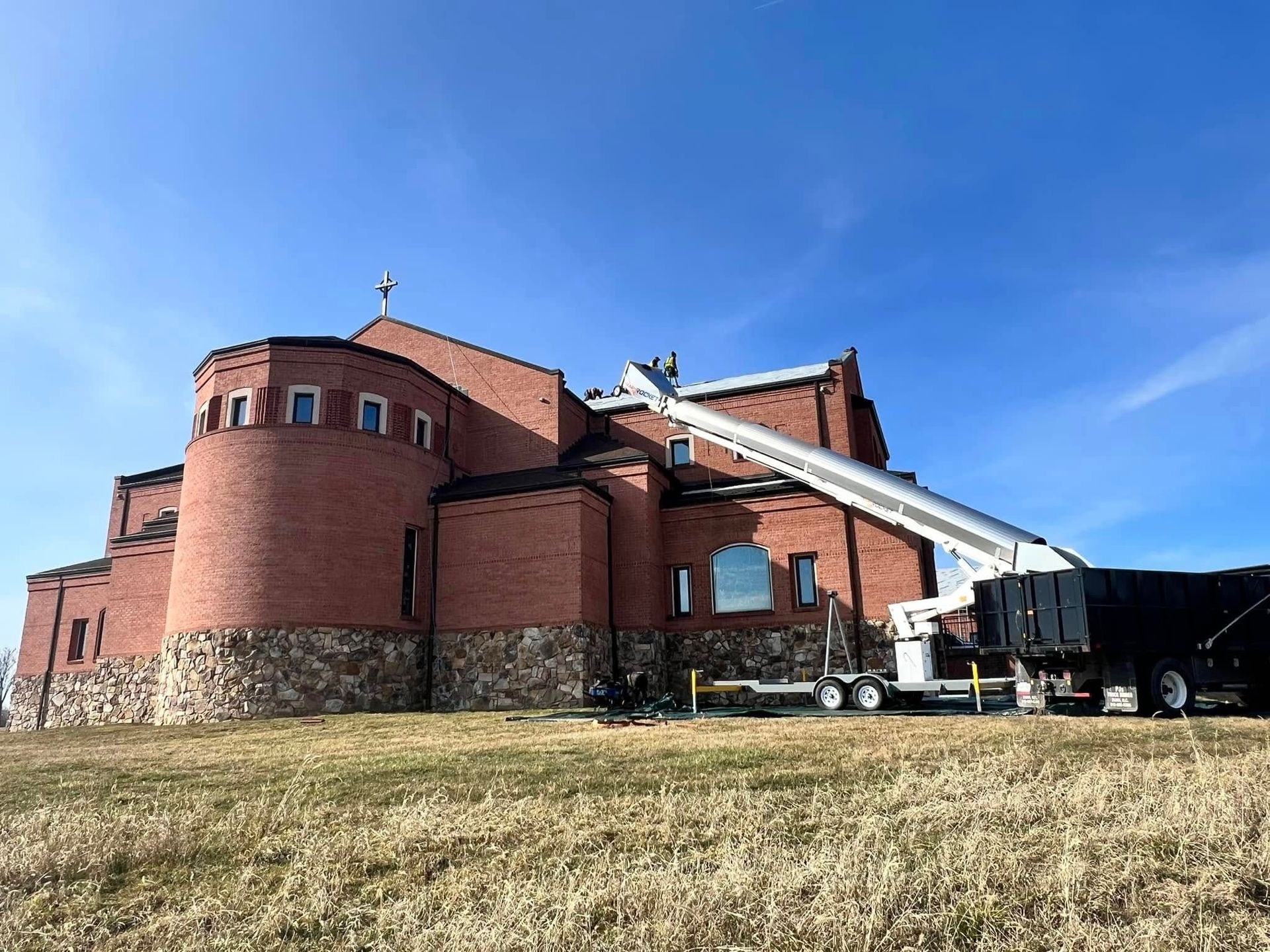
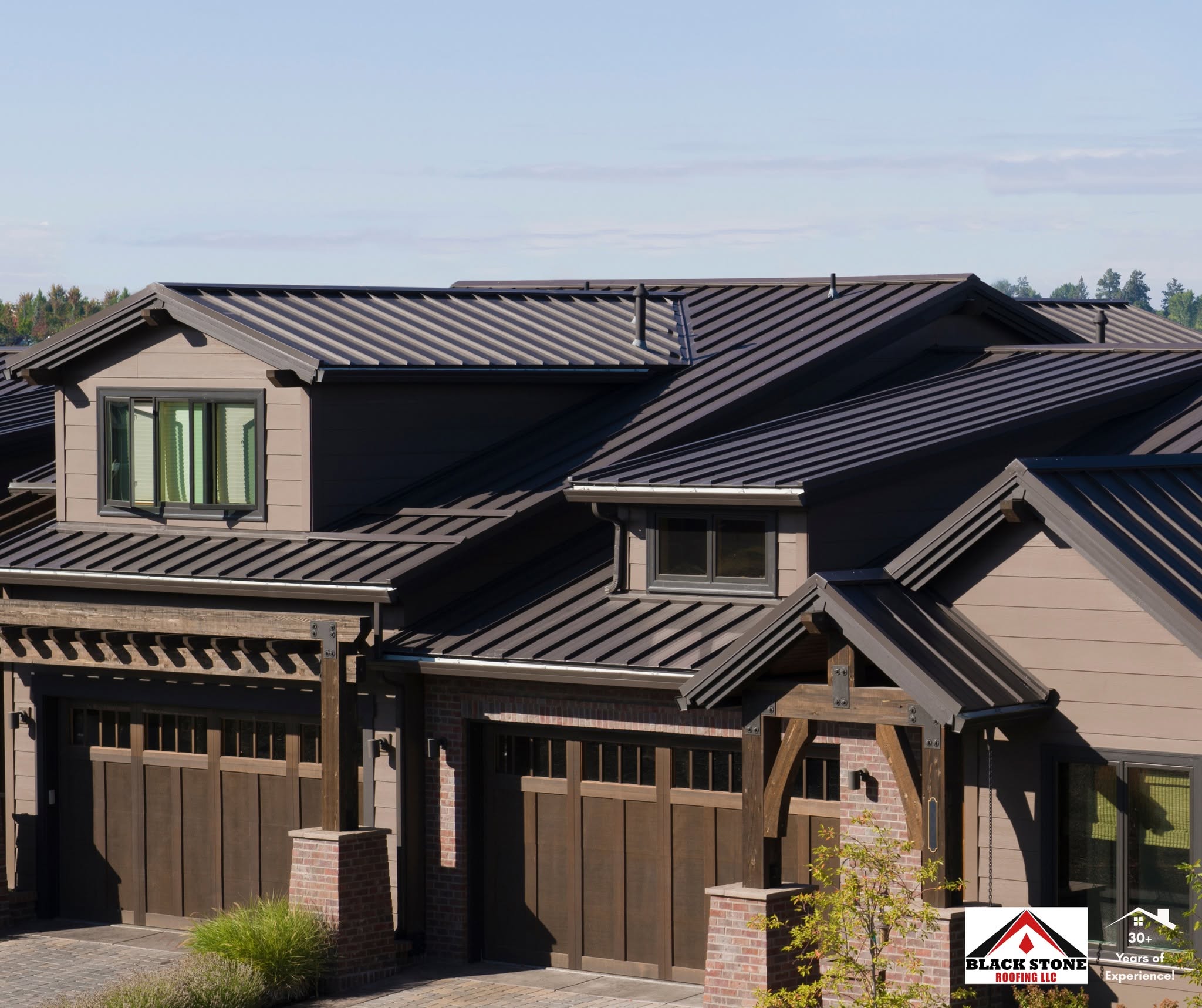
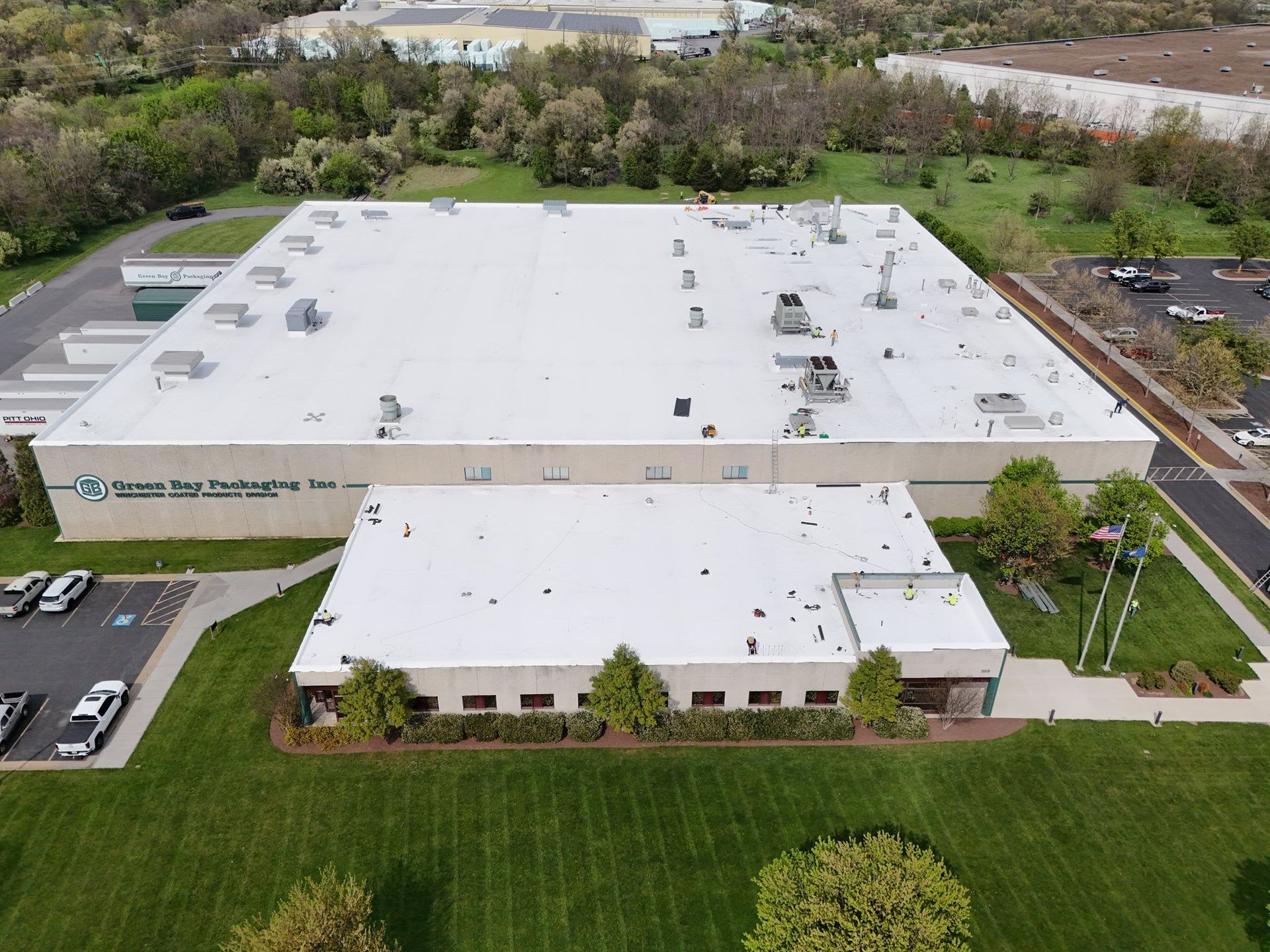
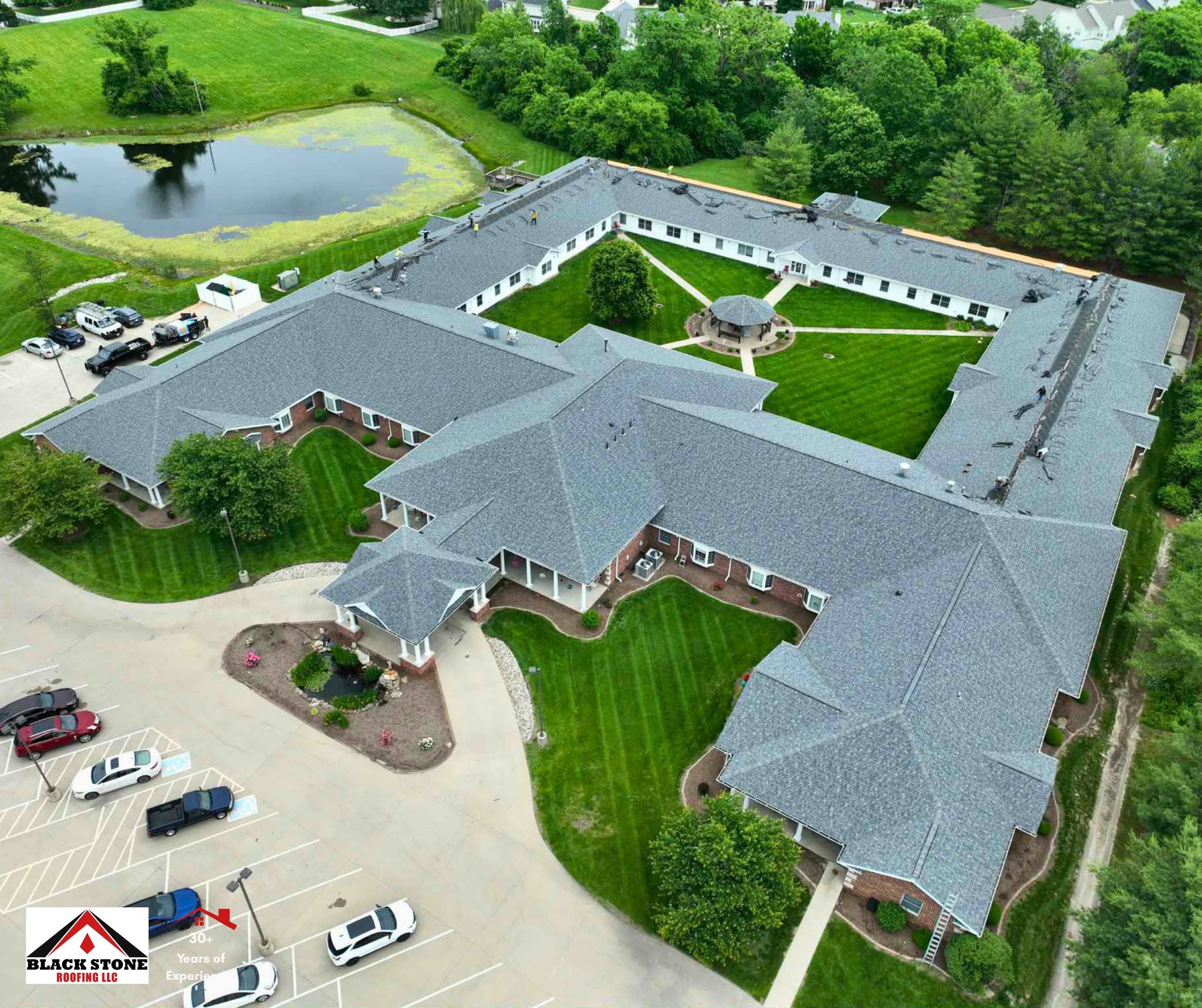
Repairs we have made around Berkeley County
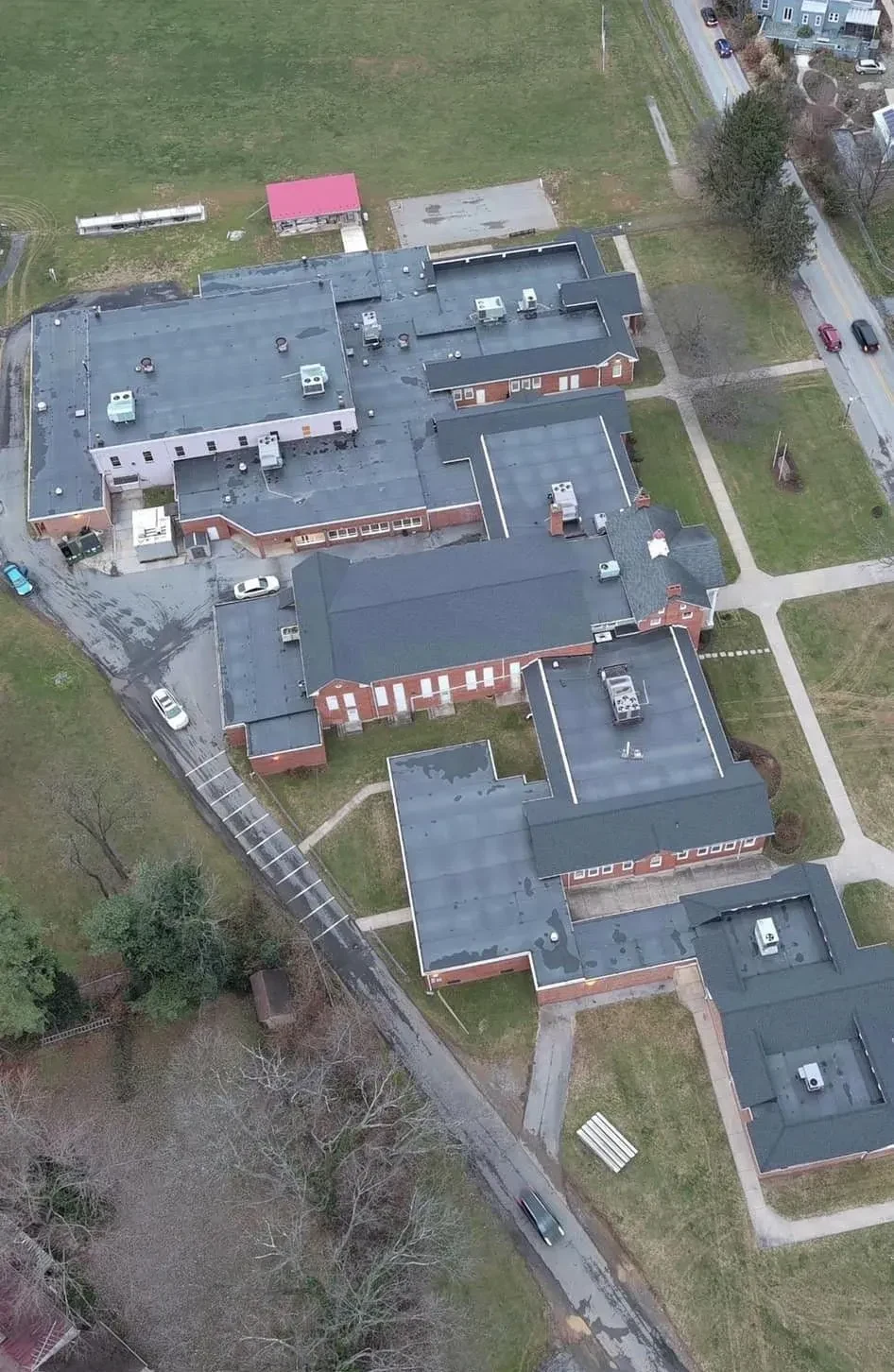
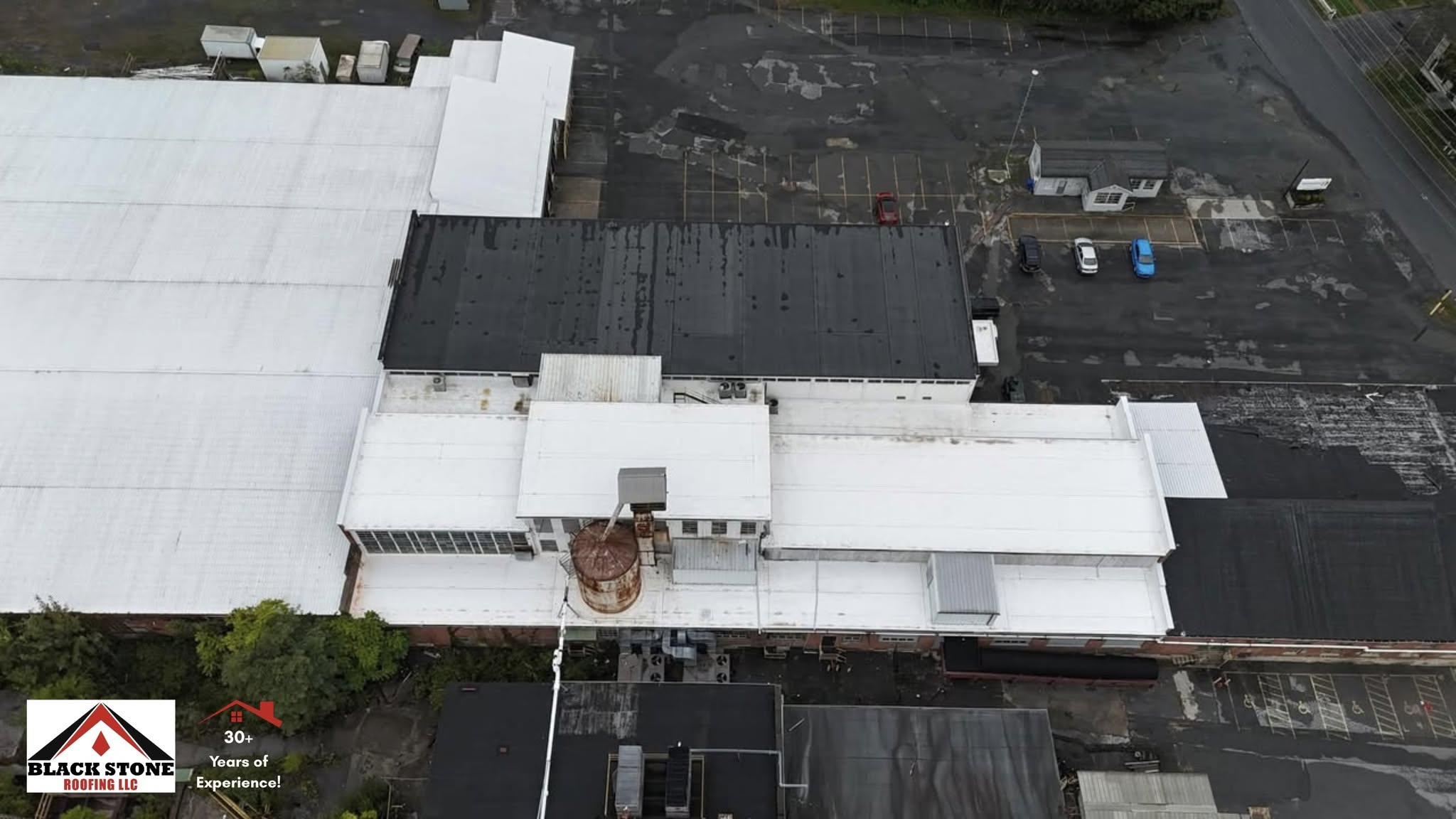
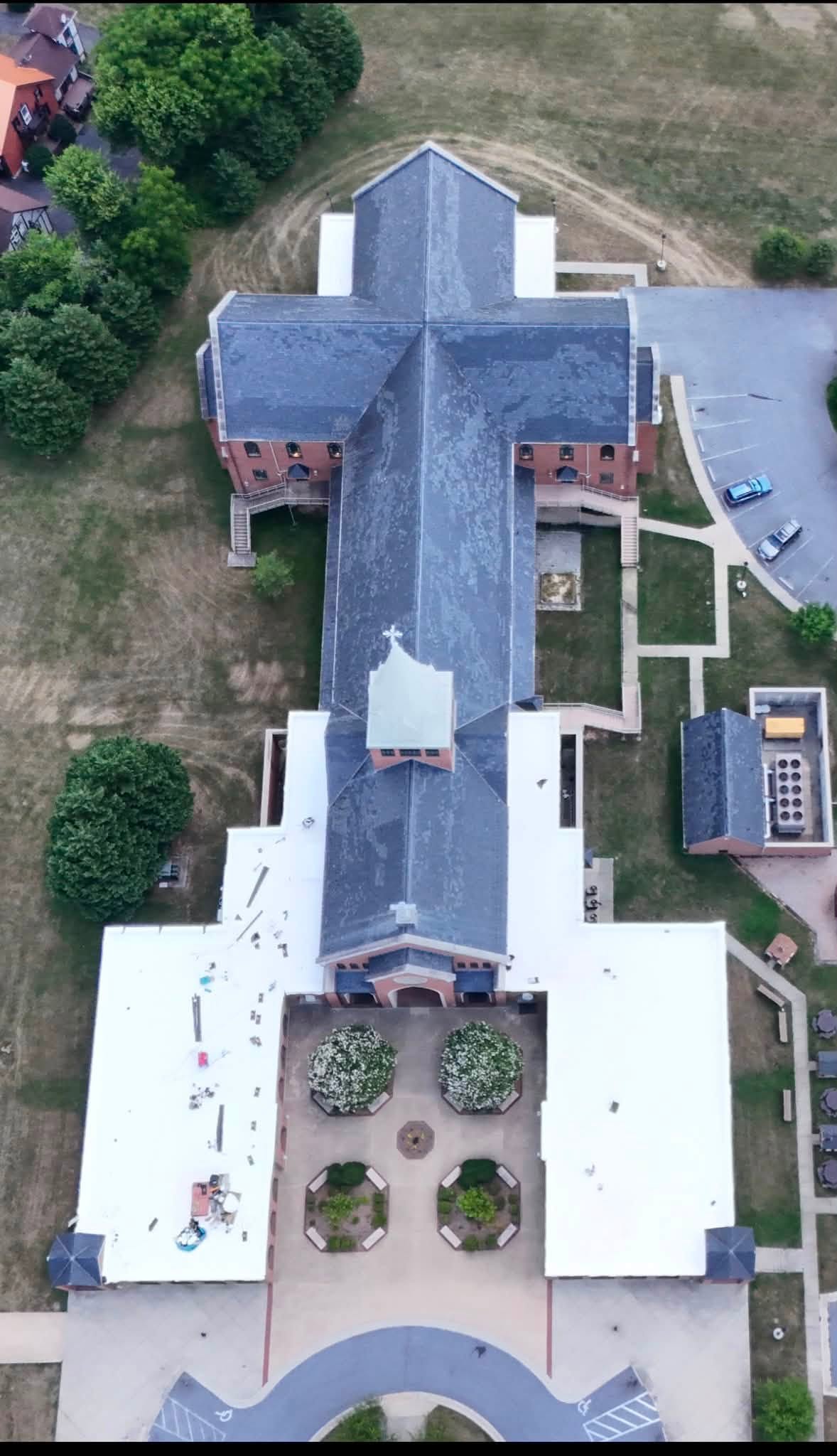
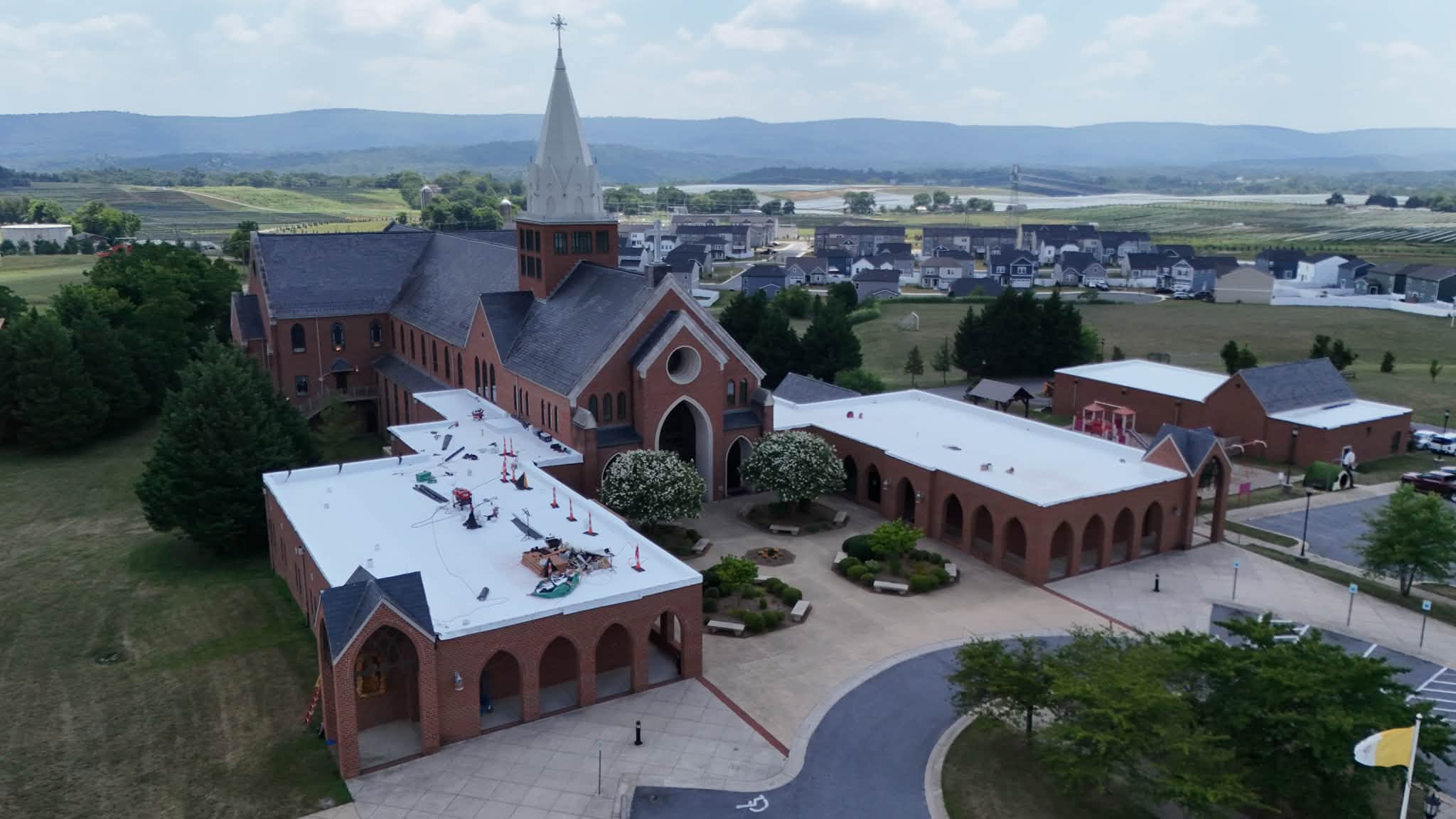
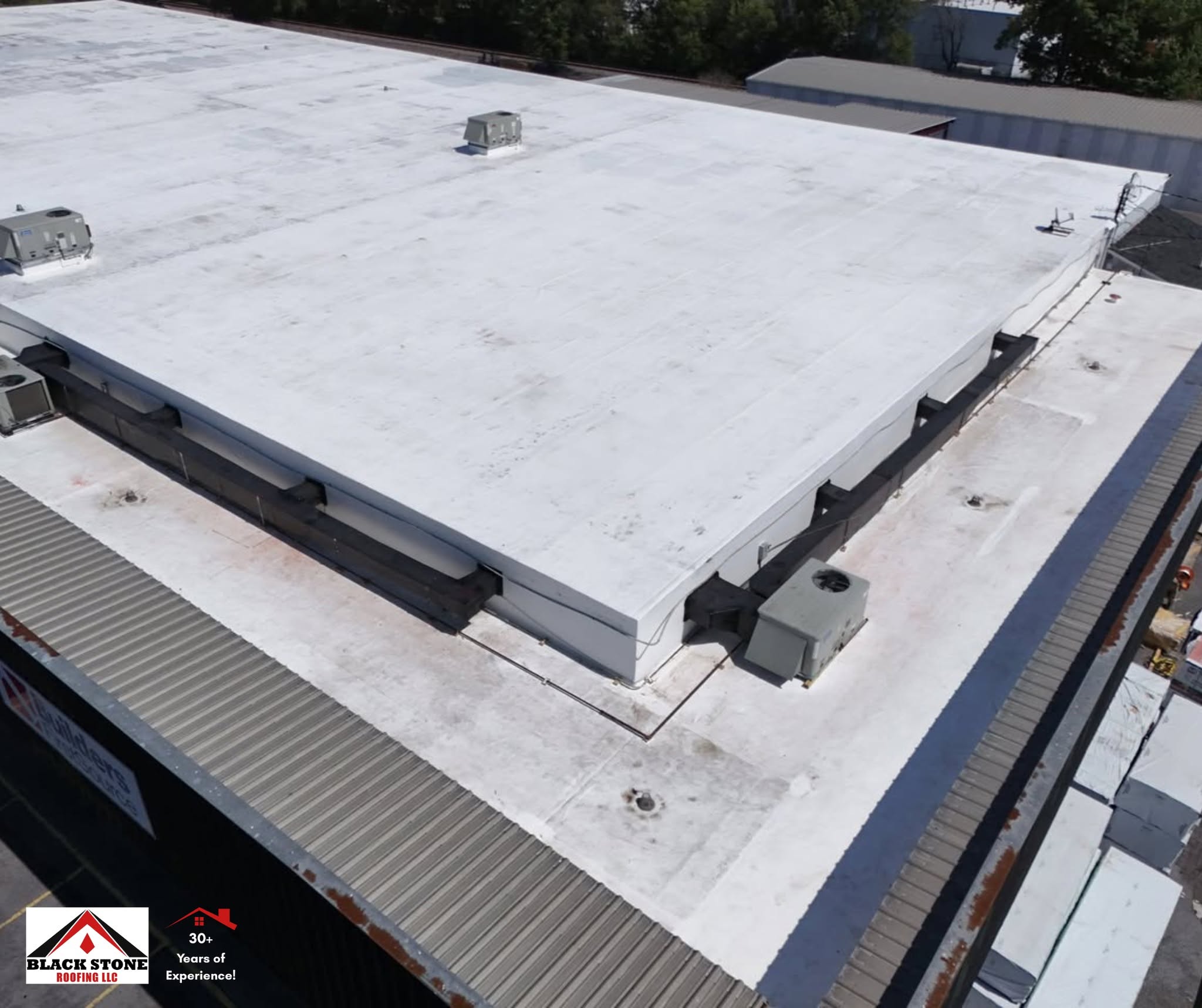
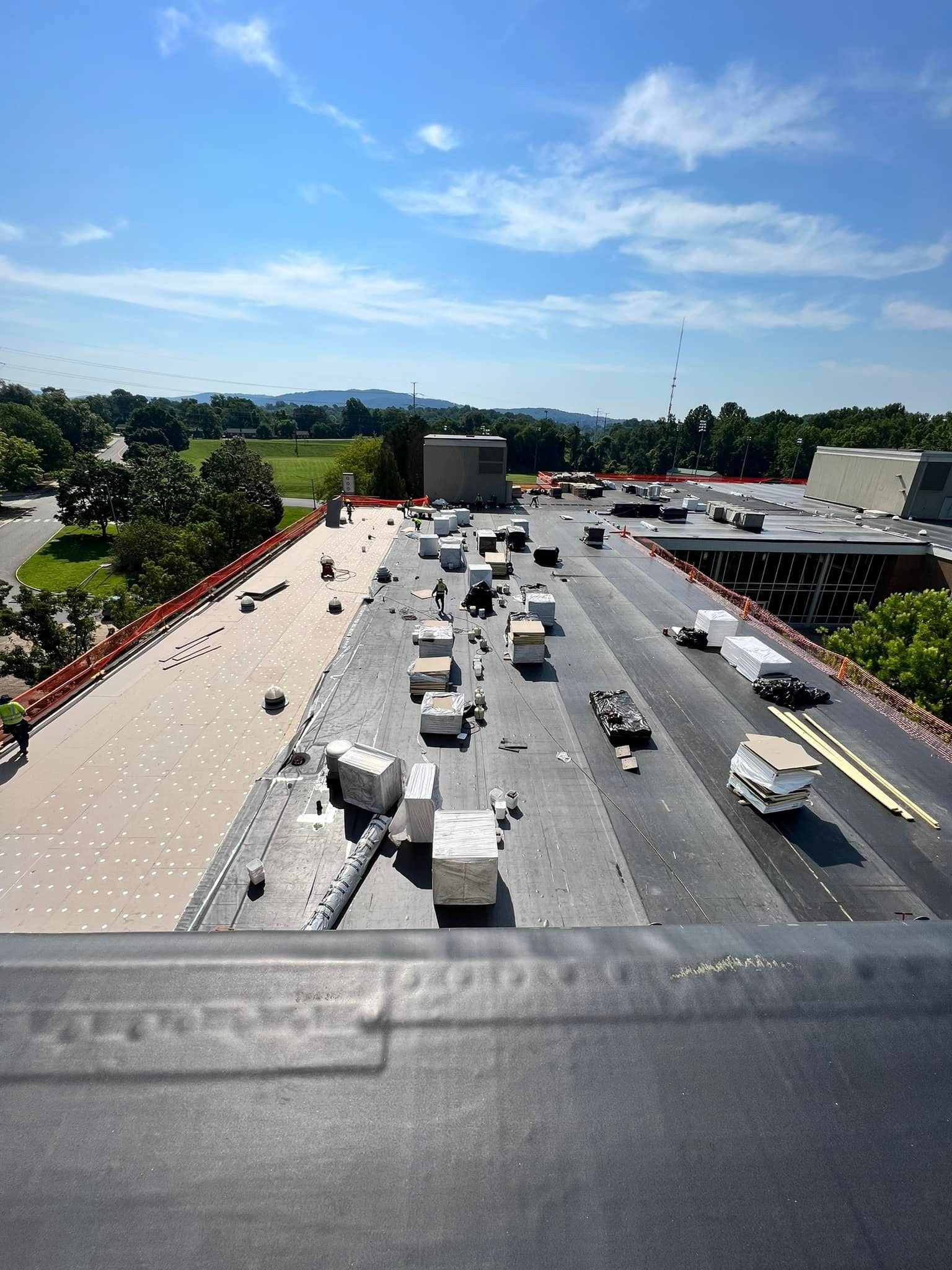
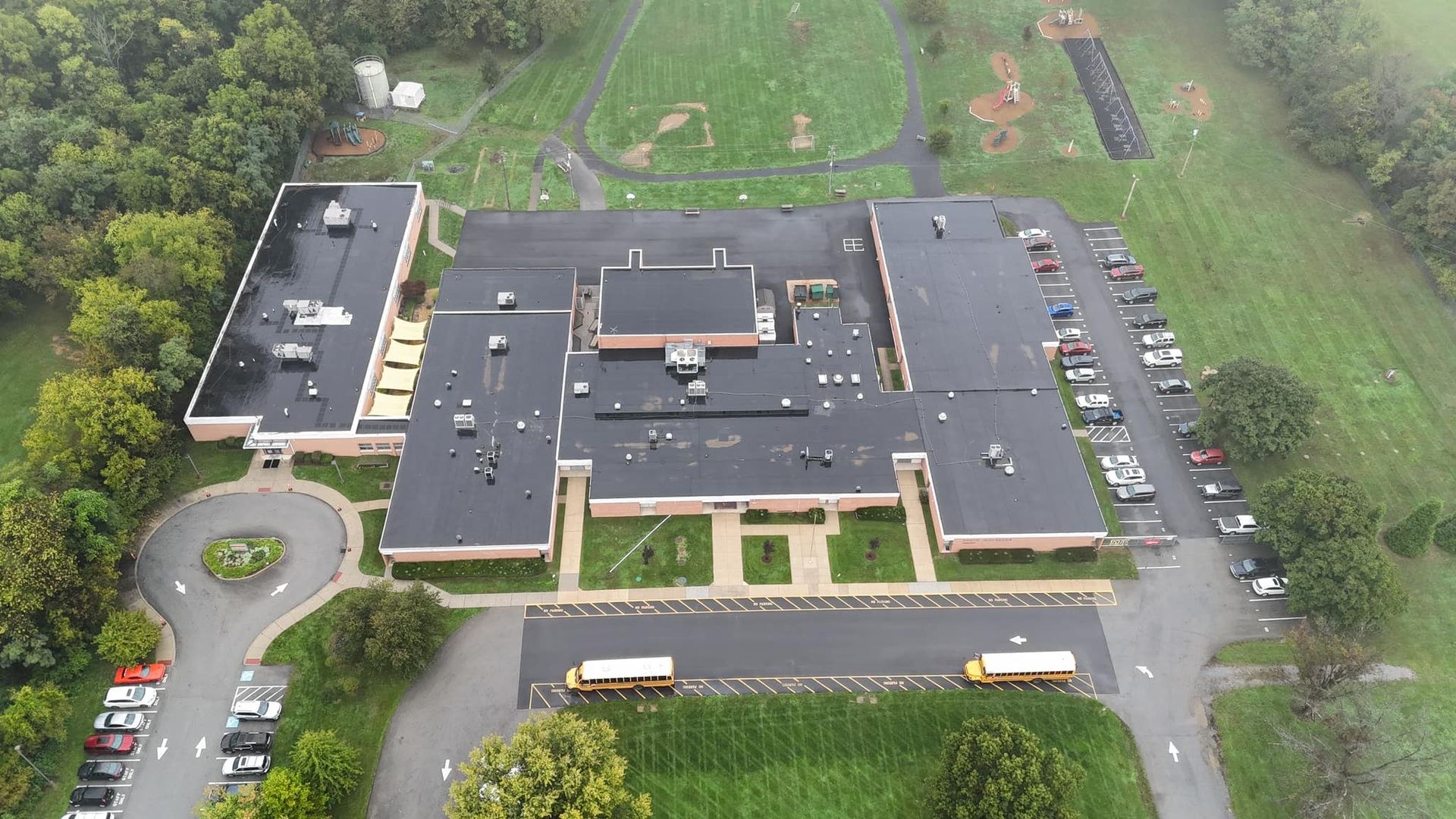
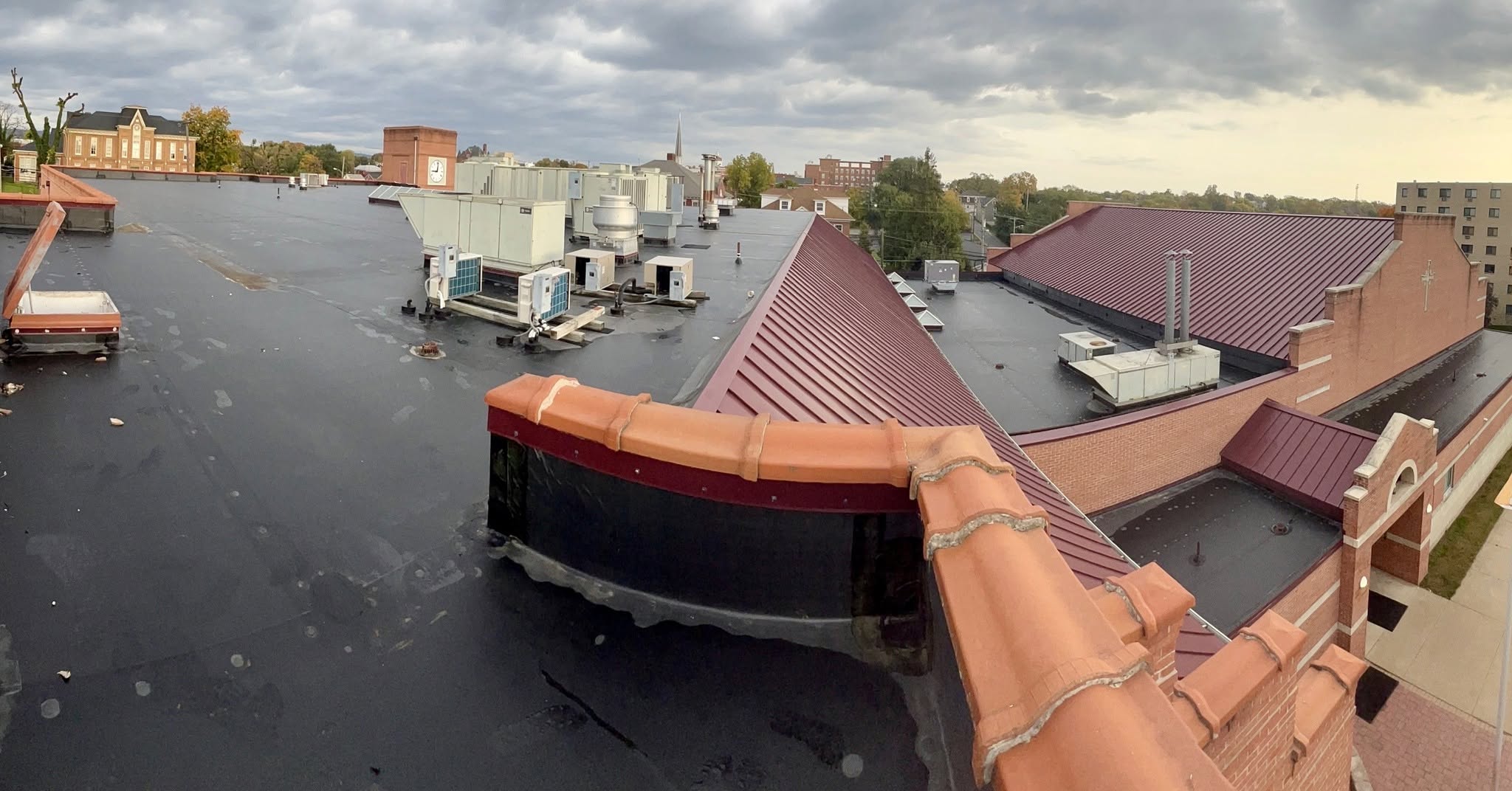
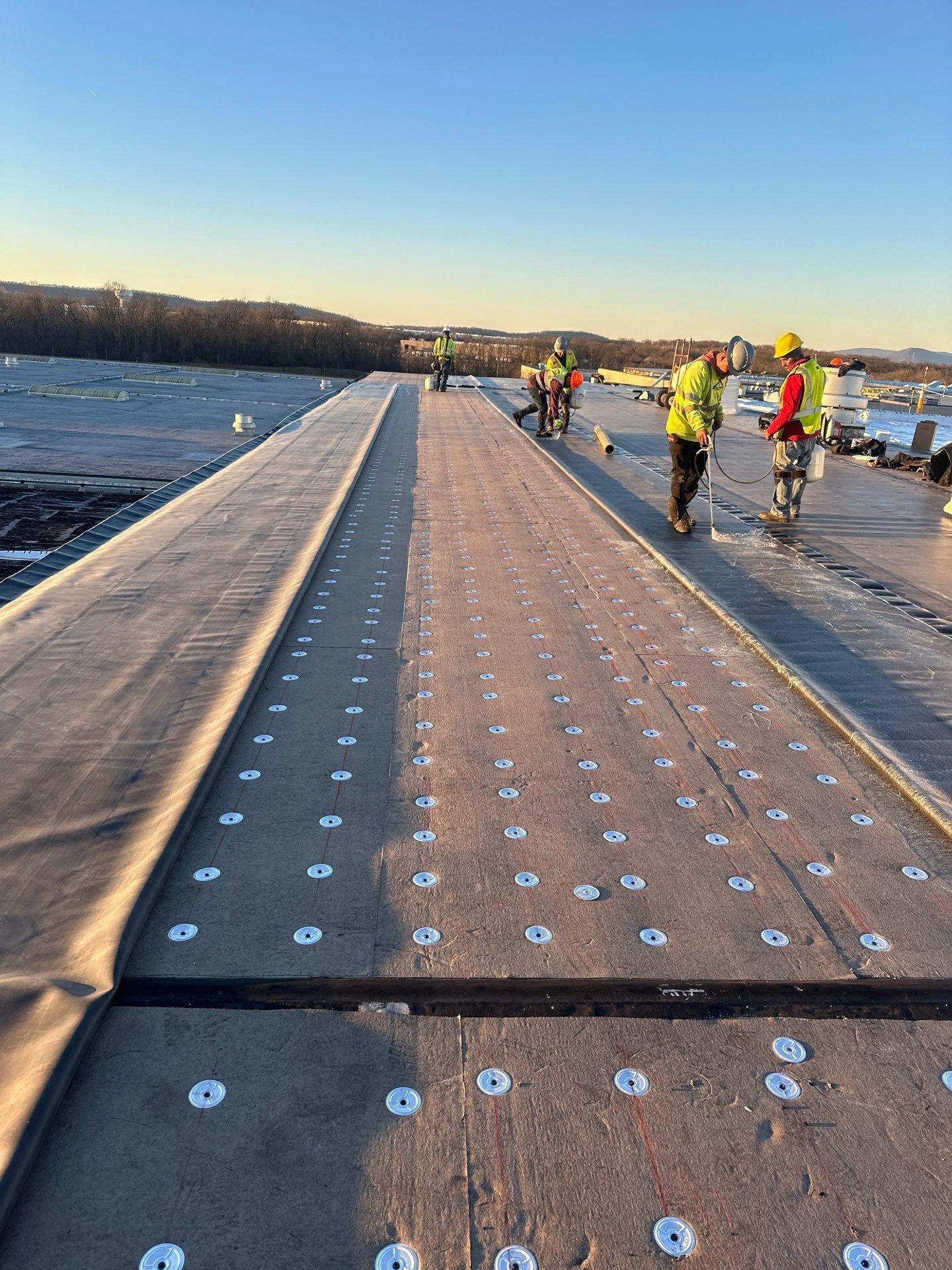
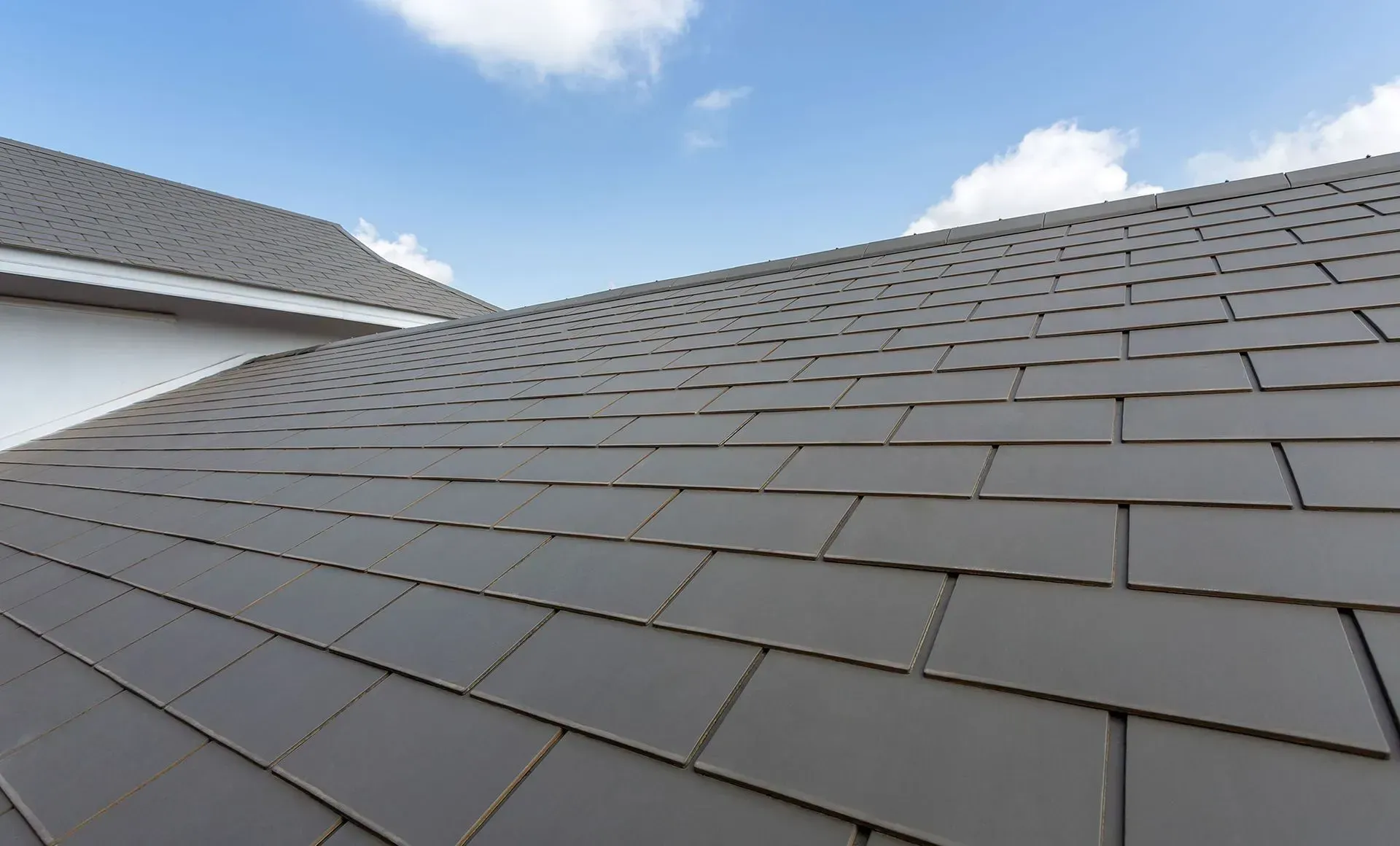
The stain on the ceiling is almost never under the hole
Water that gets through a low-slope membrane does not fall straight down. On a steel deck it runs the flute until it reaches a side lap or a bearing point. Over a tapered insulation system it crosses board joints and comes out at the first fastener it finds. We have opened ceilings thirty and forty feet from where the tenant was standing and pointing. That is also why the last patch did not hold. Somebody sealed the closest detail to the stain and left. After enough roofs the leak population stops being a mystery. It is short, repetitive, and made almost entirely of details rather than field membrane.
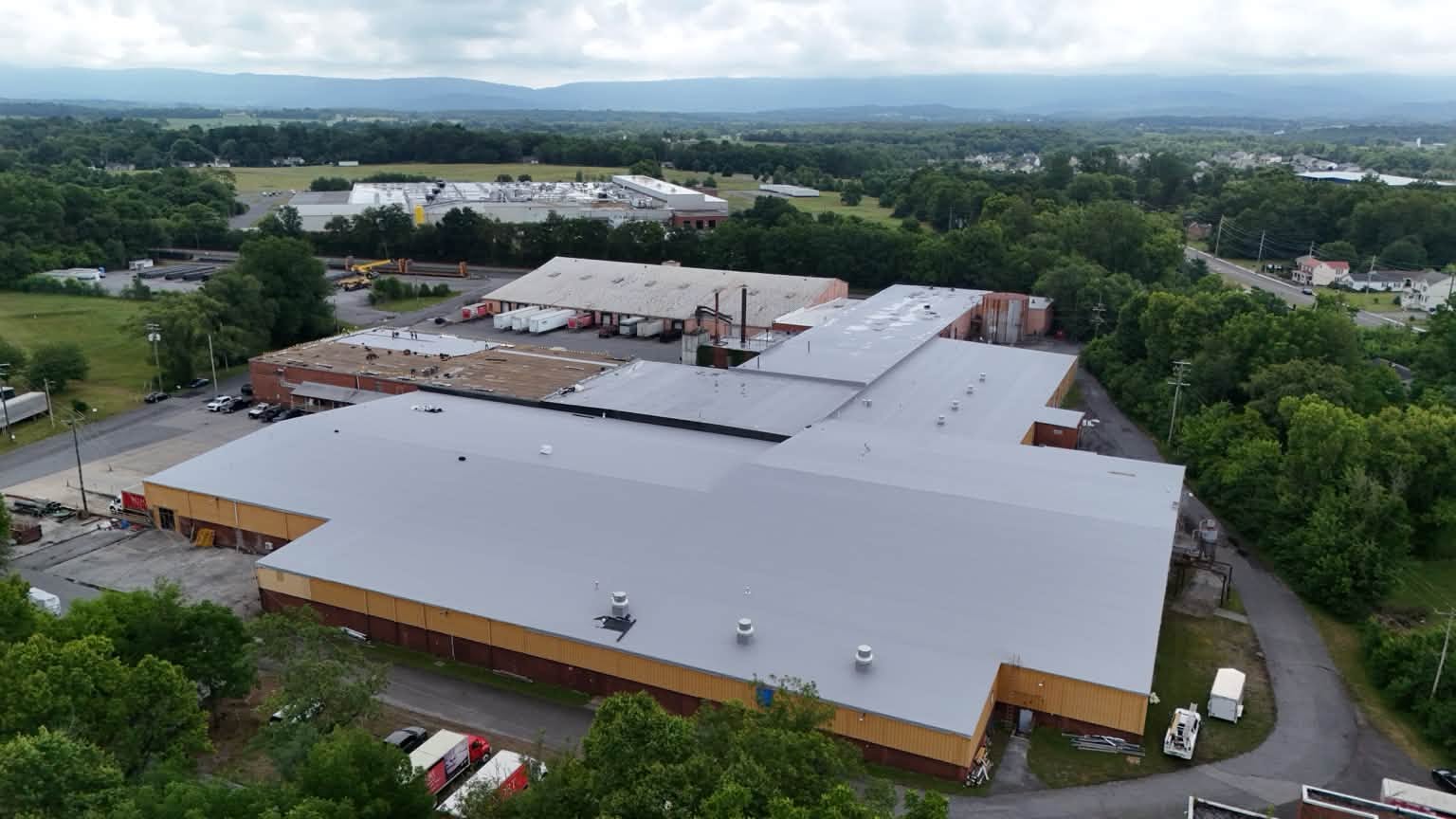
Aged TPO seams letting go
Weathered TPO carries a surface film, and a weld to a dirty sheet looks finished for about a month. Scrubbing with the correct cleaner is the step that gets skipped, which is why most quick patches on an older TPO roof fail almost immediately and you pay for the same repair twice.
EPDM laps lifting at the edge
EPDM is a thermoset, so it cannot be melted back together. Seams are glued or taped, and seams have always been its failure mode. Tape laid over a cured adhesive lap without cutting back to sound material peels at the edge by the next hard freeze and the water comes right back.
Thermal splits in modified bitumen
January in Berkeley County averages a low near 25 and a high near 41, so the roof crosses the freezing line most days all winter. Aged mod bit with nowhere to move splits, usually across a lap or straight over a deck joint, and a split runs longer every season you leave it.
Rooftop unit curbs and dead penetrations
Flashing that was never counterflashed properly, or that got cut into when a unit was swapped and new gas and electrical came through. Add the old exhaust fan opening somebody covered with sheet metal and a bead of caulk. Every rooftop unit change is a roofing job, and it usually gets handed to the mechanical contractor.
Pitch pockets nobody has touched since construction
Poured once when the building went up, never topped off, now dished and holding water around a bundle of conduit. A pitch pocket is a maintenance item and not a permanent detail, and a dished one is a funnel aimed straight at your deck.
Standing water at drains, sumps, and scuppers
Late spring is the wettest stretch of the year here, and a drain choked with a season of leaves turns a working roof into a pond. Water still standing 48 hours after the rain stops is a drainage problem rather than a membrane problem, and no patch anywhere on the roof will fix it.
How we actually find it
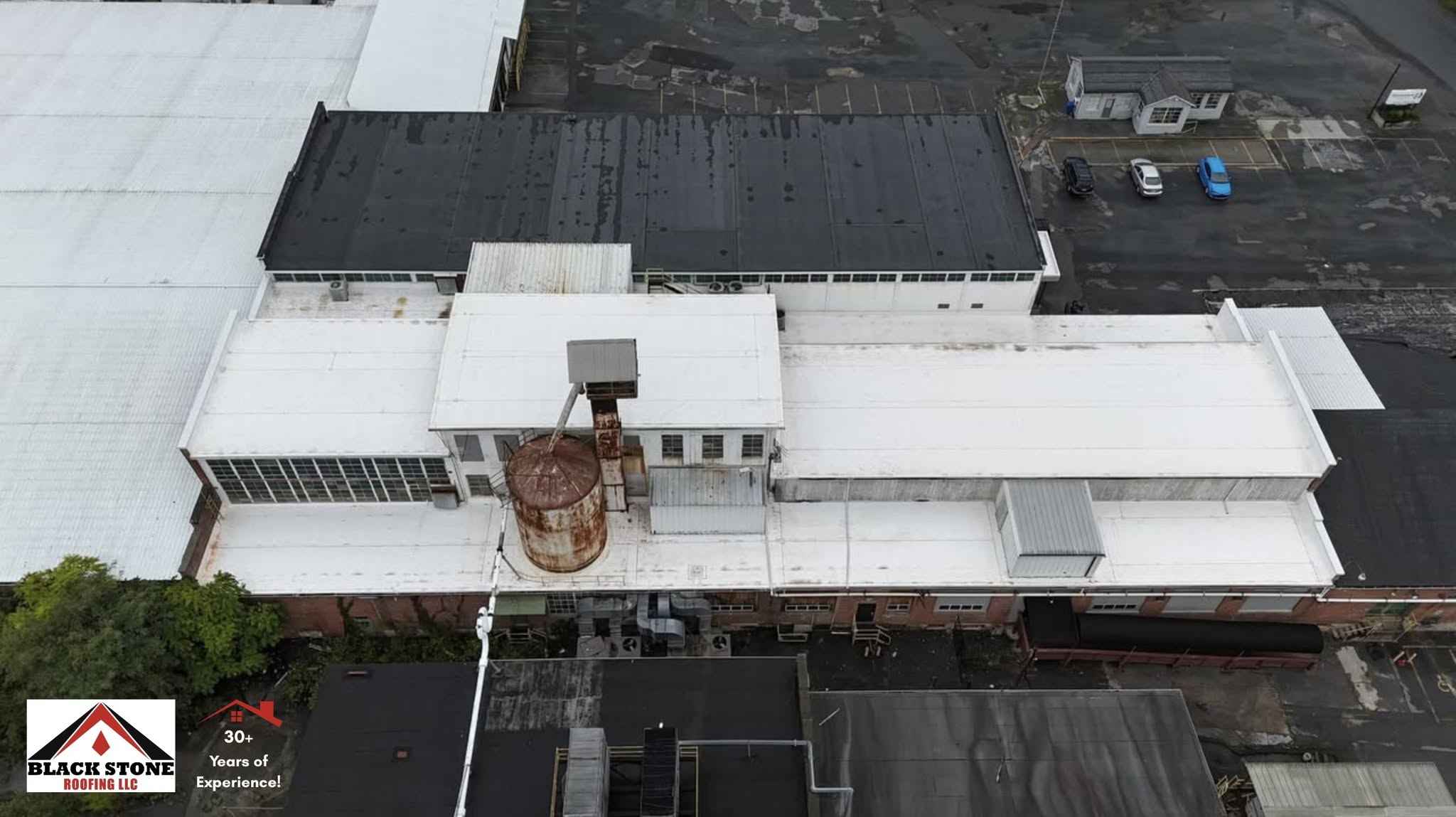
Inside the building first
Before anyone climbs a ladder, we look at what sits above the stain, which way the deck spans, and whether there is a rooftop unit, a condensate line, or a sprinkler main over it. A fair share of what gets called a roof leak in a warehouse is a condensate line off an RTU or an uninsulated pipe sweating in August. We would rather tell you that for free than sell you a repair that does not stop the water.
Then the roof, in order
Penetrations, curbs, and terminations before the field, because the field is rarely the problem. The crew pulls the drain strainers, checks every pitch pocket, and looks at every place a piece of equipment was ever mounted, including the spots where the equipment is no longer there.
Controlled water testing if we still do not have it
Low to high, one small section at a time, with somebody inside on the radio. It is slow and unglamorous, and it is the only thing that works on a roof with fifteen candidate details inside a forty foot radius. Guessing would be cheaper for us and far more expensive for you.
Core cuts to see what the water already ruined
If a leak has been running for a season, the insulation under it is wet, and patching over saturated board seals that water against your deck. Cores tell us how far it traveled. If the wet area turns out to be large, we say so, and the moisture survey protocol is spelled out on our commercial roof coatings and restoration page.
The repair, built for the system you have
Our own crew does the work, not a broker and not a day labor subcontractor rounded up after a storm. The detail gets cut back to sound material and rebuilt the way that membrane is meant to be rebuilt, which is not the same procedure on TPO as it is on EPDM or mod bit.
Photos, a written scope, and what comes next
You get images of what we found and what we did, in writing, so a property manager can forward it to an owner or an insurer without translating it first. If the roof needs eyes on it twice a year from here, we tell you that too and hand it to preventative roof maintenance.
What a real repair looks like on your roof
Hot air welded, then proven
Welds run roughly 900 to 1150 degrees depending on wind, ambient temperature, and how old the sheet is. Because those conditions move all day on a Martinsburg roof, we run a test weld at the start of every shift and again any time the weather turns. The finished seam gets probed end to end. On a pull test we want the membrane to tear. If it peels clean at the interface, the weld was cold and we do it over.
Cut back, primed, taped, sealed
Back to sound material, prime, seam tape, lap sealant at the exposed edge. One warning that matters in retail and restaurant space along the corridor: petroleum and cooking grease destroy EPDM. A leak downwind of a kitchen exhaust needs containment and a different membrane in that zone rather than another gallon of adhesive.
Split cleaned, reinforced, re plied
The split gets cleaned out, reinforced, and covered with a compatible ply. On an occupied building we use cold applied or self adhering products wherever the detail allows, because running open flame over somebody’s tenants is not a tradeoff we ask a building owner to accept.
Fasteners, end laps, headwalls, curbs
Exposed fastener roofs leak at the fasteners, the end laps, the headwalls, and the curbs, and almost never in the middle of a panel. We reseat with oversized fasteners and new gaskets. If we are pulling stripped screws by the handful, the roof is telling you the re screw cycle needs to be handled as a project, which is covered on our commercial metal roofing page.
The layer that decides repair or replace
Wet insulation is the quiet part of a leak. It holds water against the deck, it stops insulating, and it will not dry out under a patch. Cores tell us how much of it is gone. Isolated wet board gets cut out and replaced in kind. Widespread saturation is a different conversation and we will say so out loud rather than sell you a repair that buys nothing.
Where a storm starts and where water sits
Edge failure is the most common initiating event in a low-slope wind loss, so loose perimeter metal is worth correcting before a storm rather than after one. Drains, sumps, and scuppers get cleared and checked at the same visit, because a pond on a repaired roof is just a slower version of the same problem. The edge standard is covered on our single-ply membrane page.
Who is actually showing up at your building
A Martinsburg address, not a service radius
1886 Winchester Ave, Martinsburg, WV 25405. Berkeley County is where we are, so your roof is a short drive and not a road trip.
Licensed in five states
VA, WV, MD, PA, FL. West Virginia requires a state contractor license for commercial work above the statutory threshold, requires the number in the advertising, and requires it posted at the job site. Ask every bidder for theirs.
Family owned since 2016
Bonded and insured, with our own crew on your roof. One contractor for roof, edge metal, gutters, siding, windows, steel buildings, and solar.
4.9 stars from 50 Google reviews
Read them before you call anybody, including us. Our reviews page collects them in one place.
Where commercial roof repair fits with the rest of the work
Commercial Roofing
The overview when you are weighing repair against recover against full replacement across a portfolio.
Single-Ply Membrane Roofing
TPO, EPDM, PVC, and KEE compared honestly, plus insulation, cover board, and edge metal requirements.
Roof Coatings and Restoration
Silicone versus acrylic, the build spec, the core cut protocol, and when a coating is the wrong answer.
Commercial Metal Roofing
Structural standing seam, expansion joints, floating clips, and the exposed fastener re screw cycle.
Preventative Roof Maintenance
Spring and fall visits, drain clearing before the May rain peak, and the documentation warranties require.
Emergency Roof Repair
What happens on that first call when water is coming into an occupied building right now.
Storm Damage Roof Repair
Wind, hail, and debris damage documented properly after a system moves through the county.
Roof Inspection
A written condition report with photos, useful for budgeting, due diligence, or a warranty question.
Where we run commercial service
Do not see your town? We work the whole corridor, so ask or call (540) 550-9703.
Commercial roof repair questions we get
-
How fast can you get to a commercial leak in Martinsburg?
We are open 24 hours and a person answers the phone, including at 2 a.m. Our shop is on Winchester Avenue here in Martinsburg, so most Berkeley County buildings are a short drive rather than a trip up the interstate. We still will not publish a guaranteed response window, because traffic, weather, and the size of a countywide storm event are real, and after a big one every roofer in the Panhandle is triaging calls. What we will do is tell you honestly on the phone when we can be there and what to do in the meantime to protect what is under the leak.
-
The stain came back in a different spot. Did the repair fail?
Not necessarily. Water travels along the deck flute and across insulation joints before it drops, so a second entry point can surface in a completely different bay than the first one. It is also common for a roof of a certain age to have several details failing at once. We come back, we look, and if the repair we made is the one that let go, we own it.
-
Can you patch a TPO roof that is more than ten years old?
Usually yes, as long as the sheet still has enough thickness above the scrim to weld to. Aged TPO has to be scrubbed with the correct cleaner first, because weathered membrane carries a surface film that will not bond. We run a test weld and a pull test before we trust a repair on an older sheet. If the scrim is showing through, that area is past repair and we will say so.
-
Do you have to shut my building down?
No. We schedule around your operation with night work, weekend work, and staged sections so only one area is open at a time. We protect the floor below and we walk the interior with you before we start so there is no argument later about what was already stained. Tell us what your tenants or your production line cannot absorb and we sequence the work around it.
-
Will a repair void my roof warranty?
It can, if the wrong person does it. Most manufacturer no dollar limit warranties require that repairs be made by an approved contractor using approved materials and details, and an unauthorized patch can end coverage you already paid for. Tell us who holds the warranty before anyone touches the roof. It takes one phone call to the manufacturer to confirm what the repair has to look like to keep your coverage alive, and we will make that call with you.
-
How do I know whether to repair or replace?
Three things decide it. How much of the insulation is wet, which we determine with core cuts rather than a guess. Whether the failures are isolated details or seams opening in several places at once. And whether the membrane still has usable thickness left above the scrim. Isolated details on a sound sheet are a repair every time. Widespread saturation is not, and patching over it just seals water against your deck.
-
Are you licensed to do commercial work in West Virginia?
Yes. West Virginia requires a state contractor license for commercial work above the statutory threshold, requires the license number to appear in contracting advertisements, and requires it posted at the job site. We hold a West Virginia contractor license. We are also licensed in Virginia, Maryland, Pennsylvania, and Florida, and we are bonded and insured. Ask every company bidding your roof for the same and check that the number is real.
Leaking right now? Call us.
Tell us what you are seeing inside and we will tell you what it probably is before we ever get on the roof. Open 24 hours, seven days a week, from our shop at 1886 Winchester Ave, Martinsburg, WV 25405. You can also reach us at Info@BlackStoneRoofing.org.