Home/Commercial Roofing/Single Ply Membrane Roofing
TPO, EPDM, PVC AND KEESingle Ply Membrane Roofingin Martinsburg, WV
Low slope membrane systems for buildings across Berkeley County and the I-81 corridor. We are based at 1886 Winchester Ave in Martinsburg, so the roof you are calling about is in our own county. We spec the whole assembly, not just the sheet, and we tell you where the roof is going to fail before we install it.
Leaking right now
Emergency response
We answer 24 hours. Tarped and stabilized before more gets inside.
Planning ahead
Free inspection
Written scope and photos so you know what the roof actually needs.
Request your free estimate
Membrane and metal work across Berkeley County
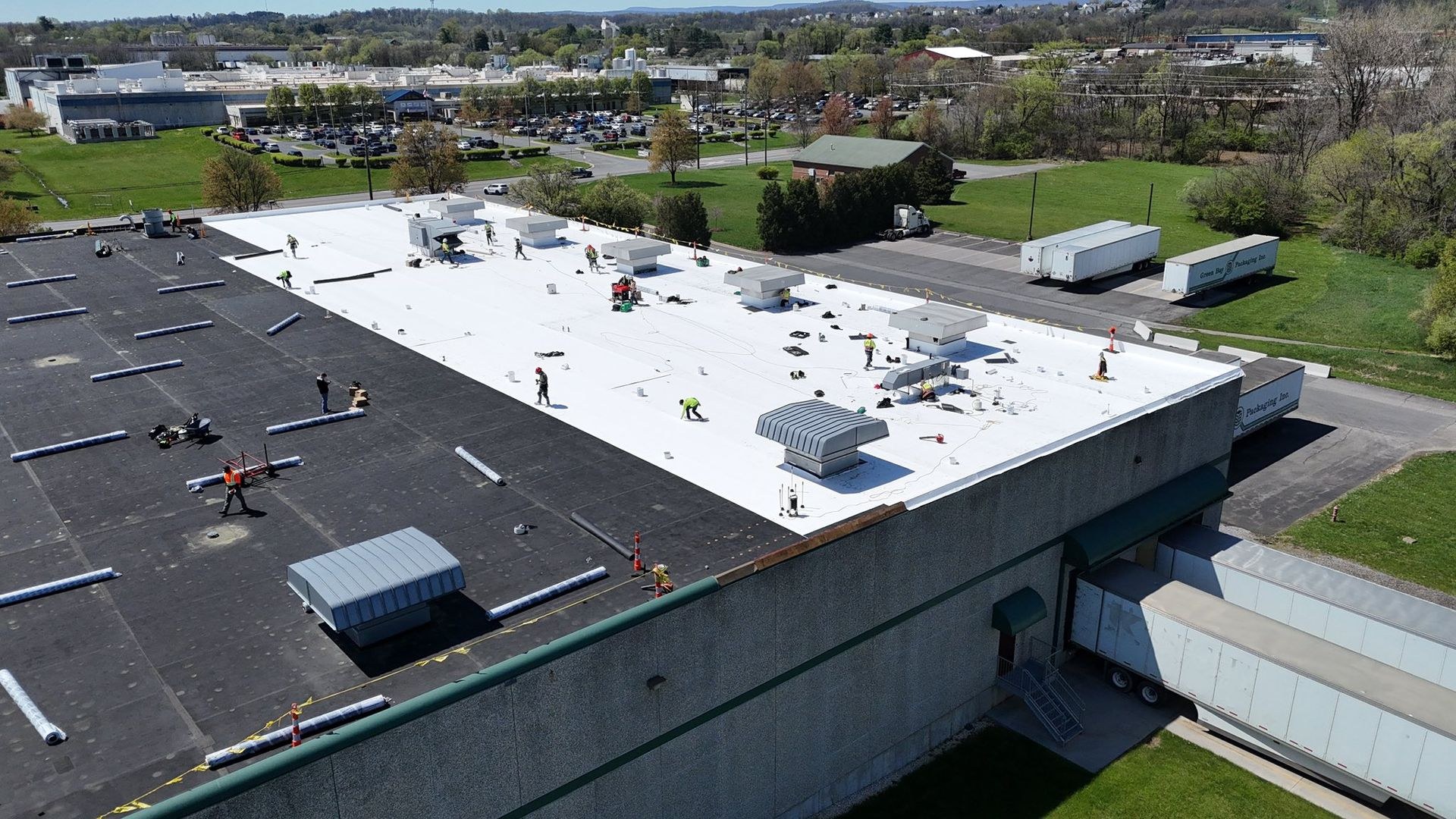
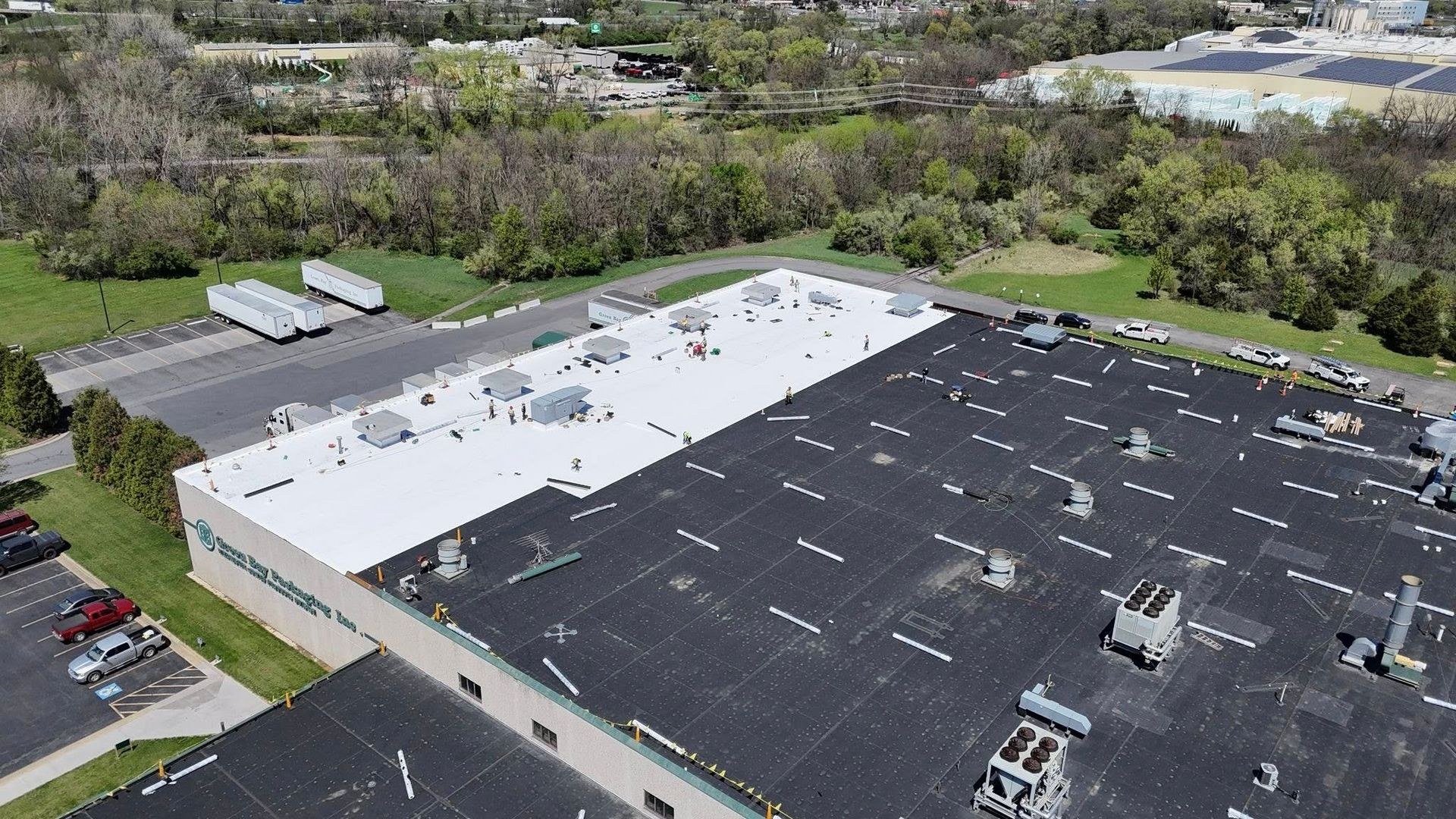
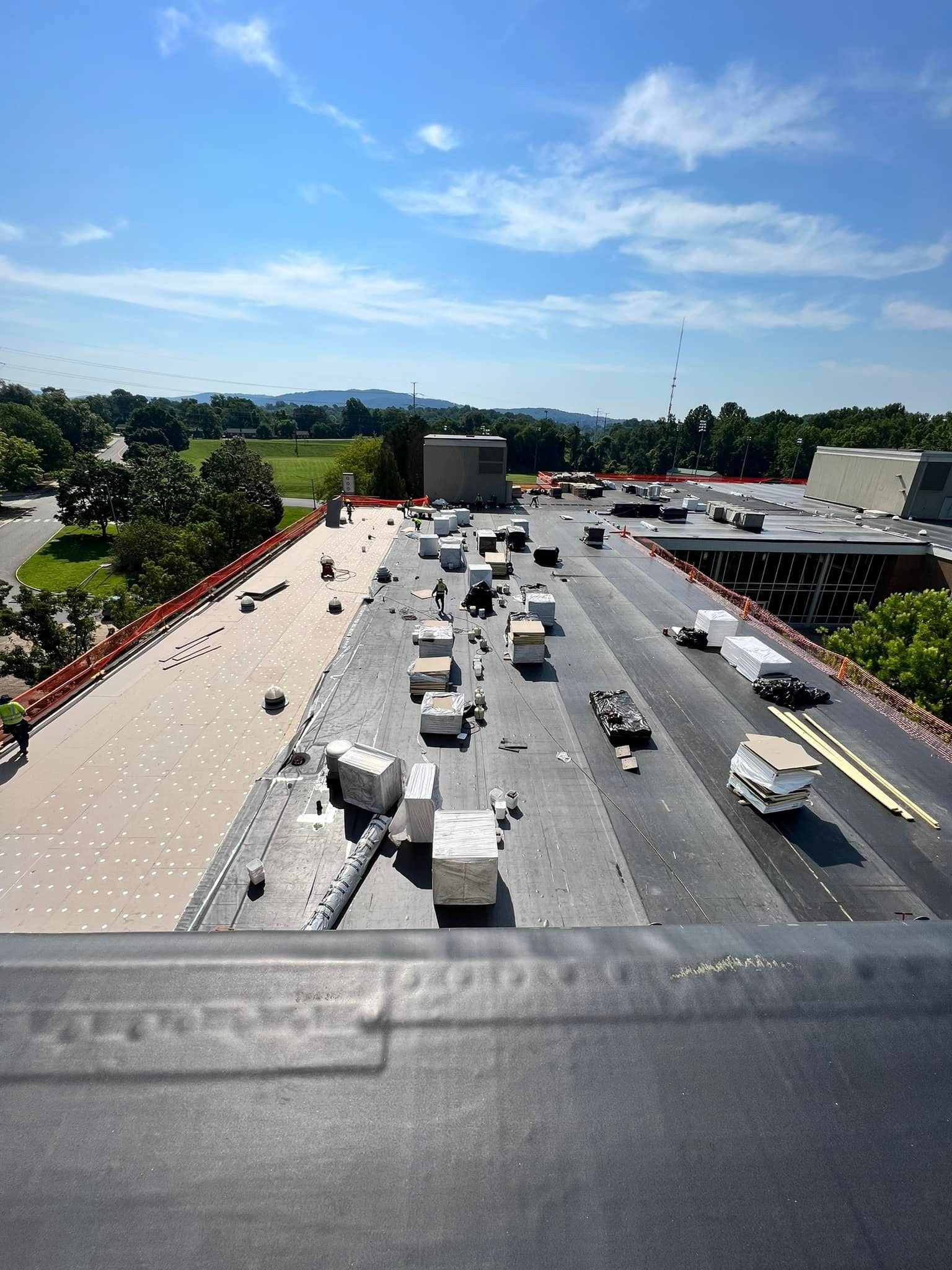
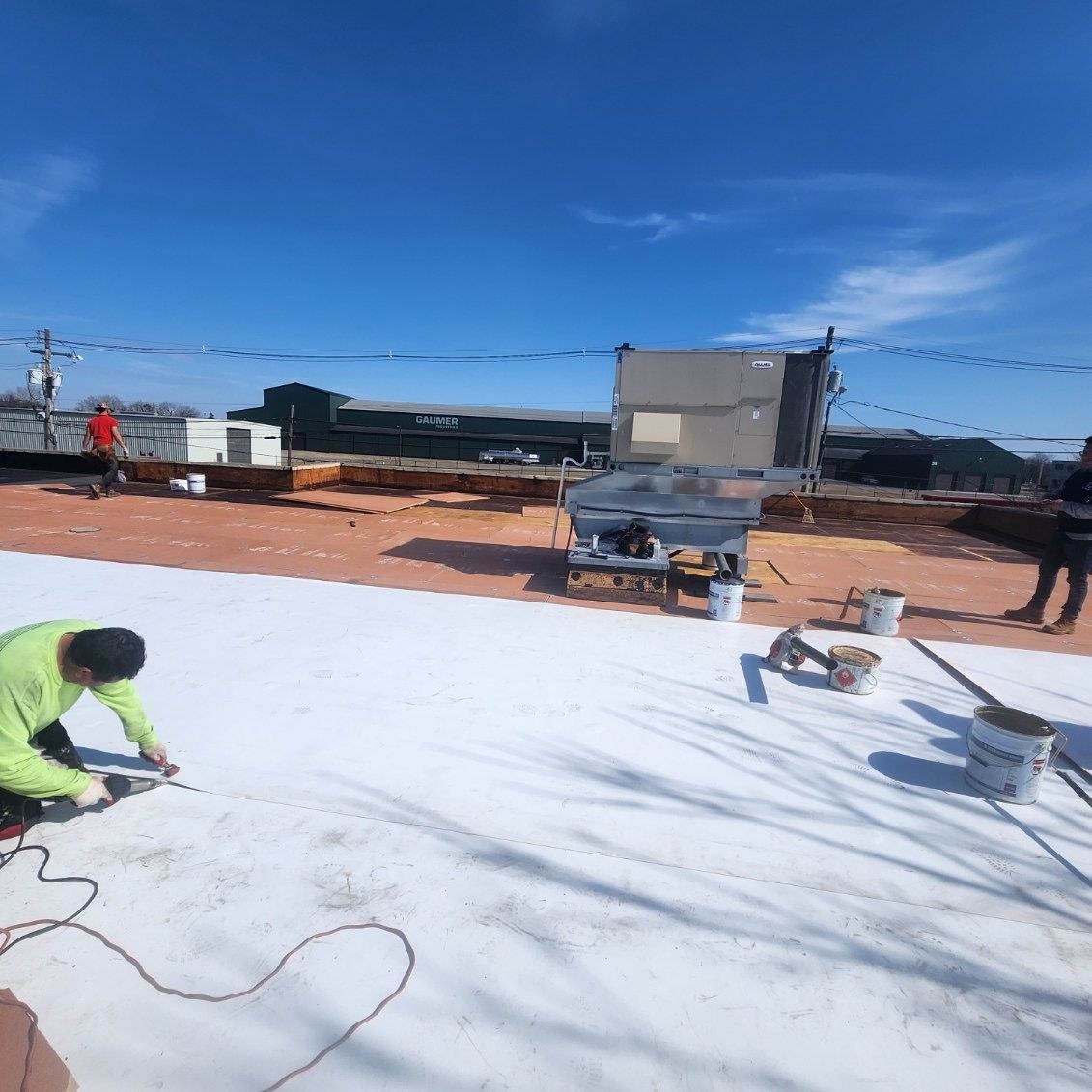
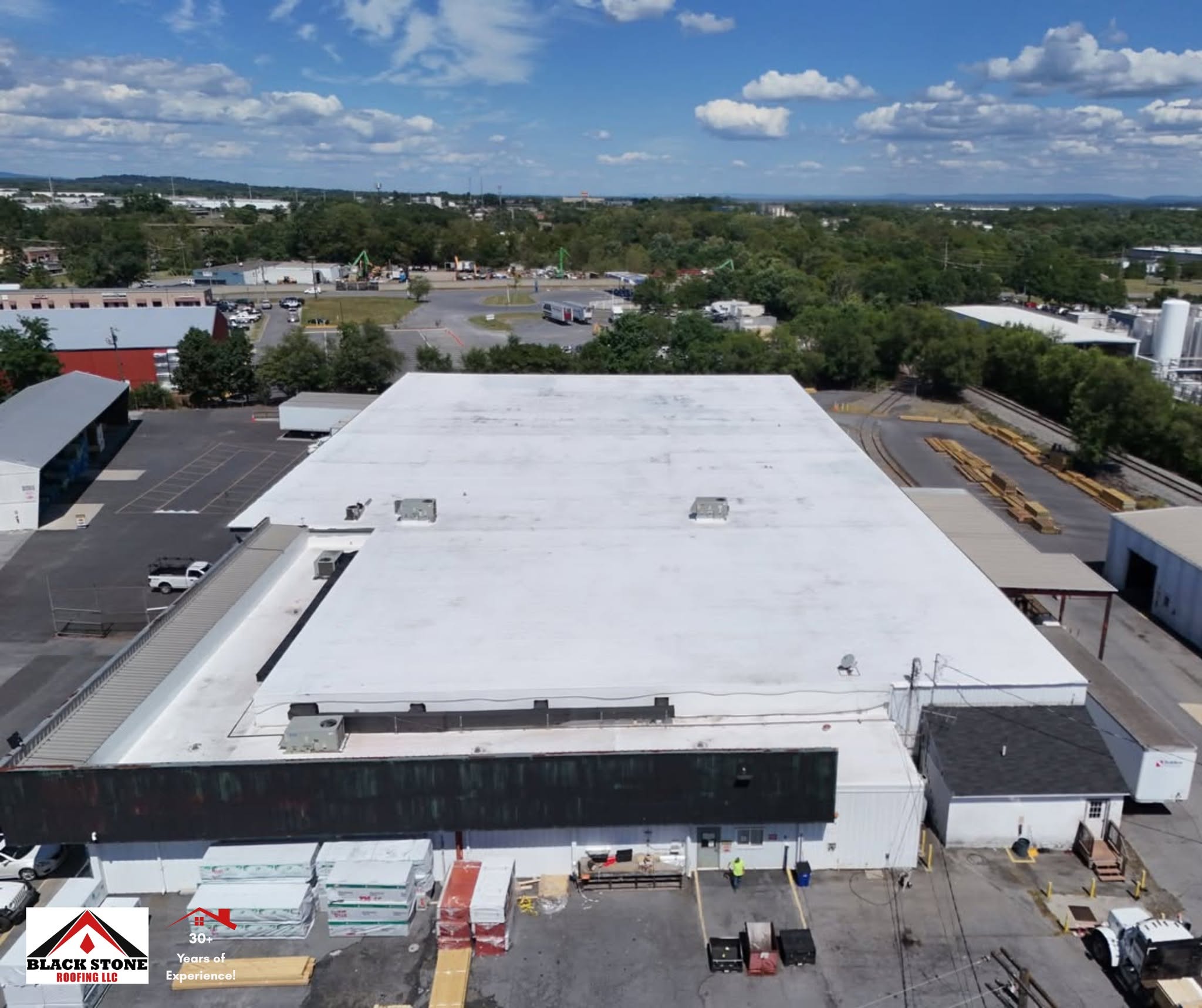
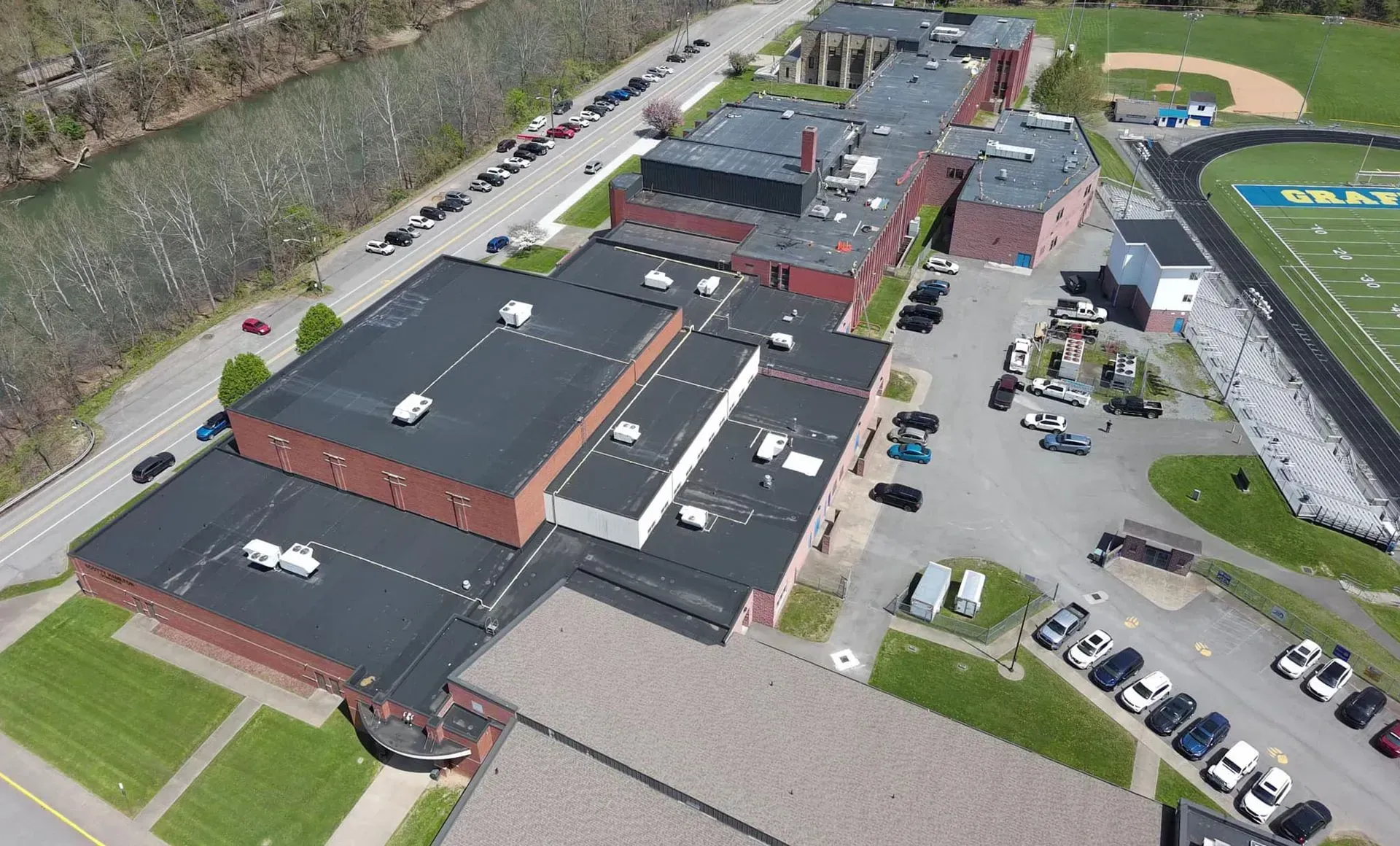
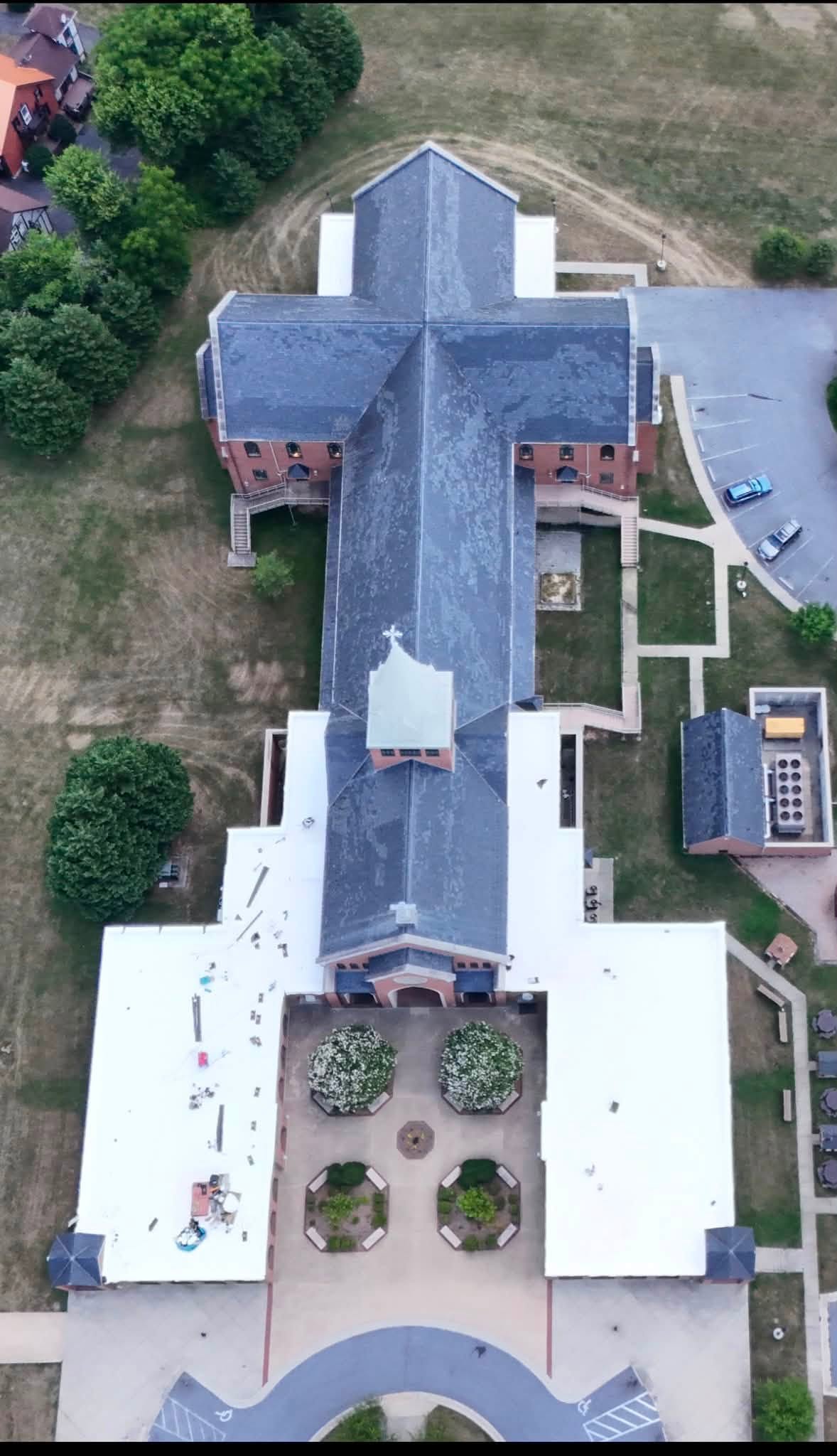
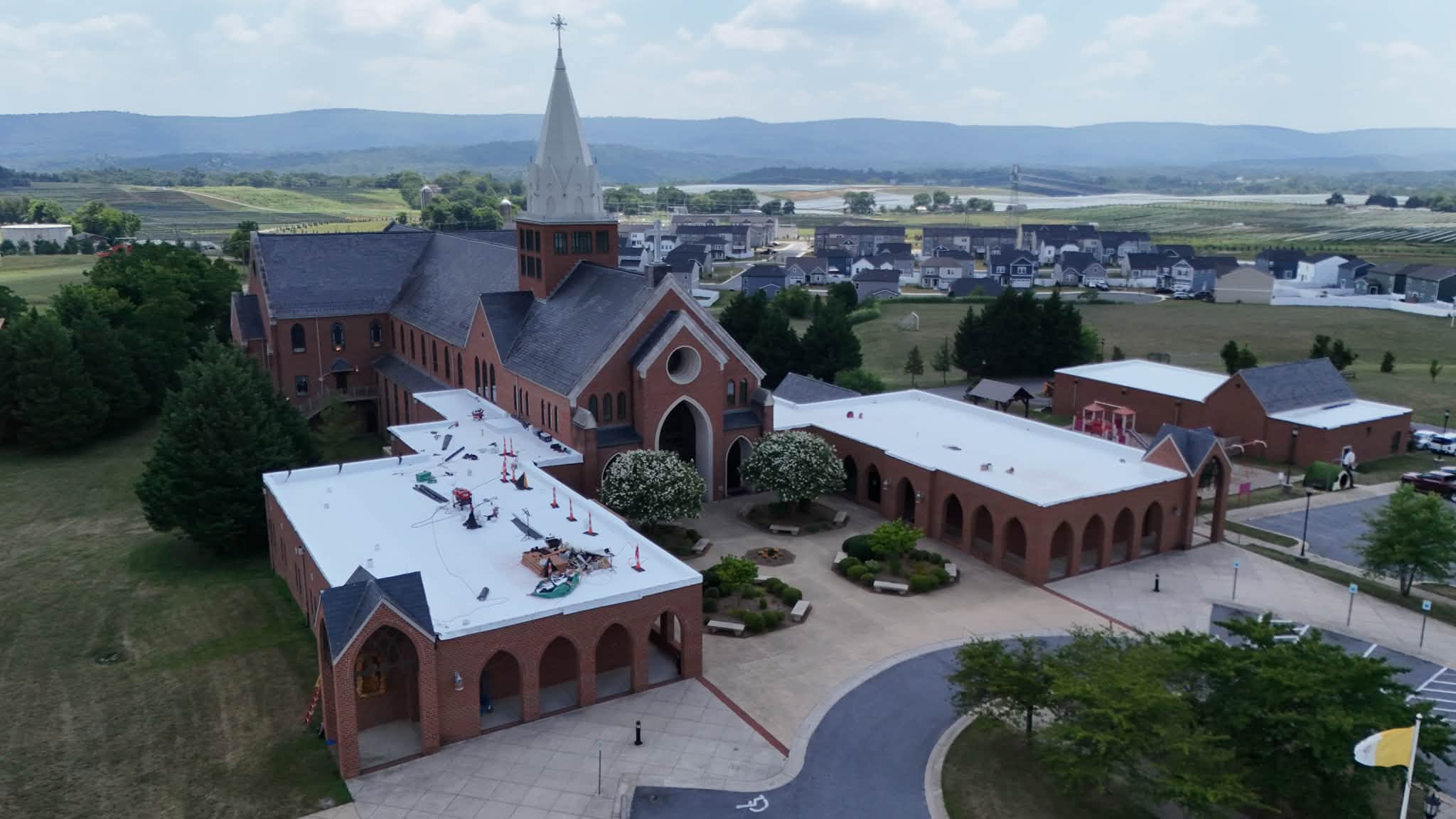
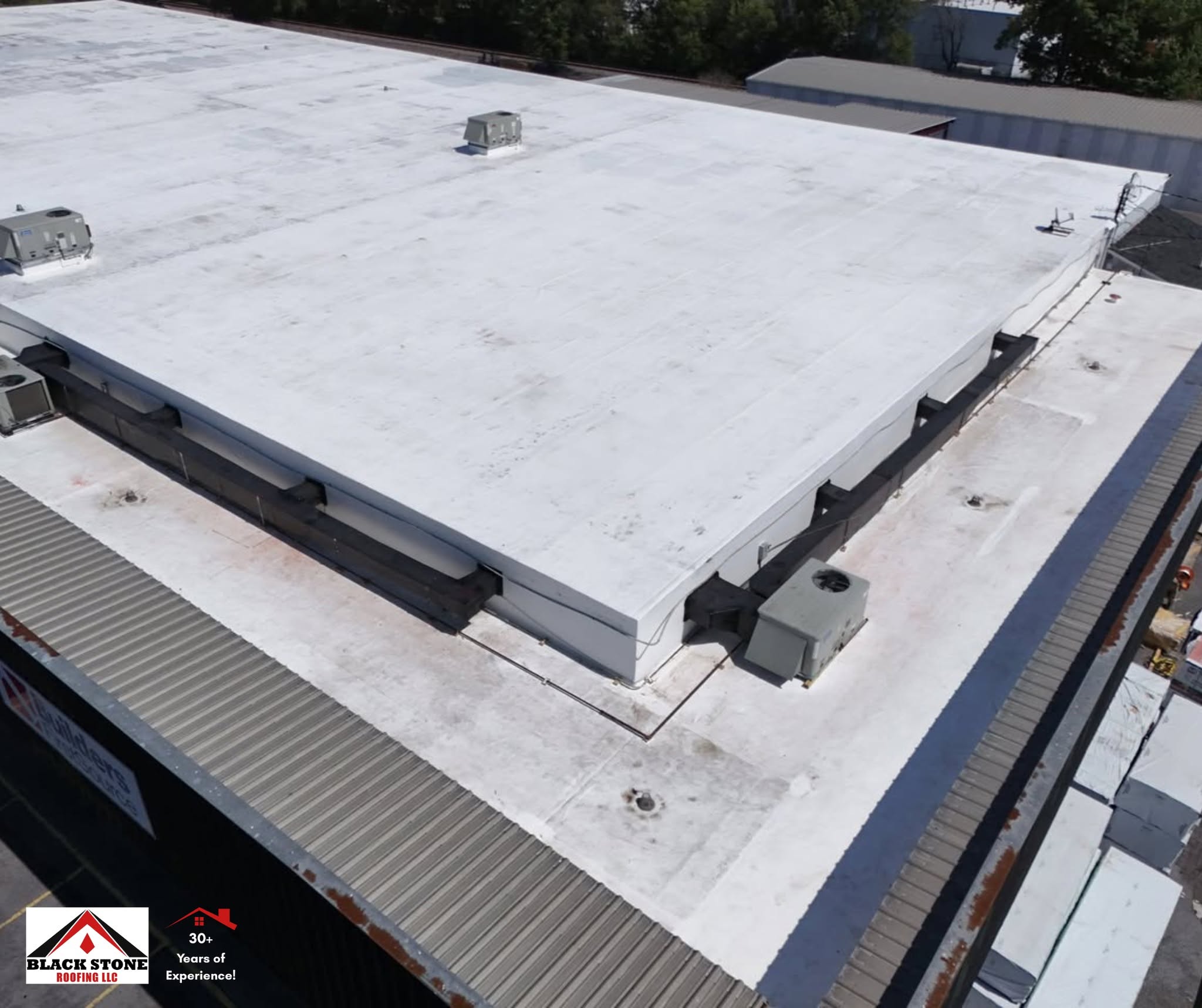
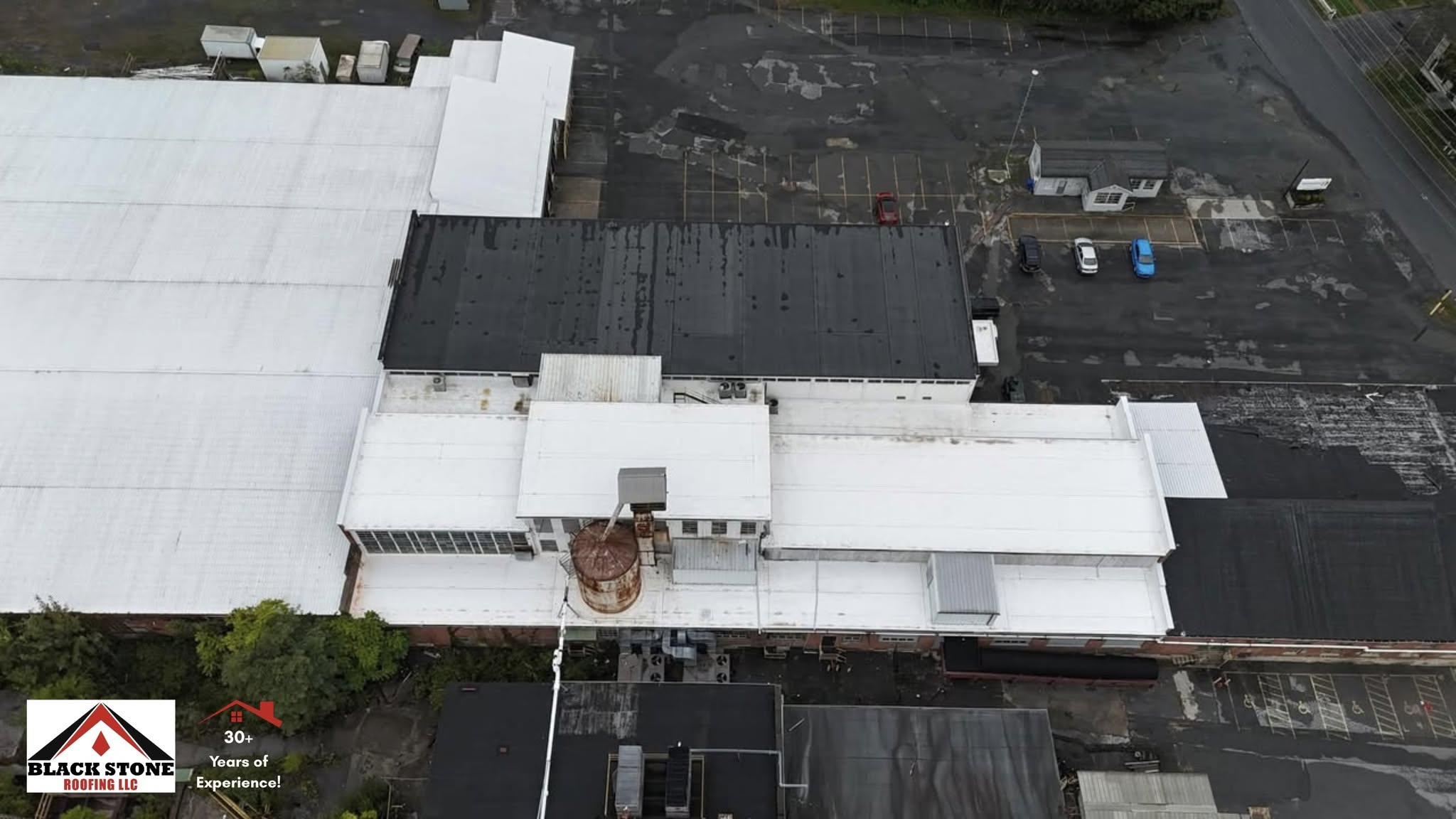
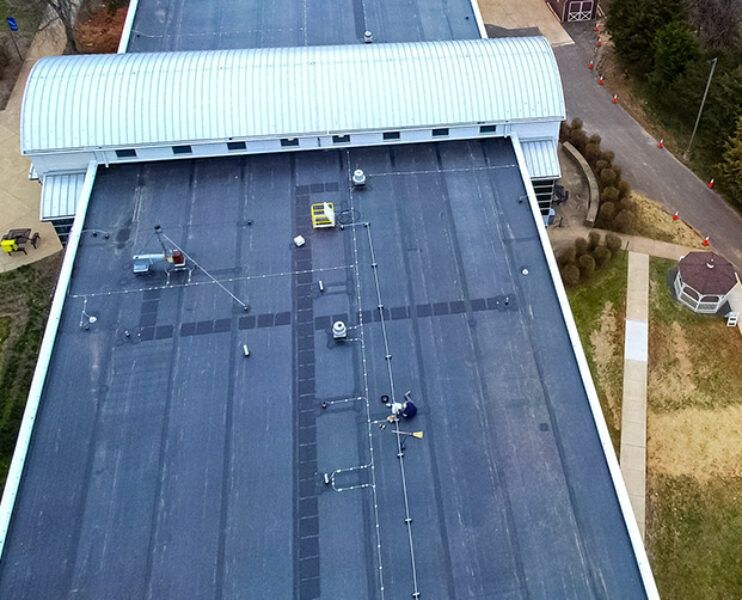
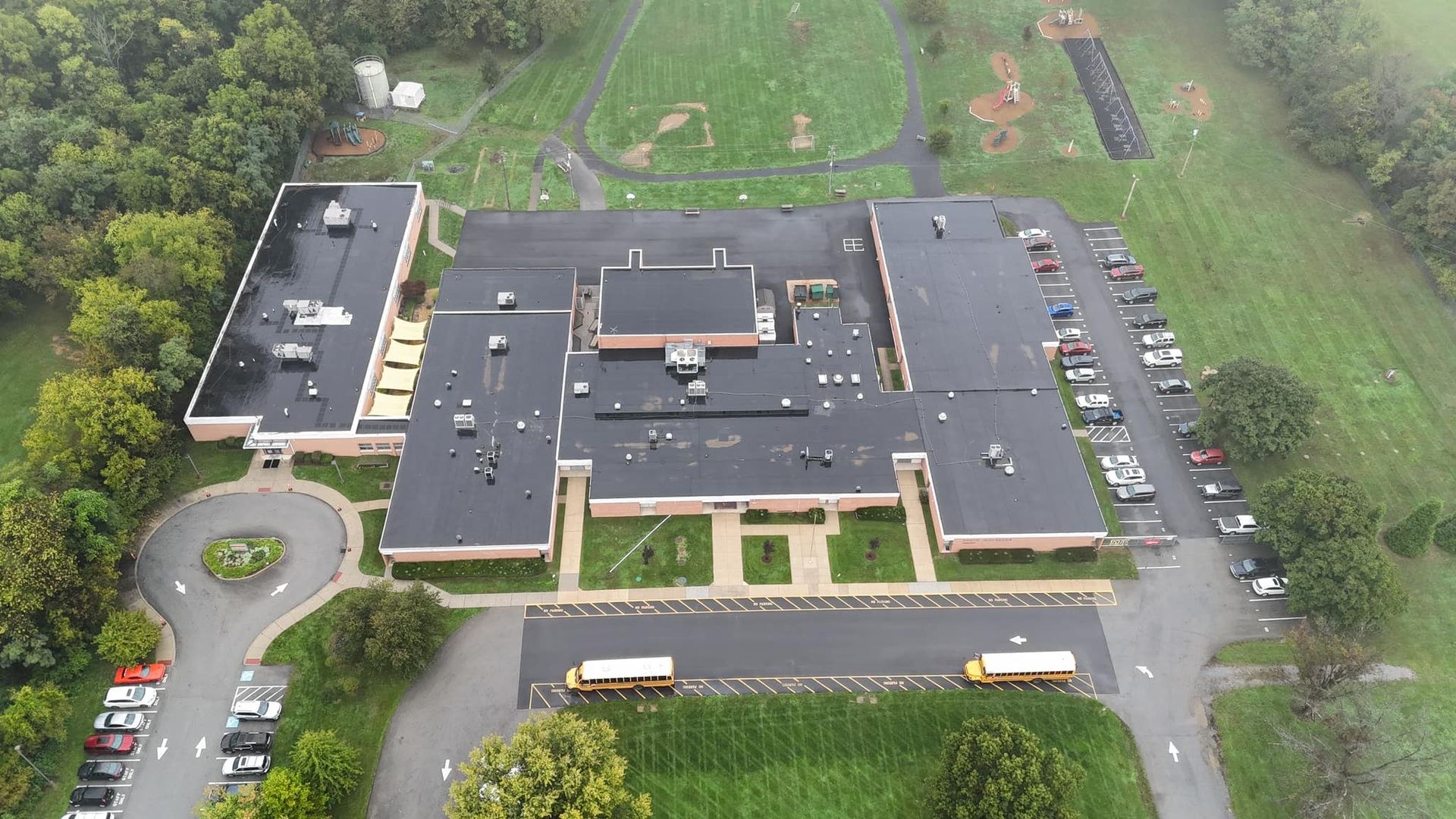
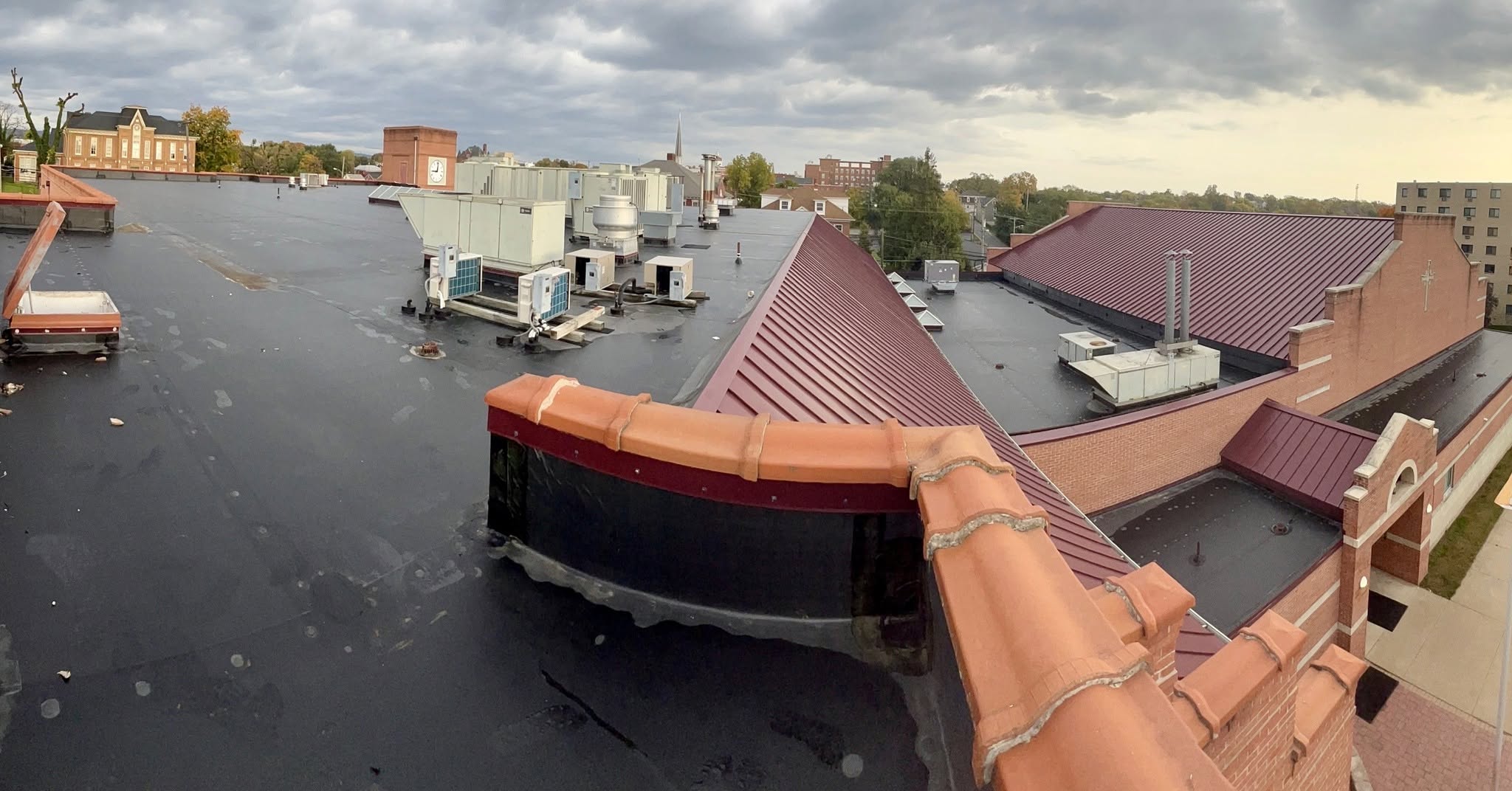
Low slope roofs fail at the perimeter and at the seams
Low slope roofs almost never fail in the middle. They fail at the edge and they fail at the seams, and both of those are workmanship, not product. Here is what those failures look like from the ground and from a walk on the roof.
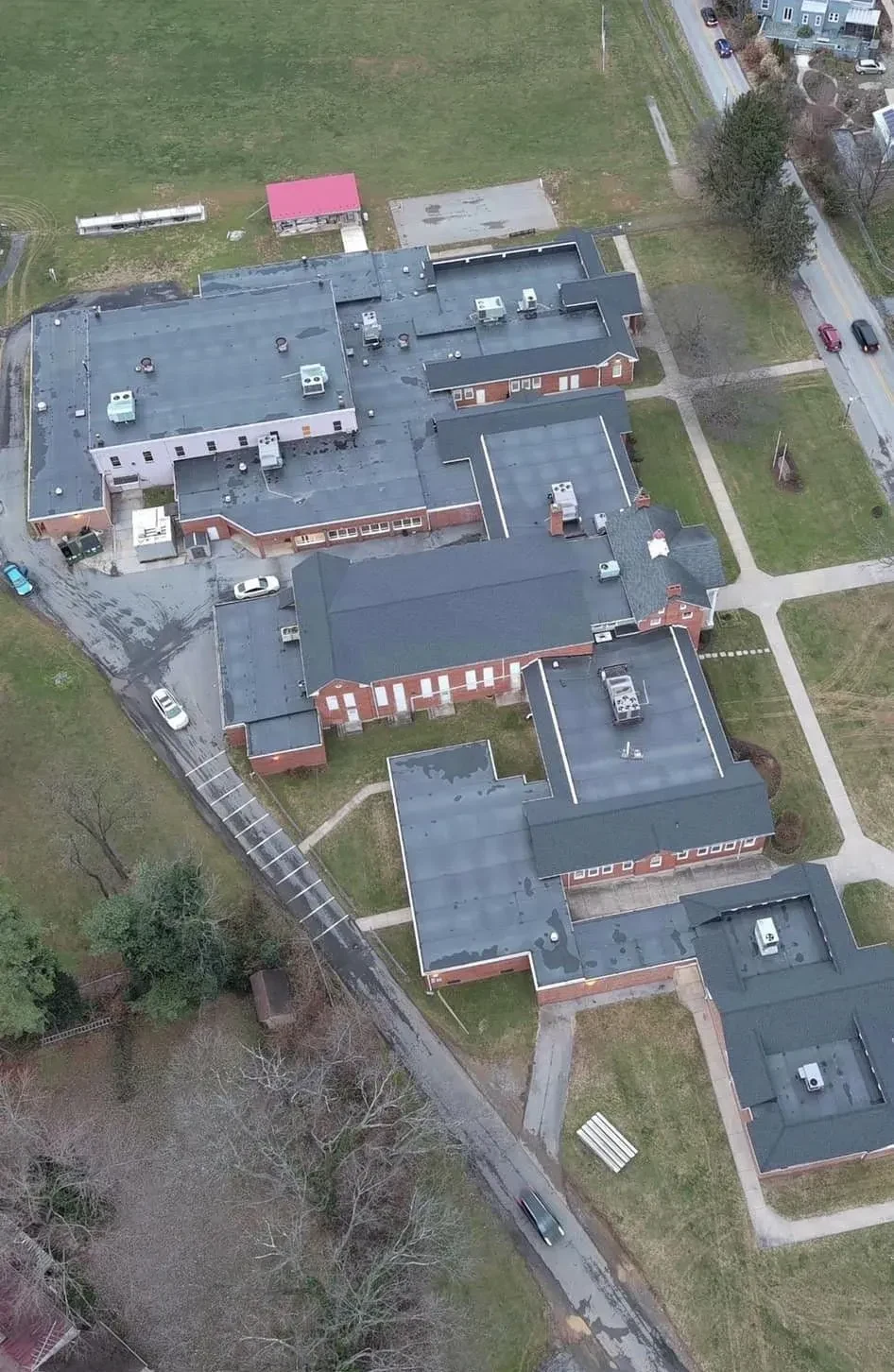
Water still standing 48 hours after the rain
That is the actual definition of ponding, and it is not cosmetic. Ponded water weighs 5.2 pounds per square foot per inch of depth, so a 40 by 40 low spot averaging two inches is carrying more than 16,000 pounds the deck was never designed for. The deck deflects, the pond deepens, and it collects more. Ponding is also excluded from most no dollar limit warranties, so the roof that is under warranty may not be covered where it ponds.
A seam that lifts when you probe it
A hot air weld that looked fine from a walk by and was never probed is a leak with a delay on it. Once a seam starts to open, water travels laterally under the sheet and shows up in the building nowhere near the actual breach. Left alone it wets the insulation, and wet insulation turns a seam repair into a tear off.
Edge metal that rattles or has lifted at a corner
Wind gets under a loose edge metal, peels the termination, and then it has the membrane. That sequence is the most common initiating event in a low slope uplift loss. A rattling fascia on a windy day is the roof telling you the perimeter is no longer holding.
Frost or snowmelt striping the roof in straight lines
Those stripes are fasteners. Every mechanical fastener through the insulation is a thermal bridge, and on a cold morning it prints the fastener pattern on the roof surface. It means the assembly is losing heat in rows and the insulation is not doing what you paid for.
A soft or spongy spot underfoot
That is saturated insulation under the membrane. The moisture never leaves on its own, it spreads through the board joints, and it eats the assembly from underneath while the membrane above it still looks acceptable. This is what a moisture scan and core cuts are for, and it is the single biggest reason a recover gets ruled out.
Sealant piled around a curb or a pitch pocket
Mastic troweled around a rooftop unit curb is somebody buying time, not fixing a detail. Curbs, pitch pockets and drain flashings are where most membrane leaks actually start, and once the pile of sealant is thick enough to see from the ladder, the detail underneath it has already failed.
Condition survey first, price second
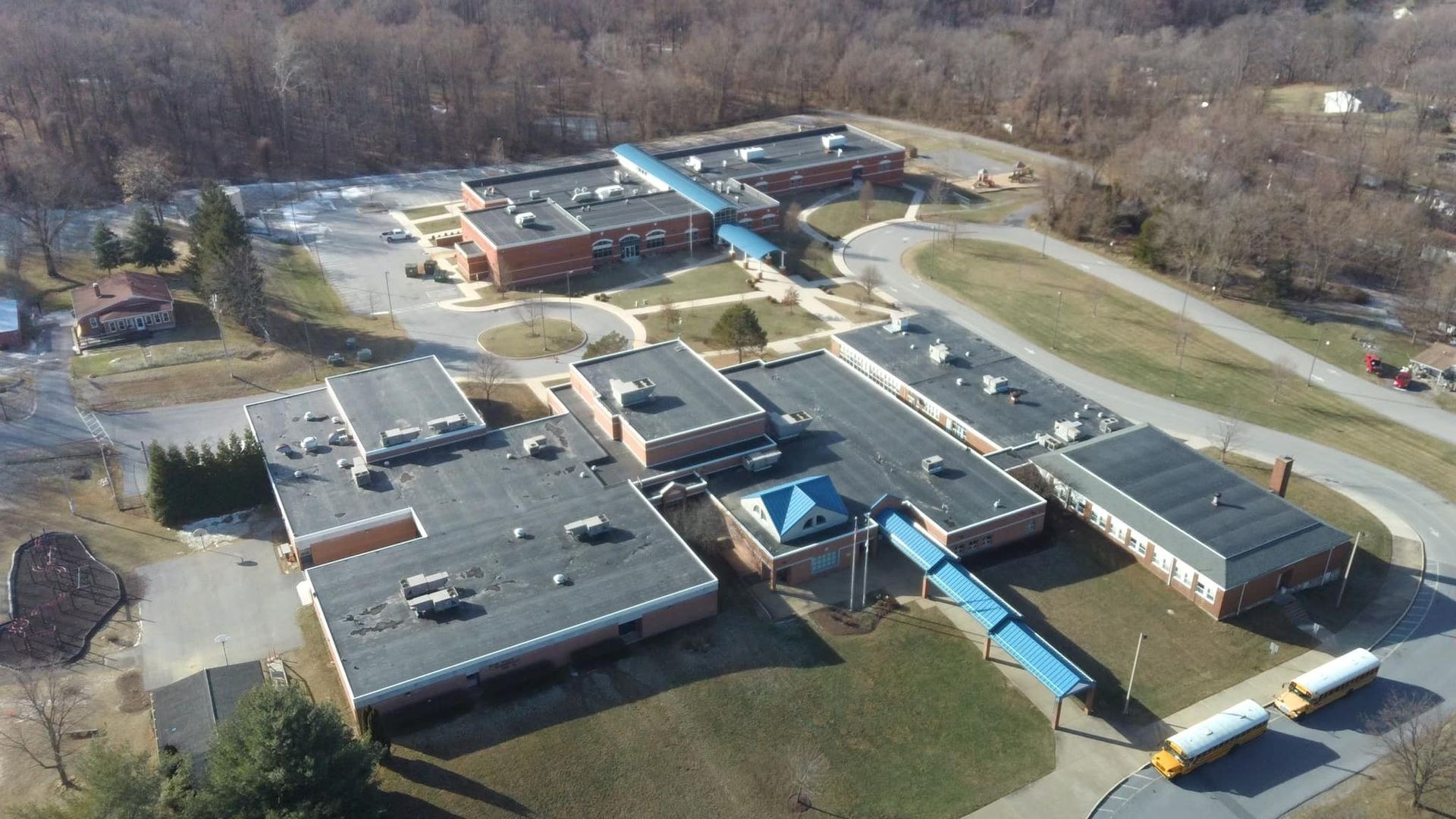
1. We walk the roof before we quote it
A project manager walks the whole field, not a sample of it. Seams, curbs, drains, pitch pockets and the full perimeter get looked at and photographed. You get the photos whether or not you hire us.
2. Core cuts and a moisture scan
We scan for trapped moisture and then core cut where the scan flags it, so we know what is actually stacked on your deck instead of guessing from the outside. The cores get patched the same day. This is the step that decides tear off versus recover versus restore, and it is the step most bidders skip.
3. A written scope that names the assembly
The proposal names the membrane and its thickness over scrim, the insulation type and layer count, the cover board, the attachment method, the tapered layout and the edge metal system. If a number matters to how long the roof lasts, it is on the page. You can hand our scope to another bidder and compare line for line.
4. Install in order, with the building staying dry
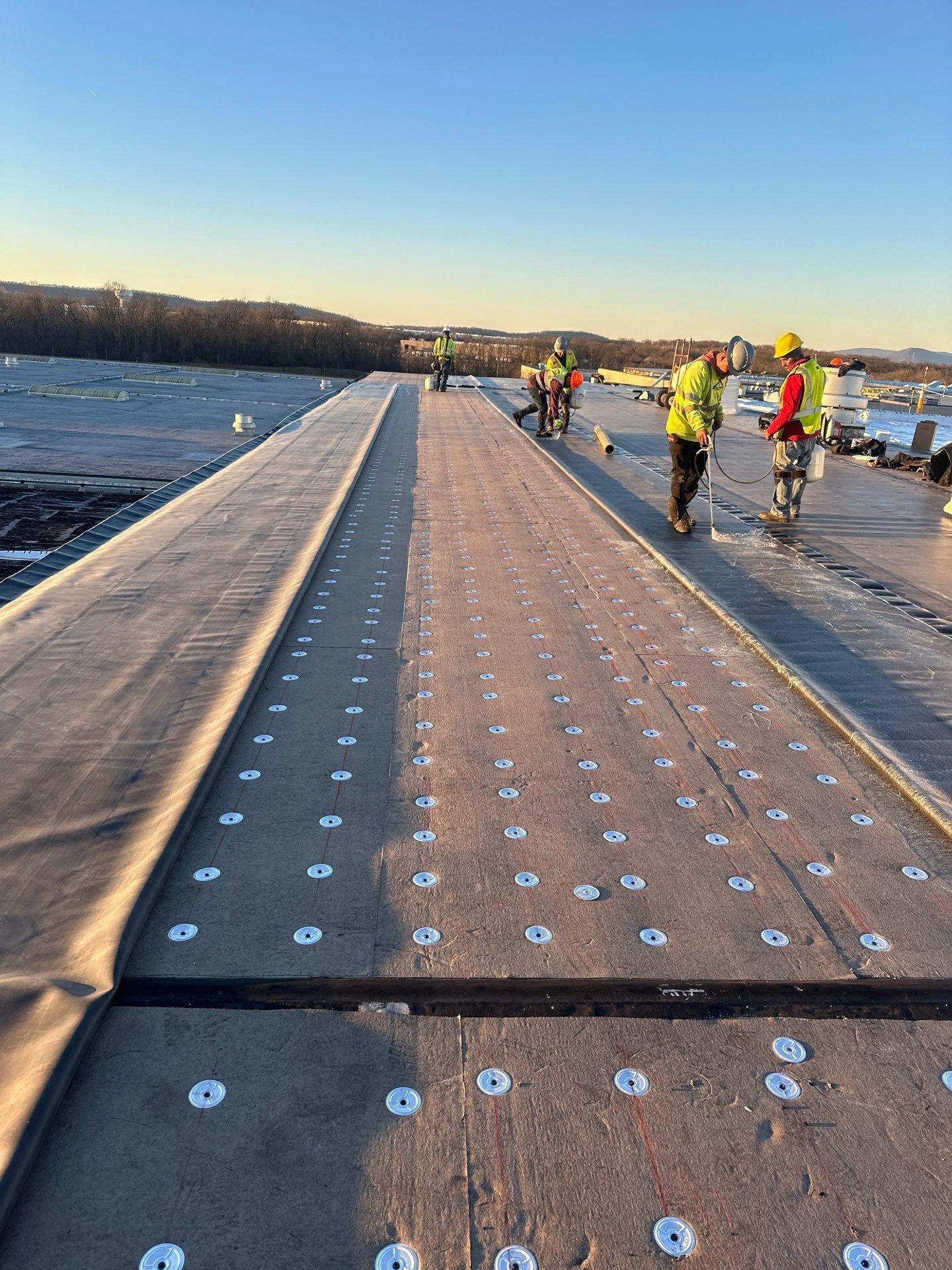
We only open what we can dry in that day. Insulation goes down in staggered layers, the cover board follows, then the membrane, then the perimeter, then the details at every penetration. Nothing gets left open overnight ahead of weather.
5. Test welds, probed seams, documented
The crew runs a test weld at the start of every shift and again any time conditions change, then pulls the coupon by hand. Every linear foot of seam gets probed with a hook before a section is called done.
6. A closeout package you can hand to the next contractor
Daily test weld records, core cut locations and what came out of them, the tapered layout as it was actually built, and photographs of every curb, drain and pitch pocket taken before the membrane covered them. Years from now that package is how somebody finds a leak without cutting your roof open to guess.
What is actually going on your deck, layer by layer
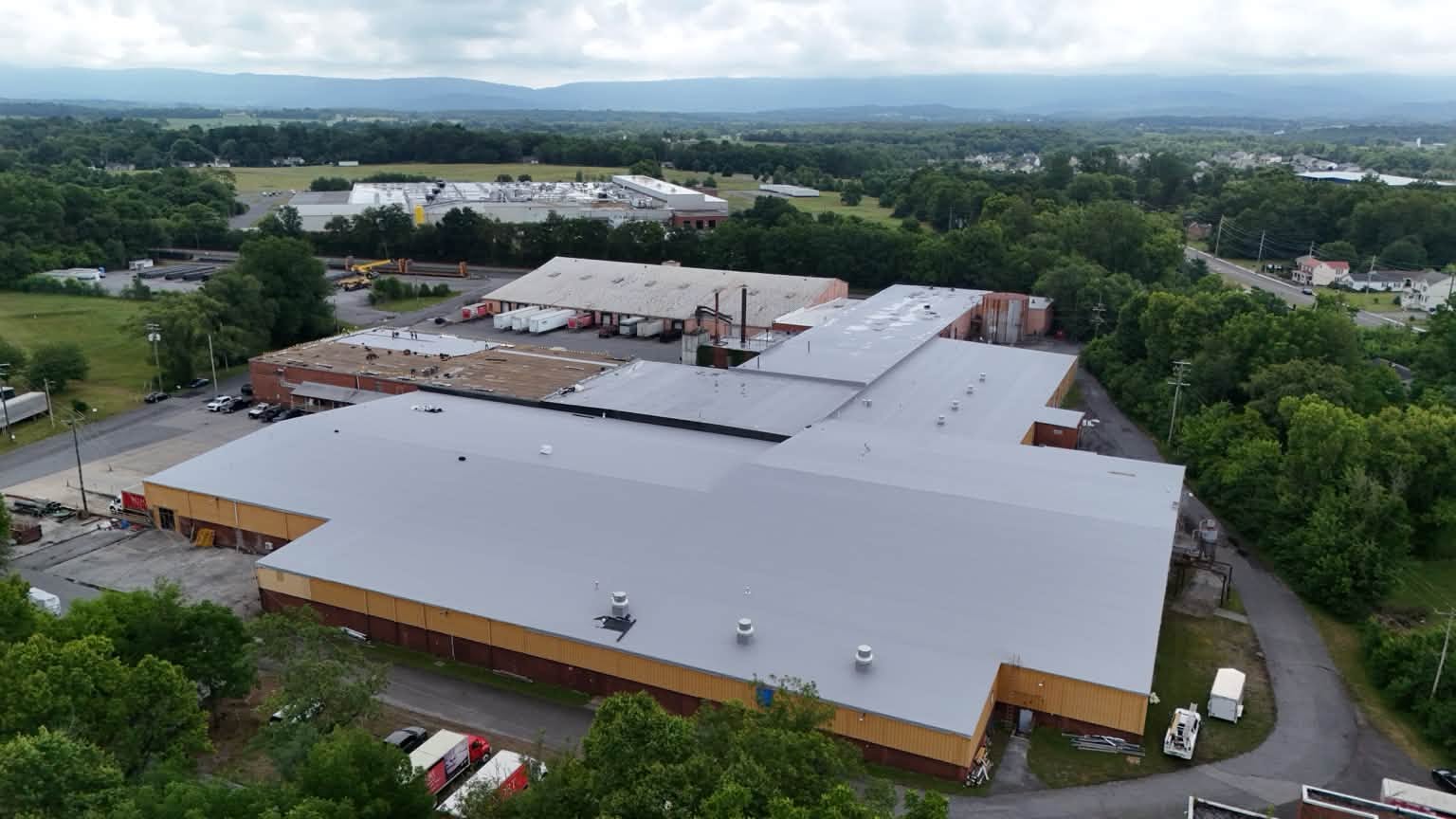
Steel, concrete or wood, and it has to be sound
Everything above it fastens to this. If the flutes are rusted through or the deck is deflected under an old pond, that gets addressed before a single board of insulation goes down. On a Martinsburg building with a 1980s steel deck this is worth checking honestly, because a fastener that will not hold pullout makes the wind rating on paper meaningless.
Polyiso, in two staggered layers
Polyiso runs roughly R-5.7 per inch LTTR and it loses R value as it gets colder, with the derating starting around 50 degrees. Martinsburg’s January mean temperature is 32.4 degrees, so the insulation is at its weakest on the coldest nights of the year. EPS behaves the opposite way and gains in the cold, which is why we sometimes hybrid the two. Whatever the material, two staggered layers beat one thick layer every time, because a single layer turns every board joint into a thermal short and an air path straight to the deck.
The highest return upgrade on the roof
It buys hail resistance, foot traffic durability, a proper adhesion substrate and fire rating in one product. Skipping it to save money on a building that gets serviced monthly is a bad trade, and Berkeley County gets enough hail and enough rooftop unit service calls that we push hard for it.
Mechanically attached, induction welded or fully adhered
Mechanically attached is the cheapest way to hold a membrane down and it comes with two consequences: the sheet flutters in wind, and every fastener is a thermal bridge. Fully adhered gets the best uplift performance. Induction welded plate systems land in between in a useful way, giving adhered level uplift at closer to mechanically attached production speed, with no fasteners running through the seam.
TPO, EPDM, PVC or KEE, with the tradeoffs stated
TPO is hot air welded, so the field becomes effectively one piece of material, and the spec detail most contractors skip is thickness over scrim, because the polymer above the reinforcement is the actual wear layer. EPDM is a thermoset, so every seam is glued or taped, and it has no defense against grease or petroleum. PVC and KEE have the best grease and chemical resistance in the category, which makes them the restaurant and food processing answer, with plasticizer migration as the honest long term downside on PVC that KEE chemistry solves at a cost.
Tapered design, crickets and sumped drains
Code minimum slope on a new low slope roof is 1/4 inch per foot. Getting there on an existing dead flat deck means a tapered insulation design: crickets behind every rooftop unit curb so water is not trapped upslope of the equipment, crickets between drains, sumps at the drains themselves so the last half inch actually leaves, and tapered edge strips at the perimeter. Martinsburg gets roughly 41 inches of precipitation a year on top of a winter that crosses the freezing line most days, and freeze thaw inside a pond is how a small seam defect becomes an open one.
ANSI/SPRI ES-1 edge metal and coping
Edge metal is engineered, tested and code required under ANSI/SPRI ES-1. The fascia and coping we install has a tested design pressure, not just a hem and a screw pattern somebody liked. Berkeley County has been under the 2018 IBC since August 1, 2022, and the edge is where an inspector should be looking. If a bid does not name the edge system, that bid is short a number that matters more than the membrane thickness.
What you are actually hiring
Licensed in five states
VA, WV, MD, PA and FL. Licensed, bonded and insured. West Virginia requires the license number in advertising and posted at the job site. Ask every other bidder for theirs.
A Martinsburg business
1886 Winchester Ave, Martinsburg, WV 25405. Berkeley County is where we are, not where we drive in to from another state.
Family owned since 2016
Same family, same name on the truck, and one contractor for the whole envelope so there are no transitions between trades for a leak to hide in.
4.9 stars from 50 Google reviews
Open 24 hours a day, seven days a week, and somebody actually answers. On an occupied building a membrane breach is a tenant problem before it is a roof problem.
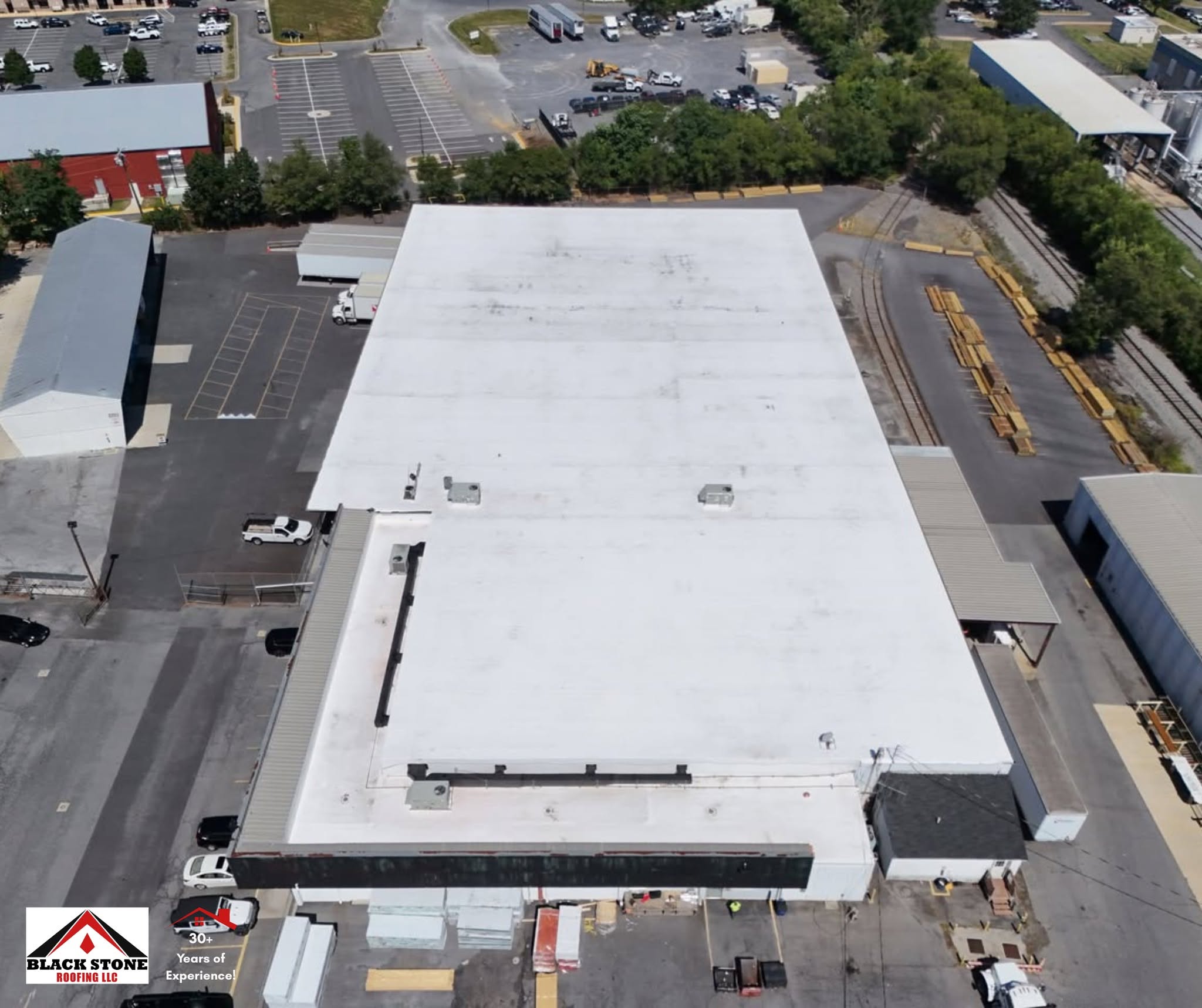
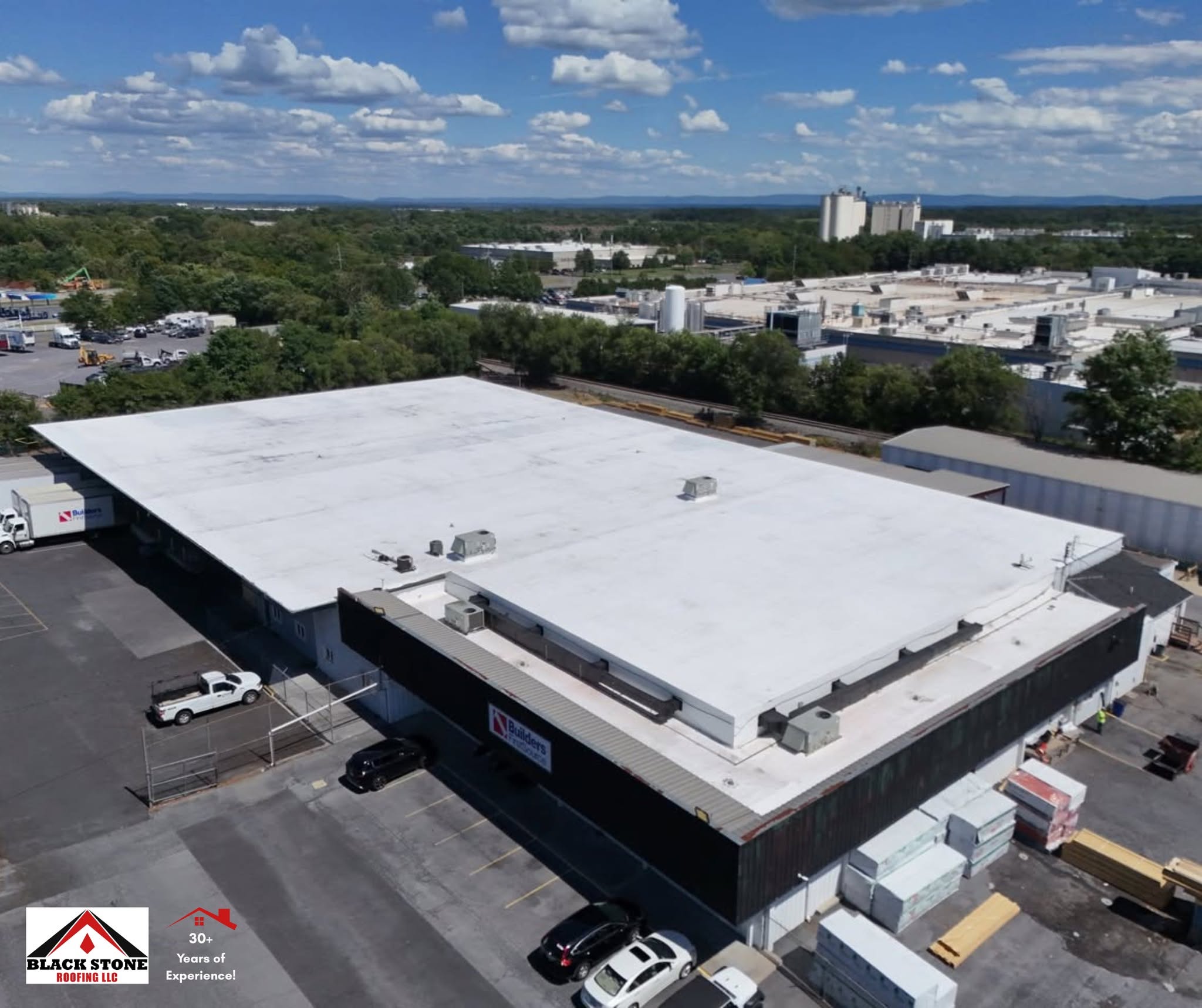
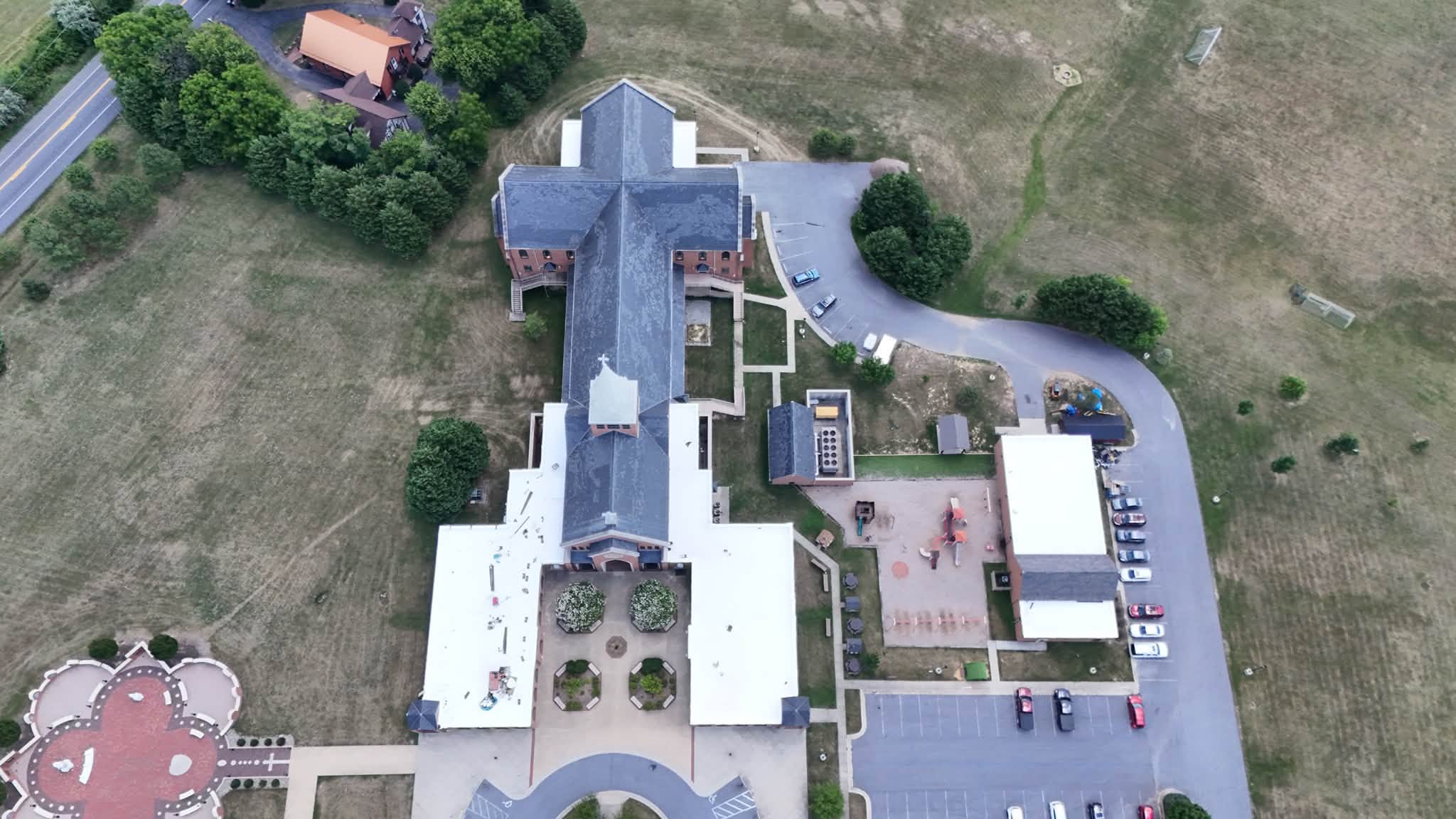
Related commercial roofing services
Commercial Roofing
Condition surveys and capital planning across a portfolio, plus the tear off versus recover versus restore decision.
Roof Coatings and Restoration
When the membrane still has life left, a coating restoration avoids the tear off entirely. It is also the wrong answer more often than it gets sold that way.
Commercial Metal Roofing
Structural standing seam, exposed fastener panel maintenance, and retrofit framing over a failing metal roof.
Commercial Roof Repair
Leak isolation on a large roof, seam repairs on aged TPO, curb and pitch pocket failures, and after hours work for occupied buildings.
Preventative Roof Maintenance
Keeping the drains clear and the pitch pockets sealed is what protects the warranty on a membrane roof.
Roof Condition Survey
We walk the roof, core cut where the scan flags moisture, photograph the seams and the perimeter, and hand you a written condition report.
Storm Damage Roof Repair
Wind lifted edge metal, punctured membrane and hail bruising after a Berkeley County storm, documented for the claim.
Emergency Roof Repair
Water stopped and contained first. The proposal comes after the building is dry.
Where we install single ply membrane roofs
Do not see your town? We work the whole corridor, so ask or call (540) 550-9703.
Single ply membrane FAQ
-
Is TPO or EPDM better for my building?
It depends on what is on your roof and what comes out of it. TPO seams are hot air welded, so the field behaves like one piece of material, and that is the reason it has taken most of the market. EPDM seams are glued or taped because a thermoset cannot be reflowed, and seams are its historical weak point. But EPDM is more forgiving of foot traffic and cold weather installation. The real disqualifier is grease. If you have kitchen exhaust or oil bearing discharge on the roof, EPDM is off the table and you are looking at PVC or KEE.
-
The bid says 60 mil. Is that the number that matters?
No. The number that matters is thickness over scrim. A reinforced membrane has a fabric layer in the middle, and only the polymer above that fabric is the wear layer that weathering and foot traffic eat into. Two sheets both labeled 60 mil can have meaningfully different over scrim thickness. Ask every bidder to put the over scrim number on the proposal. The ones who cannot answer it are quoting a price, not a roof.
-
Can you install a new membrane over the existing roof?
Sometimes. A recover avoids tear off cost and keeps the building dry through the job, but it only works if the existing system is dry and structurally sound and you are not already at the code limit for roof layers. Wet insulation under a new membrane is money set on fire, because the moisture never leaves and it destroys the new assembly from underneath. We core cut and scan before we recommend a recover, and if the field is significantly wet we will tell you it is a tear off.
-
There is still water on the roof two days after it rained. Is that a problem?
Yes, and that 48 hour mark is the actual definition of ponding. Water weighs 5.2 pounds per square foot per inch of depth, so a 40 by 40 low spot holding an average of two inches is more than 16,000 pounds of load the deck was not designed for. It deflects, the low spot gets deeper, and it collects more. Ponding is also excluded from most no dollar limit warranties, so a roof that ponds is effectively uncovered where it matters most. The fix is tapered insulation, crickets, and sumped drains, not more sealant.
-
How do I know the seams were welded correctly after your crew leaves?
Because we test them while we are there and we document it. The crew runs a test weld at the start of every shift and any time conditions change, then pulls the coupon by hand. A correct weld tears the membrane itself instead of separating at the seam. Every seam then gets probed with a hook before that section is called complete. Ask for the daily test weld records at closeout. Any contractor doing this properly already has them.
-
Should I just coat the roof instead of replacing the membrane?
Possibly, and we would rather raise that ourselves than sell you a tear off you did not need. Coating is a legitimate path when the membrane is intact and the insulation under it is dry, and it is the wrong answer often enough that we settle the question with an infrared scan and physical core cuts instead of a guess. Every condition that rules coating out is laid out on our roof coatings and restoration page.
-
Are you actually based in Martinsburg?
Yes. Our office is 1886 Winchester Ave, Martinsburg, WV 25405, in Berkeley County. That matters on a low slope roof more than it does on a house, because membrane work needs someone who can be back on the roof the same week for a warranty item or a storm, not a company routing a crew down from Pennsylvania when it fits their schedule. It also means we know the local code environment, including the 2018 IBC that Berkeley County adopted on August 1, 2022, and the edge metal requirements an inspector here is going to look for.
-
Do you hold a West Virginia contractor license?
We do. West Virginia requires a state contractor license, requires the number to appear in advertising, and requires it posted at the job site. Ours is in our footer. We are also licensed in Virginia, Maryland, Pennsylvania and Florida, and we carry bonding and insurance. Check all of that against anyone else you are considering, because on a commercial roof the cheapest bid is very often the one that cannot produce a license number.
Get a roof condition survey before you get a price
We walk the roof, core cut where the scan flags moisture, photograph the seams and the perimeter, and hand you a written condition report. Then you know whether you are buying a membrane, a restoration, or a repair. Call (540) 550-9703 or email Info@BlackStoneRoofing.org. Open 24 hours, seven days a week. Black Stone Roofing, LLC, 1886 Winchester Ave, Martinsburg, WV 25405.