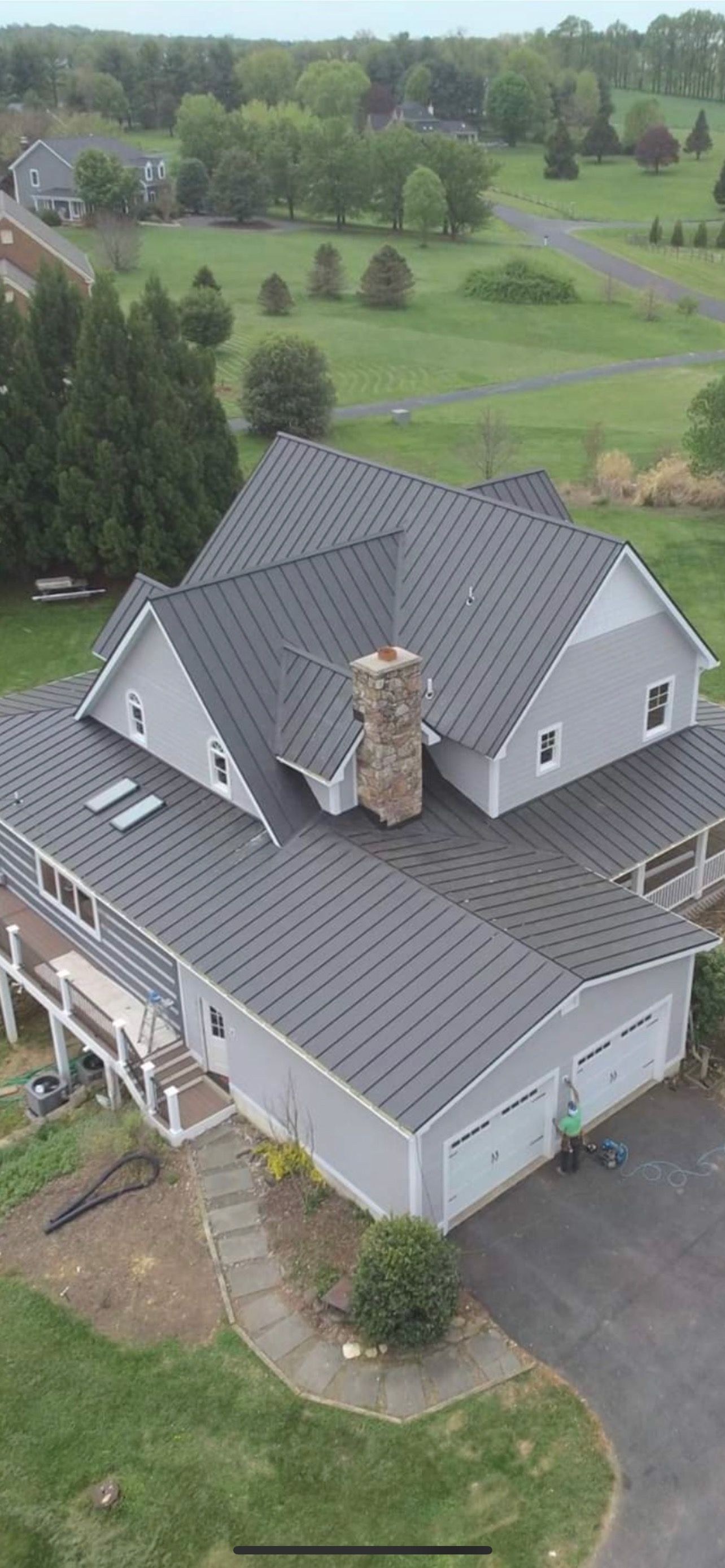
Serving Martinsburg, WV & the Eastern Panhandle Open 24/7 for Emergency Roof Repair
Licensed in WV, VA, MD, PA & FL (540) 550-9703 Free Estimate
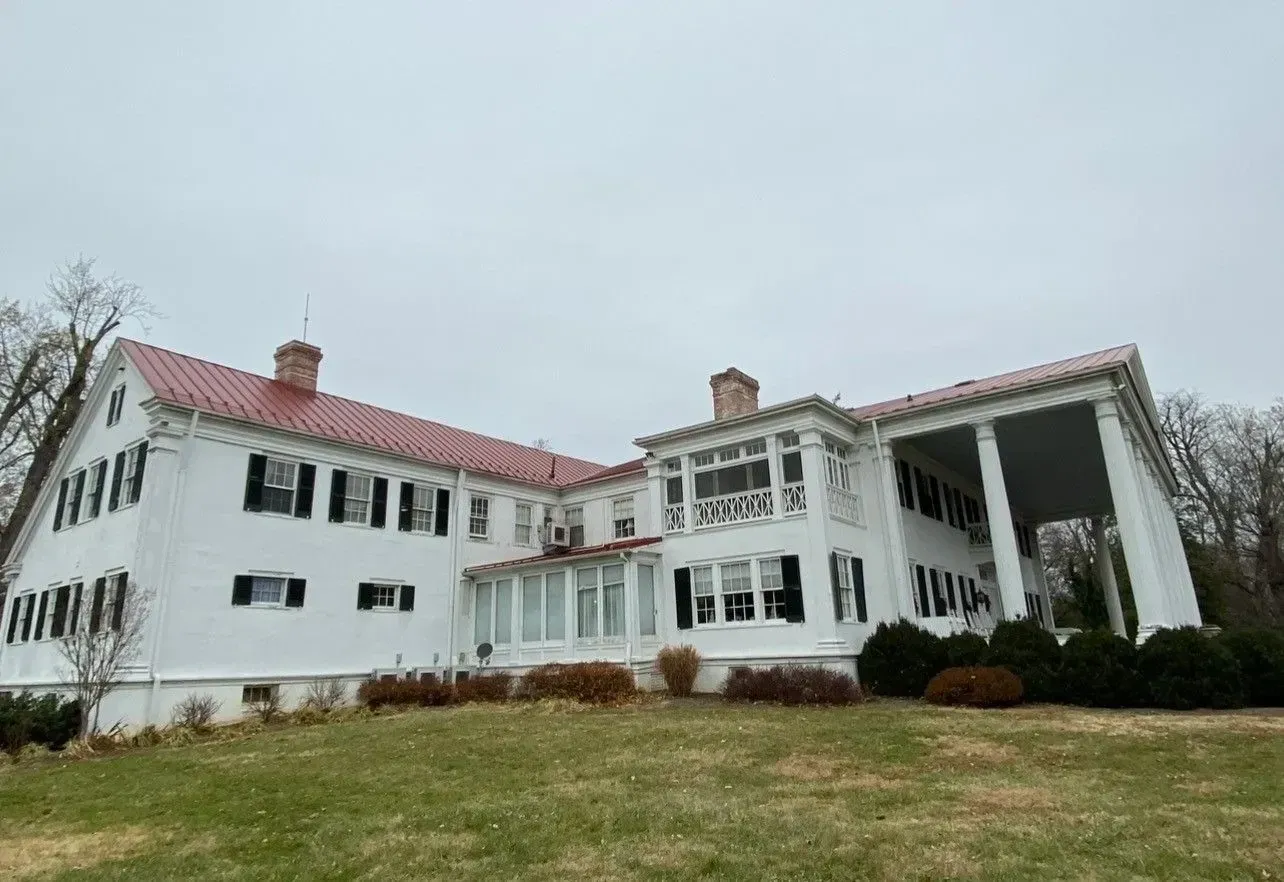
Red standing seam metal roof on a large white two story historic home with brick chimneys and a columned portico near Martinsburg WV

Standing Seam Metal vs Asphalt Shingle in the Eastern Panhandle

We install both. That is worth saying up front, because most of the metal versus shingle articles you will find were written by a company that only sells one of them.

Here is the honest comparison for a house in Martinsburg, Hedgesville, Inwood, or anywhere else in the Eastern Panhandle, based on roofs we have actually put on and then gone back to look at years later.

Lifespan is the real difference

An architectural asphalt shingle roof in our climate gives you roughly twenty to twenty five years of honest service. Standing seam metal, installed with the right fastener and clip system, runs forty to fifty and frequently longer.

That is the whole argument in one line. If you buy shingles at forty five years old, you will very likely buy another roof. If you buy standing seam metal at forty five, you almost certainly will not.

Cost, without the vague answers

Metal runs meaningfully more than asphalt on the same house. The gap comes from material cost, the labor to form and fit panels, and the flashing detail work around chimneys, valleys, and dormers, which is where metal roofs are actually won or lost.

The way to look at it is cost per year of service rather than cost today. Metal usually wins that calculation. What it does not do is help you if you need a roof this month and the higher number is not available to you. A properly installed shingle roof is not a compromise or a consolation prize. It is a good roof.
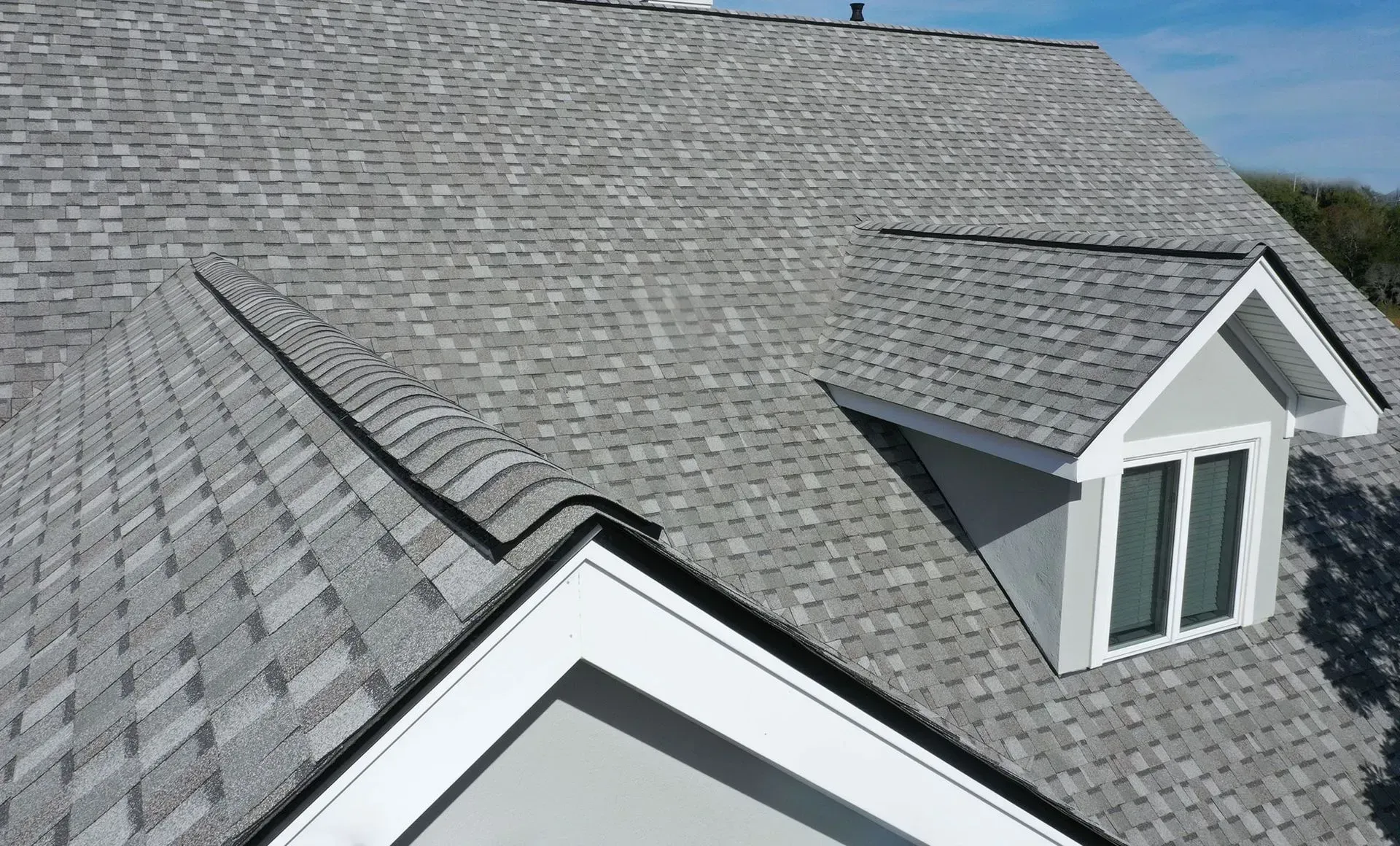
New architectural asphalt shingle roof on a residential home in Martinsburg WV
A correctly installed architectural shingle roof is a genuinely good roof, not a fallback.

Weather performance in this specific area

We get four real seasons, freeze and thaw cycling all winter, summer heat, and periodic wind and hail events coming across the ridge.

Snow and ice. Metal sheds snow instead of holding it. That reduces load and reduces ice damming at the eaves, which is a recurring problem on shingle roofs with marginal attic ventilation. If your house has a history of ice dams, metal changes the conversation.

Hail. Metal will dent in a significant hail event, and the panel keeps performing. Asphalt bruises, loses granules, and starts an accelerated failure clock. Neither one is immune, they just fail differently. Dents are cosmetic. Bruises are structural.

Wind. Standing seam has no exposed fasteners and a continuous mechanical seam, so there is far less for wind to get under. Shingles rely on the sealant strip, and once wind breaks that seal the shingle is compromised even if it is still lying flat.

The noise question

Everyone asks this one, and the answer is that it is largely a myth carried over from uninsulated barns and pole buildings.

A residential standing seam roof goes over solid decking, underlayment, and an insulated attic. In a finished house you will hear rain, but not dramatically more than you already do. The loud metal roof people remember is a corrugated panel screwed to open purlins with nothing underneath it. That is a different assembly entirely.
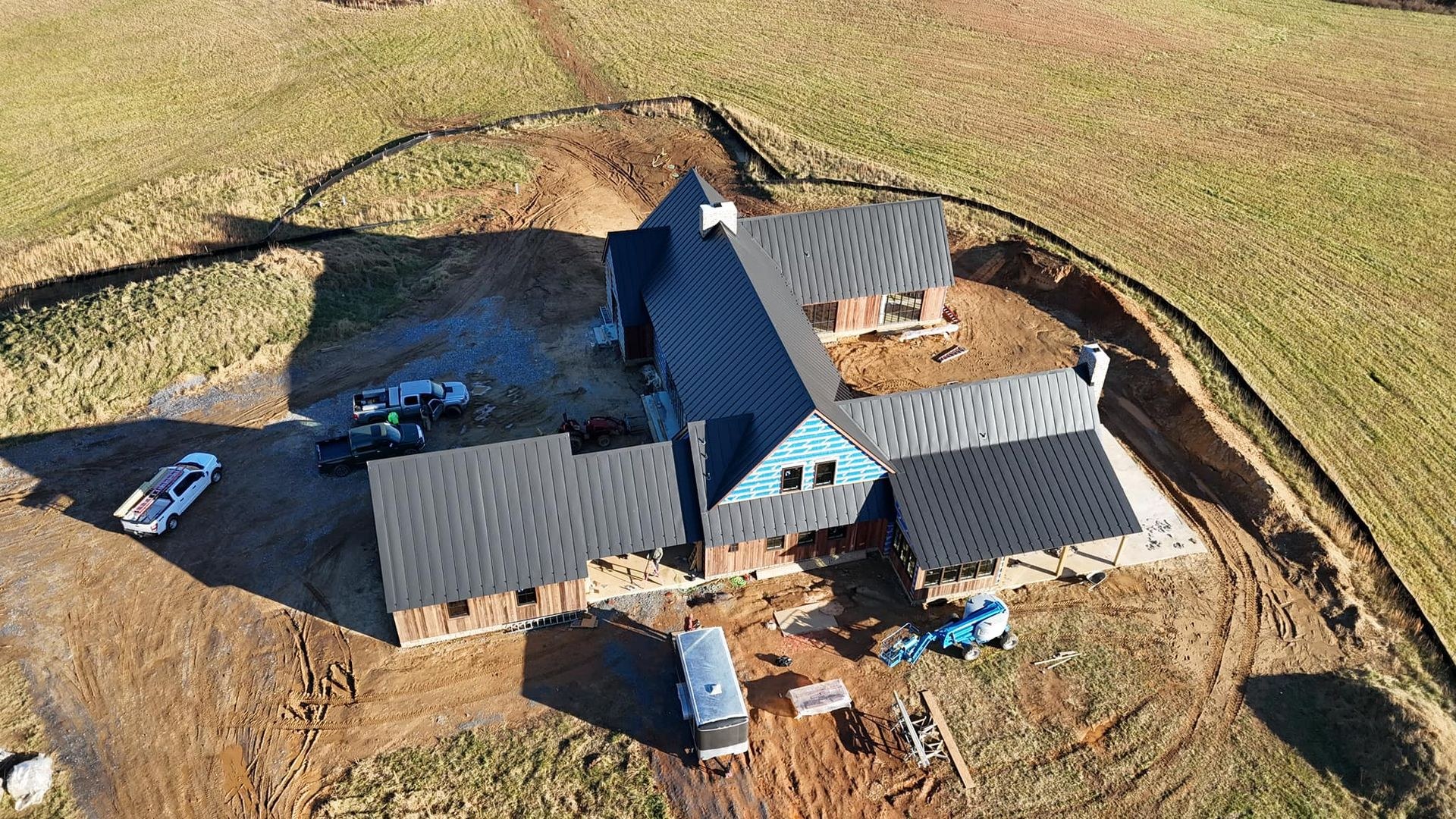
Charcoal standing seam metal roof on a newly built home in Martinsburg WV
Charcoal and dark bronze standing seam has become the default on new construction here.

Appearance and resale

Standing seam has moved from an agricultural look to the default on new construction across a lot of this area, particularly in charcoal, dark bronze, and matte black. On a historic home in town it can be exactly correct, since metal was the original roofing material on many of them.

On resale, a metal roof with thirty five years left on it is a line item a buyer notices, especially when the comparable house down the street has a shingle roof with six years left. Whether it returns the full price difference depends on the neighborhood.

How we actually help people decide

The question that settles it is rarely about the materials. It is: how long do you plan to own this house?

Under seven years, and the shingle roof usually makes better financial sense. You will not be there long enough to collect on the extra lifespan, and you will not recover the whole premium at closing.

Fifteen years or more, or this is the house you intend to stay in, and metal is very hard to argue against. You are buying the last roof.

Between those, it comes down to your ice dam history, whether you want to stop thinking about the roof entirely, and what the number looks like side by side.

We will price both on your house so you are comparing real numbers instead of internet averages. Call (540) 550-9703, or read the detail on residential metal roofing and asphalt shingle roofing.

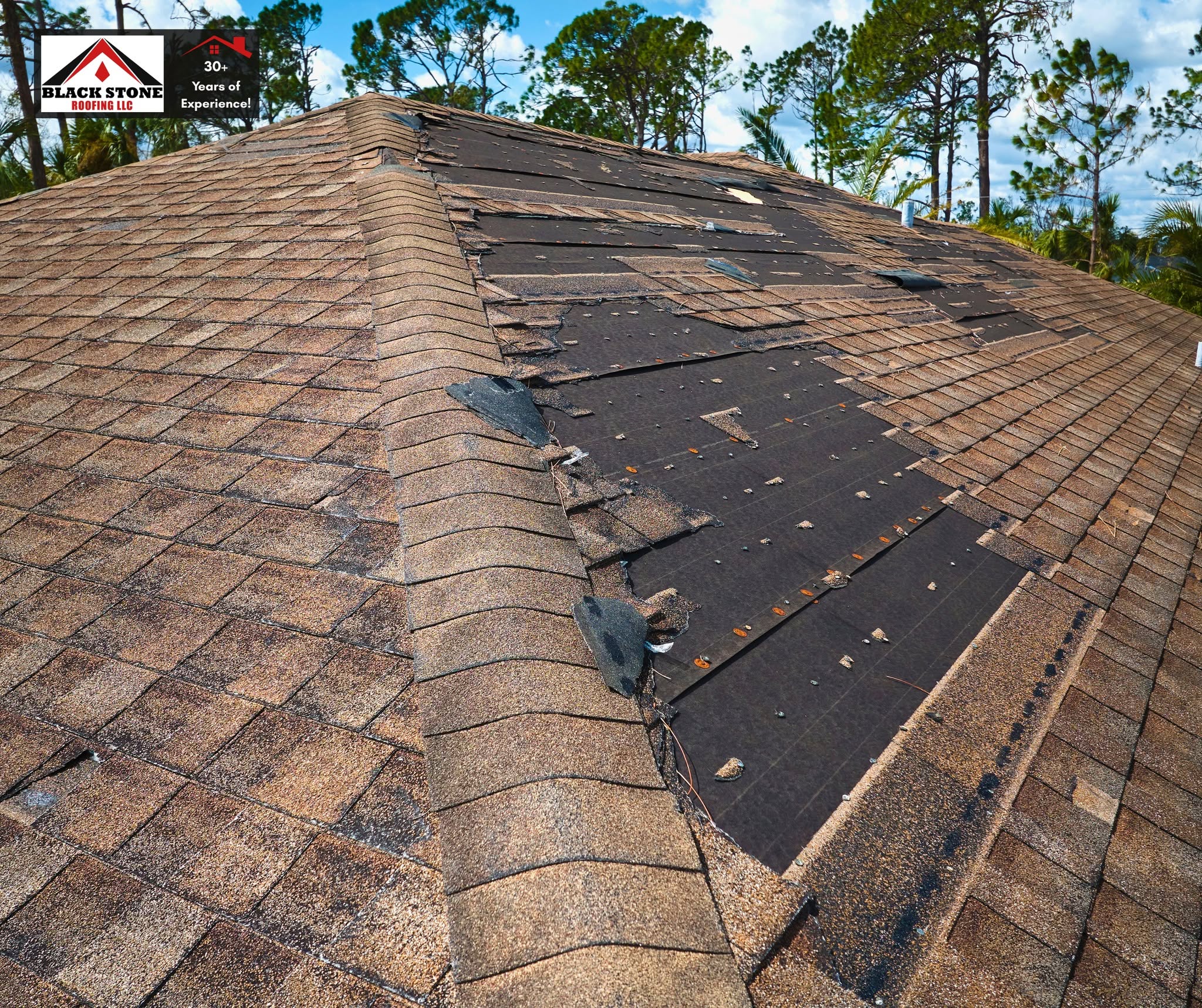
What a Storm Damage Roof Claim Actually Looks Like in Berkeley County

After a real storm moves through the Eastern Panhandle, two things show up in Martinsburg neighborhoods within about seventy two hours. Roof damage, and out of state trucks with magnetic door signs.

We have been repairing storm damage here since 2016, and the pattern almost never changes. So here is what an actual claim looks like from the inside, what your carrier is deciding, and where most homeowners get taken.

First, find out whether you actually have damage

Not every storm produces a claim. Hail under about one inch usually will not bruise an asphalt shingle enough to matter. Wind under fifty miles an hour usually will not lift a properly nailed course. Filing a claim on a roof with no real damage puts a claim on your record for nothing.

What genuine damage looks like on the roof:

  • Hail bruising. Soft dark circles where granules were knocked loose and the mat underneath was struck. You can feel them with a hand before you can always see them.
  • Creased shingles. A horizontal fold across a shingle where wind lifted it and dropped it. The seal is broken even if the shingle is still in place.
  • Collateral evidence. Dents in gutters, downspouts, soft metal vents, the AC condenser fins, and mailboxes. Adjusters look at these to confirm hail size, so do not straighten anything out before they arrive.
Storm damaged shingle roof showing lifted and creased shingles from high wind
Creased shingles read as intact from the ground. On the roof, the seal is already broken.

Document before you call anyone

The claim is decided on evidence. Get dated photos of the roof, the gutters, the yard, and anything that came down. Note the date of the storm, because your carrier will match it against weather data for your ZIP code. If water got inside, photograph the ceiling and the contents before you clean up.

Have a roofer look at it before you file. We do this at no charge, and if there is nothing there we will tell you there is nothing there. That conversation is worth having before a claim exists on your record.

What the adjuster is actually doing

Your adjuster works for your insurance company and is measuring damage against your policy. Two things drive the outcome more than anything else.

Whether they see it. Hail bruising is genuinely hard to spot, especially on weathered or darker shingles. This is why we meet the adjuster on the roof. Not to argue with them, but so that damage on the back slope that nobody chalked out does not get missed by default.

How your policy pays. Replacement cost value policies pay the depreciated amount first, then release the remaining recoverable depreciation after the work is completed and invoiced. Actual cash value policies pay the depreciated amount and that is all you get. Homeowners are frequently surprised by this, and it is worth knowing which one you carry before the storm rather than after.

Your deductible is yours. Full stop.

This is the part that matters most, and it is where storm chasers do the most damage in this area.

West Virginia law prohibits a contractor from paying, waiving, absorbing, or rebating your property insurance deductible. Any company that offers to cover it, eat it, or work it into the numbers is proposing insurance fraud, and they are proposing that you participate in it. The company that made the offer will be back in Texas by the time it becomes your problem.

The same goes for the contingency agreement handed to you at the front door before anyone has been on the roof. There is no reason to sign anything binding before you know what your claim pays and who you want doing the work.

Completed standing seam metal roof on a custom home in Martinsburg WV
The company that installs it should still be here when the warranty gets used.

The sequence, start to finish

  1. Storm hits. You document what you can see safely from the ground.
  2. A roofer inspects and tells you honestly whether a claim is worth filing.
  3. You file with your carrier. You, not the contractor, open your own claim.
  4. The adjuster schedules. We meet them on the roof with our own documentation.
  5. The carrier issues a scope and a first payment, less your deductible and less depreciation.
  6. The work is done to that scope, with any supplements documented and submitted.
  7. Final invoice goes to the carrier and recoverable depreciation is released.

Start to finish this usually runs three to eight weeks in Berkeley County, longer after a widespread event when every adjuster in the region is booked.

Who you hire matters more on storm work than on anything else

Storm work carries a warranty like any other job. The difference is that storm work attracts companies who will not be here to honor one. Our shop is on Winchester Ave in Martinsburg. We were here before the storm and we will be here in six years when you call about something.

If you think you have damage, call us at (540) 550-9703 or read more about how we handle roof insurance claims and storm damage repair. The inspection is free whether or not it turns into a claim.

Repair or Replace? How to Tell What Your Martinsburg Roof Actually Needs

Almost every call we take from a homeowner in Martinsburg starts the same way. There is a stain on a ceiling, or a shingle in the yard after a windy night, and the question underneath it is always the same one. Is this a patch, or is this a whole roof?

The honest answer is that the size of the leak has very little to do with it. A single failed pipe boot can dump water into a bedroom and cost a few hundred dollars to fix. A roof with no visible leak at all can be four years from the end of its life. What follows is how we actually make that call when we get on a roof in Berkeley County.

Start with the age of the roof, not the damage

A three tab asphalt roof in our climate typically gives you fifteen to twenty years. An architectural shingle in the 30 year class realistically runs twenty to twenty five. Standing seam metal, installed correctly, is a forty to fifty year system and often outlives the owner.

If your roof is under twelve years old and something is leaking, that is almost always a repair. Something specific failed: a boot, a flashing, a nail pop, storm damage in one area. The field of the roof still has plenty of life in it and there is no sense tearing off good material.

If your roof is past eighteen and you are calling about a leak, the math changes. Spending fifteen hundred dollars on a repair that buys you two years, on a roof you will replace anyway, is money you will not see again.

Wind damaged asphalt shingle roof with lifted and missing shingles awaiting storm repair
Wind damage in one area is usually a repair. Wind damage across three slopes is usually a replacement.

Then look at the decking, because that is the real decision

Shingles are the part everyone sees. The decking underneath is the part that decides your budget. When water gets past the shingle layer and sits on plywood or plank decking for a season or two, that wood loses structural integrity. You can feel it underfoot as a soft spot before you can see it from the ground.

Isolated soft decking around a chimney or a valley is a repair, and we cut out and replace the bad sheets as part of it. Decking that is soft in multiple areas across multiple slopes is telling you the roof has been letting water through for a while in places nobody noticed. At that point a replacement is not an upsell, it is the only thing that actually solves the problem.

Count how many things are failing at once

One failure is a repair. Several failures happening at the same time is a roof reaching the end of its service life. The things we count:

  • Granule loss. Granules in the gutters and bare black spots on the shingle surface mean the asphalt is exposed to UV and has started to break down.
  • Curling and cupping. Edges lifting off the deck across whole slopes, not just along one course.
  • Cracking. Vertical splits through shingle bodies, which means the mat itself has gone brittle.
  • Multiple prior repairs. Three or four patches in different areas is a pattern, not a coincidence.
  • Failed flashing everywhere. Rusted or pulled flashing at every penetration rather than at one.

Two of these on an older roof and you are looking at replacement. One of them on a newer roof and you are looking at a Tuesday morning repair.

Ventilation problems will not be solved by either one

This is the part most homeowners have never had explained to them. If your attic does not have balanced intake and exhaust ventilation, heat and moisture build up under the deck. In the summer that cooks the shingles from below and shortens their life dramatically. In the winter it causes ice damming along the eaves, which forces water backward up under the shingle course and into the house.

We see roofs in the Eastern Panhandle that failed at year fourteen instead of year twenty two purely because of an unvented attic. If a contractor quotes you a replacement and never once mentions your ventilation, get a second opinion, because they are about to install a brand new roof into the exact conditions that killed the last one.

Aerial view of a completed standing seam metal roof on a residential home in Martinsburg WV
A metal system installed over corrected ventilation is the last roof many of these homes will need.

What an honest inspection should give you

You should end up holding photographs. Not a verbal summary from a guy standing in your driveway, and not a number written on the back of a business card. Photographs of the actual conditions on your actual roof, with an explanation of what each one means and what it does or does not require.

Our roof inspection is free for property owners in our service area and comes back to you as a written report with images. Sometimes that report says you have eight years left and to call us in five. We would rather tell you that and get the job in 2034 than sell you a roof you did not need in 2026.

The short version

Repair if the roof is young, the failure is isolated, and the decking is sound. Replace if the roof is near the end of its rated life, the failures are showing up in several places, or the decking has gone soft in more than one spot. When it is genuinely a close call, the deciding factor is usually how long you plan to own the house.

If you want somebody to actually get up there and tell you which one you are looking at, call us at (540) 550-9703. We cover Martinsburg, Inwood, Bunker Hill, Charles Town, and the surrounding area, and the inspection does not cost anything.